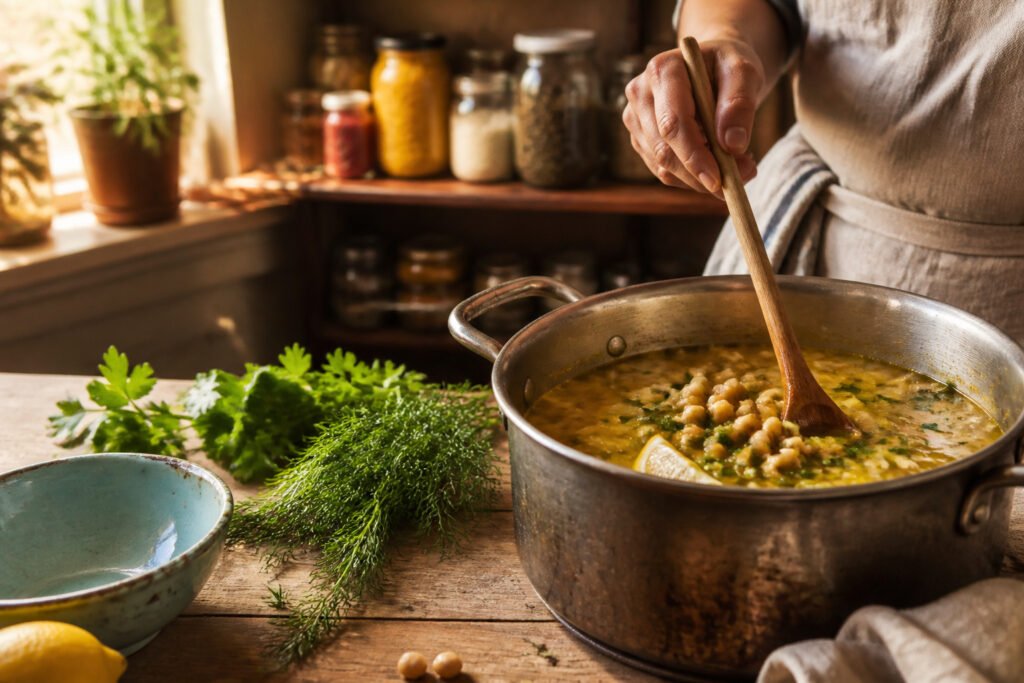
Greek chickpea soup keeps its broth loose and lemon-bright, with chickpeas that hold their shape rather than collapse into paste. The version here comes together in under an hour using canned beans, and the only equipment you need is a medium pot and a wooden spoon.
The catch is right at the start: garlic burns in hot oil in about sixty seconds flat, and once it turns bitter, the whole pot is shot. At Opa! Willow Glen, where we served this from 2008 to 2025, we learned that the hard way so you don’t have to.
What Greek Chickpea Soup Is and When to Make It

Revithia is a Greek chickpea soup, not a stew thick enough to stand a spoon in and not a warm-up act for hummus. The broth stays loose and lemon-bright, with chickpeas that hold their shape rather than collapse into paste. At Opa! Willow Glen on Lincoln Avenue, we served this from 2008 to 2025 as a weeknight dinner built from pantry staples: canned chickpeas, olive oil, onion, lemon, maybe a carrot if one was softening in the drawer. Canned beans bring it under an hour; dried chickpeas are a weekend project and a different recipe entirely.
The equipment is nothing special. A medium pot, a wooden spoon, a citrus reamer if you own one, a fork if you do not. Cleanup is the pot, the cutting board, and the bowl you ate from. What convinced me, reading back through how we made this at the restaurant, is that the simplicity is the point: a few ingredients treated carefully beat a long shopping list. This is how we rebuilt it at home after the dining room closed, and what follows uses only what a standard grocery stocks.
The Ingredients

Three cans of chickpeas, 15 ounces each, drained and rinsed, make the base. That’s 4.5 cups if you cooked them yourself. Two tablespoons of extra virgin olive oil start the pot, though avocado oil or butter work when the pantry runs low. One onion and two carrots soften in that fat; shallots swap in for the onion, parsnips for the carrots, and nobody at the table notices the difference. Three or four garlic cloves, or garlic powder in a pinch, plus half a teaspoon of red pepper flakes for warmth. Paprika stands in when the flakes jar is empty.
Four cups of vegetable or chicken broth covers the chickpeas. Three tablespoons of tahini blended in at the end gives the soup its body. No tahini? Almond butter, cashew butter, or even half-and-half do the same work. Two tablespoons of lemon juice brightens it. A small handful of chopped fresh dill or parsley finishes the bowl; dried herbs are fine when fresh isn’t in the fridge.
Build the Flavor Base

Two tablespoons of olive oil in a large pot over medium heat is where this starts. The chopped onion and sliced carrots need about four minutes to soften and turn sweet; that patience is what separates a soup with depth from one that tastes like it came out of a can. Grated garlic and red pepper flakes go in next, but only for one minute. That short window matters because garlic left in the hot oil much longer will burn and turn bitter, and then the whole pot carries that scorched edge no amount of lemon can fix. I have rushed this step, tossed the garlic in with the onions at the start, and ended up picking through the finished bowl trying to figure out why it tasted flat and a little angry. The carrots and onions can take the longer heat; the garlic cannot.
Simmer the Chickpeas

The chickpeas go in drained, followed by four cups of broth, salt, and black pepper. Bring everything to a gentle simmer, not a rolling boil. A hard boil breaks chickpeas into grit, and you want them whole and silky.
Canned chickpeas need 15 minutes of simmering to absorb the broth and seasonings. Dried chickpeas that have soaked overnight take longer, 25 to 30 minutes, though freshness varies and older beans can stretch toward the higher end. The soup is ready when a chickpea yields to pressure without collapsing. Taste the broth here; it should already taste like dinner, not water with beans floating in it.
Make It Creamy

Scoop out about two cups of the finished soup and blend it with three tablespoons of tahini until the mixture turns completely smooth. Return it to the pot and stir. The broth thickens right away, turning silky without any cream or flour, and the tahini adds a quiet nuttiness that sits behind the lemon and olive oil rather than competing with them.
If the pantry comes up short on tahini, almond butter works about as well. Greek yogurt stirred in at the end gives a sharper, tangier finish, though it clouds the broth more than tahini does. Some recipes call for lemon juice alone to add body, and it does brighten the bowl, but tahini is what we kept in reach at the restaurant for this step. The difference is a fuller, rounder mouthfeel that still reads as chickpea soup rather than lemon soup.
Finish and Serve

Turn the heat off and stir in a handful of chopped fresh dill or parsley. Taste once more for salt and lemon; the soup should taste bright and fully seasoned, not merely salty. A final drizzle of good olive oil and a few shreds of lemon zest on each bowl is what lifts this from plain chickpea soup to something you actually want to eat.
At Opa!, we sent it out with a loaf of crusty bread and a light salad dressed simply with lemon and olive oil. The bread is non-negotiable for mopping, and the salad keeps the meal from feeling too heavy. If you are wondering what to serve with it, that is the answer: crusty bread and a light salad, full stop. The soup is the main event; everything else should stay out of its way.
Optional Additions
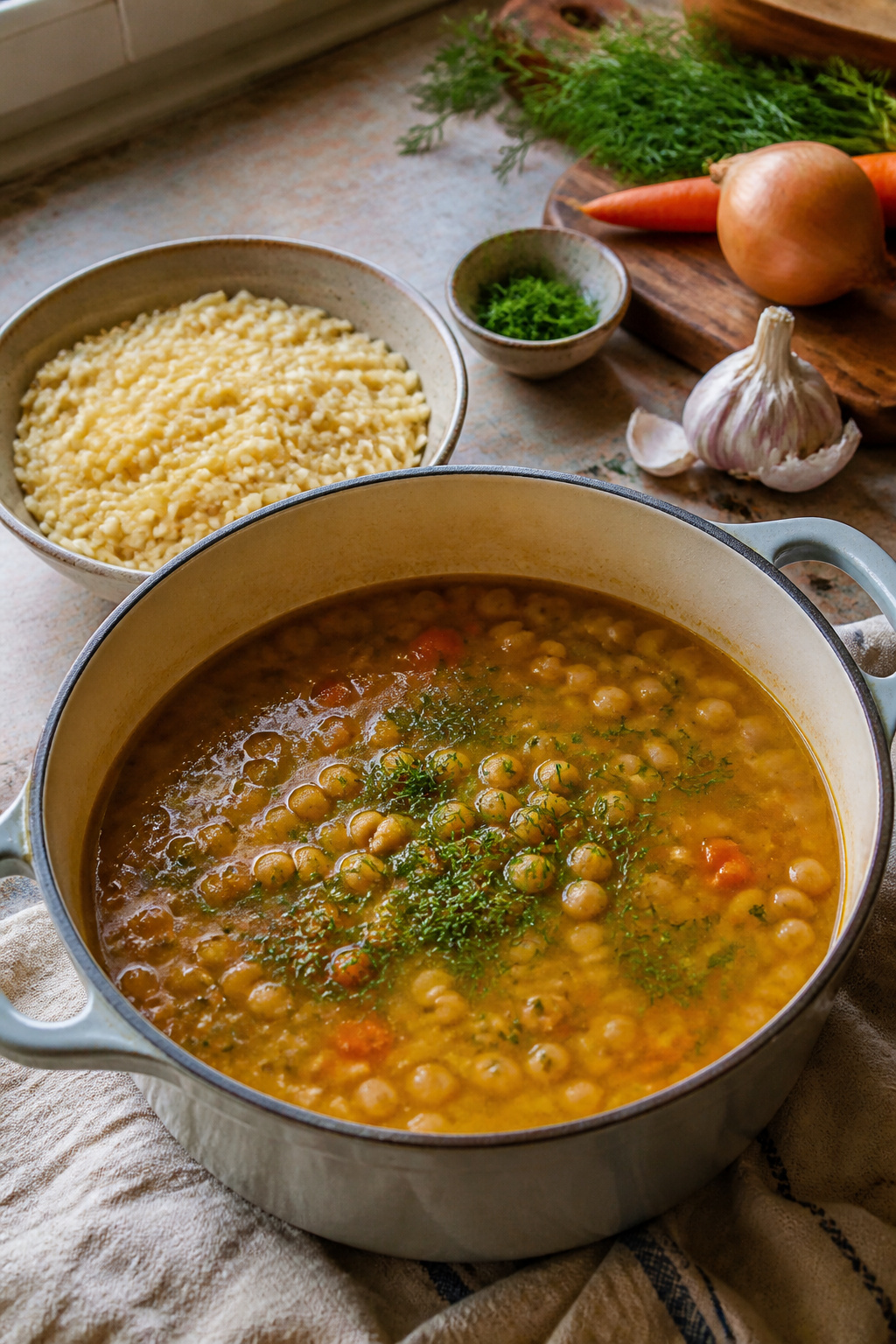
A 3/4 cup of dry orzo turns the soup into something you can call dinner without bread on the side. The pasta goes in after the chickpeas are tender and cooks until it gives, about ten minutes. Regular or whole-wheat both work; the box in your pantry is already the right choice.
Some cooks whisk two whole eggs plus two yolks into the hot broth for an avgolemono finish. The eggs need tempering: a slow stream of hot soup into the beaten eggs, constant whisking, or you get scrambled disappointment instead of silk. This is not traditional revithia, but it is a legitimate branch of the family, and I mention it because readers who know Greek soup often expect the option.
The soup does not need either addition. The chickpeas, olive oil, and lemon carry it alone, and adding pasta or egg because the recipe says "optional" is still adding a pot to wash. Start the base recipe plain. Decide after the first bowl whether the next one wants more.
Storage

Cool the soup completely before transferring it to airtight containers. The refrigerator keeps it for up to 5 days, and the freezer holds it for 3 months. Reheating demands some care: a gentle warm-up on the stovetop over medium heat preserves the smooth texture, while a hard boil after freezing breaks the emulsion and turns the soup grainy. If it thickens too much in storage, a splash of broth or water brings it back. Microwave reheating works for single portions; stop every 30 seconds to stir. Thaw frozen soup overnight in the refrigerator rather than forcing it on the counter.
Nutritional Benefits

Chickpeas carry plant protein and fiber in a combination that fills you up without weighing you down. That slow, steady energy is why the Mediterranean diet keeps coming back to legumes like these, and why a bowl of revithia can carry you through an afternoon without the crash that follows heavier meals.
The olive oil and lemon that finish the soup add their own quiet value: the fat helps your body use what the chickpeas offer, and the whole dish stays light enough for a weeknight when you still need to function after dinner. I make a big pot on Sunday and eat it for lunch through Wednesday; it holds up that well, and the flavors actually settle into something better by Tuesday.
This is cheap nourishment that does not eat like penance. The Greeks figured that out long before anyone named the Mediterranean diet, and the chickpea is the reason the soup works as both comfort and fuel.
Ingredient Substitutions

Dried chickpeas win on cost and texture, but canned chickpeas work if you rinse them and accept a shorter simmer. The overnight soak matters for dried ones: eight hours minimum, ideally twelve to fourteen, with a water change if the kitchen runs warm. Cooking time after that ranges wildly from forty minutes to several hours depending on how old the batch is, so plan for flexibility rather than a set clock.
Tahini thickens the soup with that particular sesame bitterness. Almond butter swaps in for allergy households, though the flavor shifts sweeter. A few tablespoons of full-fat Greek yogurt stirred in at the end gives tang without any nuttiness at all, which some prefer.
Dried herbs go in during the simmer so their oils have time to loosen. Fresh rosemary or oregano hit at the end, bright and almost sharp against the soft chickpeas. Neither is better; the timing is what separates them. I keep both on hand and decide based on whether I remembered to buy the fresh bunch or not.
Cooking Techniques
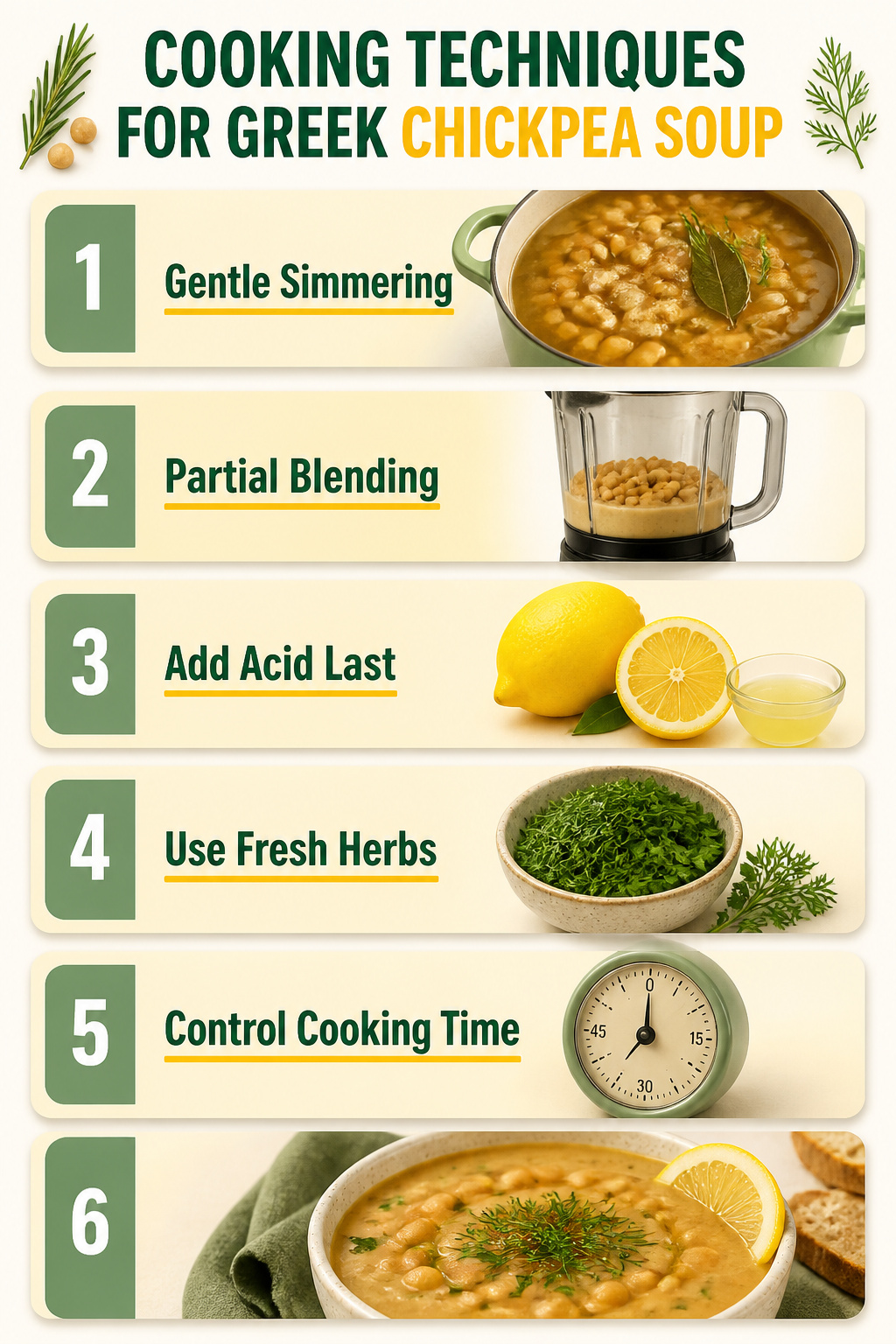
A hard boil cracks chickpeas against the pot and turns the broth murky, so gentle simmering keeps the beans whole while the rosemary, onion, and bay leaf slowly release their flavor into the liquid. The soup needs that unhurried time, especially with dried chickpeas that can take one to two hours to turn tender.
Blending the entire pot gives you a wall of beige puree. Blending none leaves you with brothy beans in watery liquid. The move that works is partial blending: ladle out roughly a third, run it smooth, and stir it back in. You get body from the puree plus whole chickpeas for texture, and the soup still reads as soup rather than hummus.
Acid is the last thing in. Lemon juice added early cooks dull and flat; stirred in off the heat, it stays sharp and bright. Two medium lemons’ worth is the usual starting point, but the bowl is where you adjust. The same rule holds for fresh dill or parsley: they go on at the end, not simmered into gray flecks.
Serving Suggestions

A hunk of crusty whole-grain bread belongs on the side of every bowl. The broth is thin and fragrant, and bread that can stand up to a quick dip turns the last few spoonfuls into the best part of the meal. At Opa! Willow Glen, we set out thick slices of toasted country loaf and watched them disappear before the soup did.
A light salad with lemon and olive oil keeps the plate from feeling too heavy. I keep the greens simple, usually just romaine or arugula, dressed only with what already flavors the soup: good oil, fresh lemon, a little salt. The echo matters more than contrast here.
Some cooks like olives or feta alongside for a more traditional spread, and that works if you have it. For a weeknight, though, the soup is the meal. Bread and a small salad are its companions, not co-stars.
Yield and What to Expect

This recipe feeds 6 as a main course or 8 as a starter, and the cleanup is one pot, one blender, and a cutting board. Active work runs about 15 minutes; the simmering handles itself after that.
The one real way to wreck the pot is right at the start. Garlic burns fast in olive oil, and once it goes bitter, there is no fixing it. The whole base is shot. I have scraped it out and tried to push through, and the soup still tasted scorched two hours later. If the garlic darkens past light gold, dump it and begin again. The chickpeas are cheap; your time is not.
Frequently Asked Questions
Can I use dried chickpeas instead of canned?
Yes, but plan ahead. Dried chickpeas need an overnight soak of at least eight hours, preferably twelve to fourteen, with a water change if your kitchen runs warm. After soaking, they simmer for 25 to 30 minutes in the soup itself, though older beans can stretch longer. The article keeps canned as the default because they bring the soup under an hour.
How do I make the soup creamier?
Scoop out about two cups of the finished soup and blend it with three tablespoons of tahini until smooth, then stir it back in. The broth thickens immediately and takes on a silky, round body without any dairy or flour. If tahini is not in the pantry, almond butter, cashew butter, or even half-and-half do the same work.
Can I freeze Greek chickpea soup?
Yes, for up to three months. Let it cool completely first, then transfer to airtight containers. Reheat gently on the stovetop over medium heat; a hard boil after freezing breaks the emulsion and turns the soup grainy. If it thickens in storage, a splash of broth or water brings the texture back.
What can I serve with it?
Crusty bread and a light salad dressed simply with lemon and olive oil. The bread is non-negotiable for mopping up the thin, fragrant broth, and the salad keeps the meal from feeling too heavy. Olives or feta work for a more traditional spread, but the soup itself is the main event.