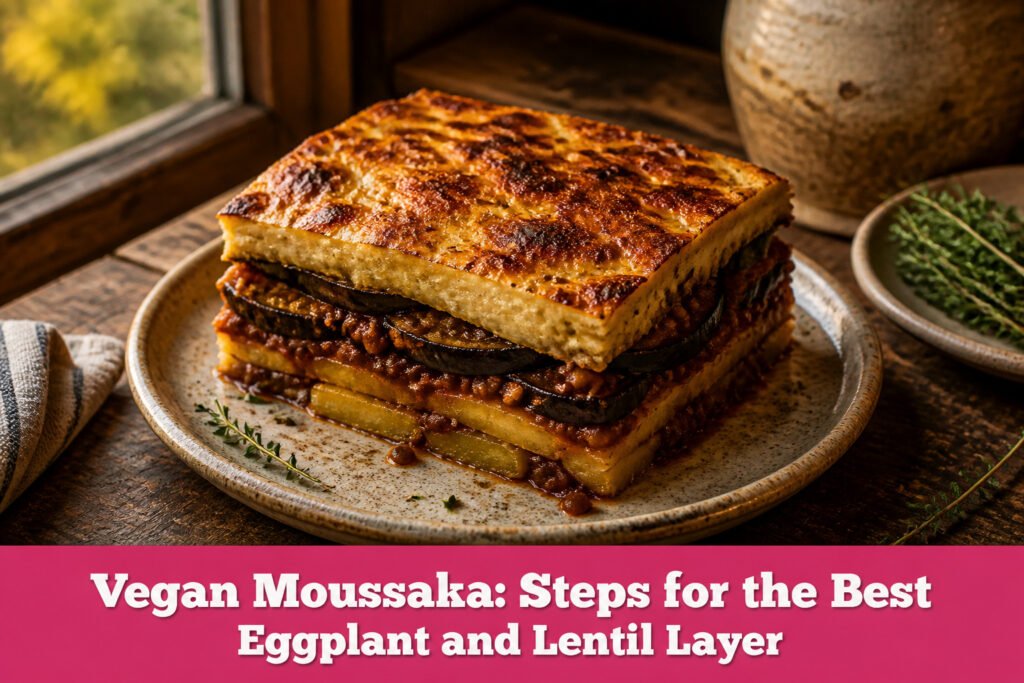
Vegan moussaka layers roasted eggplant and lentils under a cashew béchamel, but the structure depends on one easily skipped step. Without russet potatoes sliced ¼ inch thick and roasted until a knife just slides through, the dish collapses into loose sauce and soft vegetables. The potatoes give you something to cut against, the same way Greek tavernas built the original for decades.
1. Prepare the Eggplant
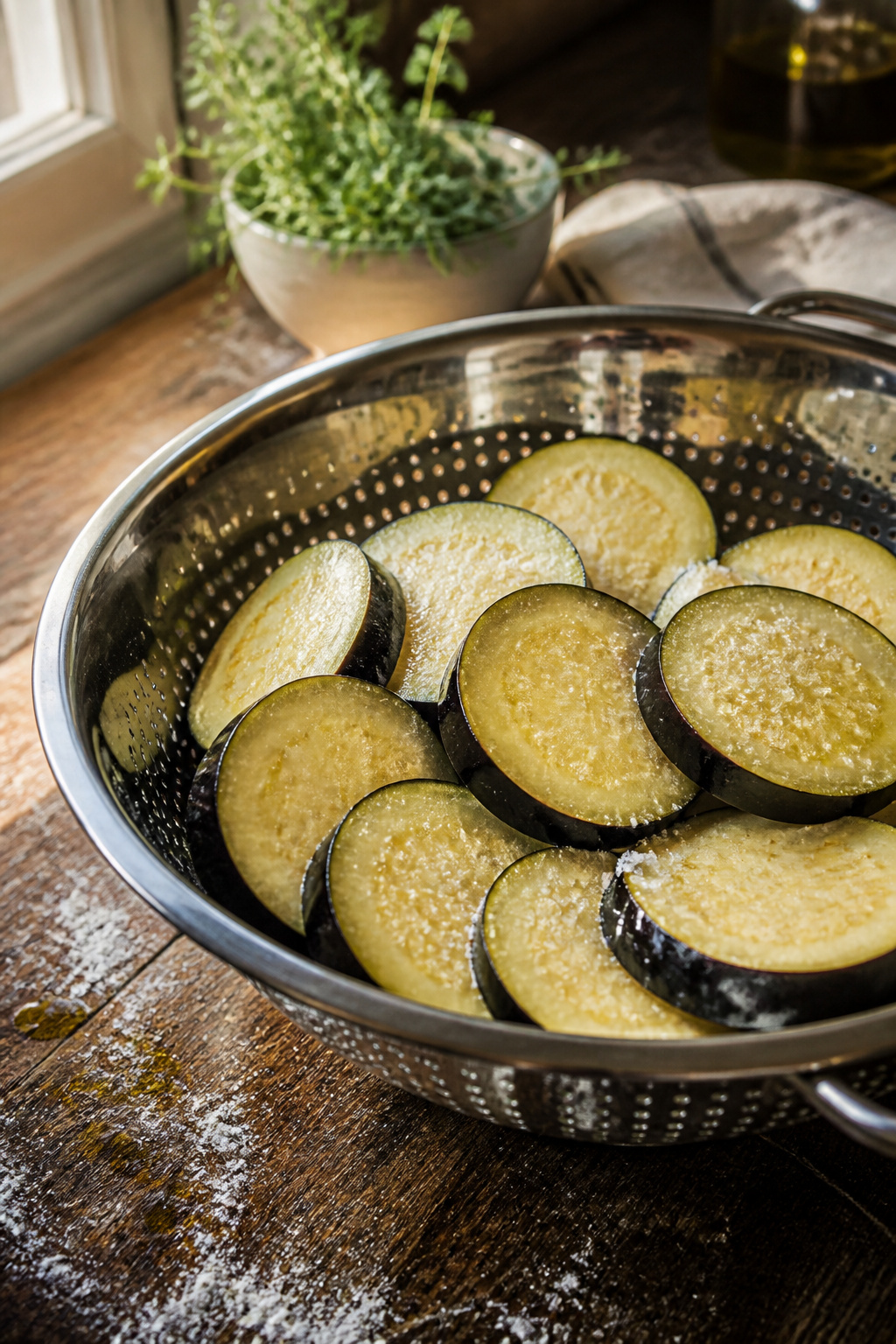
Eggplant for moussaka needs to be sliced ¼ inch thick, crosswise into rounds. The sources all agree on that measurement, but none of them specify how much salt to use for the draining step. I salt each layer generously in a colander, the way you’d salt a sidewalk, knowing most of it rinses away.
Thirty minutes of resting time draws out the bitter liquid that would otherwise make the finished dish watery. Rinse the slices well under cold water, then pat them completely dry with paper towels. Wet eggplant steams instead of roasts.
A 350°F oven works for the roasting step, with the slices brushed in olive oil and laid on parchment. Forty minutes gets them tender and lightly browned. Some recipes push to 425°F and cut that to 30 minutes; either approach yields the same soft, collapsed rounds that layer cleanly without falling apart.
2. Prepare the Potatoes
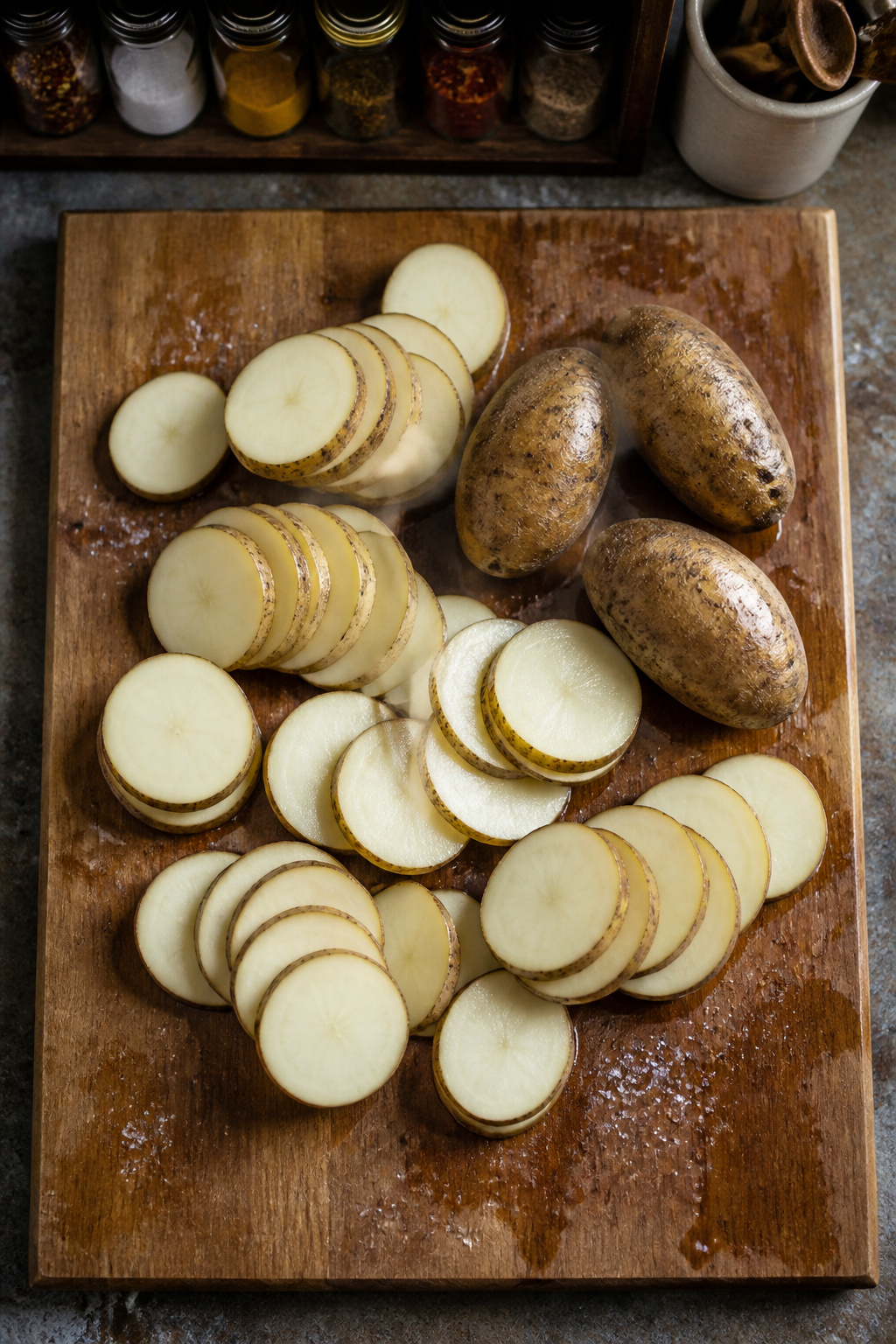
Russet potatoes give vegan moussaka the structure that ground meat and béchamel used to provide, so slice them ¼ inch thick and treat them right. Three medium potatoes, scrubbed, no peeling needed. The skin crisps and holds the round together.
I used to skip the soak, but twenty minutes in cold water while the oven heats pulls off surface starch. The slices roast browner and the layers stay distinct instead of gluing together. Drain them well, pat dry, oil lightly, and roast at 400°F until a knife slides through with just a little resistance. They’ll finish in the bake.
Without potatoes the dish collapses into soft eggplant and sauce. With them you get actual layers, something to cut against, and a starchy base that carries the lentil filling the way Athens tavernas built it for decades before the vegan version existed.
3. Make the Lentil Filling

A large skillet over medium heat is the right tool here. Onions go in first, chopped fine so they melt into the base rather than staying chunky, followed by three or four cloves of minced garlic once the onions soften. The smell is how you know; it takes about five minutes for the garlic to turn fragrant without browning.
One 15-ounce can of brown or green lentils, drained, lands in the pan next, or the equivalent cooked from dried if that is what you have. A 28-ounce can of crushed tomatoes follows, and the mixture needs seasoning now or it will taste flat. Dried oregano is standard, about a teaspoon, and a small pinch of nutmeg adds depth without announcing itself. Cinnamon is the other direction entirely: half a teaspoon gives the filling a warm, almost meat-sauce quality that reads as Greek rather than Italian. Salt and pepper go in at this stage, but conservatively; the tomatoes and any broth you add will concentrate as they reduce.
The pan simmers uncovered for ten to fifteen minutes, long enough for the liquid to tighten so the layers do not slide apart later. If it spits, lower the heat and set the lid ajar. Mushrooms, diced small and sautéed with the onions, add the savory depth that lentils alone can miss; cremini or white button both work, about eight ounces. The finished filling should hold its shape when spooned, not pool liquid in the dish.
4. Make the Bechamel Sauce

The cashews need to be raw, not roasted, and they need time in water before they go anywhere near the blender. An overnight soak is ideal, but if you forgot, a quick boil works: cover them in a pot, bring the water to a boil, then pull it off the heat and let them sit for 15 minutes. Drain, rinse, and blend with 1 cup of fresh water plus your seasonings. I add nutmeg, garlic powder, nutritional yeast, salt, and pepper. The mixture should come out as smooth as any plant milk you would buy, with no grit left between your teeth.
That blended cream gets cooked into a roux. Heat 4 tablespoons of vegan butter or olive oil in a saucepan, whisk in ⅓ cup of all-purpose flour, and keep it moving until a paste forms. Then pour the cashew cream in slowly, in stages, whisking the whole time so the flour does not seize into lumps. The sauce thickens over medium heat in about 5 to 10 minutes. Take it off when it is very thick and creamy; it will tighten more as it sits, so if you are making it ahead, transfer it straight to a container.
Sunflower seeds substitute one-to-one for cashews if nuts are off the table, and they blend up nearly as creamy with the same soak. Pine nuts work too, though they are still a tree nut and useless for true allergies. For a completely different path, some cooks build the sauce from silken tofu, oat milk, or even aquafaba for lift, and one version I have seen skips the blender entirely, starting with coconut oil and flour in the pot and thinning with cashew milk. Coconut milk itself can stand in for the cashew cream, though the flavor shifts toward something less traditional. Each of these gets you a thick white layer for the top of the moussaka; the cashew version just happens to be the one I have settled on after working through the others.
5. Assemble the Moussaka
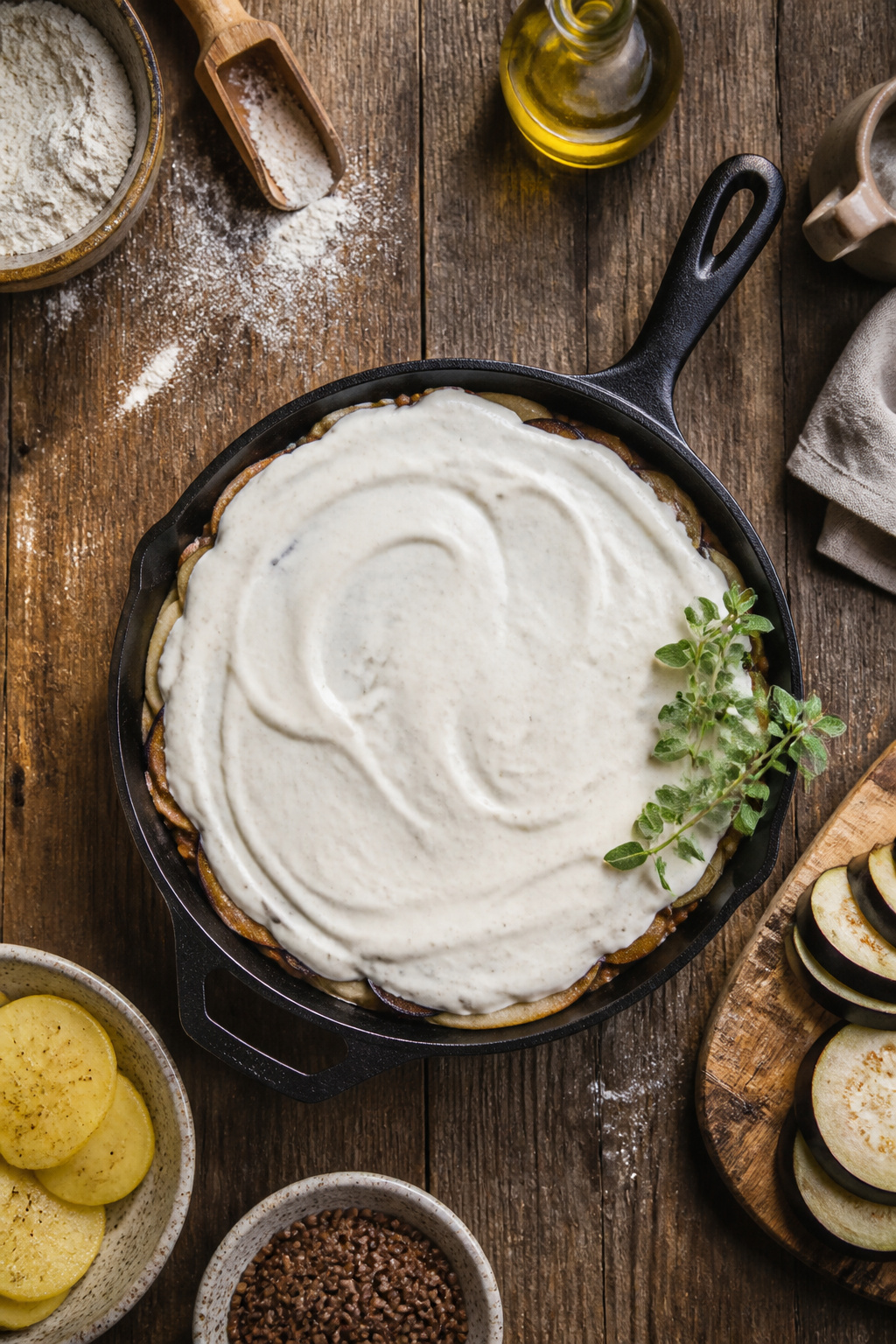
A 9-by-13-inch baking dish is the size most recipes call for, though a 10-inch cast iron skillet or an 8-by-8 casserole dish will work if that is what you have. No source I found specifies an optimal depth, so use what holds your layers without spilling.
Spread the potatoes across the bottom, overlapping where they need to cover. Spoon the lentil filling on top and smooth it flat. Layer the eggplant over that, again overlapping to cover. Some cooks spread a thin coat of béchamel between each layer; others pour the whole batch over the top. The second way saves time and still bakes up fine.
Bake uncovered at 350°F for 45 to 60 minutes, until the top turns golden. The longer end gives you a firmer, more set slice; pull it earlier if you want it softer. The béchamel will look loose coming out of the oven. It needs that rest to firm up, which is why the next section matters.
6. Cool and Serve

A bubbling vegan moussaka fresh from the oven looks ready to eat, but the layers need time to settle. Let it rest at least 10 minutes, and closer to 30 if you can wait. The lentil filling and bechamel both hold a lot of heat, and they stay loose while steaming hot. Slicing too early sends the sauce running and collapses the neat stack of eggplant, potatoes, and lentils into something closer to a casserole pile.
The wait also lets the top set to that slightly firm, golden surface you want showing on each plate. I’ve found the sweet spot for clean squares is when the dish has cooled just enough that you can hold the pan handle without a towel. The edges pull away from the baking dish, and the knife goes through without dragging. If you’re serving guests, this rest gives you time to set the table or warm some bread. The moussaka will still be hot at the center; it just won’t fall apart when you lift it out.
Make It Ahead

The lentil filling, roasted eggplant, sliced potatoes, and béchamel can each be cooked and refrigerated in separate containers up to two days ahead. On the day of serving, layer everything cold into the baking dish and bake straight through. Let the assembled dish sit on the counter for about an hour before baking if you combined the layers a day or two early and stored it covered in the refrigerator. Cold ceramic straight into a hot oven risks cracking, and the center will stay chilled past when the top browns. If time runs short, you can skip the room-temp rest, but the bake will need another ten to fifteen minutes and the edges may over-darken before the middle is hot.
Store and Freeze

Leftover vegan moussaka keeps well for 3–4 days in the refrigerator, covered tightly. The layers soften as they sit, which some people actually prefer, though the top loses its slight crispness after the first day.
For freezing, let the dish cool completely first, then portion it into airtight containers or heavy freezer bags. It holds for 2–3 months this way. Thaw overnight in the refrigerator rather than on the counter; the lentil filling is dense and needs that slow, even defrost to reheat properly.
Reheating works two ways. Individual portions go into the microwave for 1–2 minutes. For larger amounts, cover with foil and bake at 350°F for 15–30 minutes depending on how much is in the dish. The oven method preserves the structure better, but the microwave wins for speed on a Tuesday night.
What to Serve With It
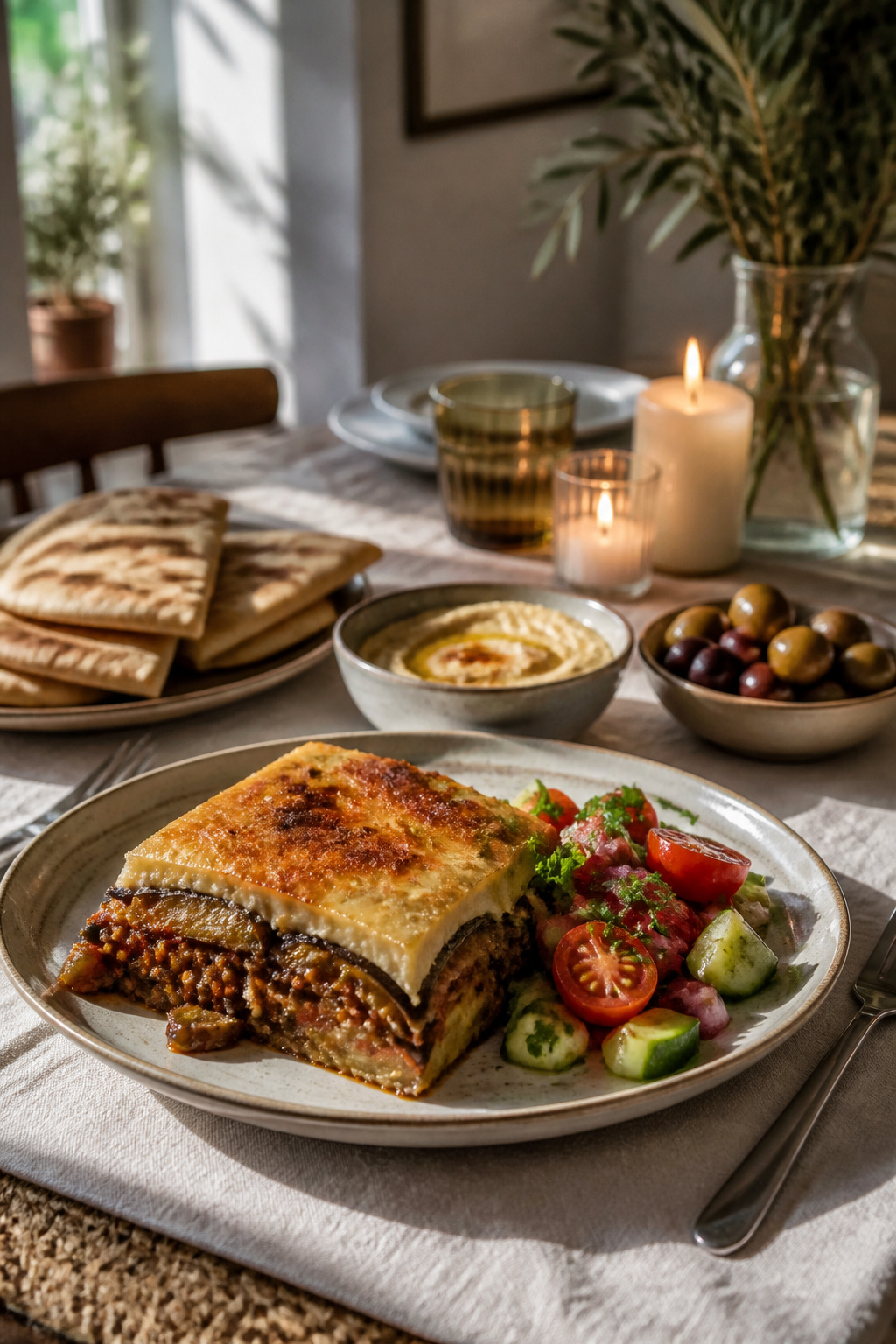
A heavy slice of vegan moussaka wants something sharp or crisp against it. I keep the sides simple so the plate does not compete with what took the real work.
- A tomato and cucumber salad cuts through the richness fastest. Dressed with lemon and olive oil, it takes five minutes and balances the warm casserole on the same fork.
- Crusty bread or warmed pita is non-negotiable at my table. The lentil ragu begs for something to push through it, and a chewy piece does that better than a spoon.
- Greek lemon potatoes turn the meal into a full taverna spread. They need their own oven time, so this is for nights when both dishes can run together.
- Hummus, tzatziki, and olives as a small mezze spread give people something to pick at while the moussaka rests. The contrast of temperatures, warm casserole against cool dips, keeps each bite interesting.
- Grilled or roasted vegetables, zucchini or red peppers especially, add color and stretch the plate without adding another heavy layer.
Lentil and Sauce Choices

Green or brown lentils hold their shape through a long bake, giving the filling the meatier texture most cooks want here. Canned lentils save a step, though home-cooked ones work the same way if you already have a pot going.
The bechamel is where the real choice sits. Cashew cream is the common starting point, and for good reason: it carries richness and body that thinner plant milks lack. But it is not the only path. Sunflower seeds cost less and work for nut-free households, though the flavor turns earthier. Oat milk or soy milk from the carton, poured straight into a roux, tends to come out thin and needs more flour to compensate. Coconut milk is a mistake here; even the unsweetened kind leaves a trace of sweetness that fights the savory layers underneath.
| Base | Texture | Flavor Notes | Best For |
|---|---|---|---|
| Green/brown lentils, home-cooked | Firm, holds shape | Neutral, takes seasoning well | When you have time to simmer |
| Canned lentils | Same firmness, no prep | Neutral | Weeknight speed |
| Cashew cream bechamel | Thick, custard-like | Mild, rich, blends into savory | The classic vegan approach |
| Sunflower seed cream | Slightly heavier | Earthier, nut-free | Nut allergies, tighter budgets |
| Oat or soy milk (carton) | Thinner, needs more roux | Clean but flat | Pantry desperation only |
| Coconut milk | n/a | Sweet, intrusive | Not this dish |
Cashew cream wins for texture, but the sunflower route is close enough if you need to avoid nuts. Skip the carton milks unless you are willing to double the flour and lose some of the silkiness that makes moussaka feel like moussaka.
Nutrition and What You Get
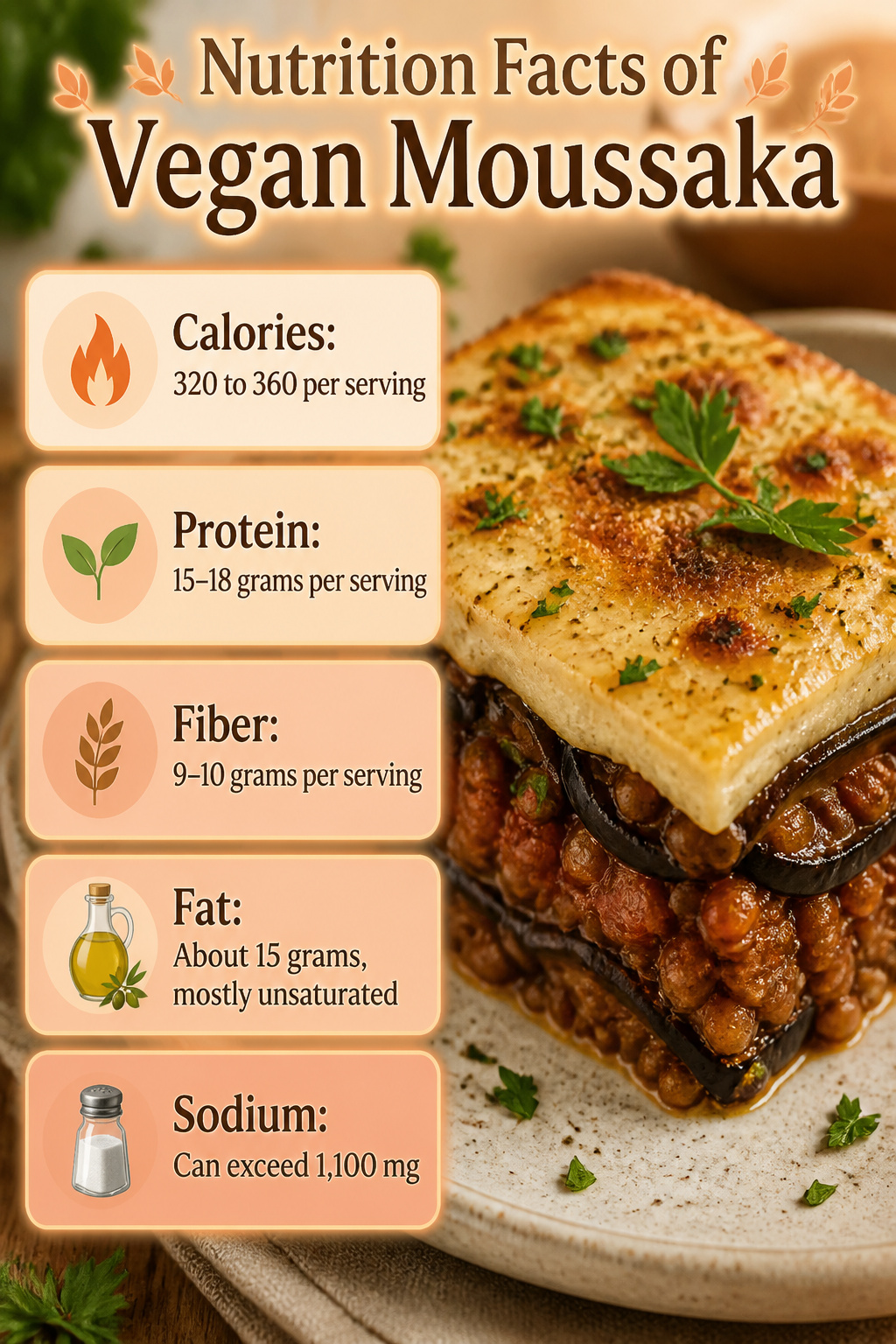
A generous square of this vegan moussaka lands around 320 to 360 calories, which sits lighter than the traditional lamb-and-bechamel version I used to serve at the restaurant. The swap to lentils and olive oil keeps protein at roughly 15–18 grams per serving, enough that you are not hunting for a snack an hour later.
Fiber runs high, typically 9–10 grams, thanks to the eggplant skins and the lentils themselves. That matters on a weeknight when you want the plate to actually satisfy. Fat stays moderate, about 15 grams, mostly unsaturated from olive oil rather than saturated dairy fat. Sodium can climb past 1,100 mg depending on how salty your canned tomatoes or vegetable broth are, so if you are watching that, buy low-sodium and taste before adding more salt.
Frequently Asked Questions
Can I make vegan moussaka ahead of time?
Yes. Cook the lentil filling, roasted eggplant, sliced potatoes, and béchamel separately and refrigerate them up to two days ahead, then layer and bake the day you serve. You can also assemble the full dish a day or two early; if you do, let it sit on the counter for about an hour before baking so the ceramic warms and the center heats through evenly.
What can I use instead of cashews for the bechamel?
Sunflower seeds substitute one-to-one and blend nearly as creamy with the same soak time. Silken tofu, oat milk, or aquafaba are other paths some cooks take, and coconut milk can stand in though it shifts the flavor away from traditional. Pine nuts work too, but they remain a tree nut and do not help with true allergies.
How long does vegan moussaka last in the fridge?
Covered tightly, leftovers keep for 3 to 4 days. The layers soften as they sit, which some people prefer, though the top loses its slight crispness after the first day.
Can I freeze vegan moussaka?
Yes. Cool the dish completely, then portion it into airtight containers or heavy freezer bags. It holds for 2 to 3 months. Thaw overnight in the refrigerator rather than on the counter; the dense lentil filling needs slow, even defrosting to reheat properly.
What type of lentils should I use?
Green or brown lentils are the ones to reach for. They hold their shape through a long bake and give the filling a meatier texture. Red lentils are too soft and will break down into mush.