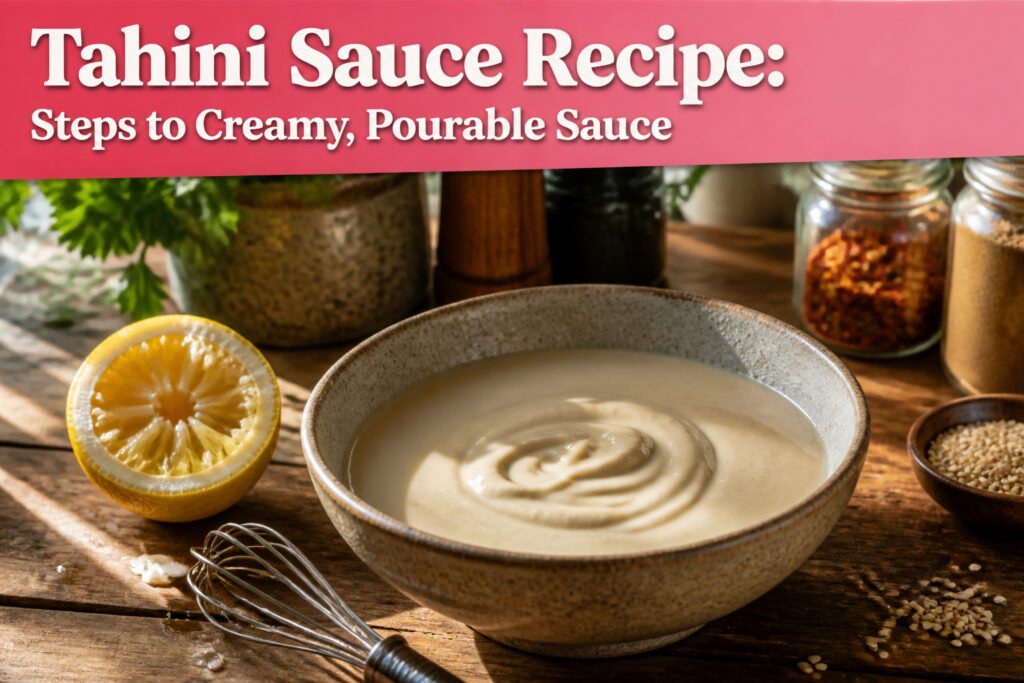
Tahini sauce turns creamy and pourable once you understand that it must seize before it loosens. The acid in lemon juice makes the paste clump tight and grainy, a stage that trips up most home cooks into adding water too early and fighting separation forever. Cold water added one tablespoon at a time, beaten hard after each splash, is the only fix, and the amount varies from six tablespoons to a quarter cup or more depending on the brand. Seed + Mill, Soom, or Cedar’s runny tahini gives you the cleanest start.
1. Gather the Ingredients

Five ingredients sit at the base of every batch I make. ½ cup tahini matters most, and the jar you grab shapes everything that follows. A smooth, runny tahini with a clean nutty taste, something like Cedar’s, Soom, or Seed + Mill, blends without turning bitter or seizing up. Old or low-quality tahini carries a harsh edge no amount of lemon can fix.
¼ cup fresh lemon juice comes next, and squeezing it yourself makes the difference between bright and flat. Bottled juice tastes dull against tahini’s density. One small garlic clove, grated fine so it disappears into the sauce rather than leaving chunky bits behind, gives the kick. Water loosens the paste, usually about 6 tablespoons to start, though I often need more to hit a pourable, creamy texture. Sea salt sharpens the whole thing, ½ teaspoon as a starting point, then adjusted by taste.
A few additions can shift the direction. A drizzle of extra-virgin olive oil adds richness, a touch of maple syrup or honey balances sharper tahini, and fresh herbs work in when the sauce heads toward salad or grain bowls. None are required, but they give the base more places to go.
2. Prepare the Garlic
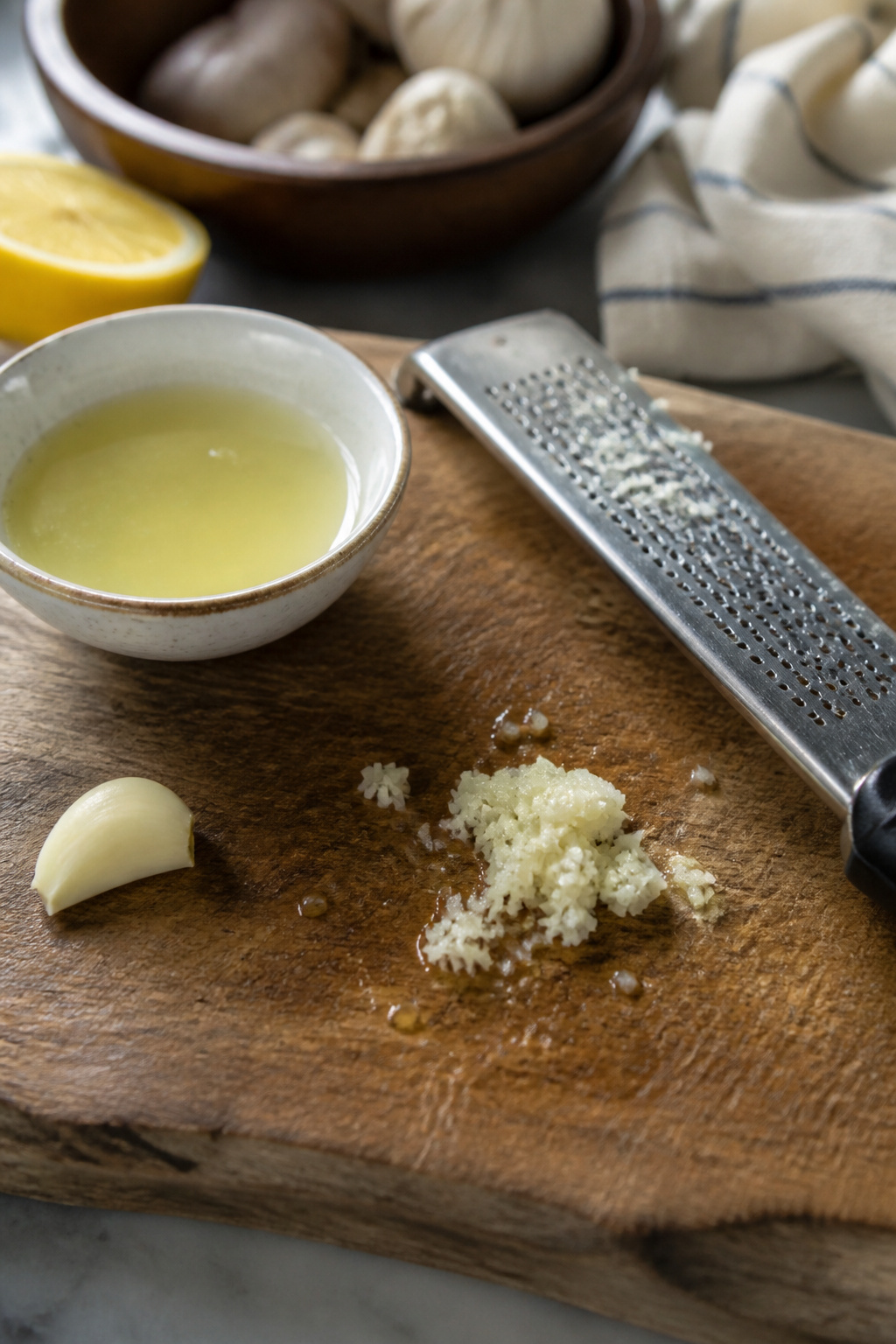
Fresh garlic can turn harsh if it sits in a sauce for more than a day or two, so the prep matters more than you might expect. I mince it fine on a board, or grate it on a Microplane if I want it to disappear into the finished sauce entirely. Either way, marinating the garlic in lemon juice for 10 minutes before you mix takes the bite down and keeps the flavor from stealing the show later. Some cooks strain the garlic out after those 10 minutes and use only the infused juice; that is the move if the sauce will sit in the fridge and you do not want it growing stronger overnight. If raw garlic is not your thing, or you are cooking for someone who avoids it, leave it out and whisk in a pinch of garlic powder instead. The sauce still works.
3. Mix Tahini and Lemon Juice
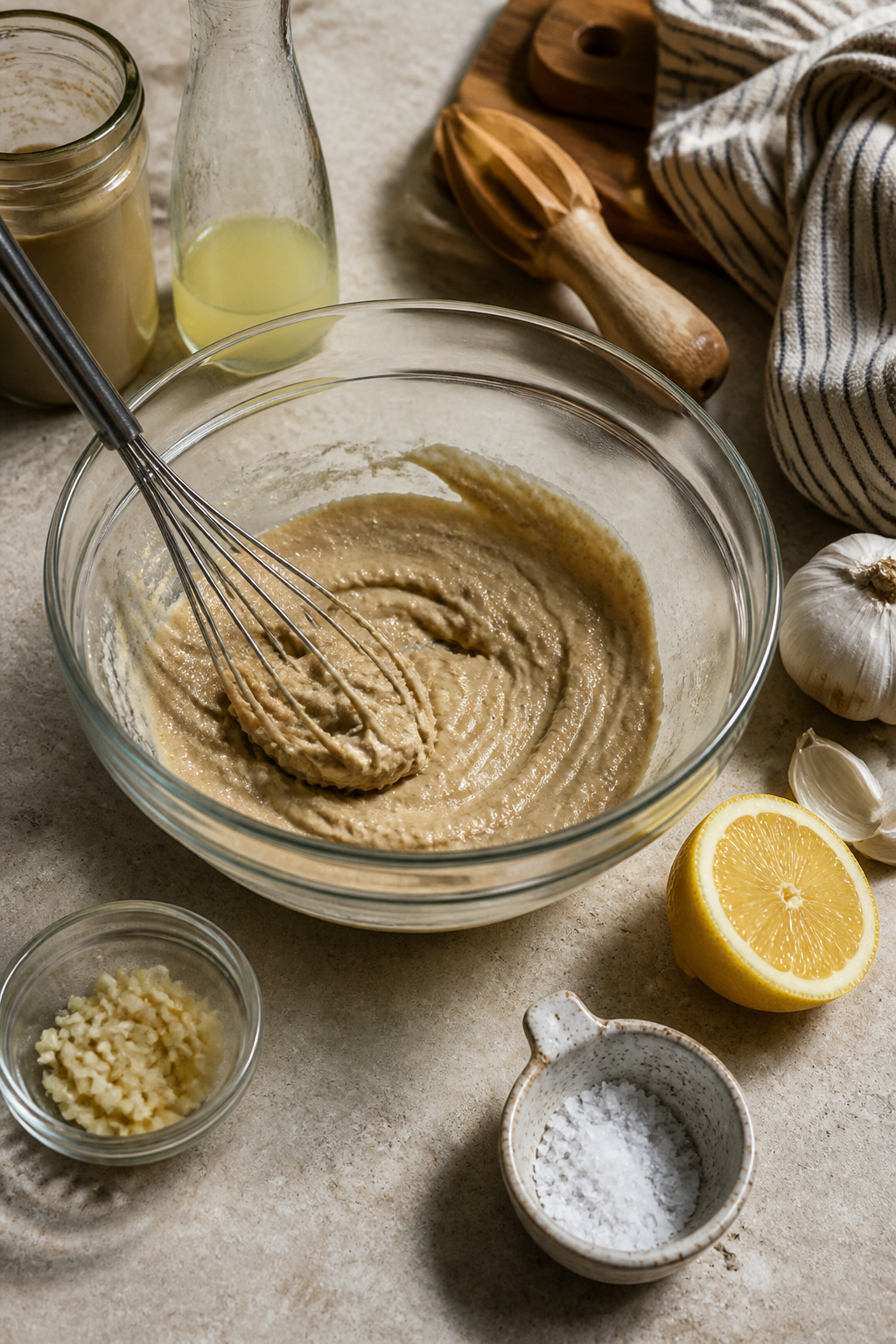
Scoop the tahini into a bowl and add the lemon juice, garlic, and salt. The moment the acid hits the sesame paste, the mixture will seize into a thick, almost dough-like clump that looks nothing like sauce yet. This is exactly what should happen, and it is the reason I never add water at this stage. The tahini needs to absorb the lemon and garlic first; trying to thin everything at once just makes the separation harder to fix later.
A medium bowl leaves enough room to work the whisk without splattering. I use a balloon whisk because its wires cut through the stiff paste better than a spoon, but a fork will do if that is what is clean. Thirty seconds of vigorous stirring breaks the clump into a uniform, grainy mass that coats the whisk. It still will not pour. The water comes next, and that is when the texture turns.
4. Add Water Gradually
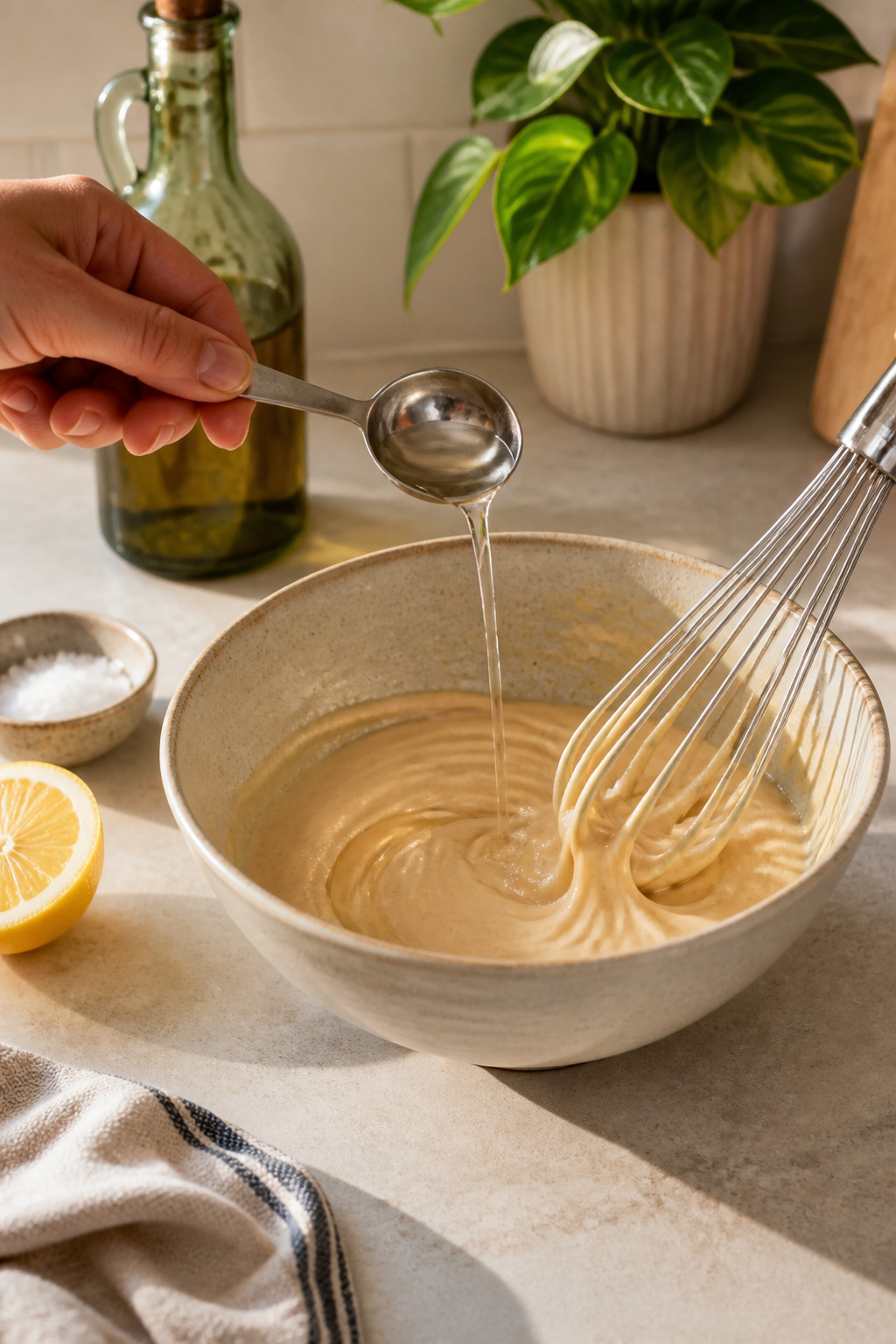
Water is where tahini sauce lives or dies. The paste seizes up the moment acid hits it, turning tight and grainy, and the only fix is patience with a whisk and a slow stream from the tap. I add cold water a tablespoon at a time, beating hard after each splash, watching the texture shift from stiff putty to something that moves like heavy cream. The full amount varies. Some days the tahini wants only a few tablespoons; other days it drinks down ¼ cup or more before it loosens. The target is specific enough to name: thick enough to cling to a spoon or a falafel ball, thin enough to pour in a steady ribbon. For a dip, stop early, while the sauce still holds a soft peak. For drizzling over roasted vegetables or a grain bowl, take it further, nearly to the runniness of salad dressing. The sauce tightens as it sits, so I aim a touch looser than I mean to serve it, knowing the fridge will reclaim some of that water overnight.
5. Adjust Seasoning

Tahini sauce can turn on you fast. One minute it’s smooth and bright, the next it’s bitter or flat, and the culprit is almost always balance. A half teaspoon of maple syrup or honey pulls back bitterness without making the sauce sweet, which is the fix I reach for more often than extra salt. If the edge feels dull, lemon juice wakes it up; if it’s sharp, another pinch of salt rounds the corners.
The base recipe leaves room to move. Cumin adds warmth at about a half teaspoon, and fresh herbs stirred in at the end, parsley or cilantro, turn the sauce green and lively. I keep those as finishing moves rather than blending them in, unless I’m after a uniform color for a specific dish. The point is to taste after every addition, because tahini brands vary in bitterness and your lemon might be more acidic than last week’s. Adjust in small increments; the sauce tightens as it sits, so let it rest five minutes before the final call on water or acid.
6. Serve or Store

The sauce is ready in about five minutes of actual work, ten at most if you’re squeezing lemons by hand and hunting for the garlic press. Use it right away while it’s loose and warm, or transfer it to an airtight container and refrigerate. It keeps for up to one week, though at Opa! it rarely lasted the night.
Cold thickens tahini sauce considerably. What poured easily on Wednesday will cling to a spoon by Sunday. A splash of water fixes this, whisked in until the sauce returns to its original consistency. Some separation is normal during storage, a quick stir brings it back together. Check the smell before serving, sour or off notes mean it’s time to make a fresh batch. Freezing works for longer storage, up to six months, though the texture after thawing never fully recovers the silkiness of the original. For a sauce this quick to make, I keep it in the fridge and make more when I need it.
Tahini Paste Versus Tahini Sauce

Tahini paste is nothing more than ground toasted sesame seeds and their oil: a single ingredient, thick as nut butter, with a strong nutty flavor that can turn bitter depending on the brand. You will find it shelved with the nut butters or in the Mediterranean section, and the oil will have separated to the top, so stir it well before measuring.
Tahini sauce is what you make from that paste. You thin it with water and emulsify it with lemon juice, garlic, and salt until it turns smooth and pourable. The sauce is brighter, thinner, and far more versatile for drizzling over vegetables or using as a dip. Some cooks swap in white wine vinegar or apple cider vinegar for a sharper, zippier version, though bottled lemon juice is worth avoiding. If the finished sauce still tastes bitter, the fix is usually more sweetener or a different brand of paste next time.
Ingredients and Quality

The tahini you choose makes or breaks the sauce. A good jar pours like loose peanut butter and tastes nutty rather than harsh. Old or cheap tahini turns bitter fast, and no amount of lemon will fully mask that edge. I look for brands with a runny texture and a clean sesame flavor; Cedar’s, Soom, and Seed + Mill are the ones I keep coming back to.
Lemon juice works the same way. Bottled lemon juice is flat and occasionally harsh; squeezing a fresh lemon takes thirty seconds and gives the sauce real brightness. The acidity does more than add flavor, of course. It balances the richness of the tahini and softens the garlic’s bite. If you are out of fresh lemons, a splash of white wine vinegar or apple cider vinegar will get you there, though the flavor shifts toward sharper and more assertive.
Ways to Use Tahini Sauce
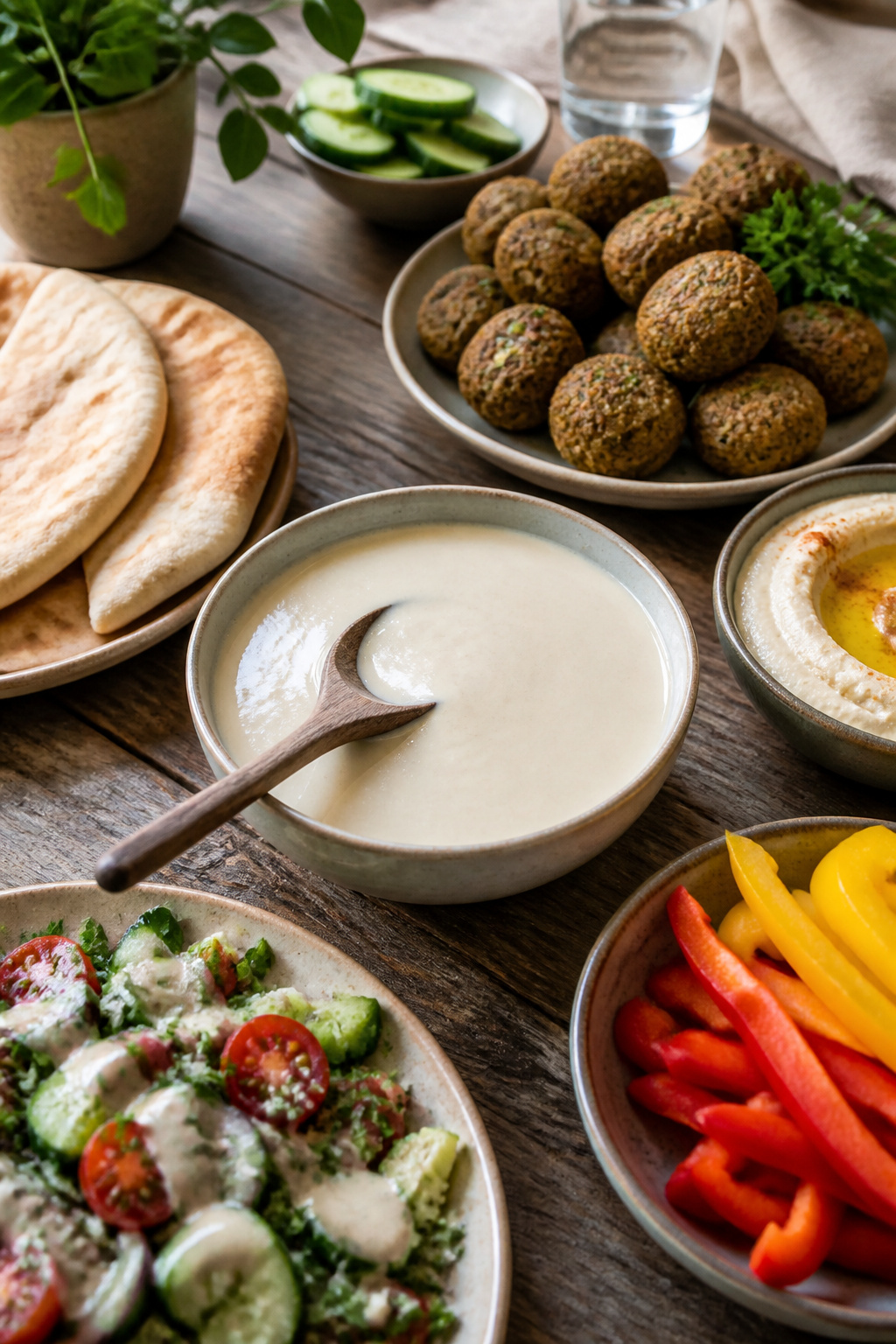
A batch of tahini sauce rarely finishes where it started in my kitchen. The same jar that began as dip for falafel on Tuesday becomes salad dressing by Thursday and the drizzle that saves leftover roasted vegetables on Friday.
- Dip: Thick tahini sauce holds up to falafel, warm pita bread, or a simple plate of sliced bell pepper and cucumbers. Set it out with hummus and baba ganoush for a quick mezze spread.
- Salad dressing: Thin it with a tablespoon or two of water and it coats roasted vegetable salads, pasta salads, and grain bowls without weighing them down.
- Roasted vegetables: The sauce’s nuttiness plays against sweet vegetables straight from the oven. Try it on roasted carrots, delicata squash, sweet potatoes, or cauliflower.
- Grain bowls: A few spoonfuls finish a bowl of rice, quinoa, or farro, especially alongside chickpeas or grilled chicken.
- Sandwiches and wraps: Skip the mayo and spread it inside a falafel pita or a chicken shawarma wrap instead.
- Proteins: Spoon it over grilled chicken kabobs, salmon, or air-fryer chicken breast when the meat needs something sharp and creamy.
Variations to Try

The base sauce is a blank canvas, and small additions shift it in useful directions.
- Herbs: Stir in 2 tablespoons finely chopped fresh cilantro, dill, or parsley. Cilantro and dill pair especially well with grain bowls and roasted carrots; parsley brightens the color and adds a fresh, grassy note.
- Spices: Add ½ teaspoon ground cumin for warm, earthy depth, plus a pinch of smoked paprika. A pinch alone also works if you want only the cumin.
- Sweetener: If the tahini tastes bitter, ½ teaspoon maple syrup or honey balances it. Start there and add another ¼ to ½ teaspoon only if the bitterness still lingers.
- Heat: A teaspoon of Sriracha, a spoonful of chili crisp, or chopped Calabrian chiles turns the sauce sharp and spicy.
- Turmeric, beet, or greens: These make separate, distinct sauces altogether, not minor tweaks. Worth trying, but they deserve their own batch rather than a spoon stirred in.
Frequently Asked Questions
What is tahini sauce?
Tahini sauce is a creamy, pourable condiment made from tahini paste thinned with water and emulsified with lemon juice, garlic, and salt. It starts as a thick, stiff clump when the acid hits the sesame paste, then loosens into a smooth sauce as cold water is whisked in slowly. The result is brighter, thinner, and far more versatile than tahini paste alone.
How long does tahini sauce last?
Tahini sauce keeps for up to one week in an airtight container in the refrigerator. It thickens considerably as it chills, so whisk in a splash of water before serving to bring it back to a pourable consistency. Some separation during storage is normal; a quick stir fixes it.
Can I make tahini sauce without garlic?
Yes. Simply leave the garlic out and whisk in a pinch of garlic powder instead if you want a milder background note. You can also strain garlic out after marinating it in lemon juice for 10 minutes, or skip it entirely; the sauce still works without it.
What can I use tahini sauce on?
Tahini sauce works as a dip for falafel, pita, or raw vegetables; a dressing for salads and grain bowls; a drizzle over roasted carrots, squash, or cauliflower; and a spread inside sandwiches and wraps. It also pairs well with grilled chicken, salmon, and air-fryer proteins when you need something sharp and creamy.
What does tahini sauce taste like?
It is nutty, earthy, and slightly tangy from the lemon juice, with a creamy texture that clings or pours depending on how much water you add. Bitterness varies by tahini brand; a small amount of maple syrup or honey pulls that back without making the sauce sweet.
Is tahini sauce raw or cooked?
It is raw. No cooking is needed; you simply whisk the ingredients together in a bowl and adjust with water until the texture is right. The whole process takes about five to ten minutes of actual work.