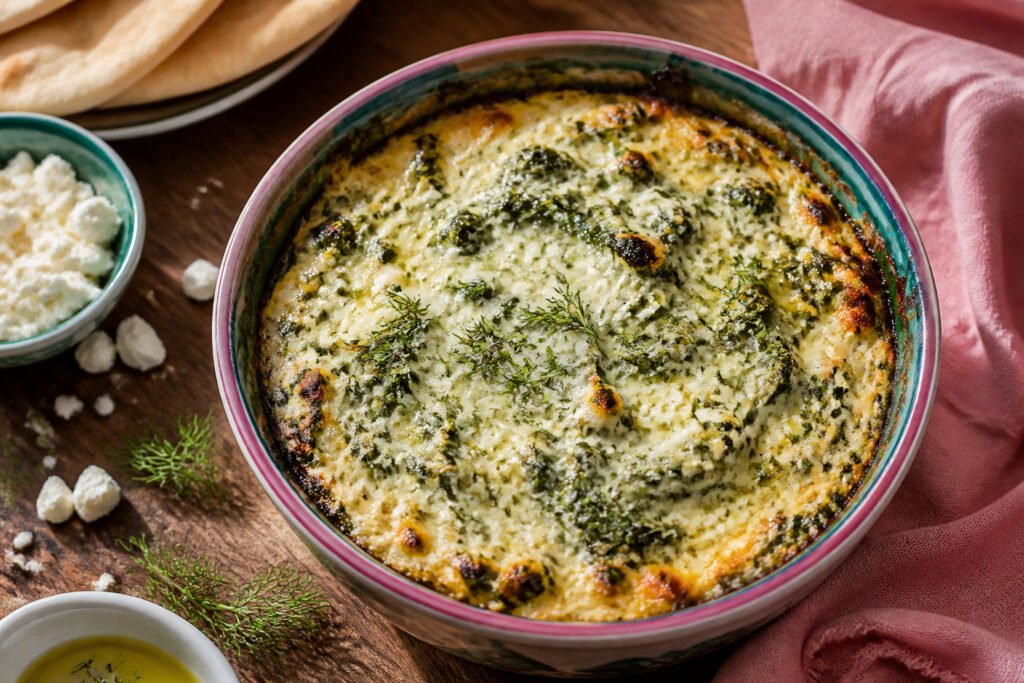
Spanakopita dip tastes like warm spinach pie you scoop with pita: salty feta, soft cream cheese, and dill baked until molten. This version gives you two ways to serve it, depending on whether you need the dip to hold its shape on a chip or stay loose for bread.
The difference is goat cheese. Leave it out and the dip sets firm enough for a party platter; stir in two ounces and it turns spreadable, better for a skillet brought straight to the table. Either way, the bake takes 20 to 30 minutes at 400°F, plus another 15 to cool before the first scoop.
What Spanakopita Dip Is
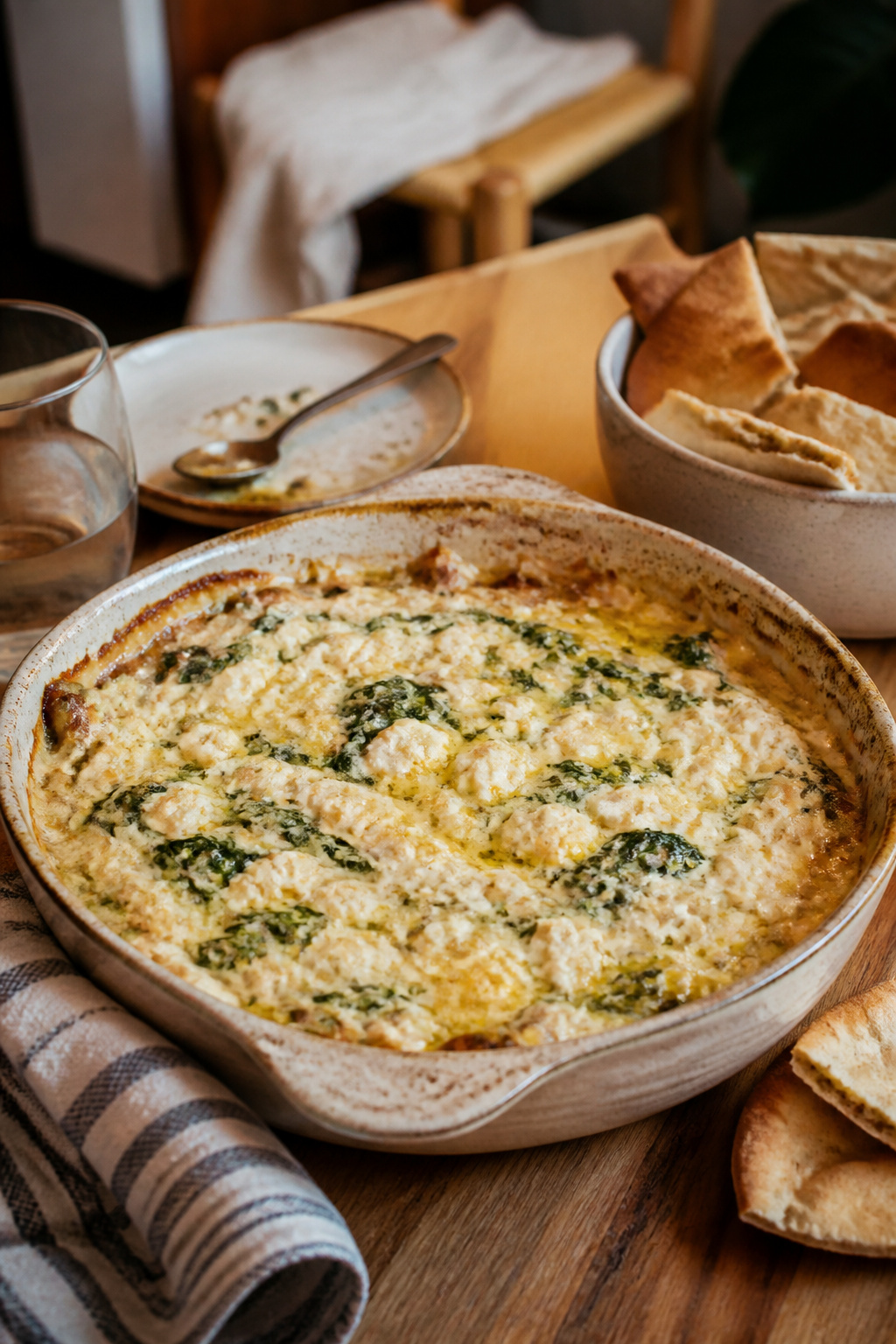
Spanakopita dip is a warm, creamy dip built from spinach and feta, the same pairing that anchors Greek spinach pie but loosened into something you scoop with pita rather than slice. The base needs cooked spinach, some combination of feta, cream cheese, and soft goat cheese, plus fresh dill and a light hand with black pepper and crushed red pepper flakes. A drizzle of olive oil goes into the baking dish before the mixture, and the whole thing bakes covered for 20 to 25 minutes until it turns gooey and molten inside.
The full timeline runs 20–30 minutes in the oven, then another 15–20 minutes cooling before the dip sets enough to serve without burning tongues or sliding off chips. Some versions lean heavier on cream cheese for a thick, spreadable texture; others let the goat cheese run sharper and looser. Both work, though the cream cheese base holds up better if you need something that can sit out during a party.
Ingredients

Fresh spinach and frozen spinach both work here, but they behave differently in the bowl. Frozen spinach is already wilted and blends in easily, though the texture can turn stringy. Fresh spinach needs a quick sauté first to cook off its water, and I find the flavor cleaner. Either way, squeeze it dry or the dip turns soupy.
- 1 pound spinach leaves, fresh or frozen (thawed if frozen, with all water pressed out)
- 2 tablespoons unsalted butter
- 3 garlic cloves, grated
- ¼ cup olive oil
- 8 ounces cream cheese, softened
- 8 ounces feta cheese, crumbled
- 6 ounces shredded mozzarella cheese
- ½ teaspoon lemon pepper seasoning (black pepper and a squeeze of lemon juice substitute fine)
- 1 tablespoon extra virgin olive oil
- 4 ounces crumbled feta cheese, for finishing
Optional additions: chopped dill, red pepper flakes, or a spoonful of mayonnaise for extra creaminess. The feta should be the briny, crumbly kind; a block works too if you break it up yourself.
Sauté the Vegetables
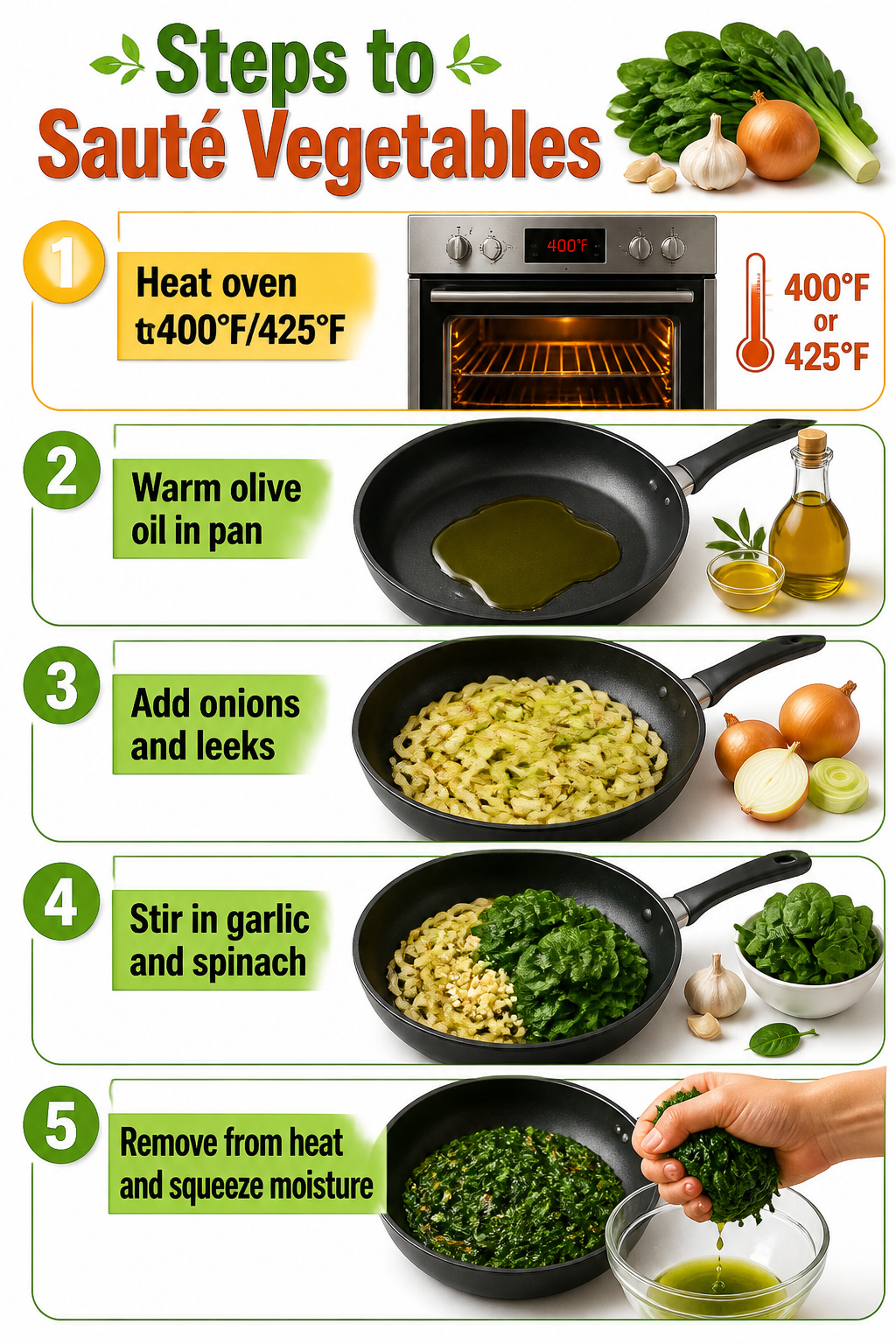
- Heat the oven to 400°F or 425°F before you start the vegetables; the skillet method needs a hot oven waiting.
- Warm olive oil in a large non-stick pan over medium heat. Add onions and leeks, cooking until soft and golden, about 2 to 8 minutes depending on how much color you want.
- Stir in garlic and let it warm through for a few seconds, then add spinach in batches, one heaping cup at a time. Each batch wilts and makes room for the next.
- Cook just until the spinach softens and releases its juices, then remove the pan from heat. Squeeze out every drop of moisture you can, especially with frozen spinach; a watery base will thin the cheese filling and the dip will never set properly.
Mix the Cheese Filling
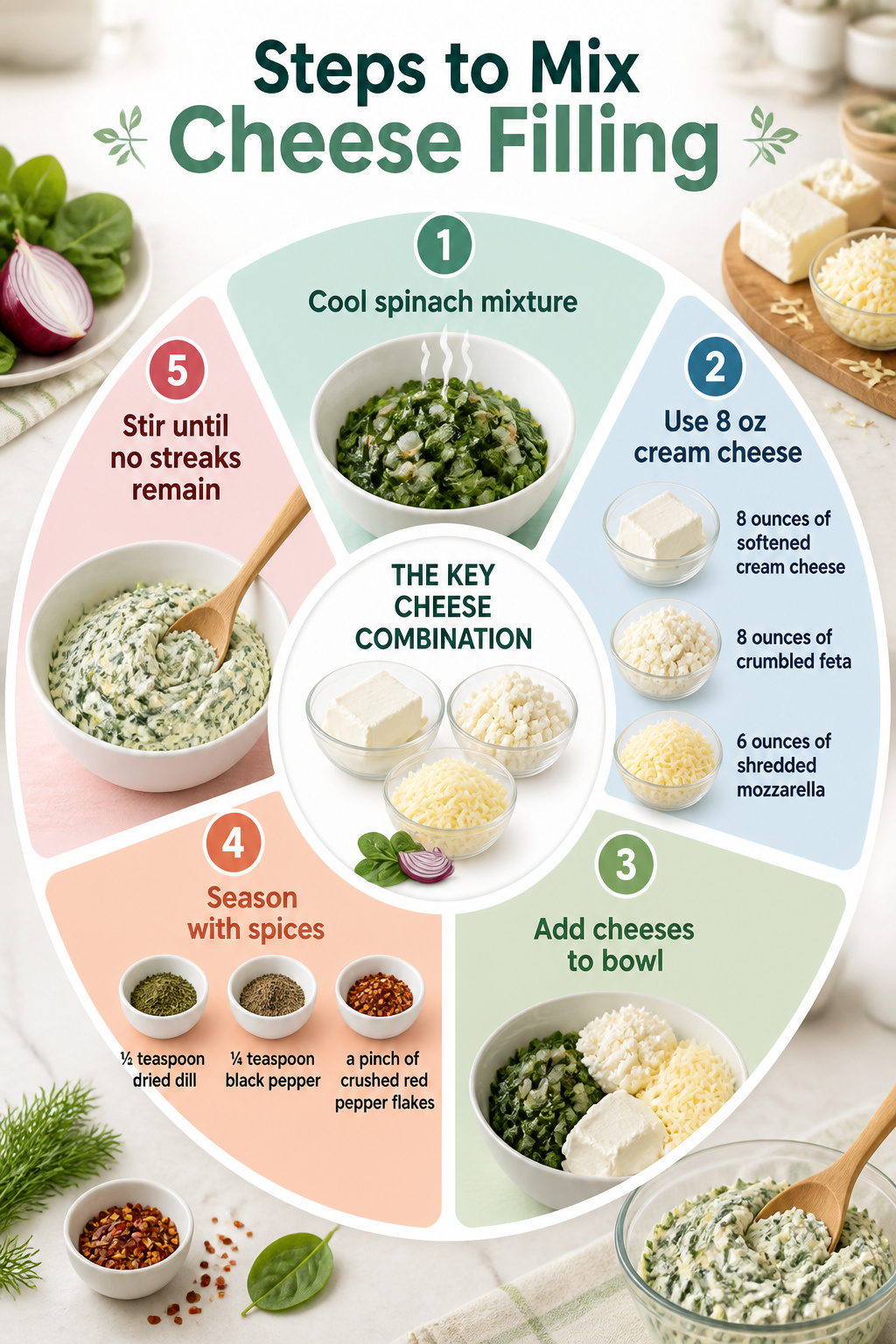
- Let the sautéed spinach and onion mixture cool for five minutes so it does not melt the cheeses on contact. A hot pan turns cream cheese into a greasy puddle instead of a creamy base.
- Use 8 ounces of softened cream cheese, 8 ounces of crumbled feta, and 6 ounces of shredded mozzarella. The cream cheese gives body, the feta brings salt and brine, and mozzarella stretches into those long, gooey pulls people reach for first.
- Add the cheeses to the bowl with the vegetables. If you want a lighter, more spreadable texture, work in 2 ounces of soft goat cheese or ricotta. I skip it when I want the dip to hold its shape on a chip, but add it when I am serving it as a warm spread with bread.
- Season with ½ teaspoon dried dill, ¼ teaspoon black pepper, and a pinch of crushed red pepper flakes. The dill is non-negotiable; without it, the dip tastes like generic spinach dip instead of spanakopita.
- Stir until no streaks of white remain. The mixture should look like thick, green-flecked frosting. If it seems stiff, a tablespoon of the olive oil left from the pan loosens it without thinning it out.
Bake and Cool
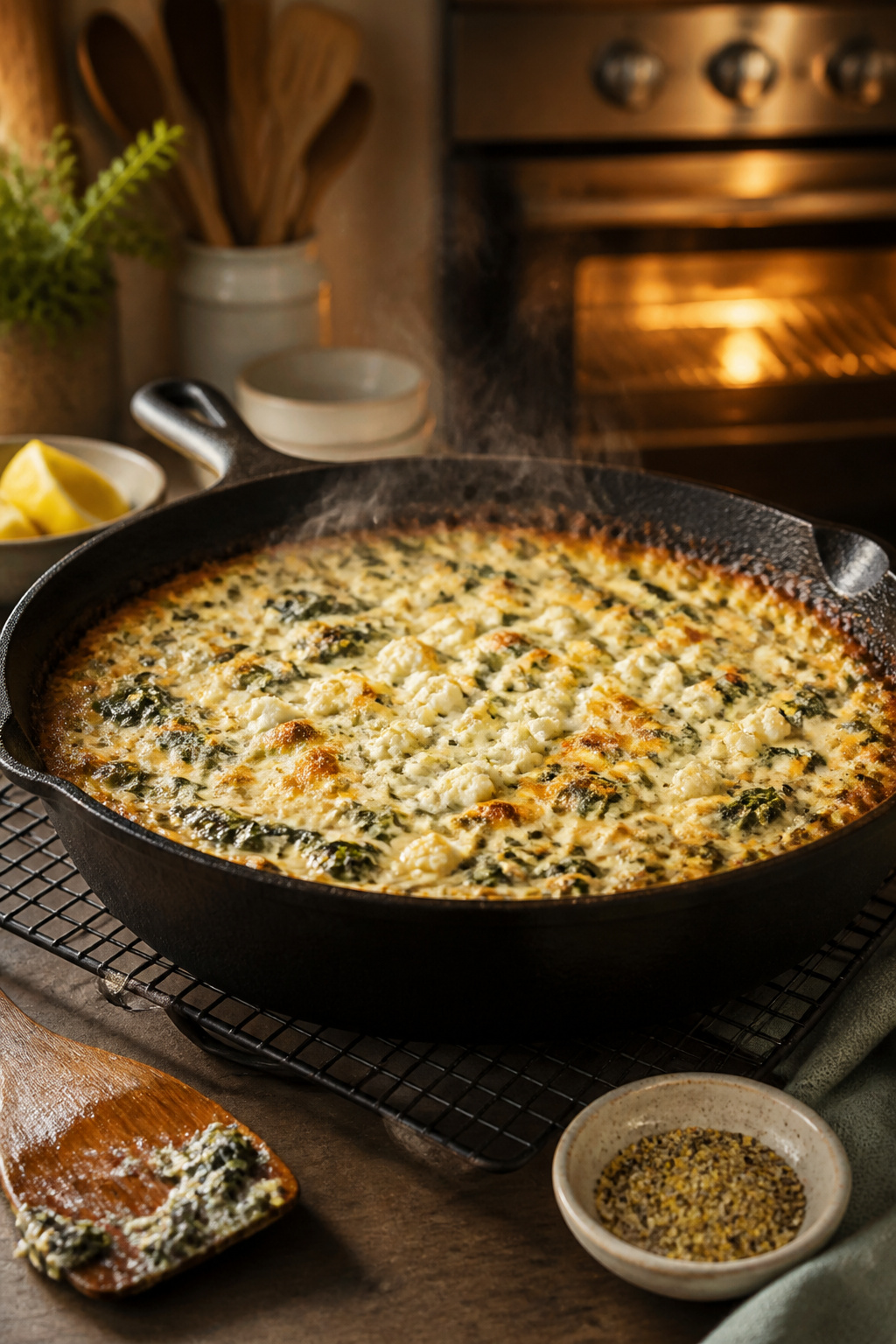
- Scrape the spinach and cheese mixture into whatever baking dish you have on hand. A 10-inch cast iron skillet works well, but a 9-inch pie plate or an 8-inch square dish does the job too. The dip spreads out more in a wider dish and stays thicker in a narrower one, which only changes how you scoop it.
- Scatter the rest of the feta across the top. Some of it will sink in and some will crisp, which is exactly what you want.
- Bake until the edges are bubbling and the top has turned that deep gold you see on good spanakopita, 20 to 30 minutes. Start checking at 20; ovens vary and this is the point where you can still rescue it from pale or push it to properly bronzed.
- Let it sit on a rack for 15 to 20 minutes before you serve it. The dip is molten straight from the oven, and the wait lets it set enough that your first bite is creamy rather than a scalded tongue.
Serving Suggestions

The skillet comes out with a golden, crackled top that looks built for scooping. Pita chips are the move here; their wide surface holds the dip without snapping, and the warm bread against the spinach and feta makes sense in a way a random cracker never quite does. That said, tortilla chips work, especially the sturdy, restaurant-style ones, and water crackers or seeded flatbreads do fine if that is what the pantry offers.
For something lighter, cucumber slices are the usual choice. They add crunch and cut the richness, though I would skip anything too watery like iceberg; it turns the dip soupy by the third pass.
A few recipes suggest baking the dip inside a hollowed bread bowl. It looks festive, and the torn bread edges become edible spoons. The tradeoff is timing: the bread insulates the center, so the dip takes longer to heat through and the bowl itself can go stale if it sits out past an hour. For a party where people graze for three hours, the skillet or a ceramic dish stays fresher.
Make Ahead and Storage
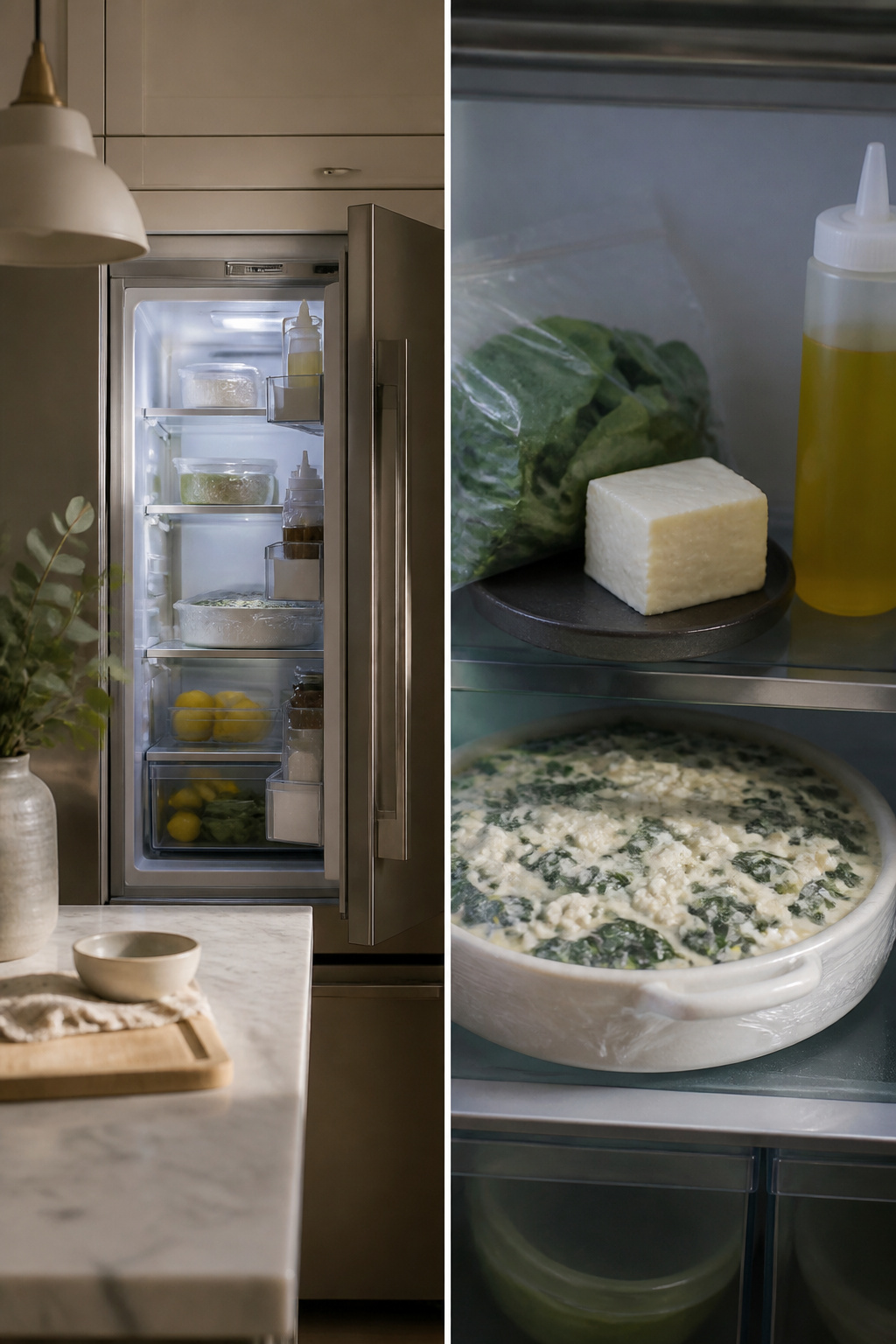
The dip can be assembled and stored in the refrigerator for up to a day before baking. Cover it tightly and keep it cold until you are ready to slide it into the oven. Starting from refrigerator temperature rather than room temperature, the baking time will need a few extra minutes to heat through to the center.
For longer storage, the assembled dip freezes well for up to three months. Wrap it tightly and thaw it overnight in the refrigerator before baking.
Once baked, leftover spanakopita dip keeps in the refrigerator for 2–4 days in an airtight container. Reheat it gently in the oven or a toaster oven if you want the top to stay crisp; the microwave works in a pinch but softens the texture. It also eats fine cold, straight from the container, which is how I finished the last of it more than once.
Ingredient Variations

The classic mix holds up on its own, but a few add-ins turn the dip into something you can claim as your own. ½ cup chopped marinated artichoke hearts fold in cleanly and keep the Greek profile intact. Bacon moves it in a different direction; use ½ cup cooked and crumbled if you want that smoke and salt cutting through the feta. Sun-dried tomatoes or roasted red peppers work at ¼ cup chopped, oil-packed, and add a tart, concentrated punch that stands out against the cream cheese.
Feta itself is worth swapping around. A block in brine, crumbled by hand, gives you more moisture and a creamier collapse than the pre-crumbled tubs. Bulgarian feta, tangier and a little softer than the standard Greek style, is what a few cooks reach for specifically; it melts into the dip differently and sharpens the whole thing. I tend to grab what’s at my regular grocery and adjust the salt downward if it’s already brined heavy, but the Bulgarian choice is the one I remember when I’m planning ahead.
Fresh Spinach vs. Frozen
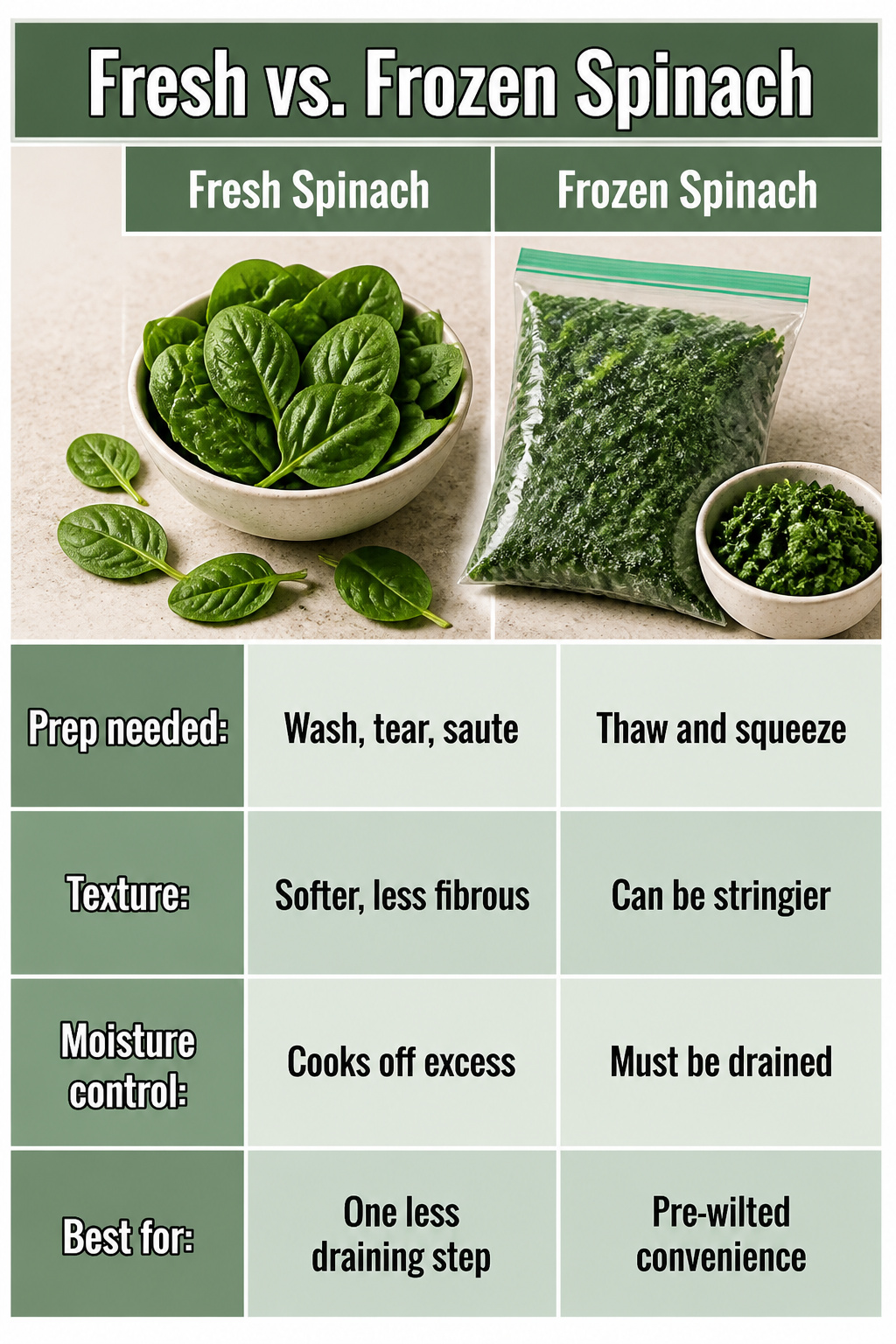
Fresh spinach wilts down to almost nothing, which is exactly why I reach for it here. A full pound of leaves cooks into roughly a cup of usable spinach, and that sauteing step drives off the moisture that would otherwise leave your dip watery. Frozen spinach skips the wilting but not the work: it has to be thawed and squeezed bone-dry or the dip turns loose and grainy. Some cooks find frozen stringier and less flavorful; others like that it is already collapsed and easy to fold in. The real difference is the pan time, not the result.
| Attribute | Fresh Spinach | Frozen Spinach |
|---|---|---|
| Prep needed | Wash, tear, saute in batches until wilted | Thaw completely, squeeze out all liquid |
| Texture | Tends to be softer, less fibrous | Can be stringier; some find it less flavorful |
| Moisture control | Cooks off excess in the pan | Must be manually drained; risk of watery dip if skipped |
| Best for | Cooks who want one less draining step | Cooks who want pre-wilted convenience |
I keep a bag of frozen as backup, but fresh wins on texture if you have the ten minutes at the stove. Either way, the non-negotiable is dry spinach going into the mix.
Cheese Choices
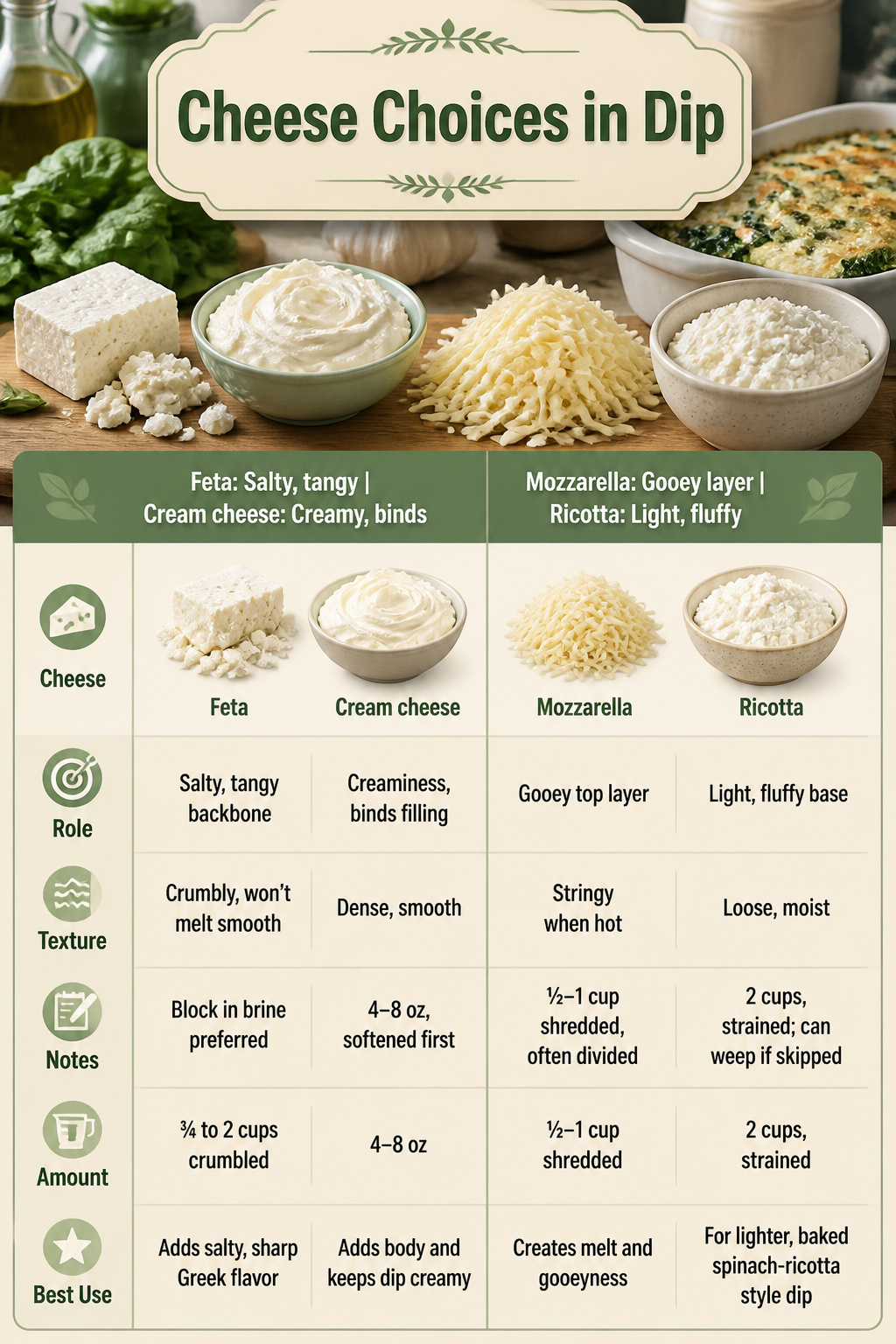
The cheese mix in spanakopita dip splits into two jobs: feta carries the salty, sharp punch that makes the dish taste Greek, while a melter handles the texture. Most recipes land on cream cheese for body, mozzarella for stretch, or both. Ricotta shows up as a lighter, fluffier base, though it can water out if not strained.
| Cheese | Role | Texture | Notes |
|---|---|---|---|
| Feta | Salty, tangy backbone | Crumbly, won’t melt smooth | Block in brine preferred; ¾ to 2 cups crumbled |
| Cream cheese | Creaminess, binds filling | Dense, smooth | 4–8 oz, softened first |
| Mozzarella | Gooey top layer | Stringy when hot | ½–1 cup shredded, often divided |
| Ricotta | Light, fluffy base | Loose, moist | 2 cups, strained; can weep if skipped |
I tried the all-feta route once and the dip seized up, grainy and too sharp. The cream cheese version spread better but sat heavy. What works is pairing: feta plus one melter, not feta alone. Cream cheese and mozzarella together cover both bases, which is why that combo keeps appearing. Ricotta is worth it only if you drain it well and want something closer to a baked spinach-ricotta spread than a party dip.
Baking Temperature and Time
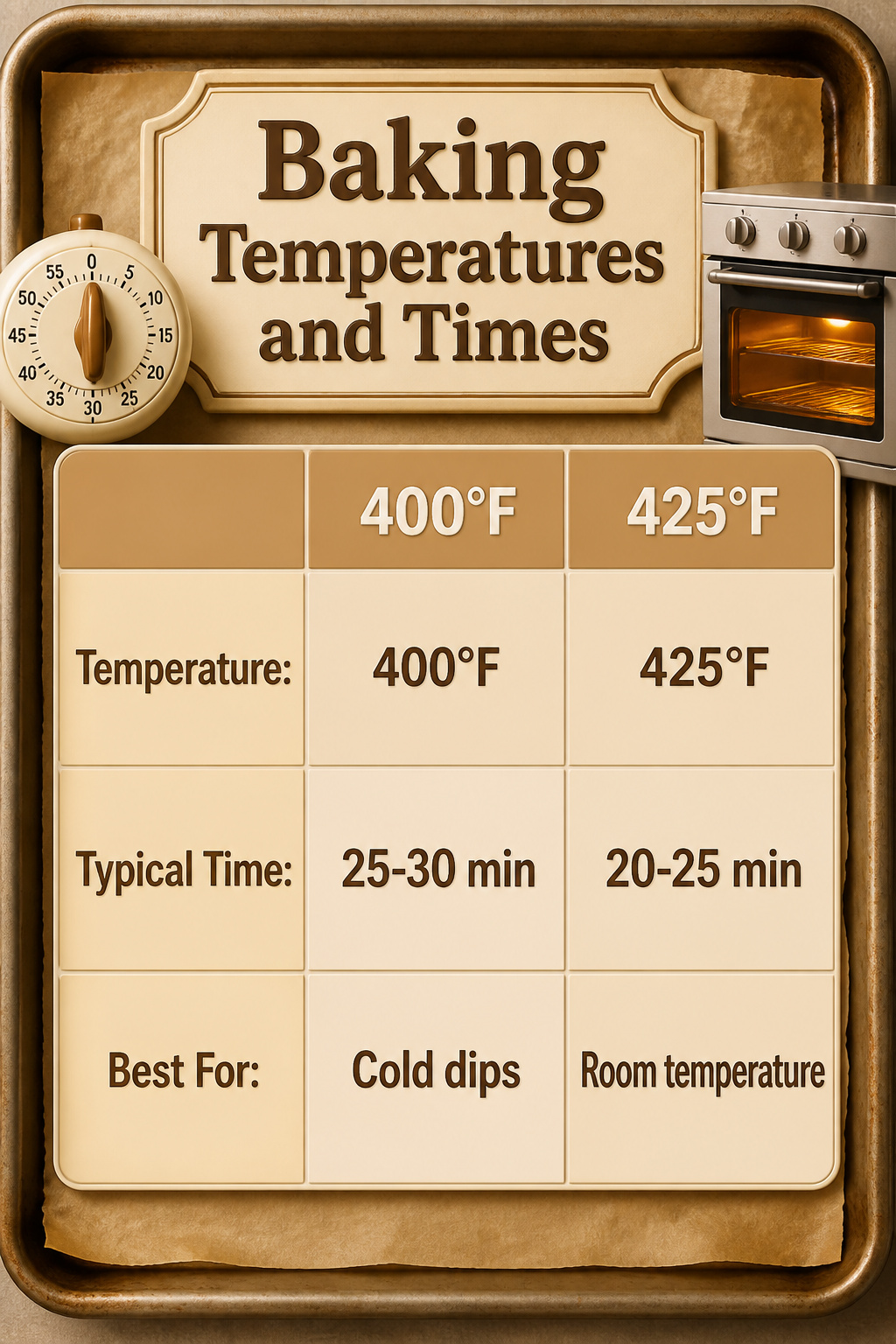
Most recipes land on 400°F or 425°F, with bake times stretching from 20 to 30 minutes depending on what your dish started at. A cold dip pulled straight from the refrigerator needs longer than one that sat on the counter, and a few sources add that extra time explicitly.
| Temperature | Typical Time | Best For |
|---|---|---|
| 400°F | 25–30 min | Cold or make-ahead dips |
| 425°F | 20–25 min | Room-temperature assembly |
The 25-minute mark at 400°F shows up for refrigerated make-ahead versions, while the shorter window at 425°F assumes you assembled fresh and let the dish warm slightly. Both work; the difference is whether you are compensating for cold cream cheese and chilled spinach or hitting the oven immediately.
Frequently Asked Questions
Can you make spanakopita dip ahead of time?
Yes, you can assemble it up to a day ahead and refrigerate it tightly covered. Starting from cold, add a few extra minutes to the bake so the center heats through. It also freezes well for up to three months; thaw overnight in the refrigerator before baking.
How long does spanakopita dip last in the fridge?
Leftovers keep for 2 to 4 days in an airtight container. Reheat gently in an oven or toaster oven if you want the top crisp, though it also eats fine cold straight from the container.
What can I serve with spanakopita dip?
Pita chips are the best match; their wide surface holds the dip without breaking. Tortilla chips, sturdy crackers, seeded flatbreads, and cucumber slices all work too. Avoid watery vegetables like iceberg lettuce, which will thin the dip as people scoop.