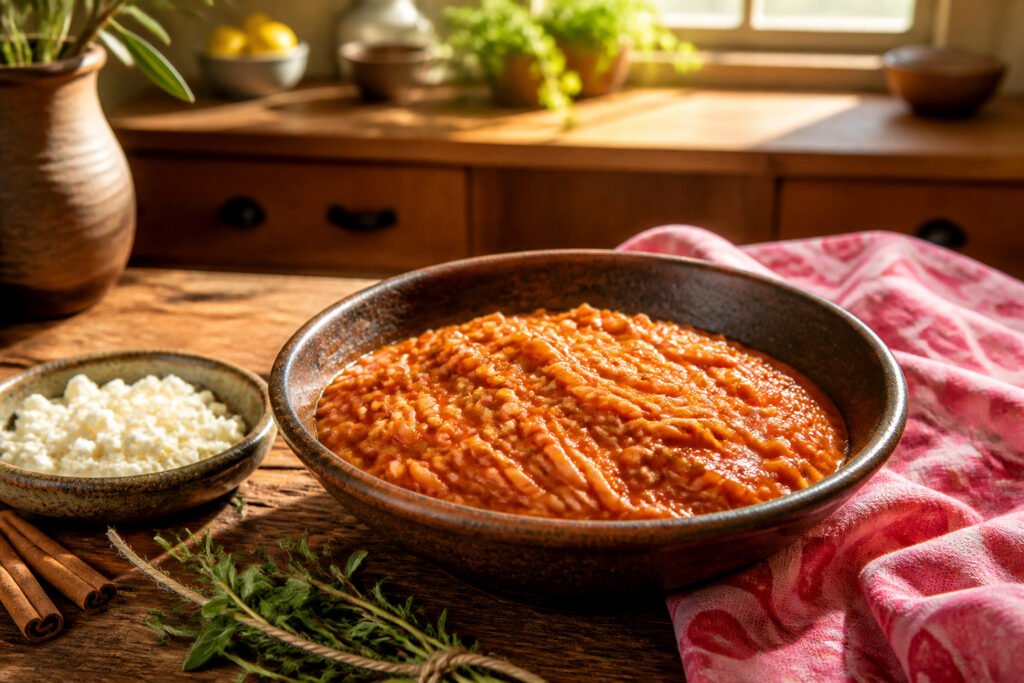
Manestra tastes like a loose risotto dressed in tomato sauce, silky and spoonable rather than souped, with cinnamon giving it a warmth you will not find in Italian orzo recipes. This version takes 30 to 40 minutes from chopping onion to bowl, and it works as a weeknight main or a mellow side depending on whether you crumble feta on top or stir in shredded chicken at the end. The one thing that trips people up: orzo’s starch grabs the pot the second you stop stirring, so the spoon stays in hand for the full simmer.
Seven tablespoons of olive oil goes into the pot before anything else, more than you would pour for a weeknight pasta, because the onion needs it.
What Manestra Is
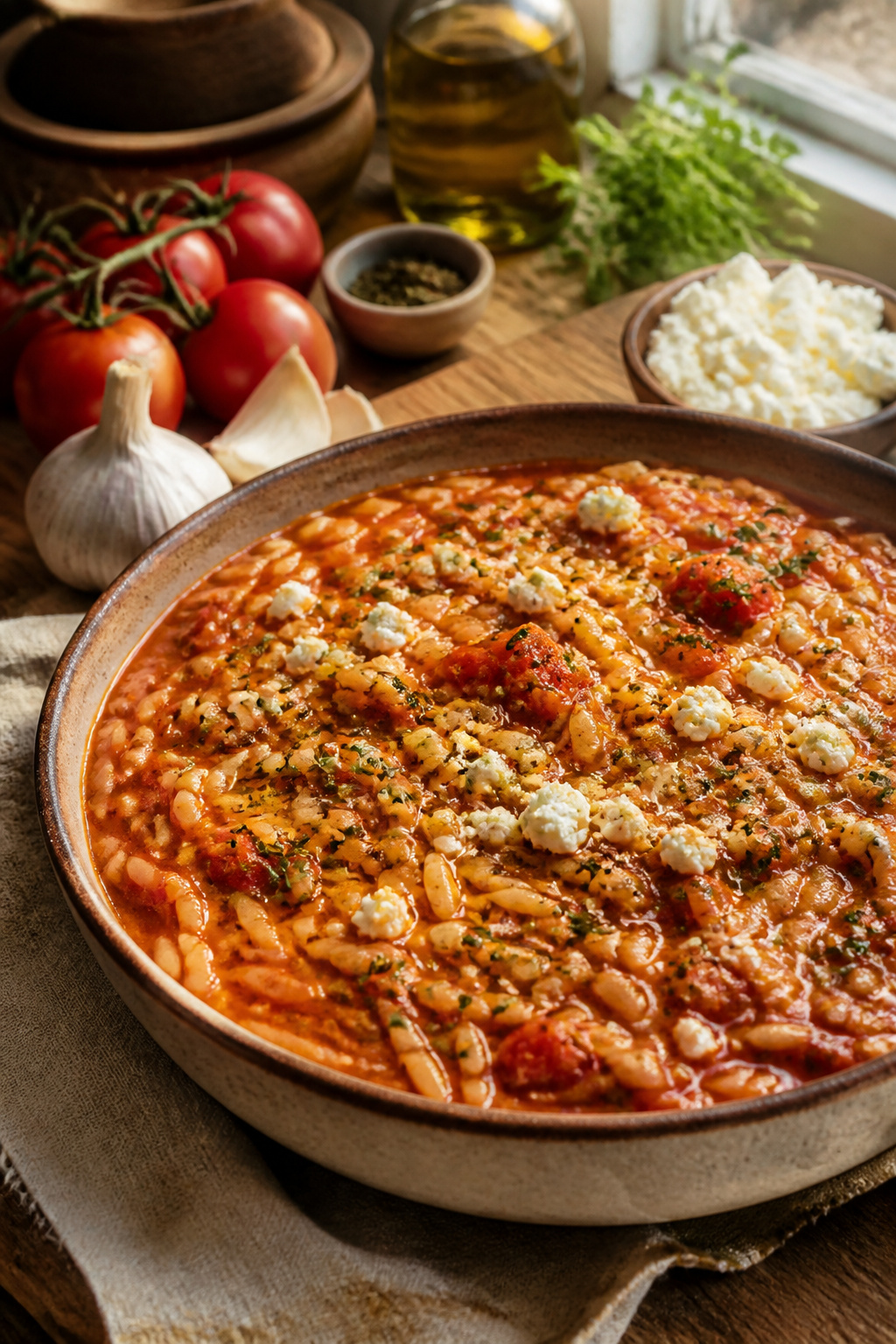
Manestra is orzo pasta simmered in a tomato-based sauce until thick and spoonable, landing somewhere between a loose risotto and a saucy stew rather than a soup. The Greek name, μανέστρα, refers both to the dish itself and to the orzo, a rice-shaped pasta called kritharaki that also shows up in baked casseroles like giouvetsi. What sets manestra apart is the stovetop method: the orzo cooks directly in the sauce, absorbing liquid and turning silky rather than getting boiled separately.
It serves as a quick weeknight main, often topped with crumbled feta, or as a mellow side alongside meat. The flavor is tomato-forward and lightly spiced, built from olive oil instead of butter, which keeps it rustic rather than fussy. In Greek home cooking, manestra carries the weight of comfort food and family memory. The meatless version remains the everyday standard now, though some households still make a heartier version with ground meat, a practice that dates back to the 1950s as a budget stretcher for feeding a family.
Olive Oil and Aromatics

Seven tablespoons of olive oil goes into a medium pot over medium heat. That’s more than you might pour for a weeknight pasta, but the onion needs it. I let the chopped onion soften for three to ten minutes depending on how patient I am that evening; the sources I trust split the difference at five to seven, and I’ve landed there too when I’m not rushing. The onion is the first layer of flavor, backed by every version of this dish I could find.
Garlic follows, but only for 30 seconds to a full minute. Push past that and it turns bitter and sharp, which is the quickest way to make a pot of manestra taste like a mistake. The garlic comes in second as a flavor foundation, and it needs the heat to wake it up without burning it down. Stir constantly, watch it closely, then move straight to the next step before it has time to turn on you.
Tomato Base
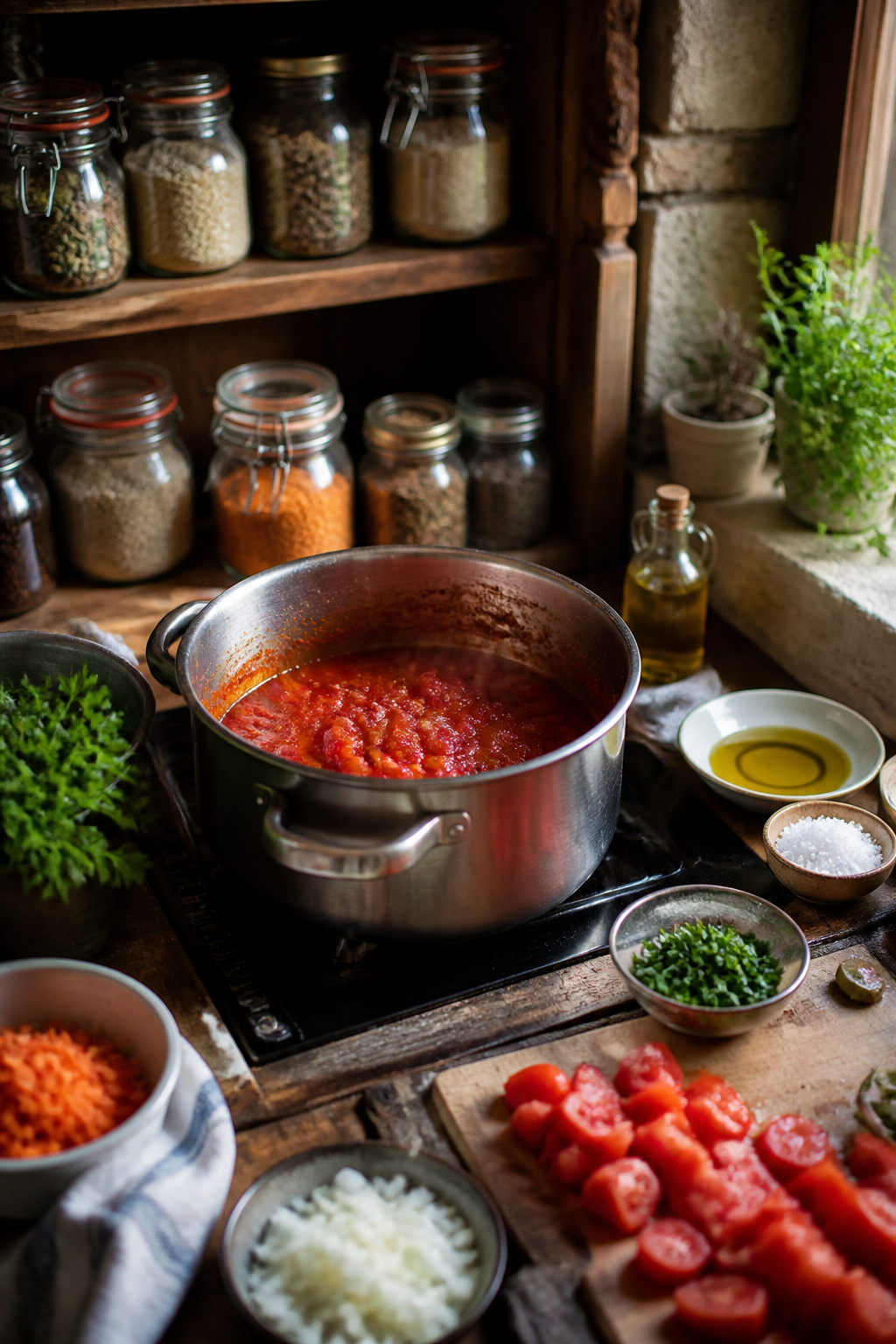
Tomato paste is where the sauce finds its depth. I have seen recipes call for as little as 1 tablespoon and others go up to 6 ounces, and both work, though they give you different results. The larger amount browns onto the meat or aromatics and turns almost nutty, which is the backbone of a richer manestra. Fresh tomatoes, or a mix, lean brighter: 10 cherry tomatoes halved, or a few super-ripe ones grated into the pot, give you something closer to what you would eat in late August when they are actually in season. The sources split on this, and so do I depending on the night. If I have paste on hand, I fry it for two to five minutes until it darkens and sticks slightly to the bottom of the pot before adding liquid. Fresh tomatoes need less time, just enough to soften and release their juice. Either way, this is the moment the sauce commits to a direction, and the rest of the dish follows.
Orzo and Liquid

Orzo comes in three sizes: small, medium, and large, though most recipes for manestra call for medium or large. I use medium most often because it holds its shape through the simmering without turning to mush. One to one and a half cups of orzo is the usual amount for a pot that feeds four to six people.
Dump the orzo into the pot once your tomato base is ready, and stir constantly for a minute or two so every grain gets coated. That thin film of oil and tomato keeps the starch from clumping early.
Liquid goes in gradually, four to six cups of water or broth total. Some cooks pour in three cups at once and top up later; others add ladle by ladle the whole way, risotto-style. The gradual method gives more control over the final texture, but both work if you stay at the pot. Stir often, scraping the bottom, because orzo’s starch will grab and stick the second you look away.
Simmer time ranges widely, anywhere from 10 to 30 minutes depending on your orzo size and how hard the liquid is bubbling. Start testing at 10 minutes for small orzo, closer to 15 for medium, and pull the pot when the grains still have a slight bite. The sauce thickens as it sits, so stopping just shy of fully tender leaves you room for the final rest.
Seasonings

Dried oregano and cinnamon are what separate manestra from any other tomato-orzo dish. One teaspoon of dried oregano and a quarter teaspoon of ground cinnamon give the pot its characteristic Greek sweetness and depth. I used to skip the cinnamon until I noticed how many home cooks insisted on it; now I treat it as non-negotiable. The warm spice against the acidic tomato is the pairing that makes this taste like Willow Glen on a Thursday night, not generic pasta.
Some recipes build a fuller base with carrots and celery cut into coins and small dice, softened in the oil before the tomato goes in. That route adds sweetness, bulk, and a little nutrition without changing the dish’s identity. I keep it optional because the core flavor is already there with just onion, oregano, and cinnamon, but on nights when the vegetable drawer needs clearing, two medium carrots and a couple celery stalks do the work without complicating the timeline.
Finishing and Serving
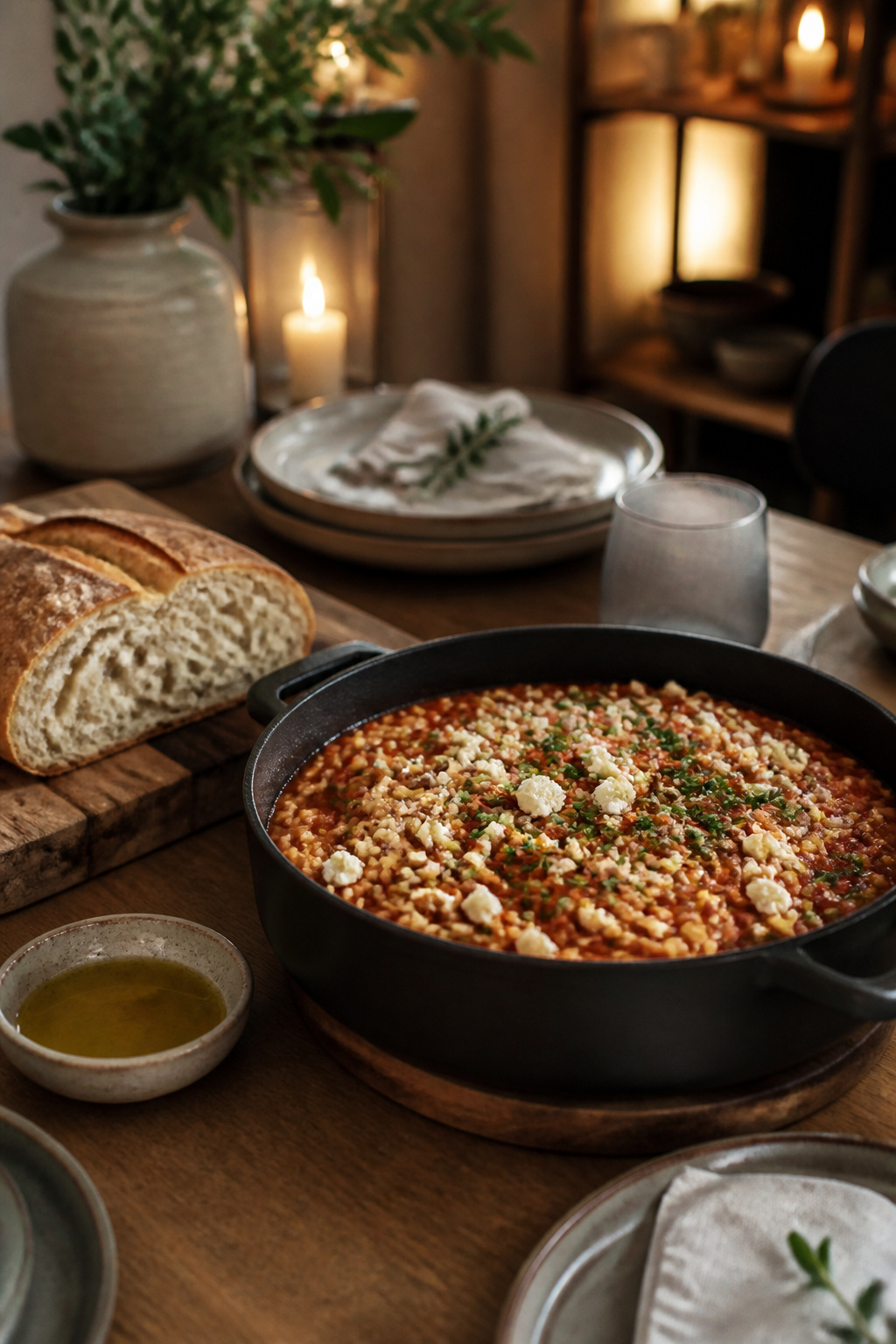
A warm bowl of manestra is already a full meal, but the right finishing touches turn it into something worth setting the table for. Grated kefalotyri or a crumble of feta melts into the hot orzo and adds the salty sharpness the tomato base wants. If those cheeses are not in the fridge, mizithra or even parmesan will do the work, though the flavor shifts slightly. Fresh herbs, whatever is on hand, should go on last so the heat does not flatten them.
Most recipes yield 4 to 6 servings, with calories landing somewhere between 445 and 672 per bowl depending on how much olive oil went into the pot and whether cheese gets piled on top. For a complete plate, crusty bread is the obvious companion, something sturdy enough to push through the sauce. A small bowl of olives and a Greek salad round out the meal without adding much work; the cold crunch against the soft orzo makes both taste better. On nights when the pot needs to stretch further, a slice of bread and a drizzle of good oil over each bowl will quiet any second-helping guilt.
Variations
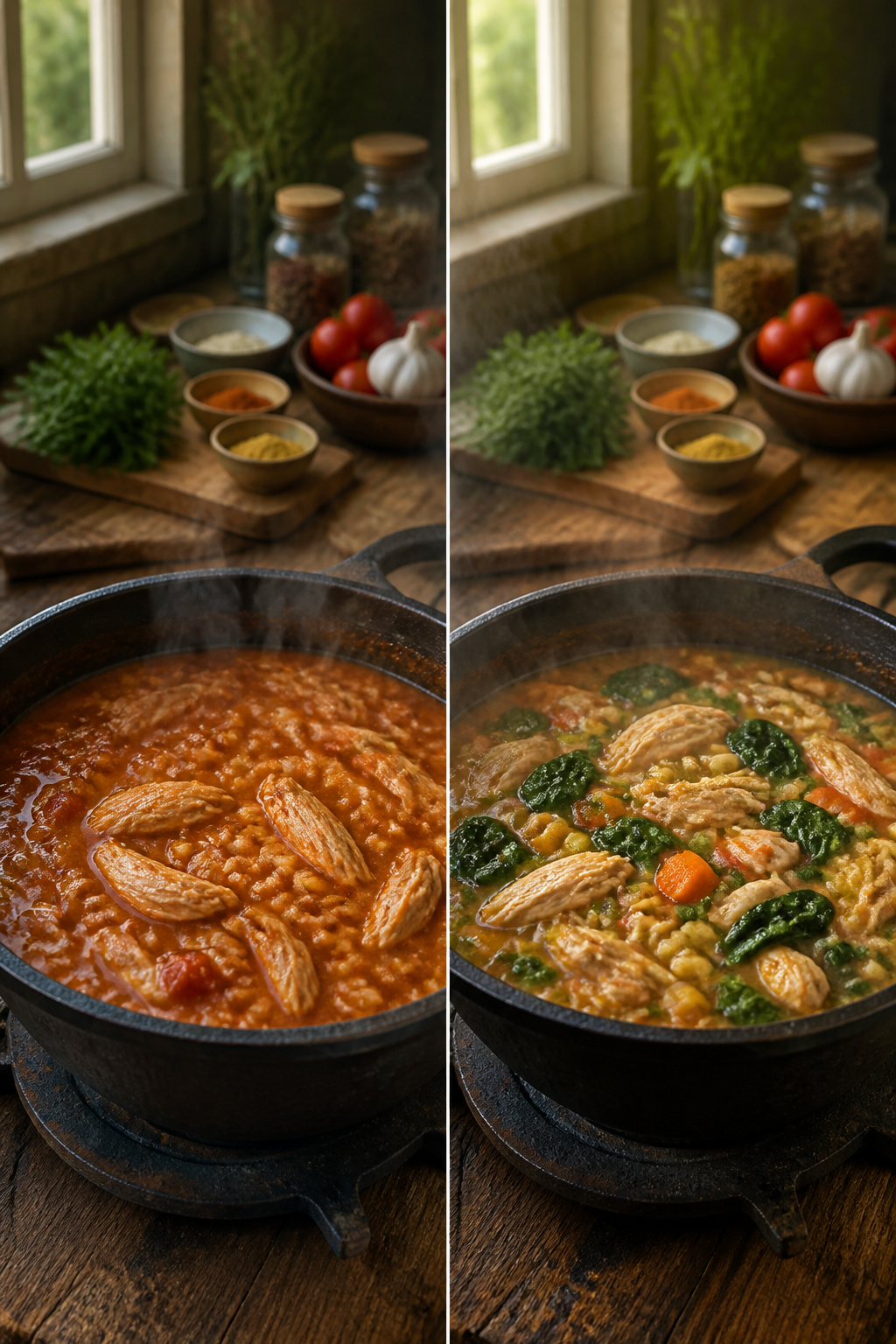
Chicken turns manestra from a side into dinner without much trouble. Shredded rotisserie chicken or seared thighs go in during the last five minutes of simmering, just long enough to warm through. Lamb works too, though any meat needs browning first if you want that crust. The vegetarian version stays closer to what you’d find across Greece at its simplest: just orzo and tomato sauce, no protein needed.
The texture question matters more than the protein choice. Extra water or tomatoes at the end pushes the dish toward a loose, almost soupy stew, while the standard simmer gives you something closer to risotto-like and silky. The orzo’s starch keeps thickening as it sits, so yesterday’s leftovers need a splash of water to loosen back up. Sources split on whether this belongs as a main or a side; the answer depends on whether you added meat and how much liquid you let the pasta drink down.
Cooking Tips
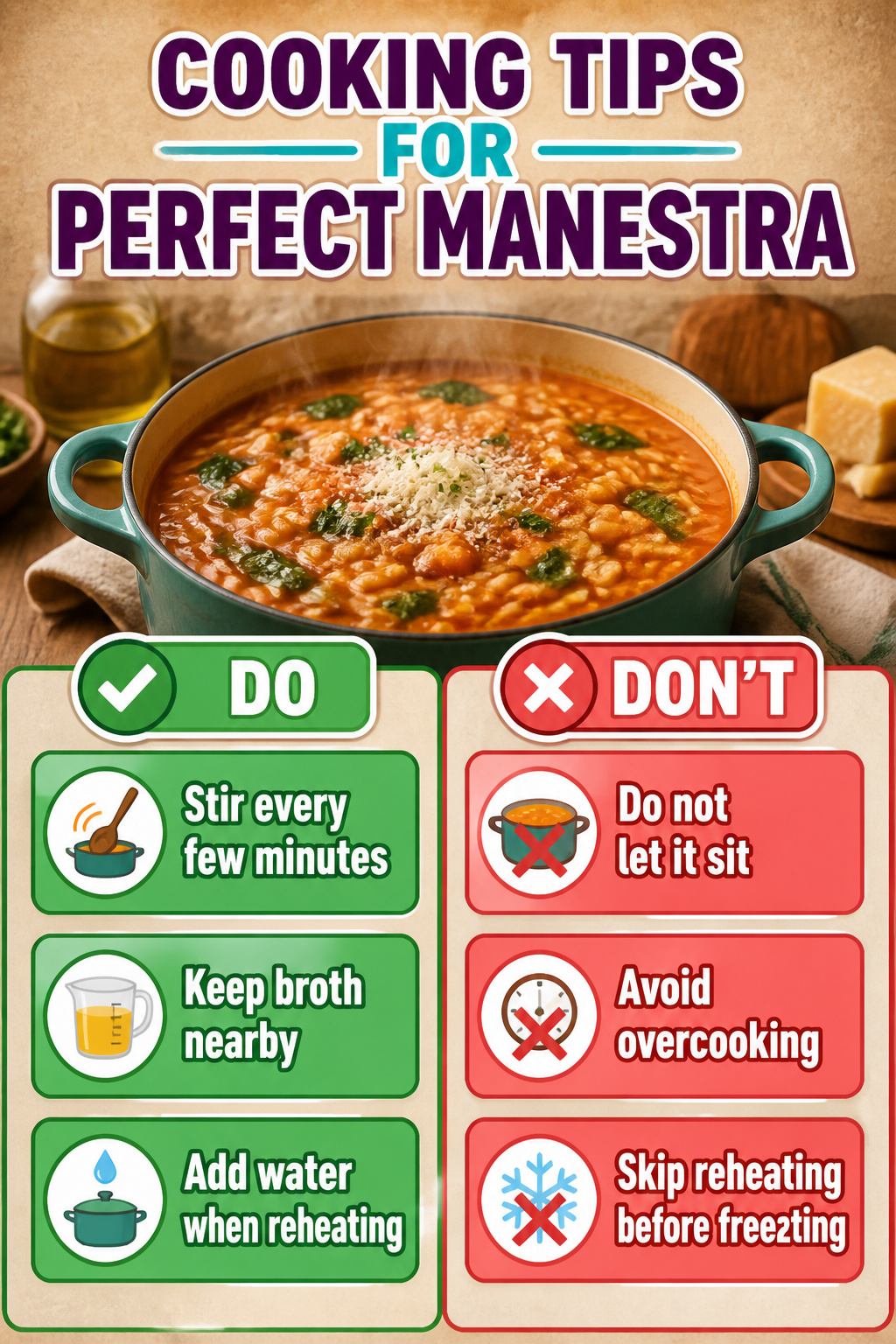
Orzo needs attention once the liquid goes in. Stir every few minutes, especially in the first ten, and scrape the spoon flat across the bottom of the pot. The starch releases quickly and will glue the pasta to the surface if you let it sit.
The liquid level is a judgment call. Start with what the recipe calls for, but keep a cup of hot water or broth nearby. If the orzo looks dry before it is tender, add two tablespoons at a time. You want the finished dish loose enough to pool slightly on the plate; it tightens as it sits.
Leftovers keep for about three days refrigerated. The manestra will thicken overnight, so reheat it in a small pot with a splash of water or broth to loosen it back to a sauce. The same thickening happens in the freezer, and the same fix applies: add broth when reheating, not before you freeze it.
Nutrition and Budget
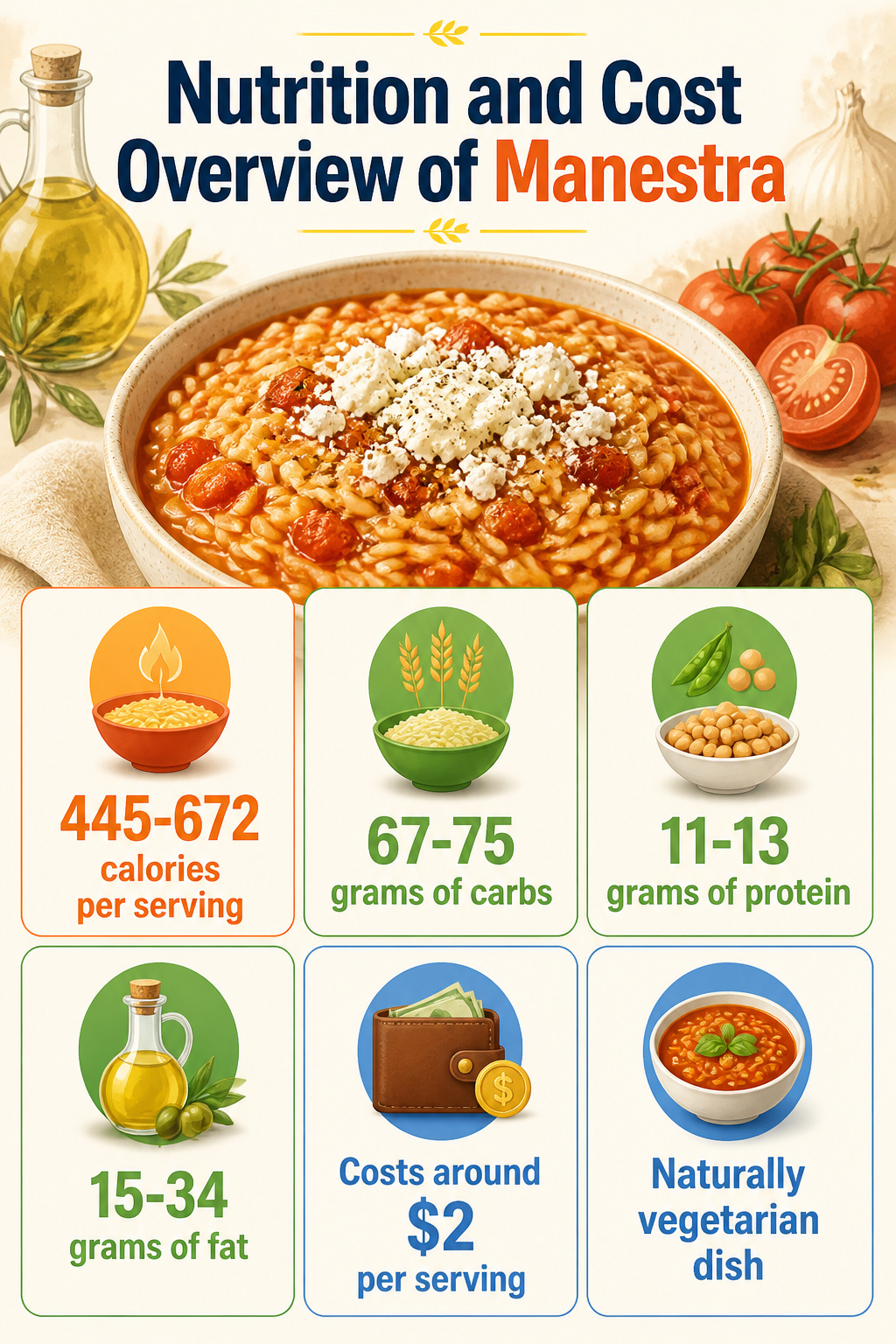
A serving of manestra lands somewhere between 445 and 672 calories, depending on how much olive oil and cheese you finish it with. The lighter version runs about 67 grams of carbohydrates, 11 grams of protein, and 15 grams of fat, while a richer plate can hit 75 grams of carbs, 13 grams of protein, and 34 grams of fat. What stays consistent across both is the fiber, around 5 to 6 grams, and the modest sugar, usually under 10 grams.
The real draw for weeknight cooking is the cost. Dried orzo, canned tomatoes, and onion make up the body of the dish, with olive oil and maybe a little cheese as the only items that nudge the price up. It is naturally vegetarian, and the meat-based versions do not carry any separate nutritional breakdown in the sources I found, so the calorie range above reflects the classic preparation. If you add lamb or chicken, the protein and fat climb in ways you would expect, but the pantry core stays cheap either way.
Ingredient Sourcing
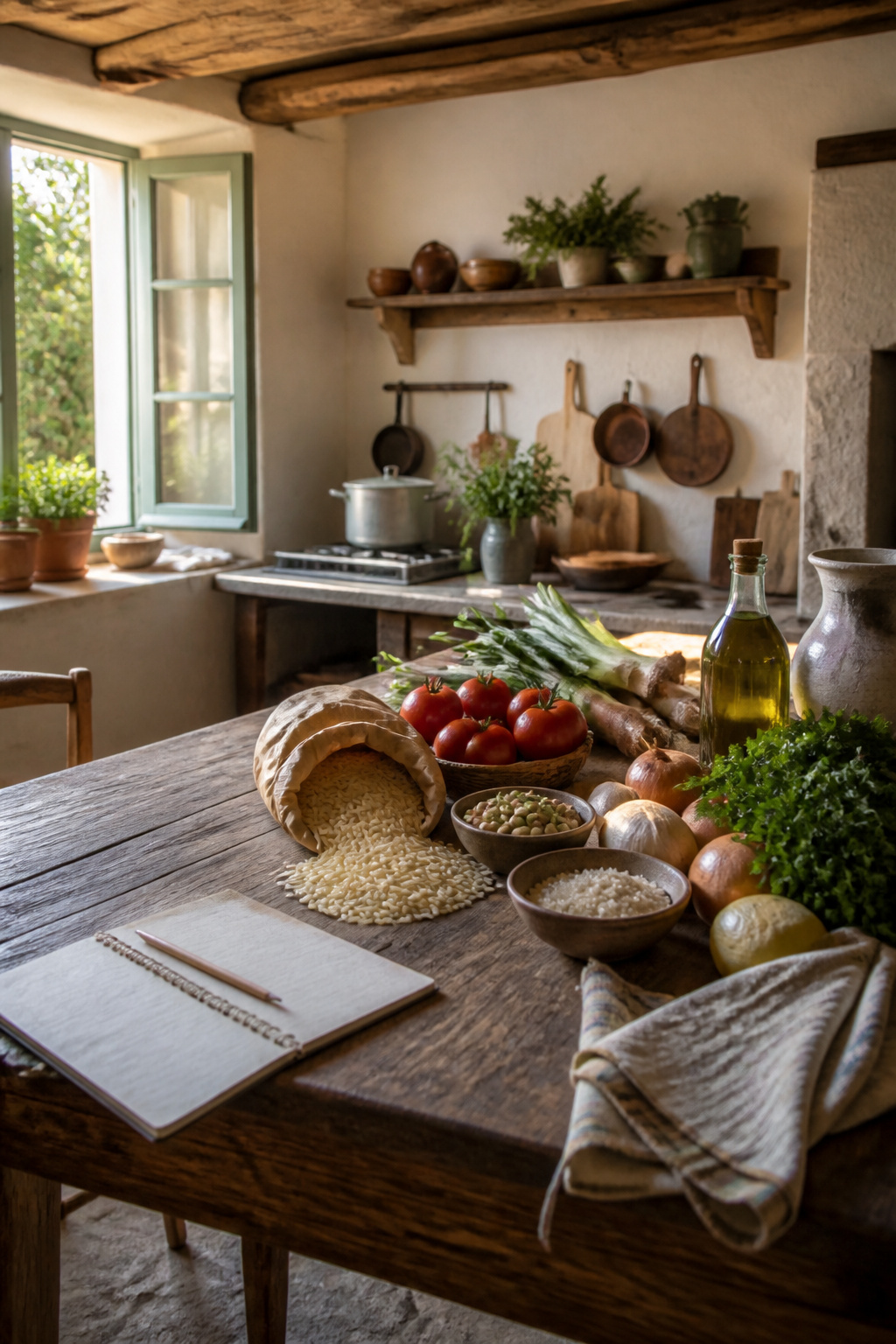
Greek olive oil and orzo both sit on regular grocery shelves now, which was not the case even ten years ago. For the oil, look past the Italian bottles to the bottom shelf or the "international" aisle; the Greek stuff tends to be priced a dollar or two lower and carries a fruitier bite that survives simmering. Koroneiki varietal is the one to watch for on the label, though any cold-pressed Greek oil works if the harvest date is within eighteen months.
Orzo shows up in the pasta section, usually near the couscous. Most stores stock one national brand in a blue box; it is fine. The Greek markets in larger cities carry Misko or Helios, which toast a little more evenly and hold their bite longer in the sauce. Either way, buy the full 16-ounce bag. Manestra uses more than you expect, and the leftover orzo keeps for months.
Frequently Asked Questions
What is manestra?
Manestra is orzo pasta simmered in a tomato-based sauce until thick and spoonable, sitting somewhere between a loose risotto and a saucy stew. The Greek name refers both to the dish and to the orzo itself, which is also called kritharaki. What distinguishes it from baked casseroles like giouvetsi is the stovetop method: the orzo cooks directly in the sauce, absorbing liquid and turning silky rather than getting boiled separately.
How do you make manestra?
Start by softening chopped onion in seven tablespoons of olive oil over medium heat, then add garlic for only 30 seconds to a minute so it does not burn. Build the tomato base with paste or fresh tomatoes, stir in one to one and a half cups of orzo to coat every grain, then add four to six cups of water or broth gradually while simmering. Season with one teaspoon dried oregano and a quarter teaspoon ground cinnamon, then finish with grated kefalotyri or crumbled feta.
Can you freeze manestra?
Yes, though the orzo will keep absorbing liquid and thicken in the freezer. Add broth when reheating rather than before freezing, since the same fix works for both overnight refrigeration and longer storage. Leftovers keep about three days refrigerated and follow the same loosening rule.
What can I serve with manestra?
Crusty bread is the obvious companion, something sturdy enough to push through the sauce. A small bowl of olives and a Greek salad round out the meal without adding much work; the cold crunch against the soft orzo makes both taste better. On nights when the pot needs to stretch, a slice of bread and a drizzle of good oil over each bowl will quiet any second-helping guilt.