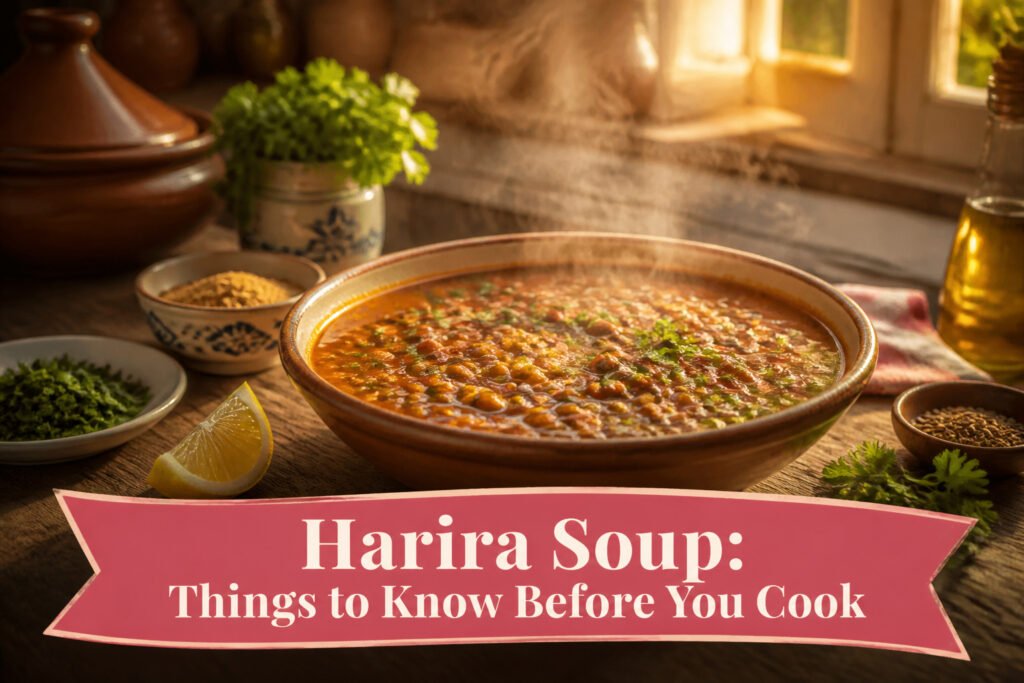
Harira soup lands somewhere between a brothy starter and a full meal, depending on how much thickener you stir in at the end. This version takes about an hour and a half from prep to bowl, and the single move that separates a thin pot from one that holds a spoon upright is when you add the flour slurry: too early and it gums the lentils, too late and the raw taste never cooks out. I build the base with two cans of crushed tomatoes and seven cups of stock, then thicken only after the brown lentils have turned tender, about twenty minutes in.
What Harira Is and When to Make It
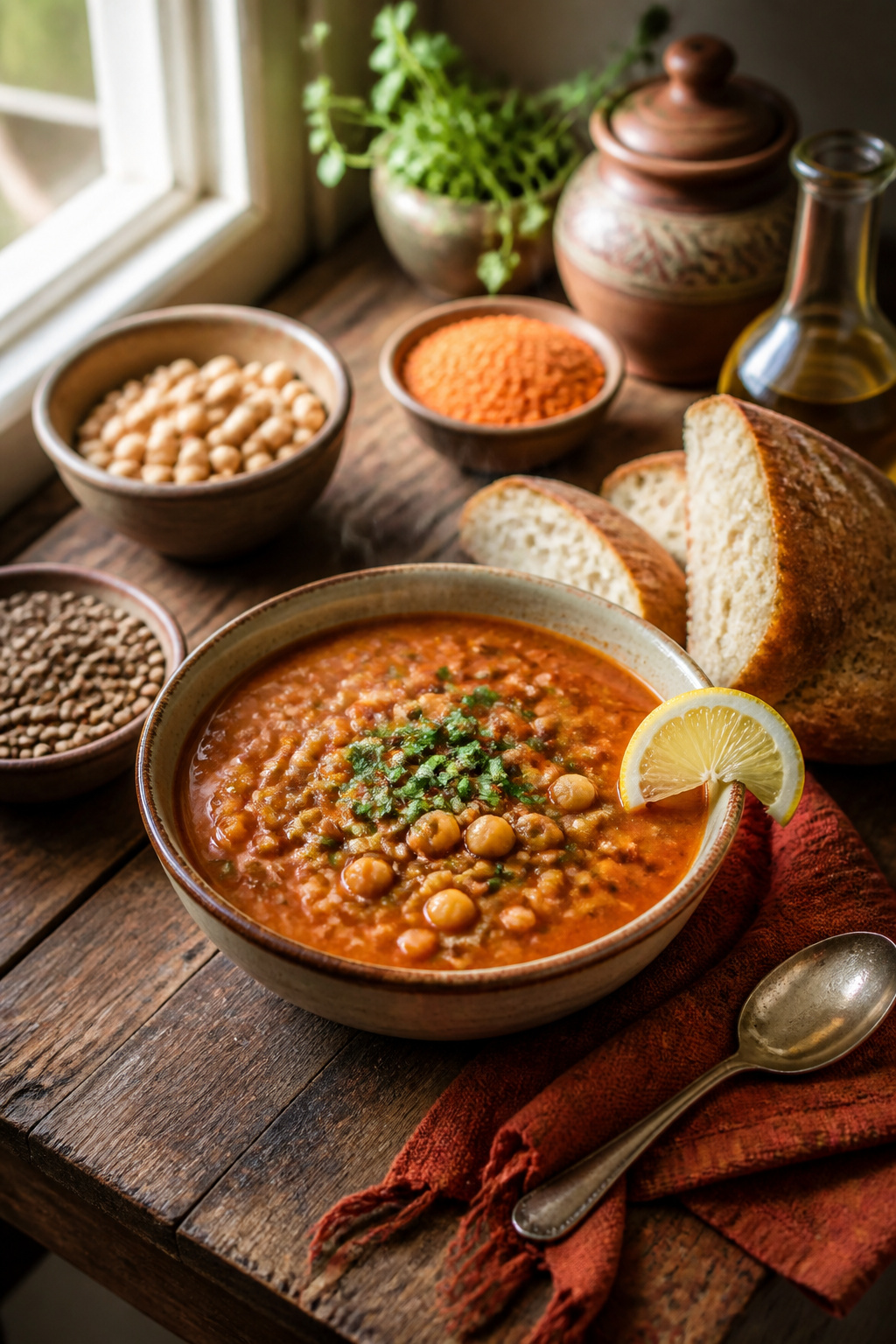
Harira is a traditional Moroccan soup built on chickpeas, lentils, tomatoes, and warm spices like turmeric, cumin, and cinnamon. The name comes from the Arabic word for silk, which describes the texture you get after thickening it with broken vermicelli, rice, or a flour-and-water mixture called tedouira. In Morocco it appears year-round in homes, restaurants, and street carts, but Ramadan is when it becomes essential, served to break the fast alongside dates, bread, or pastries like chebakia.
For a weeknight cook in the US, the appeal is practical: dried legumes and canned tomatoes keep it pantry-friendly, everything happens in one pot, and the result is substantial enough to stand alone. The flavoring is flexible. Some versions add beef, lamb, or chicken to the stock; others stay vegetarian. Fresh herbs, ginger, and pepper give it backbone, and a squeeze of lemon at the table brightens the whole bowl. A big batch freezes well if you hold off on adding rice or pasta until reheating, since those break down in the freezer.
Prep Ingredients

Soaking dried chickpeas overnight is the move if you want them to hold their shape through a long simmer, though a 15.5-ounce can, drained and rinsed, will get you to the stove in twenty minutes. Either way, you are looking at 1 cup dried or 1 can as your starting point. The mirepoix builds from there: 1 large yellow onion, 2 stalks of celery, and 1 carrot, all peeled where needed and chopped fine enough to melt into the broth. Garlic and ginger come in at 2½ tablespoons and 2 tablespoons respectively, minced fine so they disappear into the base rather than landing as a bite. For the herbs, set aside ⅓ cup of parsley and ½ cup of cilantro, leaves and tender stems, washed and drained thoroughly before chopping; wet herbs steam instead of sautéing, and that is a mistake you only make once.
Saute Aromatics
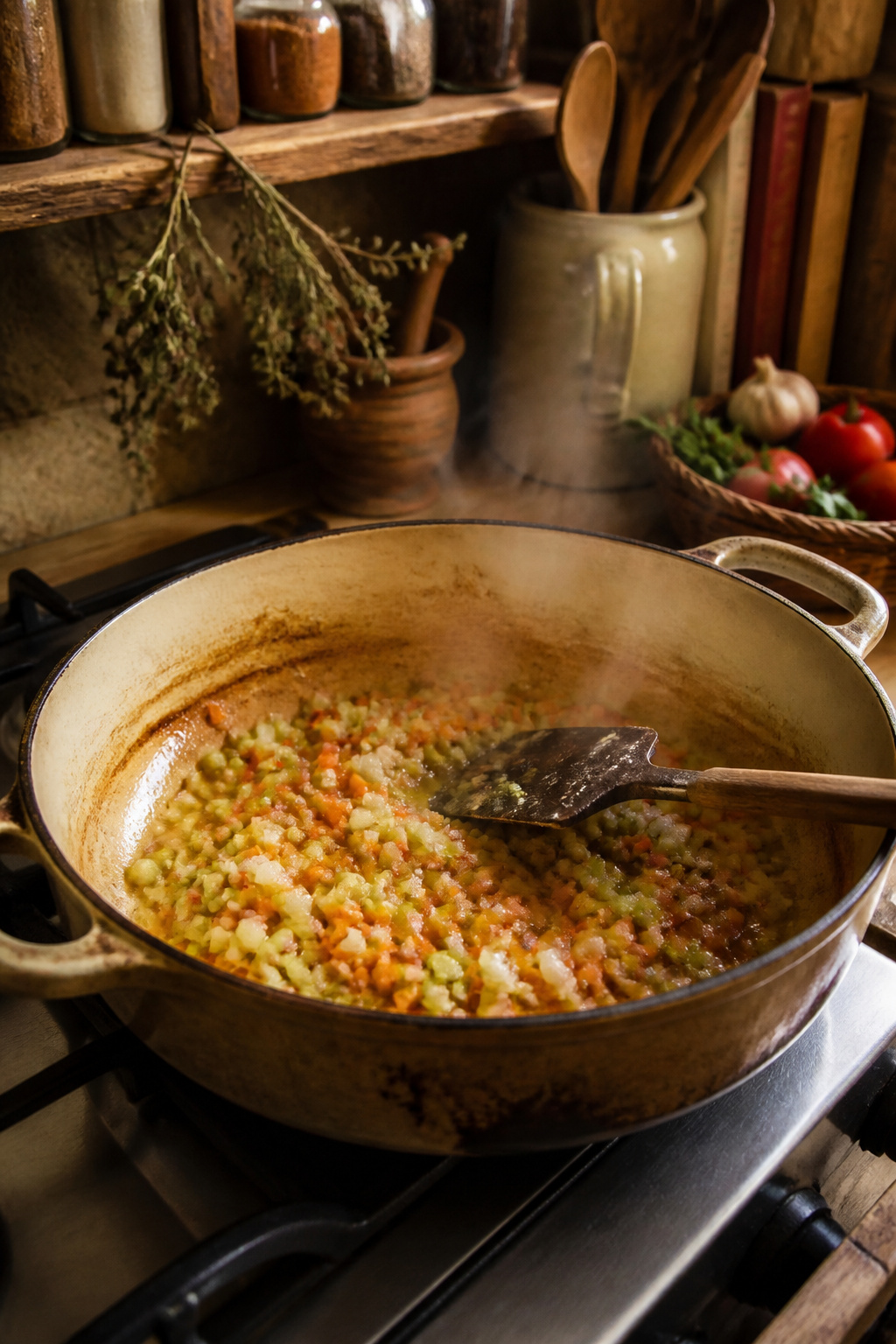
Two tablespoons of olive oil in a heavy pot or Dutch oven over medium heat is the starting point that most harira recipes share. The oil should shimmer before anything goes in, which tells you the surface is hot enough to actually cook rather than steam the vegetables.
Onion, celery, and carrots go in together, and the timing here matters more than the color. Five to ten minutes of stirring will soften them and draw out the sweetness that carries the soup once the spices hit. Some cooks push for slight browning; others keep the heat at medium-low and stop before any color develops. The softer, paler route gives you a cleaner base, but a little caramelization adds depth if you have the extra few minutes and don’t mind the darker finish.
The pot you choose shapes this step more than you’d expect. A Dutch oven holds heat evenly and buys you forgiveness if the phone rings mid-stir. A thinner saucepan needs closer watching. Either way, the vegetables need to be genuinely tender before the garlic and spices follow, or you’ll taste raw onion in every spoonful of the finished bowl.
Add Spices
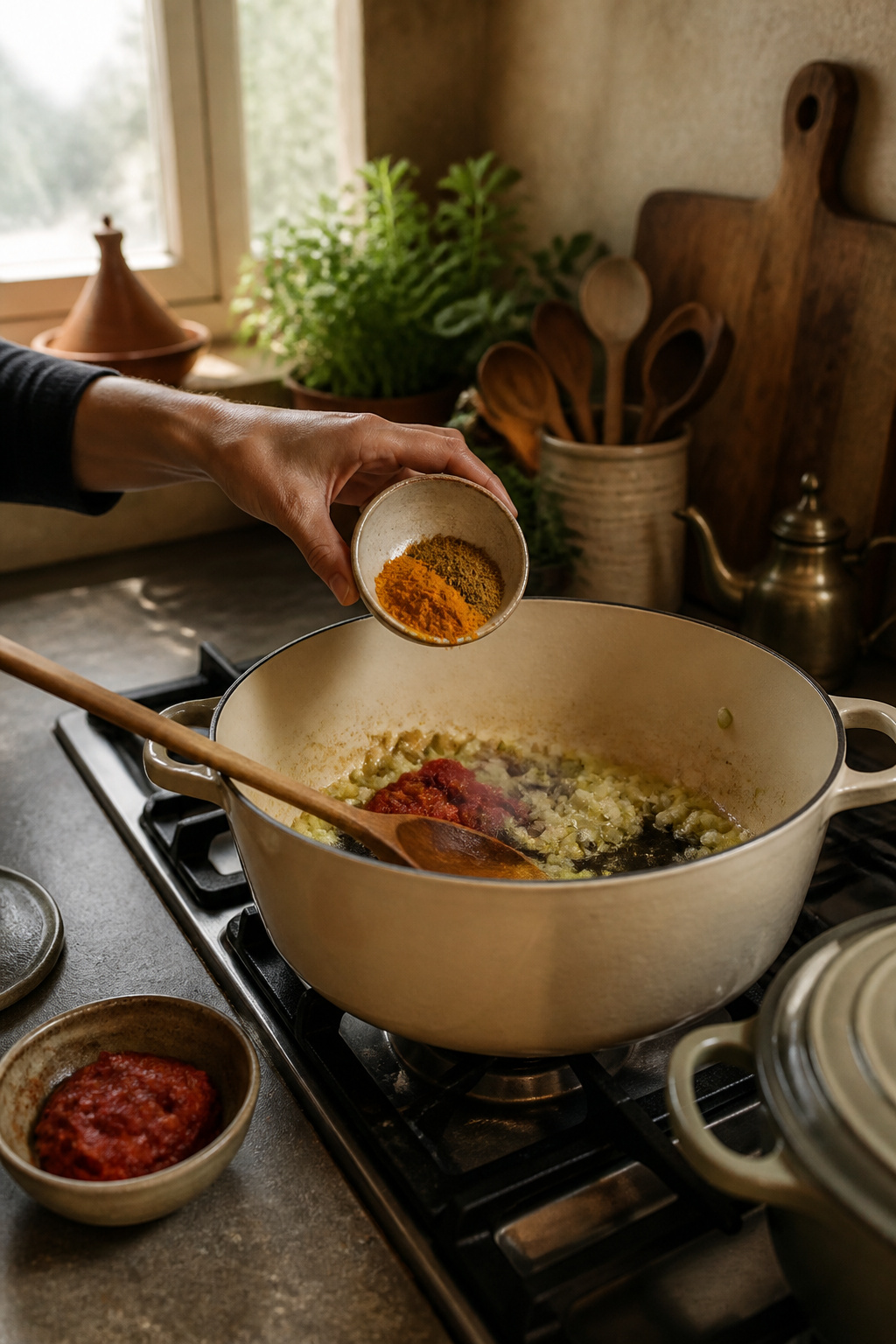
Once the aromatics have softened, the spices go in fast. I add 1 tablespoon ground cumin, 1 teaspoon ground turmeric, and 1/2 teaspoon ground cinnamon, plus a smaller hit of ground ginger and a few cracks of black pepper. The goal is to wake everything up in the hot fat, not to toast it to a darker place. About one to two minutes does it; the kitchen will tell you when the cumin turns sharp and the cinnamon goes warm in the air.
If you want heat, harissa is the move here. I stir in a tablespoon when I’m cooking for adults who want the full Moroccan profile, or I skip it and keep the bowl mild for my kids. The soup works either way, and you can always add more at the table.
Tomatoes and Liquids
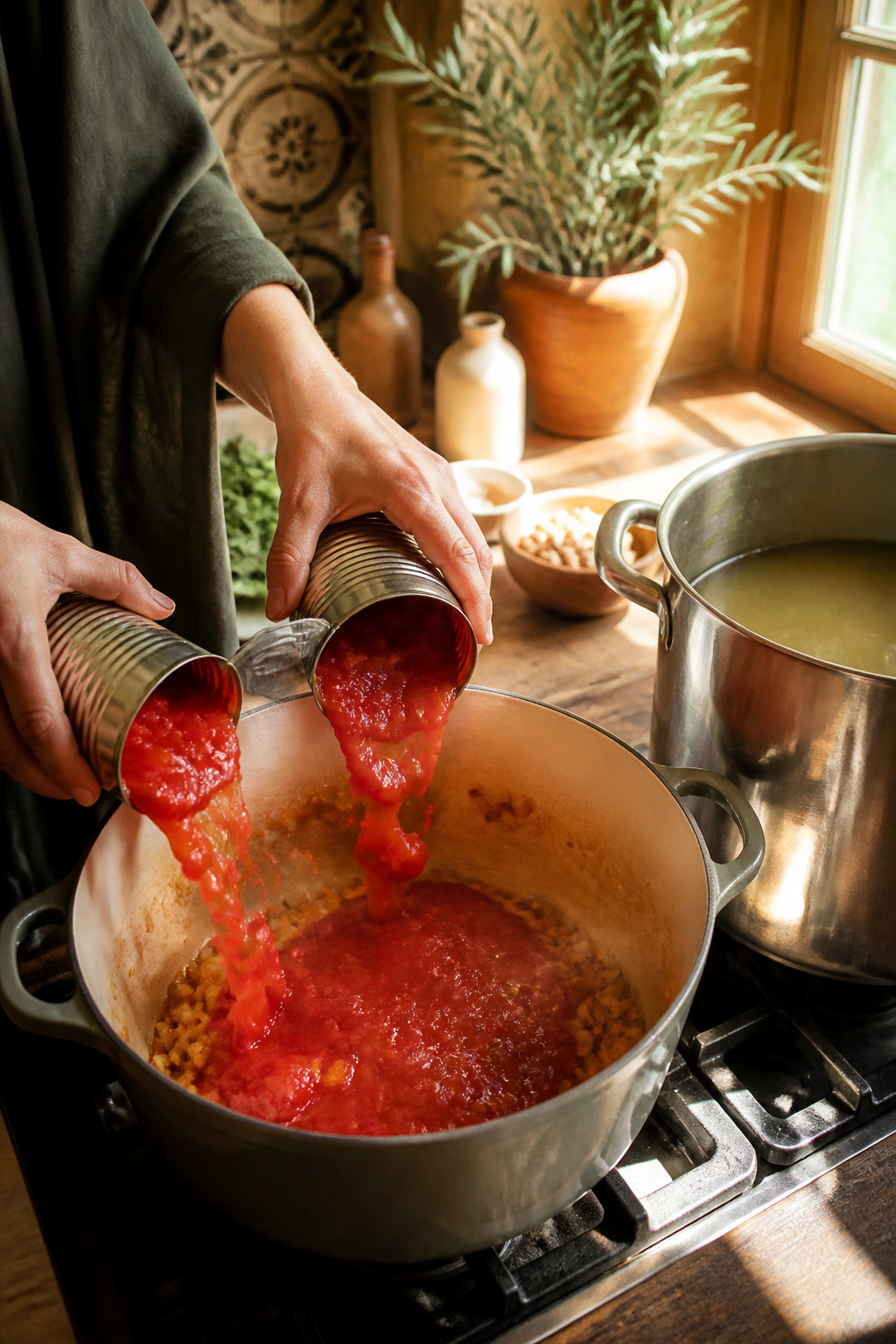
Two cans of crushed tomatoes or a single 15-ounce can plus tomato paste will both build the base, though the double-can approach gives you a deeper red and more body. I puree fresh tomatoes when they’re actually good, which in most American supermarkets means August and little else; the rest of the year, canned is the smarter move and nobody at the table knows the difference.
Seven cups of chicken or vegetable stock goes in next, cold or room temperature, and the pot needs a real rolling boil before you dial it back. That boil matters more than most home cooks bother with: it forces the tomato and stock to marry instead of settling into layers, and it sets the color to that muted brick-red you want rather than something too orange or too thin. Low-sodium stock lets you control the salt later, especially since the tomato paste and any canned chickpeas are already carrying their own.
At this stage the soup is mostly liquid and looks wrong. The body comes later with legumes and thickening, but the color and the basic structure lock in here, so don’t rush the boil or short the stock.
Add Legumes
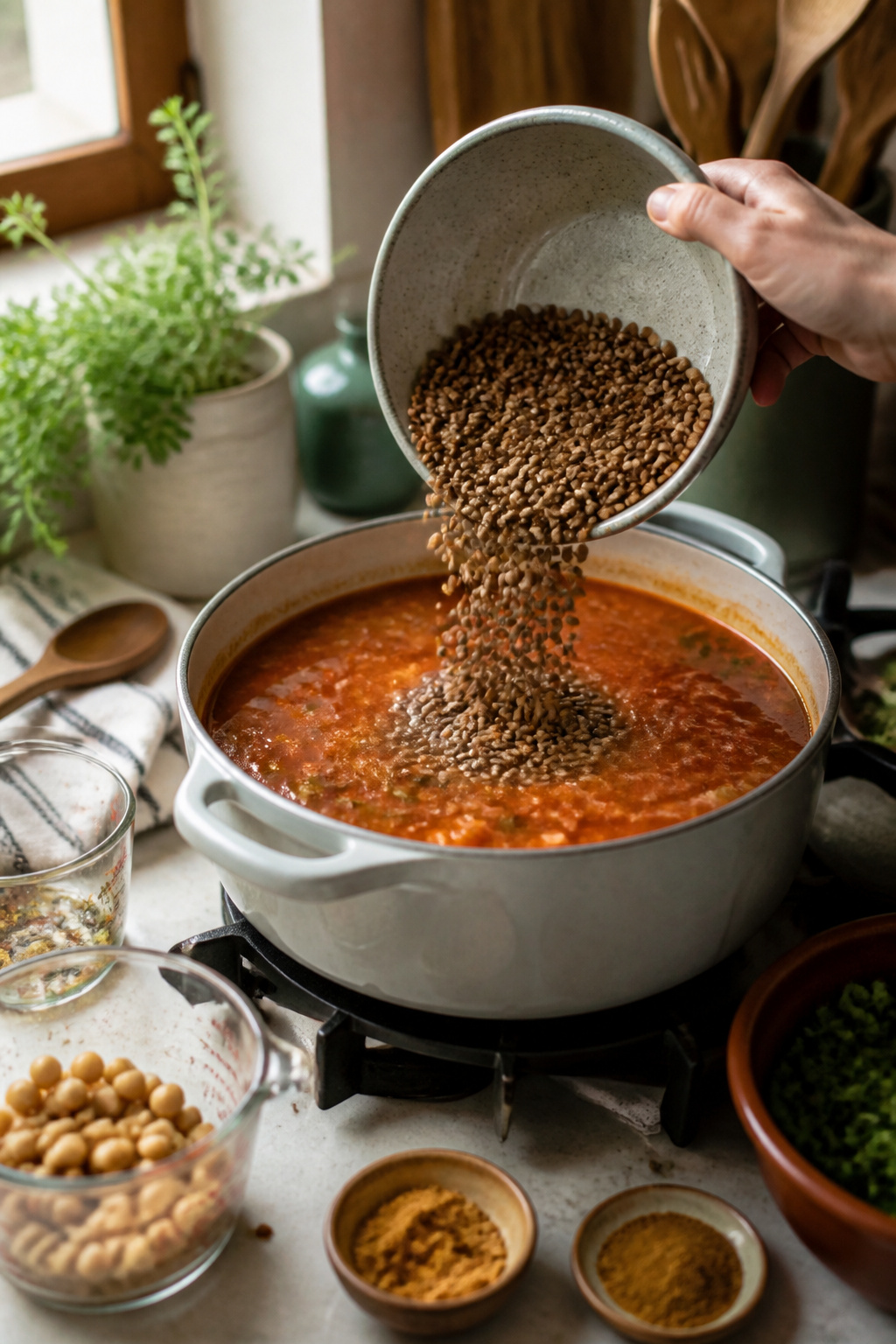
Brown lentils hold their shape through a long simmer, which is why they belong here. 1 cup, rinsed, goes in now, along with the chickpeas you soaked and simmered ahead of time. The pot should be at a gentle bubble, not a rolling boil, and the lentils need 20 to 30 minutes to turn tender without falling apart.
Red lentils are the faster alternative. They collapse into the broth in about half the time and thicken the soup more aggressively. That change in texture is the whole trade-off: brown lentils stay distinct, red ones melt in. Either works, but the switch is not a simple swap if you want the body the recipe intends.
Thicken Soup
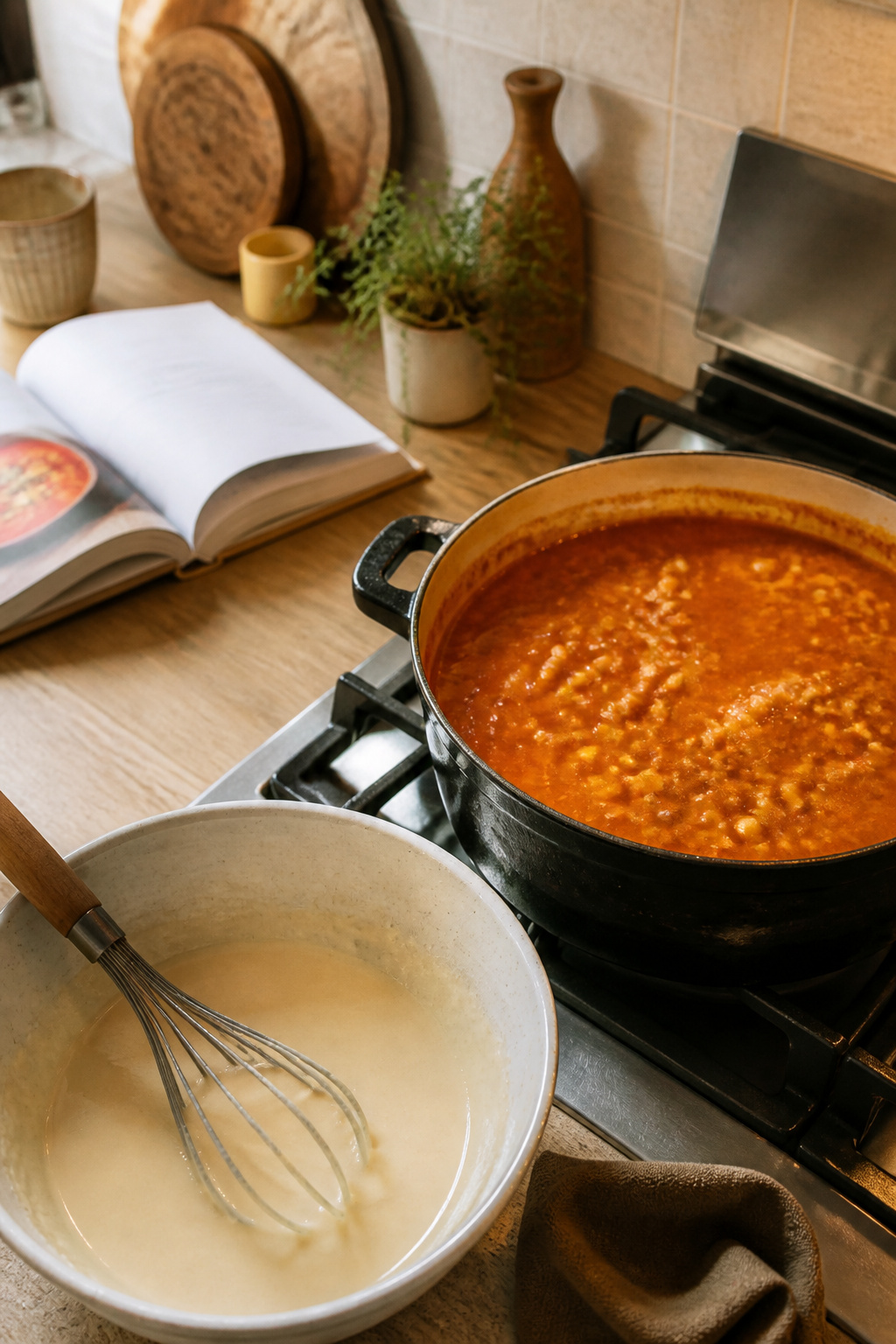
The tedouira comes together fast: mix flour with water until it dissolves into a smooth, lump-free paste, then stir it straight into the simmering soup. Keep the heat low and the spoon moving for five to ten minutes while the body of the soup tightens. Cornstarch or tapioca starch swaps in cleanly for anyone avoiding gluten, added the same way at the same point. If you are making this ahead to freeze, stop here. The soup keeps best without thickener added, and without rice or broken vermicelli in the pot either. Cool it completely, freeze flat, and finish the final steps on the day you serve.
Finish and Serve
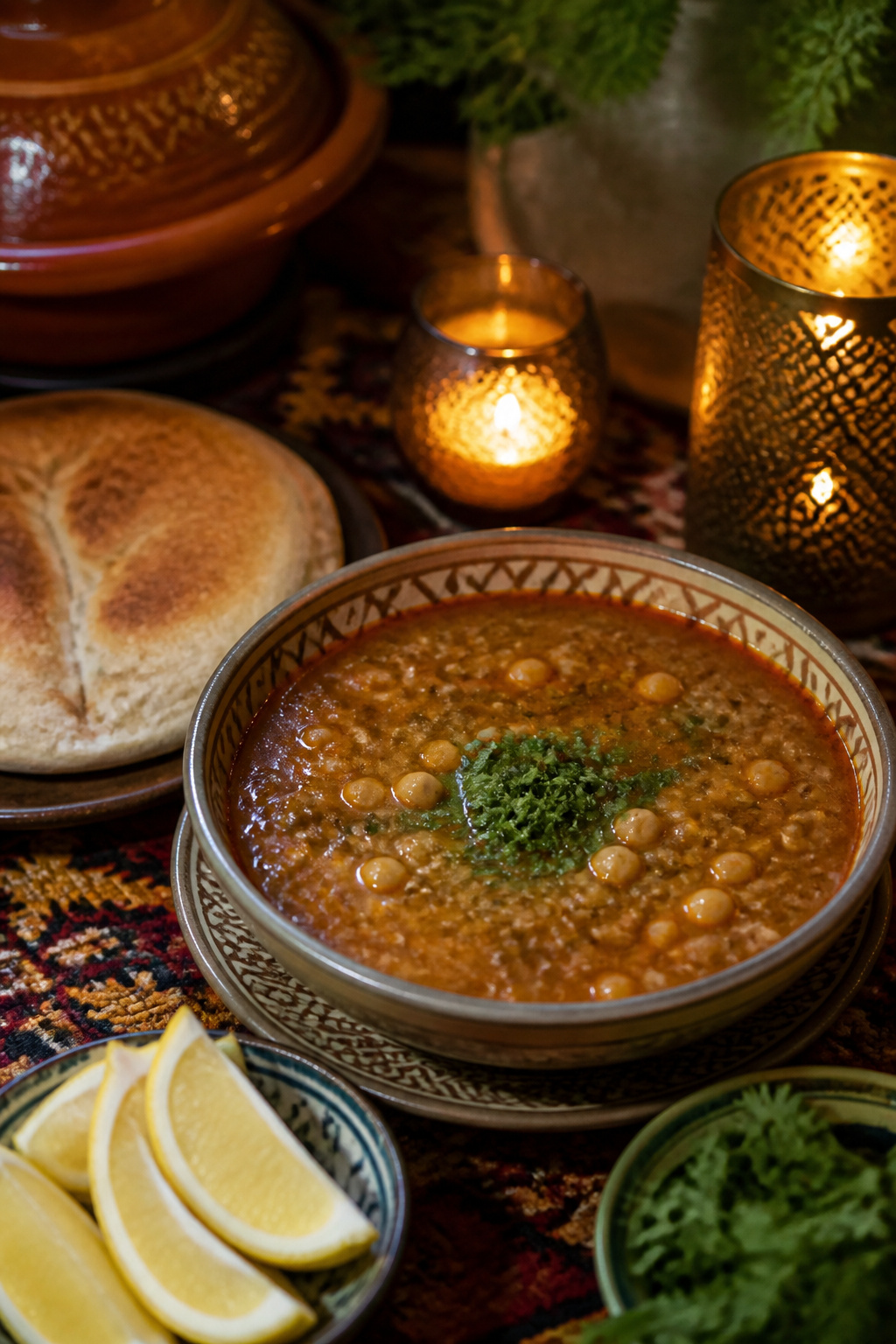
Taste the soup once more after it rests. The spices settle, and the salt you added early may have vanished into the lentils. Adjust it now, plus a little more pepper if the cinnamon reads too sweet.
Serve it hot with lemon wedges on the side, not squeezed in ahead of time. The acid brightens the turmeric and cumin only when it hits the bowl fresh. A warm pita bread on the side is the traditional move, and it earns its place: tear off pieces to push through the soup, or lay a wedge across the rim to cool a spoonful.
A few other garnishes work if you have them around. Extra chopped herbs, a spoonful of plain yogurt, or a couple of dates on the plate for sweetness between bites. The yogurt especially cuts the heat if you went heavy on the harissa earlier. None of these are required. The soup stands alone.
Chickpeas and Lentils

Dried chickpeas soaked overnight give the firmest texture, but a 15-ounce can drained and rinsed is what most weeknight cooks reach for. Either works; the soup simmers long enough to soften canned chickpeas without turning them to mush.
For lentils, the choice matters more:
- Brown lentils hold their shape through a long simmer, so the soup stays brothy with distinct bits to chew
- Red lentils break down faster and dissolve into the broth, thickening the pot almost without help
Both approaches are traditional. Some recipes call specifically for French Le Puy lentils, a smaller green variety that keeps even firmer than standard brown. Others use a mix: green or brown for body, red for silkiness.
What you have on hand wins here. Canned chickpeas save a day of planning. Brown lentils from any grocery store give you a soup with separate components. Red lentils turn it into something closer to a stew. The cooking time shifts slightly, red lentils tender in about 20 minutes of simmering, brown ones maybe ten minutes longer, but the soup itself tells you when it’s done.
Tomatoes and Thickening

The tomato decision splits between fresh and canned, and the choice matters more for harira than for most soups. Fresh tomatoes need pureeing to break down properly; diced canned tomatoes leave visible pieces that never fully meld into the broth. For the smoothest base, pureed canned tomatoes win, especially since the soup simmers long enough that fresh brightness cooks away.
Thickening turns harira from brothy starter into a meal that holds a spoon upright. The traditional route is tedouira, a slurry of flour and water (sometimes with tomato paste) stirred in at the end. It gives a silky, cream-like body but carries gluten. For a gluten-free pot, cornstarch or tapioca starch substitutes cleanly at the same finishing stage. Add either gradually and stir constantly; lumps in a soup this thick are a chore to fix, and the soup only needs enough slurry to reach the consistency you want, not the whole batch.
Spices and Optional Additions
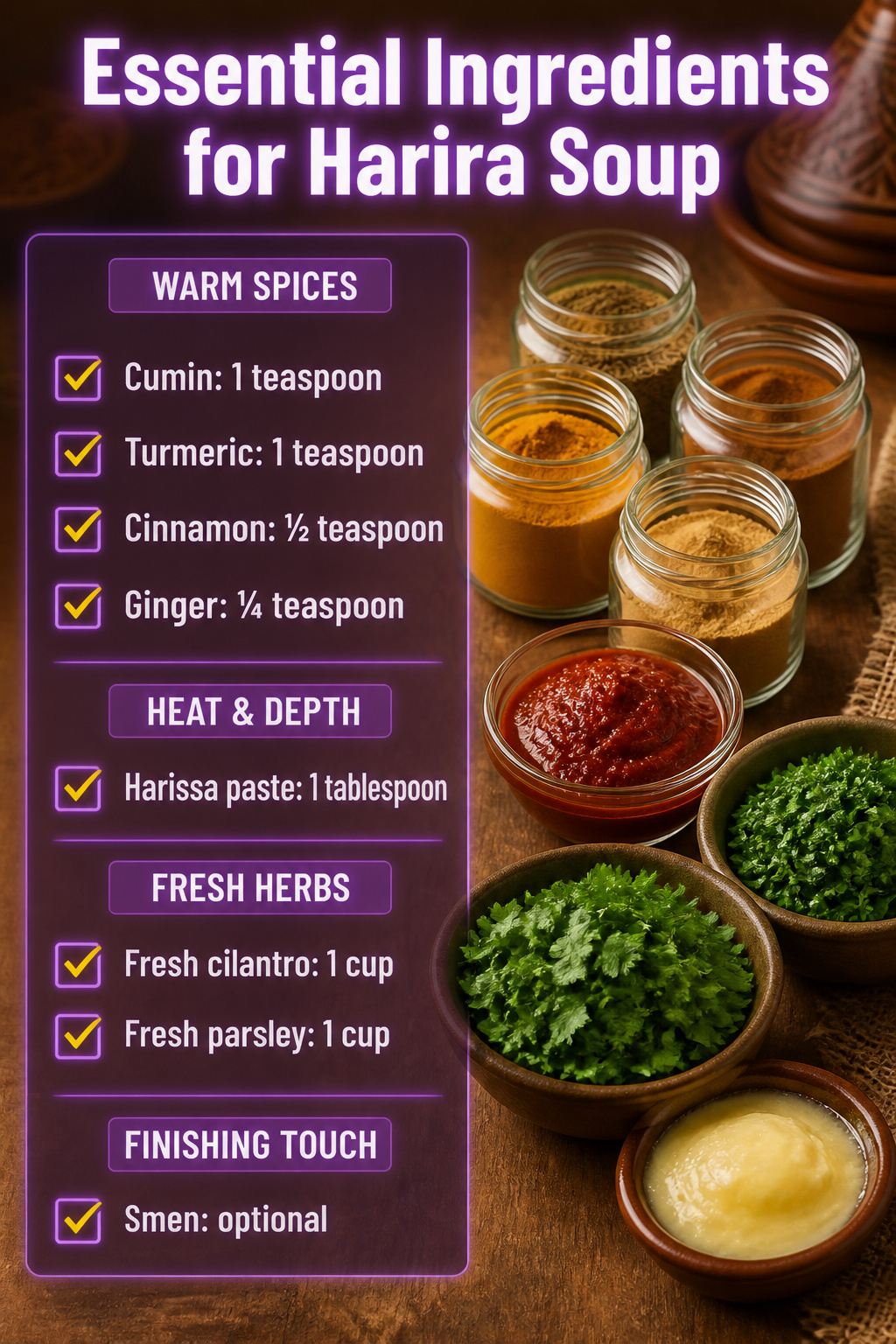
The warm backbone of harira soup comes from cumin, turmeric, cinnamon, and ginger, measured in teaspoons rather than tablespoons so the broth stays balanced, not muddy. I like to add the ginger fresh if I have it, but ground works fine and keeps the pantry count low.
- Cumin and turmeric each need about a teaspoon for a full pot; cinnamon settles in at half that amount, and ginger can go even lighter, around a quarter teaspoon, since it brightens rather than builds the base.
- Harissa paste brings the heat, and the amount is flexible. Start with one tablespoon stirred into the tomatoes, then taste at the end and add more if the broth still tastes flat. Some cooks skip cayenne entirely and let harissa do all the work.
- Smen, that preserved Moroccan butter, is optional and honestly hard to find in most American grocery stores. The soup still smells and tastes complete without it, though if you do track some down, a small spoonful deepens the savory edge in a way nothing else quite matches.
- Fresh cilantro and parsley are non-negotiable. Sources call for a full cup of cilantro, chopped and divided so some goes in during cooking and the rest hits right at the end. Parsley joins it in the final simmer. Dried herbs are not a substitute here; the whole point is that sharp, clean lift against the warm spices.
Variations

Meat-based harira usually means lamb or beef simmered long enough for the connective tissue to soften, two hours or more. Vegetarian versions built on dried legumes, lentil, chickpeas, fava beans, still need time but lean on the bean cooking rather than meat breakdown. The broth itself splits two ways: traditional Ramadan service keeps it light, more liquid than substance, meant as a starter before a larger meal; home cooks who want a full dinner let it go thicker, closer to stew.
Regional differences matter at the table. Moroccan harira runs dense with tomato, lentil, and chickpea, seasoned with ginger, cinnamon, cilantro, thickened with flour, sometimes with chicken or lamb added. Algerian versions, particularly around Oran, work in frik, cracked green wheat, or a fermented flour starter called khmira baldiya. Tunisian harira centers on lamb, tomatoes, and chickpea paste, thickened with crushed caraway, dried mint, and fine semolina or langue d’oiseau pasta rather than flour.
The soup tastes best the following day, when flavors have melded, but may thicken when refrigerated. Thin with water or broth when reheating, and adjust the salt.
That overnight rest is worth planning for, especially with meat-based batches where the fat sets and the broth clarifies. Reheating is the moment to decide: thin it back to soup, or leave it thick and call it dinner.
| Attribute | Moroccan | Algerian | Tunisian |
|---|---|---|---|
| Protein | Lamb, chicken, or vegetarian | Variable | Lamb-centered |
| Thickener | Flour | Frik, fermented starter | Semolina, pasta, caraway |
| Texture range | Dense to broth | Variable | Medium to thick |
| Distinctive note | Cinnamon, cilantro | Cracked green wheat | Caraway, dried mint |
Storage and Leftovers
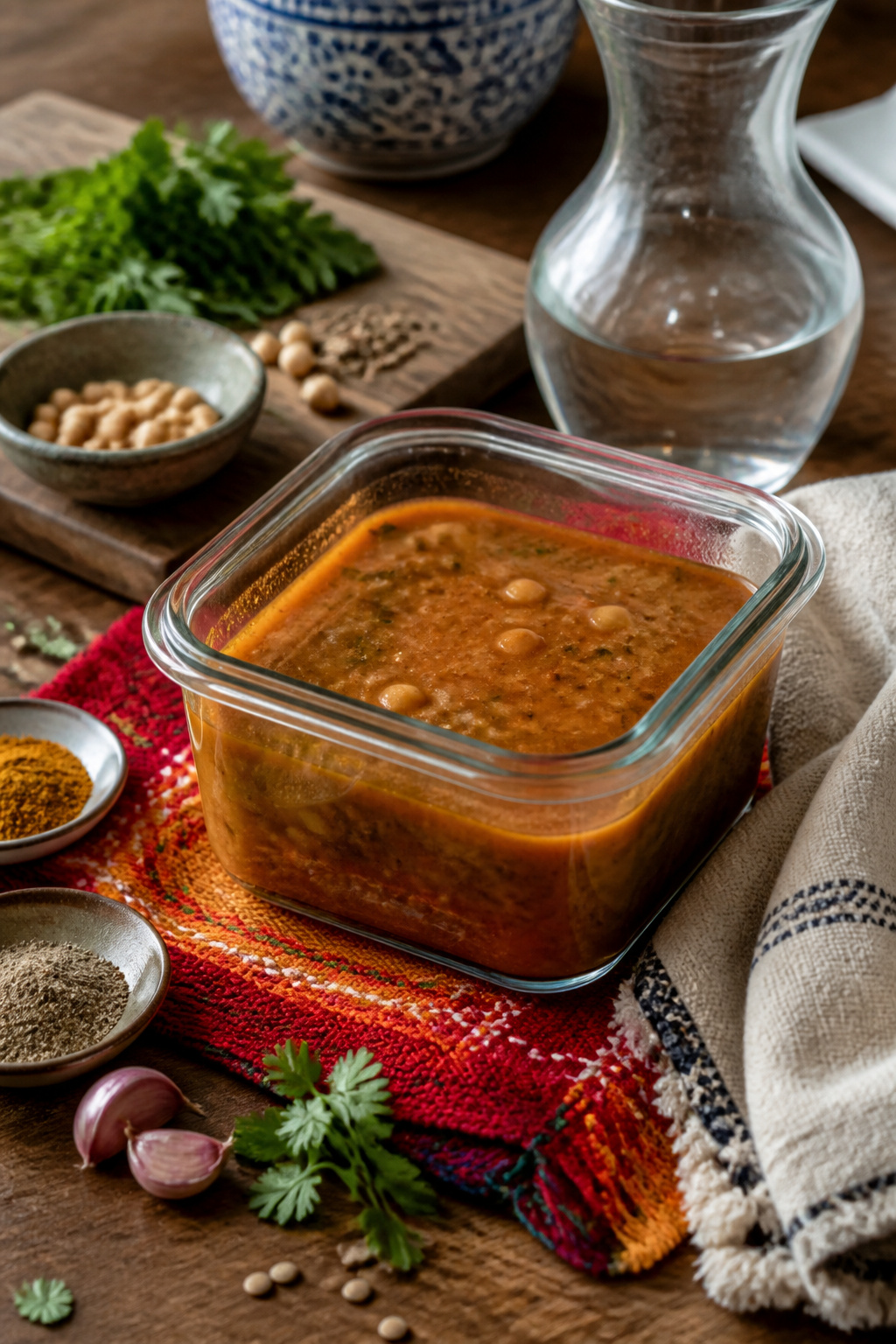
Harira keeps in the refrigerator for 3 to 4 days, and the flavor actually improves as it sits. The legumes will thicken the broth overnight, so add a little water when reheating to bring it back to the right consistency. Warm it over medium heat, stirring regularly so the lentils do not stick and burn. A skin may form on top as it cools; just stir it back in.
If you want to freeze it, do so before adding the flour thickener, and preferably before adding the rice or broken vermicelli. Let it cool completely, then freeze in tight-lidded containers. On serving day, thaw the soup over low heat and resume cooking from where you left off, adding the tedouira at the end.
Frequently Asked Questions
What is harira soup?
Harira soup is a traditional Moroccan soup built on chickpeas, lentils, tomatoes, and warm spices like turmeric, cumin, and cinnamon. Its name comes from the Arabic word for silk, describing the velvety texture you get after thickening it with broken vermicelli, rice, or a flour-and-water mixture called tedouira. In Morocco it appears year-round, but Ramadan is when it becomes essential, served to break the fast alongside dates, bread, or pastries like chebakia.
How do you make harira soup?
Start by softening onion, celery, and carrot in olive oil, then bloom cumin, turmeric, and cinnamon in the hot fat for a minute or two. Add crushed tomatoes and stock, bring to a rolling boil, then drop to a gentle simmer and add brown lentils and chickpeas. After 20 to 30 minutes, thicken with a slurry of flour and water (tedouira) stirred in over low heat for five to ten minutes. Finish with parsley, cilantro, and a squeeze of lemon at the table.
Can you freeze harira soup?
Yes, but stop before adding the flour thickener and any rice or broken vermicelli, since those break down in the freezer. Let the soup cool completely, then freeze in tight-lidded containers. When you are ready to eat, thaw it over low heat and finish the final steps fresh, adding the tedouira and pasta at the end for the right texture.