
Halloumi fries are brined cheese sticks from Cyprus that hold their shape when fried, thanks to the high melting point that keeps them from oozing through the grate. The catch is thickness: cut to roughly 0.6 inch, they fry in ninety seconds with a golden crust and creamy center; go thinner and they crack, thicker and the middle stays rubbery. A standard block yields about twenty sticks, dredged through spiced flour, egg, and panko before hitting the oil.
Halloumi Cheese

Halloumi is a brined cheese from Cyprus, traditionally made from a mixture of goat and sheep’s milk. That brining gives it a firm, salty texture and the high melting point that makes it worth frying in the first place: unlike most cheeses, it holds its shape under heat rather than oozing through the grate or turning to liquid in the pan. A typical block weighs 250 g, about 8.8 oz, which is enough to cut into a generous pile of sticks without committing to a restaurant-sized batch.
The texture shifts once it hits heat. Raw halloumi is dense and rubbery; cooked, it turns golden on the outside and develops the squeaky, chewy bite that people either love or need one encounter to learn to love. Feta, the cheese it most often gets compared to, crumbles and semi-melts when heated. Halloumi does neither, which is exactly why it works for fries and feta does not. You will find it vacuum-packed in the cheese section of most grocery stores, and the long shelf life means buying a block on sale is not a gamble.
Cut the Cheese

A standard block of halloumi yields the most even sticks when sliced lengthwise into five planks, then halved crosswise for roughly 0.6-inch thickness and twenty pieces total. That thickness matters more than the length, which will vary with the brand’s block shape. Go thinner and the cheese weakens; crumbs slip, sticks crack in the pan, and you lose the creamy center that makes these worth making at all. Much thicker than 0.6 inch and the outside scorches before the middle warms through, leaving you with a rubbery core and a bitter crust. The 0.6-inch stick fries in about ninety seconds, soft inside and golden outside, which is the window you want.
Set Up the Dredge
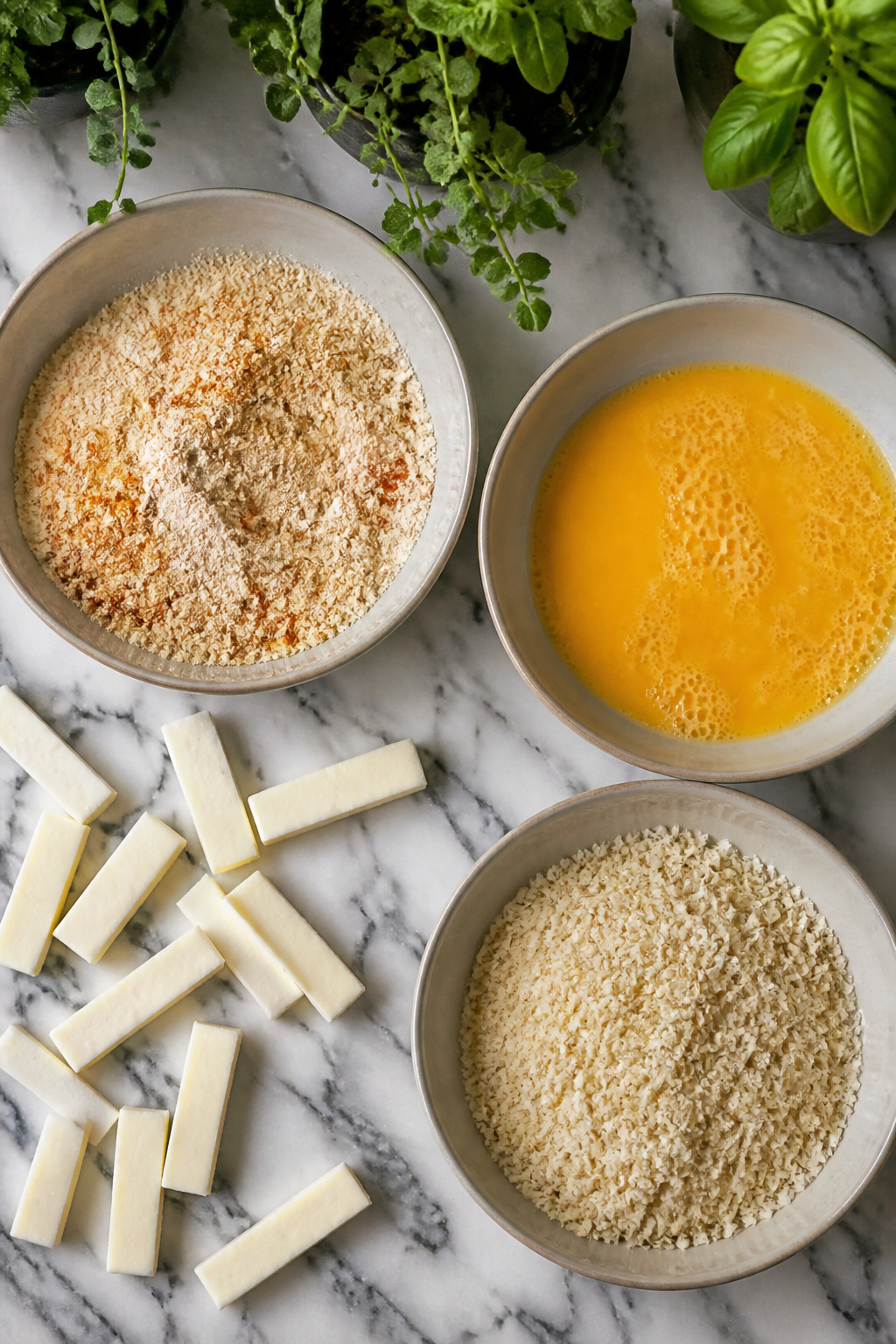
Three shallow bowls line up left to right: flour mixed with paprika, garlic powder, and salt; two whisked eggs; and panko breadcrumbs. The dry-wet-dry order matters because flour gives the egg something to grip, and egg gives the panko something to grip. Skip a step or reverse them and the coating slides off in clumps.
Panko beats regular breadcrumbs here. The flakes are larger and drier, so they fry up with more air between layers. That means the crisp holds even after a few minutes on the plate, which matters when you are batch-frying and the last sticks sit while the first ones cool.
One hand stays dry, one stays wet. Coat in flour with your left, drop into egg with the same left, then switch to right for the panko toss. This keeps your fingers from turning into breaded clubs halfway through.
Coat the Sticks

Flour first, then egg, then panko: that order matters because each layer needs something to grip. The flour gives the egg a matte surface to cling to, and the egg turns sticky enough for breadcrumbs to adhere without sliding off in the oil.
I set up three bowls wide enough to fit the sticks flat. Flour mixed with paprika, garlic powder, and salt goes in the first. Whisked eggs in the second. Plain panko in the third. One halloumi stick at a time, I dredge it through the flour and shake off every excess speck; loose flour left on turns gummy in the egg and blocks the panko from setting right. Into the egg next, then straight to the breadcrumbs. I press each stick down firmly into the panko so the crumbs pack on rather than just dusting the surface. The finished coating should look like a rough, even crust with no cheese peeking through.
The two-hand rule saves cleanup: dry hand for flour and panko, wet hand for egg. Some cooks toss the panko bowl instead of turning each stick by hand, which coats faster and keeps fingers clean. Either way works. What matters is that the crumbs stick before the cheese hits the heat.
Fry, Bake, or Air Fry

The three methods produce noticeably different results. Frying at 350°F for about 90 seconds gives the deepest color and the firmest crust, though it demands a heavy pot with high sides and a tolerance for spatter. Baking at 350°F for 20 minutes uses less oil but yields a slower, drier heat that can leave the coating pale without a generous spray. The air fryer at 390°F for 9 minutes splits the difference: faster than the oven, less messy than the stovetop, though the batch size is limited to whatever fits in a single layer.
| Method | Temperature | Time | Texture | Oil Needed |
|---|---|---|---|---|
| Fry | 350°F | ~90 seconds | Deep golden, firm crust | 1 inch in pot |
| Bake | 350°F | ~20 minutes | Lighter, needs oil spray | Light spray |
| Air fry | 390°F | ~9 minutes | Even browning, small batch | Generous spray |
For weeknight cooking, the air fryer wins on timing and cleanup if you own one. The oven suits feeding more people at once. Frying remains the choice when you want the truest crunch and do not mind the pot to wash afterward.
Garlic Yogurt Sauce

The sauce that disappears first on any plate of halloumi fries is the simplest one: half a cup of plain Greek yogurt, one grated garlic clove, half a teaspoon of lemon juice, a teaspoon of olive oil, and a quarter teaspoon of salt. Stir it together and let it sit while the cheese cooks so the garlic softens into the yogurt rather than biting back.
Cool tang against hot, salty cheese is the whole point. The yogurt fat carries the garlic across your tongue without the harshness of an oil-based dip, and that small hit of acid resets your palate between bites so the salt keeps reading as salt instead of just salt. I grate the garlic on a microplane so it melts in; minced bits stay crunchy and uneven, and nobody wants a chunk of raw garlic in a creamy sauce.
Low-fat yogurt works if that is what you have, though it thins out the mouthfeel. Full-fat Greek yogurt holds its shape on the plate and clings to the fry instead of sliding off. The olive oil is not for flavor so much as richness; a teaspoon is plenty, more than that and the sauce starts to taste like dressing instead of dip.
Marinara and Spicy Aioli

Warm marinara is the sauce people reach for when they want something familiar alongside fried cheese. The acidity cuts through the fat, and the tomato base matches what most diners already expect on a plate of sticks. I keep a jar of decent marinara in the pantry for exactly this kind of night; it heats while the cheese fries and costs nothing in extra effort.
For heat, a sriracha aioli covers the same base as the garlic yogurt but swaps in mayo and enough sriracha to turn the color pale pink. The fat in the mayonnaise carries the capsaicin across the tongue differently than yogurt does, so the burn builds slower and lingers longer. Start with a ratio that tastes mild to you; the aioli thickens as it sits and the heat concentrates overnight. One bowl of this is usually enough for a full batch of halloumi fries, and any extra keeps in the refrigerator for sandwiches.
Serve and Eat
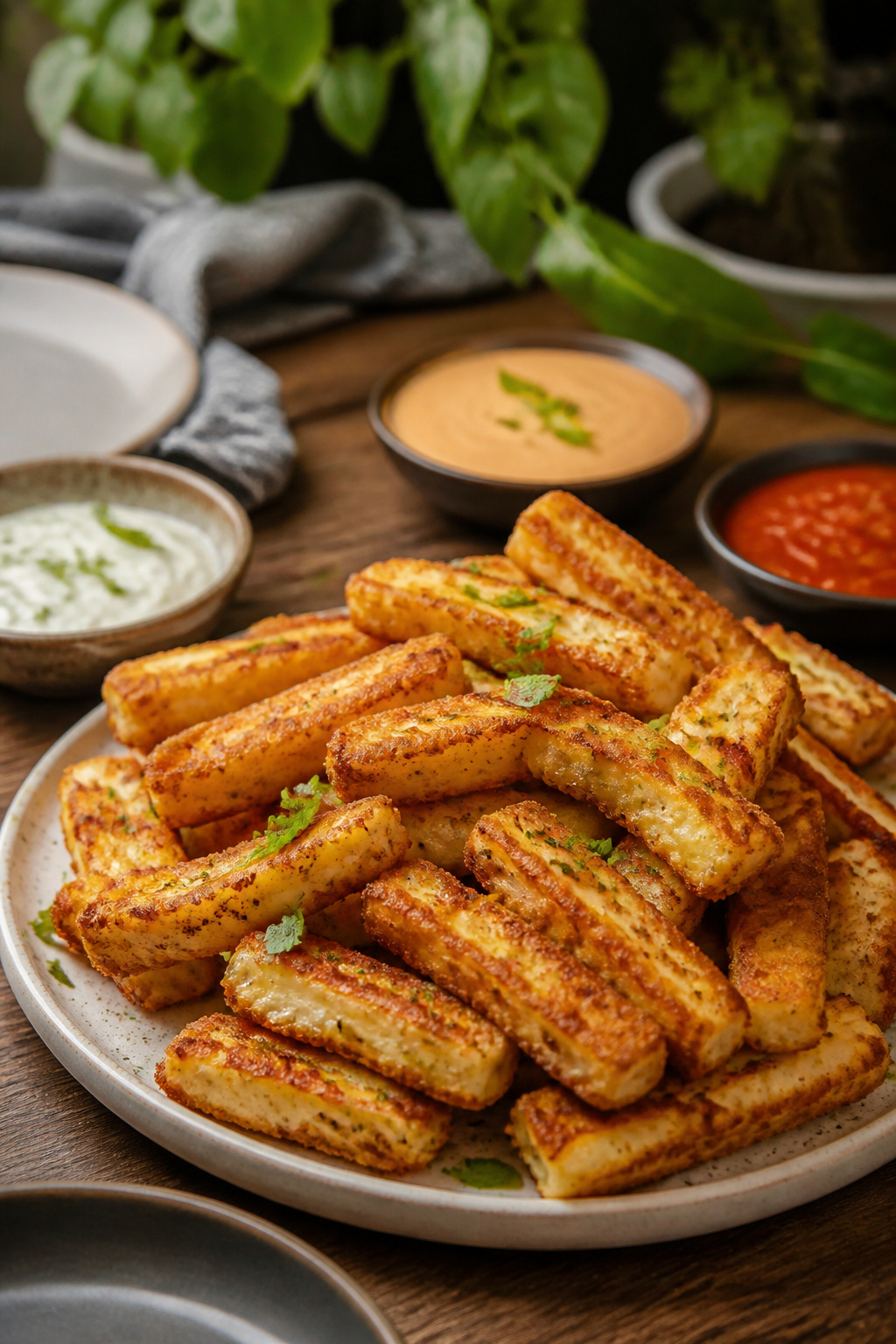
Timing matters more than most people expect with halloumi fries. The cheese stays soft and yielding for maybe ten minutes after it leaves the heat, then firms up fast as it cools. Serve them the moment they’re ready, while the crust still shatters between your teeth and the center gives way like warm mozzarella.
These work best as an appetizer or party snack, set out while people are still gathering and drinking something cold. At Opa! we saw whole trays vanish in minutes when the dining room filled, and that’s the ideal: hot, crisp, gone. Leftovers lose the contrast that makes them worth making. The panko softens, the cheese turns rubbery, and what was special becomes merely salty.
If you must hold them, the dredged cheese sticks can wait on a baking sheet, covered, for a few hours before their trip into the oven or air fryer. That much prep ahead is fine. But the final cook should happen right before you set them down. Cold halloumi fries do keep for two or three days refrigerated, though at that point I chop them into a salad where their saltiness matters more than their crunch.
Paneer as Substitute

Paneer is the substitute most cooks reach for when halloumi is hard to find. Both cheeses resist melting under heat, so paneer fries will hold their shape in the pan or oven just as halloumi does. Indian grocery stores stock it reliably, and many mainstream supermarkets carry it in the specialty cheese case now.
The differences matter, though. Paneer carries less salt, so the finished sticks taste milder and may need a heavier hand with any salted coating or dipping sauce. The texture is softer and slightly more crumbly too; where halloumi fries develop a firm, almost squeaky chew, paneer yields more readily and can split if handled roughly during dredging. I would press it between paper towels for twenty minutes first to draw out moisture and firm it up. The fry itself still works, but expect a gentler bite and plan for more seasoning than the halloumi version demands.
Protein, Salt, and Leftovers

Halloumi fries carry a protein load most fried snacks do not. The cheese itself delivers roughly 21 to 23 grams per serving, along with calcium that can approach 800 mg, nearly a full day’s target in one plate. That same brining process that lets the cheese hold its shape under heat loads the sodium high, 1,100 mg or more, which is half the daily limit in a single sitting. Taste before you salt anything else on the plate.
Leftovers go into the refrigerator in a sealed container and stay acceptable for two days. Reheating demands high, dry heat; a hot oven or air fryer restores the crust, while a microwave turns the sticks rubbery and sad. Freezing is not something the sources address, and I will not pretend I have tested it.
Frequently Asked Questions
How do you make halloumi fries?
Cut halloumi into roughly 0.6-inch sticks, coat in seasoned flour, egg, and panko breadcrumbs, then fry at 350°F for about 90 seconds. You can also bake at 350°F for 20 minutes or air fry at 390°F for 9 minutes.
What dipping sauces go well with halloumi fries?
Garlic yogurt sauce, warm marinara, and sriracha aioli are the three best matches. The yogurt sauce pairs cool tang with hot salt, marinara adds familiar acidity, and the aioli brings slow-building heat.
Can you make halloumi fries in the air fryer?
Yes, air frying at 390°F for 9 minutes produces excellent results with even browning and less mess than stovetop frying. The batch size is limited to a single layer, so you may need to cook in rounds for a crowd.