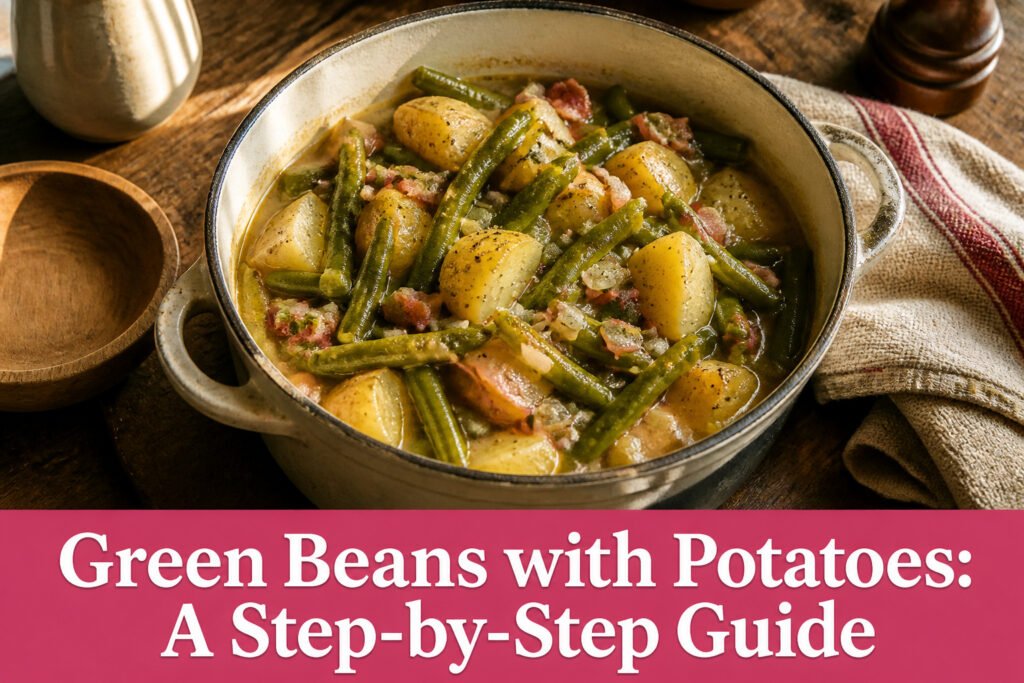
Green beans with potatoes is a one-pot Southern dish built from slow-simmered beans, waxy potatoes, and smoked pork fat. The catch is timing: russets collapse and cloud the broth, so red potatoes or Yukon Golds quartered to an even 1 to 2 inches are the only reliable choice. A full stovetop simmer runs 20 to 45 minutes, and that unhurried reduction is what turns the pot liquor worth saving for tomorrow’s cornbread.
Preparing the Ingredients

Fresh green beans beat frozen or canned for this dish, hands down. The texture stays snappy through a long simmer, and the flavor is grassier, fuller. Trim both ends by hand and snap them in half if you want shorter pieces; no knife required. A quick rinse under cold running water finishes the job.
Red potatoes or small Yukon Golds hold their shape in the pot, where russets break down and cloud the broth. Quarter them into even chunks, roughly 1 to 2 inches, so every piece finishes tender at the same moment. Do not cut them ahead and let them sit, or they will oxidize and turn dark. If you must prep early, submerge them in cold water until cooking starts.
One medium onion and a few garlic cloves, chopped coarse, are all the aromatics this prep needs. The onion goes in first, the garlic only in the last minute, since it burns fast and turns bitter if it hits the heat too soon.
Cooking the Bacon
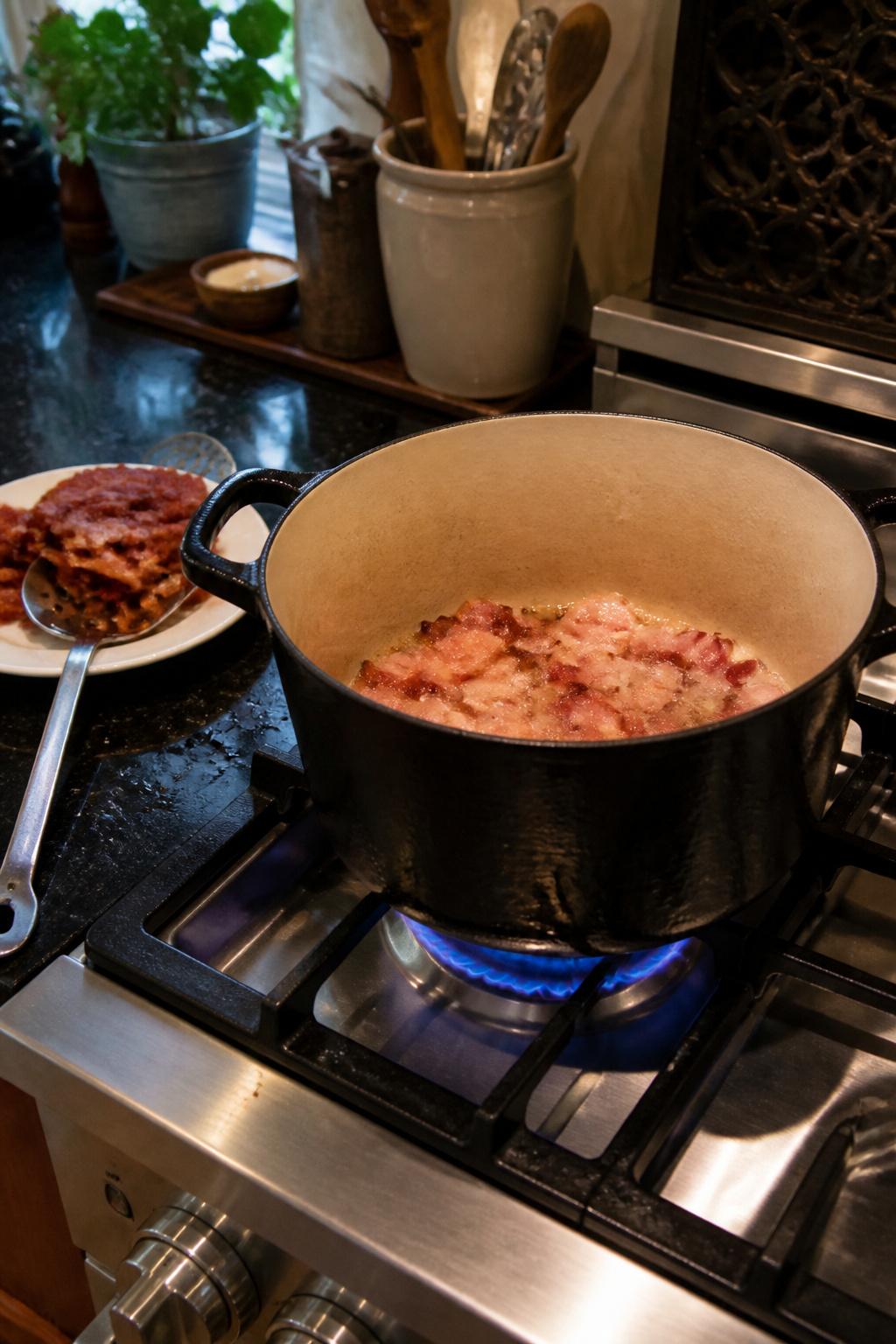
Chopped bacon goes into a heavy pot, Dutch oven or any thick-bottomed vessel that holds heat evenly. Medium heat does the work in about 5 to 7 minutes. The goal is crispy pieces with the fat fully rendered, not just browned edges, because that fat becomes the cooking medium for everything that follows. A slotted spoon lifts the bacon out, and the pot stays on the burner with its pool of drippings. That rendered fat carries the smoke and salt that builds the dish’s base layer, so pouring it off would mean starting from flavor zero. Some recipes call for smoked meat instead of bacon, and the same rule applies: cook it down, save the fat, build from there. The bacon waits on a plate while onions go straight into that grease.
Adding the Aromatics

The bacon fat left in the pot is where the next layer of flavor builds. Scrape the chopped onion straight into that rendered grease and let it soften over medium heat, about 3 minutes. The edges should turn translucent and the kitchen will smell sweet before you move on. Stir in the minced garlic and cook just until fragrant, another minute or so.
Do not rush this step. The onion’s sweetness is what carries the whole pot; if it still bites, the broth will stay thin-tasting no matter how long everything simmers after. Three minutes is the minimum, five is fine if the heat is gentle. The garlic goes in last because it burns fast, and bitter garlic ruins the whole foundation.
Simmering the Green Beans
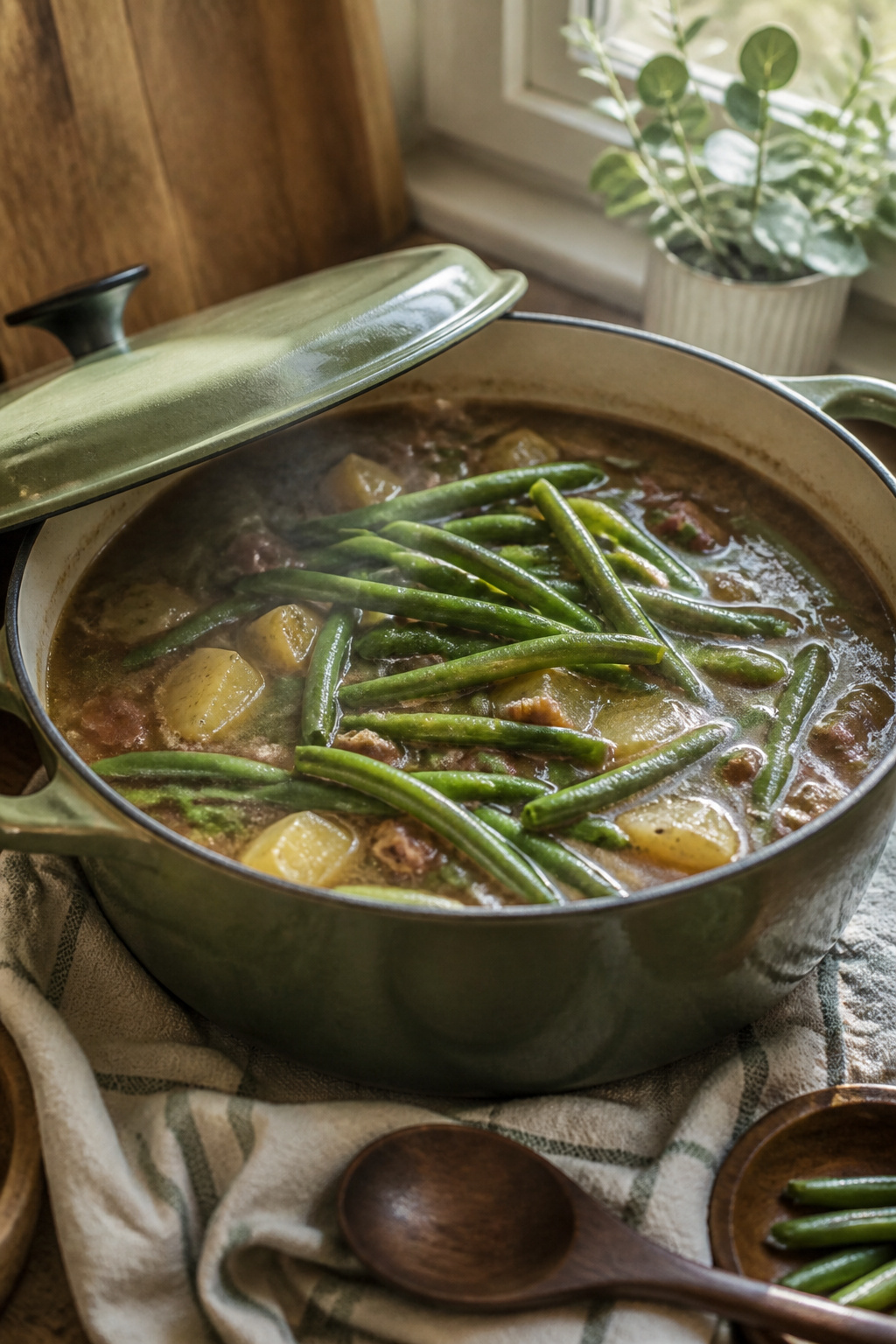
Green beans need liquid to soften, and chicken broth does more than water ever could. The salt, the protein, the slight fat content: all of it carries the smoky meat deeper into the beans than plain water manages. I add the trimmed beans right on top of whatever bacon or ham hock is already in the pot, pour in broth to nearly cover, and set the lid on.
Twenty to thirty minutes at a low simmer is the window. At 20 minutes the beans still have some resistance, which some cooks prefer. At 30 they go fully tender, starting to collapse at the edges, and that is where they absorb the most flavor. The liquid will darken to a deep green-brown as it reduces, and the beans take on the smoked meat character in earnest during this stretch, not before. Stir once or twice, but mostly leave them be. The covered steam does the work you cannot do with a spoon.
Cooking the Potatoes Through
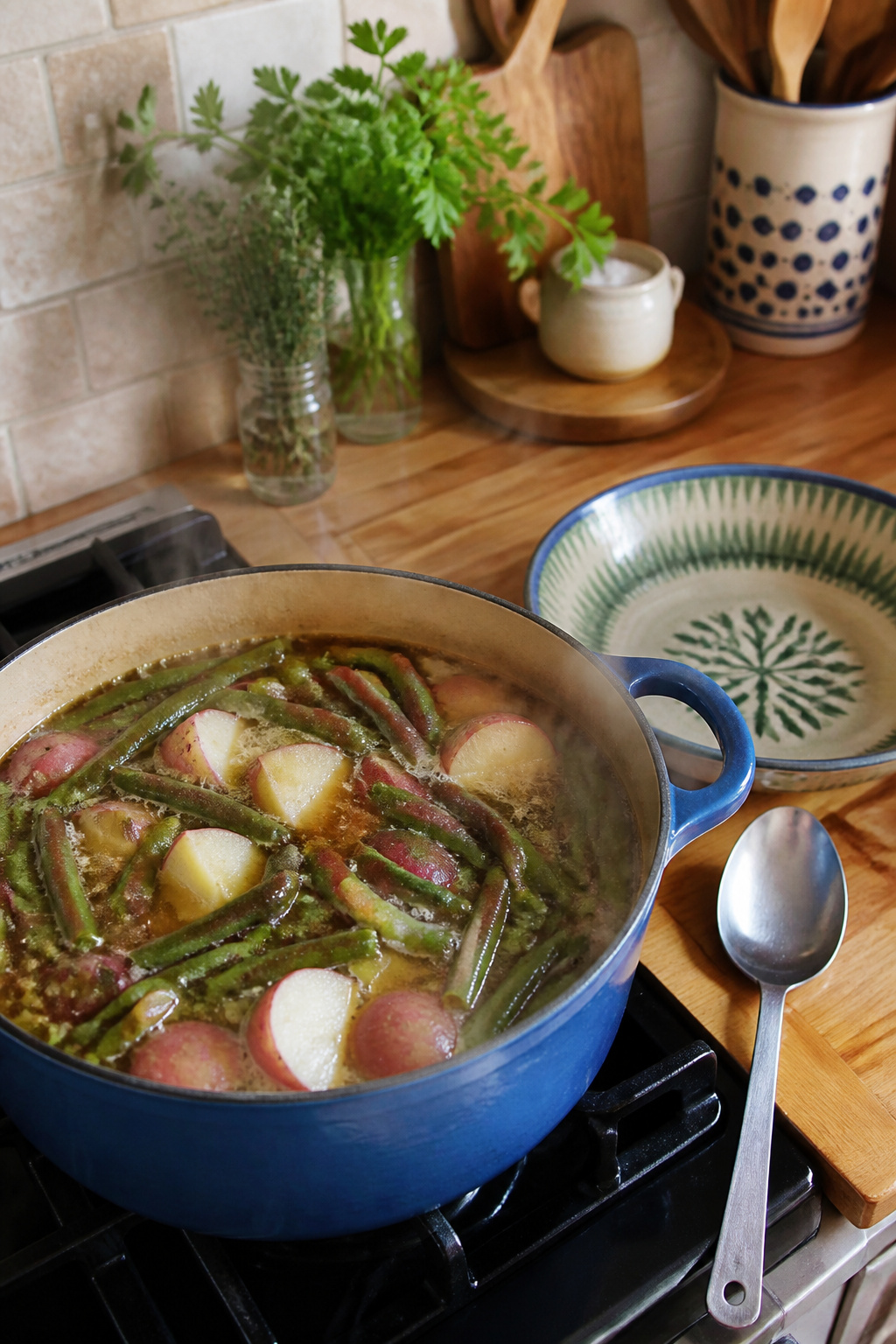
Once the beans have softened, quartered potatoes go in. I cut them to roughly the same size so nothing finishes half-raw while something else collapses, then give them 15 to 25 minutes in the simmering liquid. A fork should slide through a potato without any resistance at all; that is the only test that matters.
Red potatoes or small Yukon Golds hold their shape through this second simmer. Russets work in a pinch, but they break down faster and can turn the broth cloudy. Waxy potatoes keep each bite intact, which is what you want when the beans and potatoes are meant to stay separate on the plate rather than melting together.
Seasoning and Serving
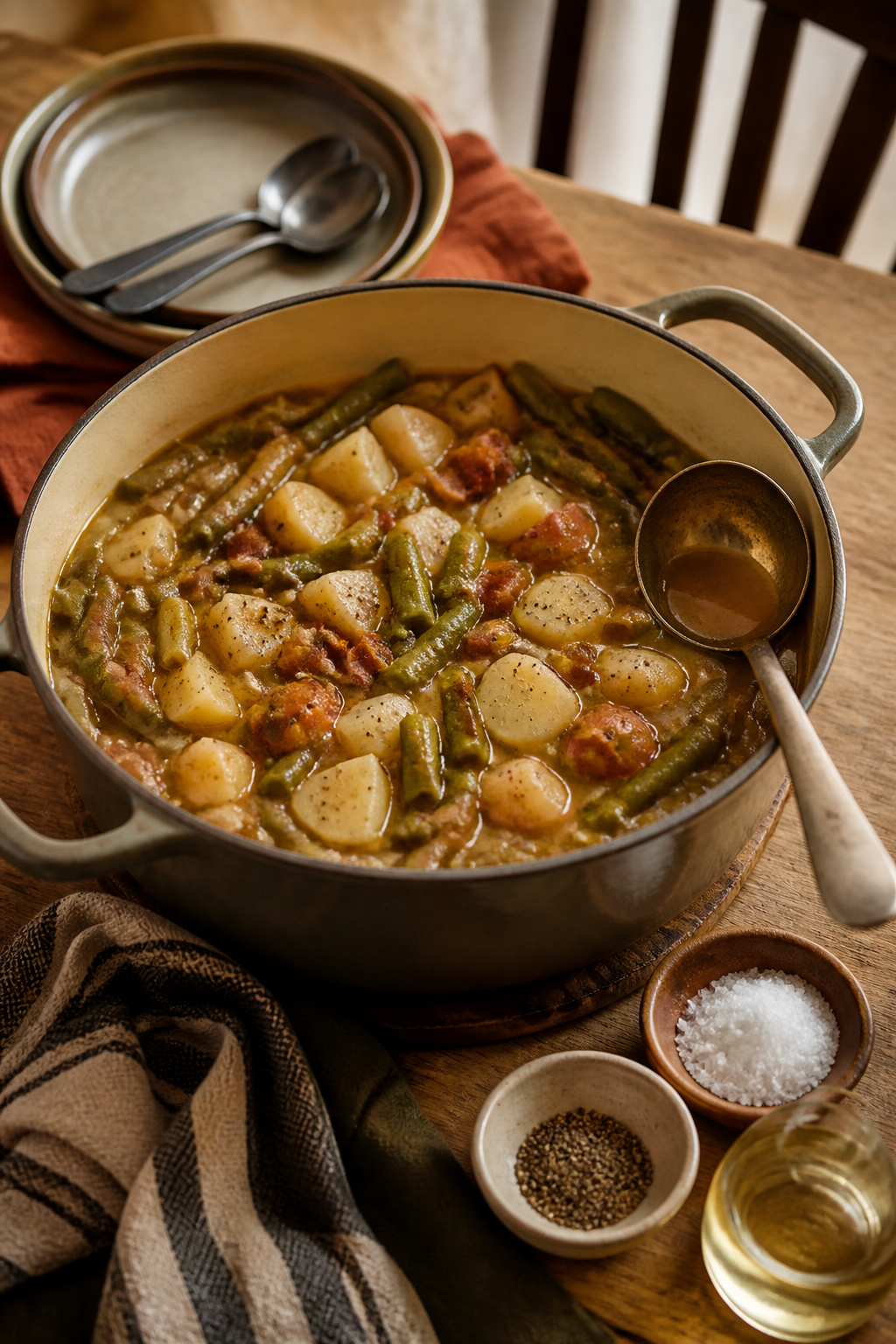
Taste the pot before you call it done. Ham, bacon, or a smoked hock can leave the broth salty enough that extra salt is unnecessary, so start with a small pinch and build from there. Black pepper goes in at the same time; I add it generously, but the exact amount depends on whether you want the gentle warmth of a few grinds or something sharper.
The recipe yields 4 to 8 servings, depending on what else is on the table and whether people come back for the broth. Do not drain that liquid. The pot liquor, as it’s called, carries the concentrated flavor of the meat and vegetables together; in some households it is poured over cornbread the next day, or sopped up with bread and butter at the table.
For extra dimension, a splash of apple cider vinegar brightens the richness, or a pinch of cayenne adds heat without changing the dish’s character. Neither is required, but either one earns its place.
Fresh, Frozen, or Canned Green Beans
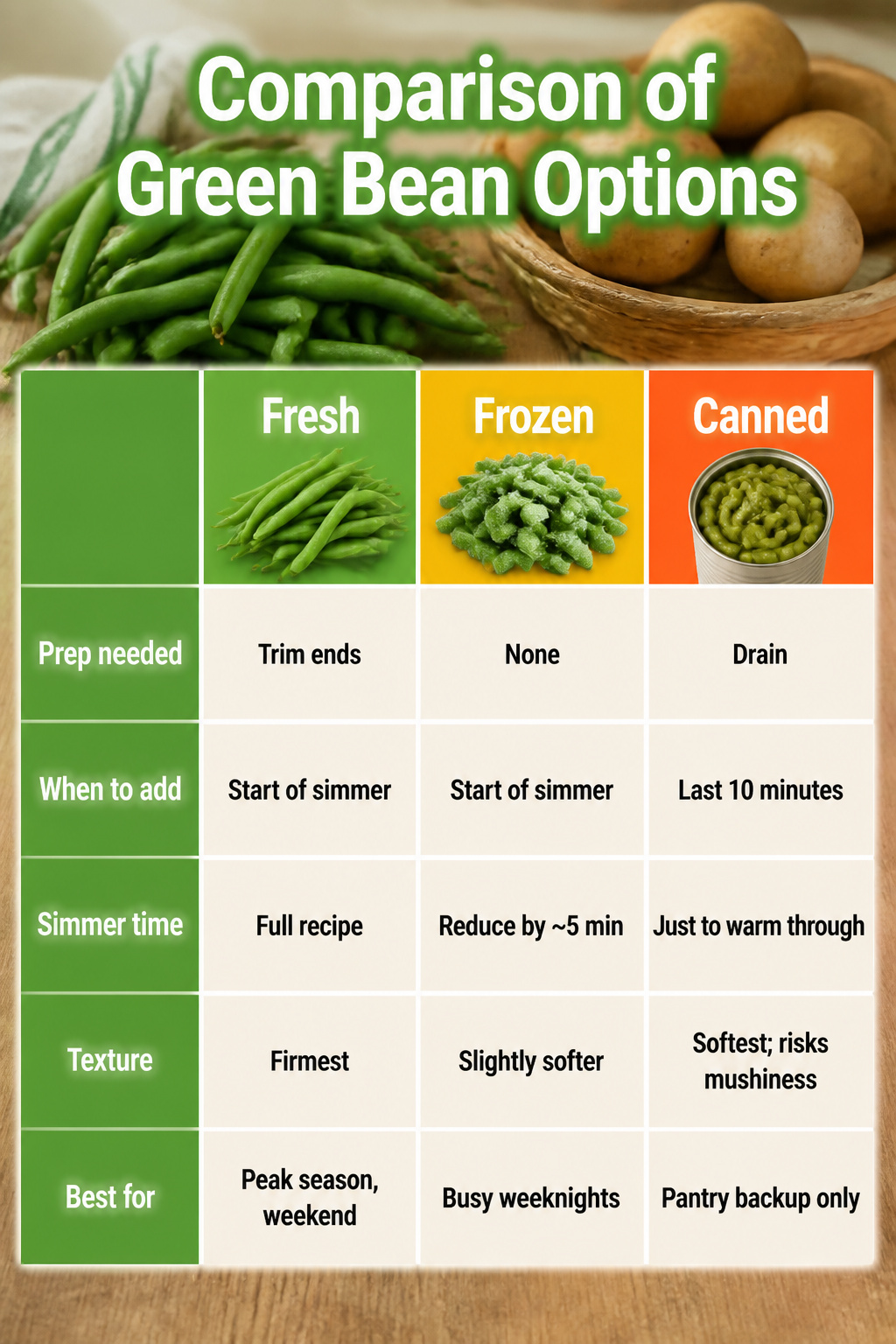
Fresh green beans win on flavor and texture when you can find decent ones at the store. Trim the stem end, snap them if they’re stringy, and they go straight into the pot with no thawing or draining.
Frozen green beans are the practical weeknight choice. Add them still frozen and cut about five minutes from your simmer time since the blanching they got before freezing has already started the softening.
Canned green beans need the lightest touch. They are fully cooked already, so drain them well and add them only in the last ten minutes. Any longer and they collapse into mush before the potatoes are done.
| Fresh | Frozen | Canned | |
|---|---|---|---|
| Prep needed | Trim ends | None | Drain |
| When to add | Start of simmer | Start of simmer | Last 10 minutes |
| Simmer time | Full recipe | Reduce by ~5 min | Just to warm through |
| Texture | Firmest | Slightly softer | Softest; risks mushiness |
| Best for | Peak season, weekend | Busy weeknights | Pantry backup only |
Potato Types That Hold Up
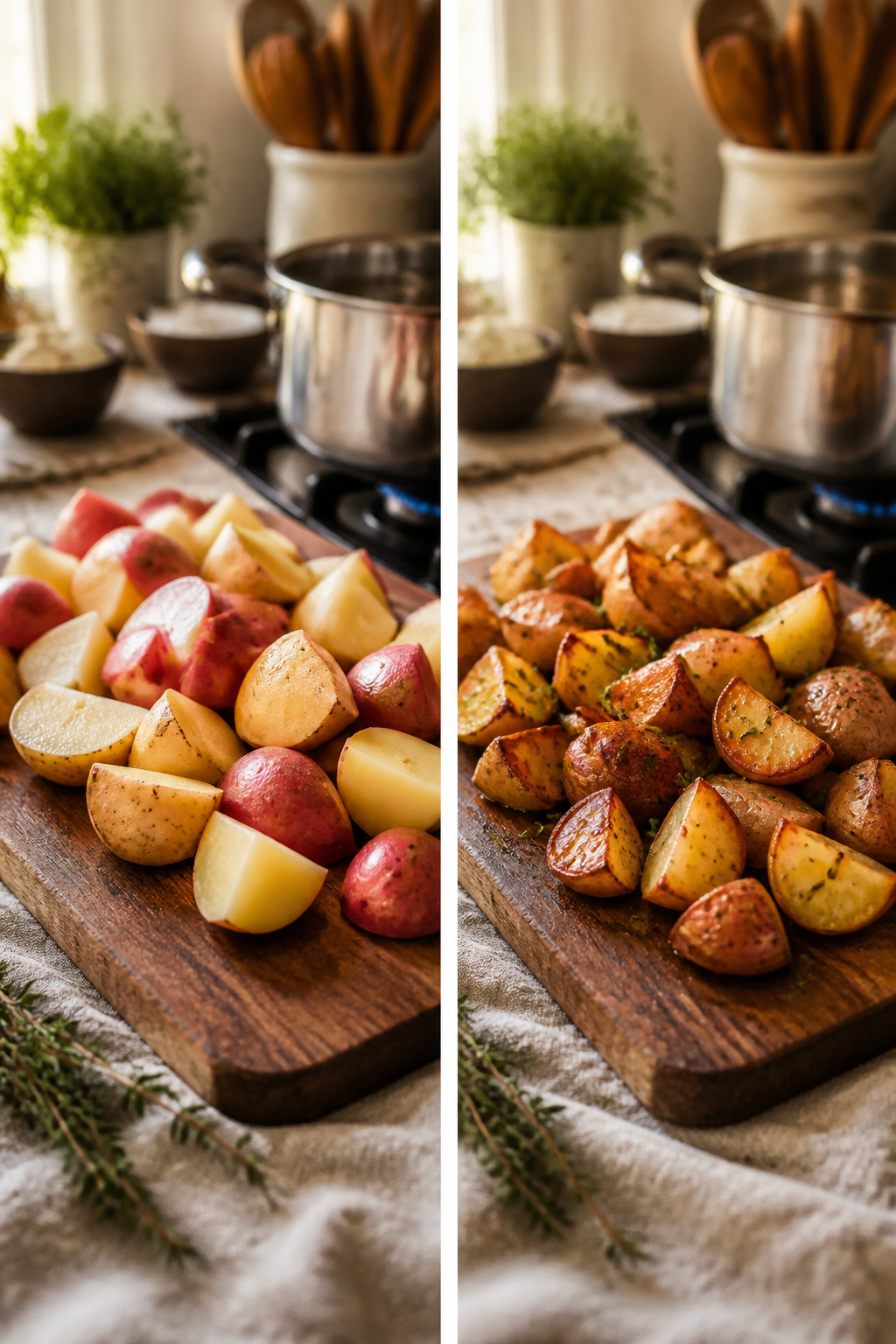
Waxy potatoes hold their shape in a long simmer, which makes red potatoes and Yukon Golds the reliable choice for this dish. Russets carry too much starch and tend to fall apart in the broth, turning the pot cloudy and thick where you want it clear and light. The cut matters as much as the variety. Quarter your potatoes into similar-sized chunks so every piece finishes tender at the same moment, not half raw and half collapsing. Cooking time shifts with both type and size: small new potatoes quartered might need 15 minutes, while larger Yukon Gold pieces can run closer to 25. Russets in a pinch demand smaller chunks still, since their density takes longer to penetrate than their breakdown would suggest.
Stovetop, Slow Cooker, or Instant Pot
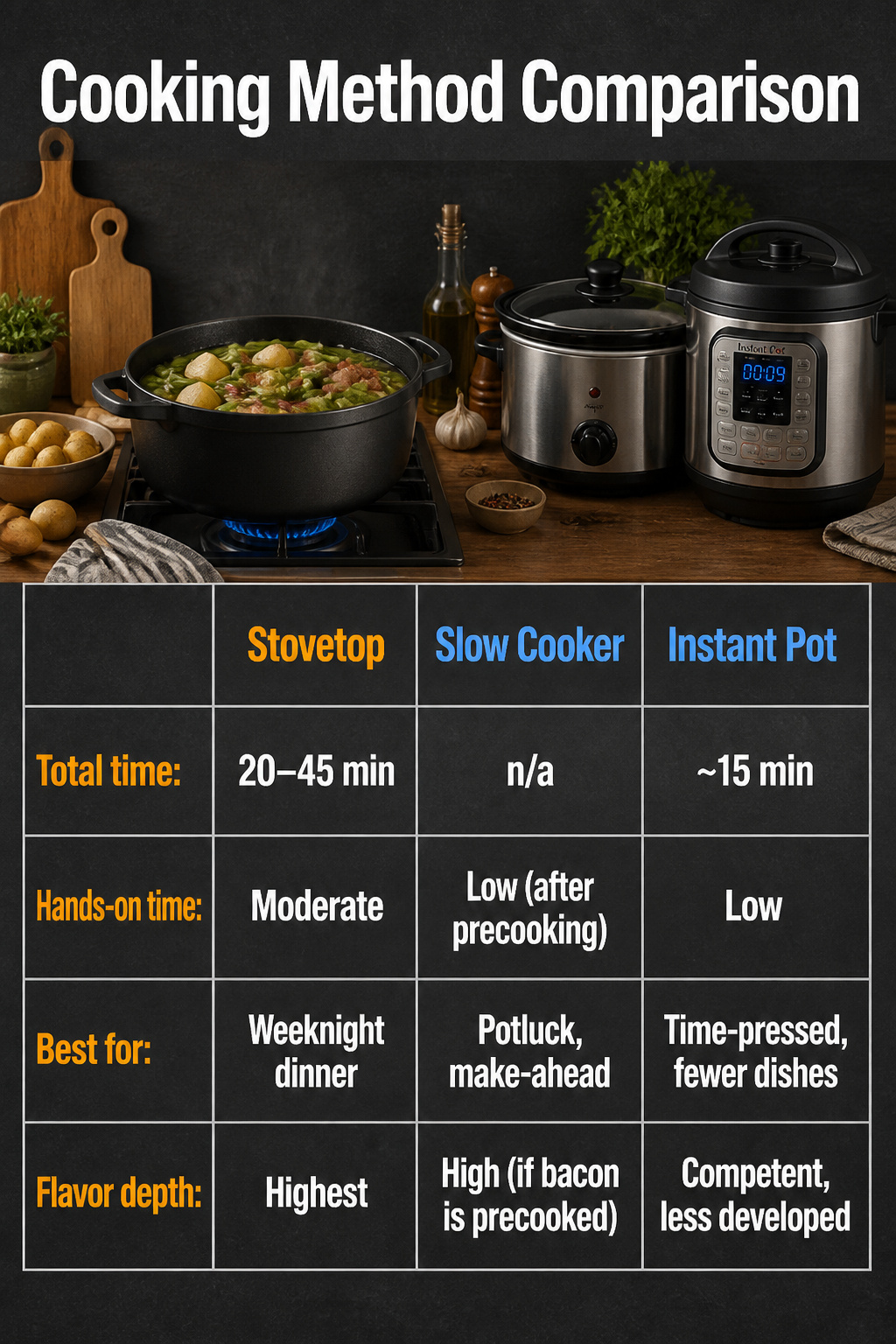
Stovetop stays the standard for this dish, and the reason is control. A heavy pot on a low burner lets the beans collapse slowly while the potatoes soak up broth without turning to mush. Most recipes land between 20 and 45 minutes total, depending on whether you want the beans tender or fully silky.
The slow cooker works if you front-load the flavor. Bacon and aromatics need a skillet first; throwing raw onion into six hours of gentle heat leaves it washed-out and sweet in the wrong way. Once browned, everything transfers and holds beautifully for a potluck or a make-ahead Sunday dinner.
The Instant Pot trims active time to about 9 minutes under pressure plus a 5-minute natural release, but that speed costs depth. What builds over 45 minutes of stovetop simmering, the broth reducing and the beans taking on smoke, gets compressed into something competent rather than craveable.
| Stovetop | Slow Cooker | Instant Pot | |
|---|---|---|---|
| Total time | 20–45 min | n/a | ~15 min |
| Hands-on time | Moderate | Low (after precooking) | Low |
| Best for | Weeknight dinner | Potluck, make-ahead | Time-pressed, fewer dishes |
| Flavor depth | Highest | High (if bacon is precooked) | Competent, less developed |
For most weeknights, the stovetop wins. The Instant Pot is defensible when the sink needs to stay empty and dinner needs to happen fast.
Making It Vegetarian

The vegetarian version of green beans with potatoes comes up often enough that the substitutions are worth spelling out plainly. Use olive oil in place of bacon for the fat that carries the rest of the flavor, and swap chicken broth for vegetable broth. The oil does not render down the way bacon does, so the pot starts quieter; smoked paprika fixes that. A pinch, maybe a half-teaspoon, stirred in with the onions, gives back the depth the bacon would have built. The rest of the method stays the same. Potatoes still need to sit fully submerged in the broth to pick up salt, and the beans still want that slow simmer until they go soft without collapsing. The result is not identical, but it is complete, and it answers the question without making the cook feel they are settling for less.
Frequently Asked Questions
Can I use canned green beans instead of fresh?
Yes, but drain them well and add them only in the last ten minutes of cooking. Canned green beans are already fully cooked, so any longer and they collapse into mush before the potatoes finish.
What type of potatoes work best?
Red potatoes or small Yukon Golds hold their shape through the long simmer. Russets break down faster and can turn the broth cloudy, so save those for another dish.
How do I make this dish vegetarian?
Swap the bacon for olive oil and use vegetable broth instead of chicken broth. Add a half-teaspoon of smoked paprika with the onions to replace the depth that rendered bacon fat would have built.
Can I cook this in a slow cooker?
Yes, but brown the bacon, onion, and garlic on the stovetop first. Raw onion in six hours of gentle heat turns washed-out and sweet in the wrong way. Once browned, transfer everything and cook on low.
How do I know when the potatoes are done?
A fork should slide through a potato piece without any resistance at all. If you feel firmness, give them another five minutes covered on low heat.