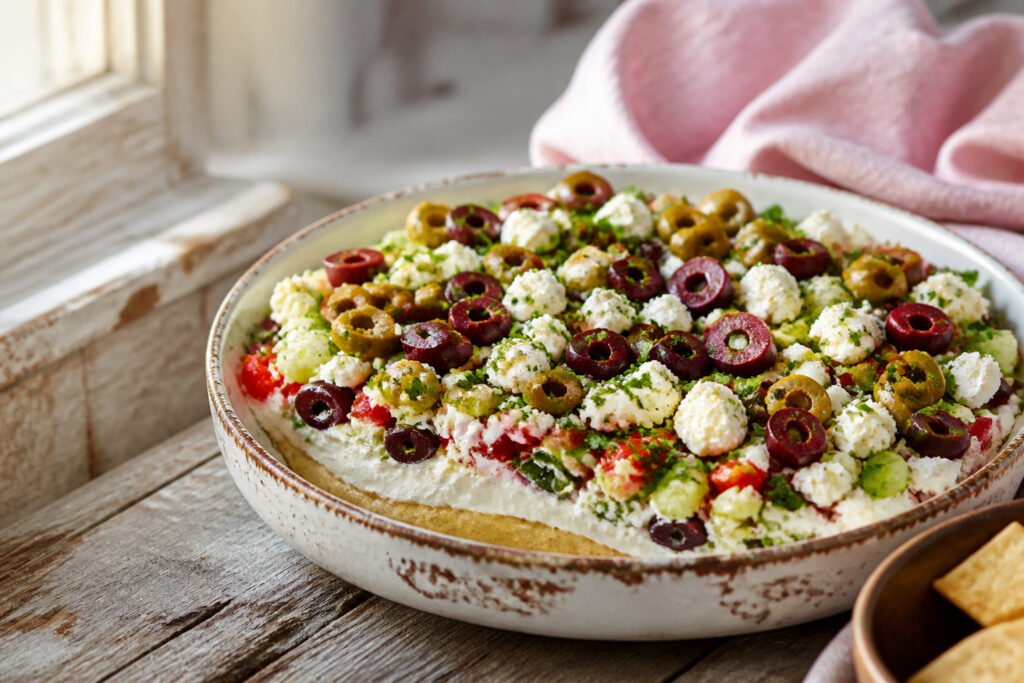
A Greek 7 layer dip tastes like cool, garlicky yogurt cut by briny olives and sharp feta, layered over hummus instead of refried beans. It takes about four hours in the fridge to set into something you can actually scoop. The catch is that cucumbers will turn it watery if you assemble too early, even after salting and draining them. Salt yours, pat them dry, and hold them out until just before the doorbell rings; that single step is what separates a crisp stack from a puddle.
What Greek 7 Layer Dip Is and When to Make It
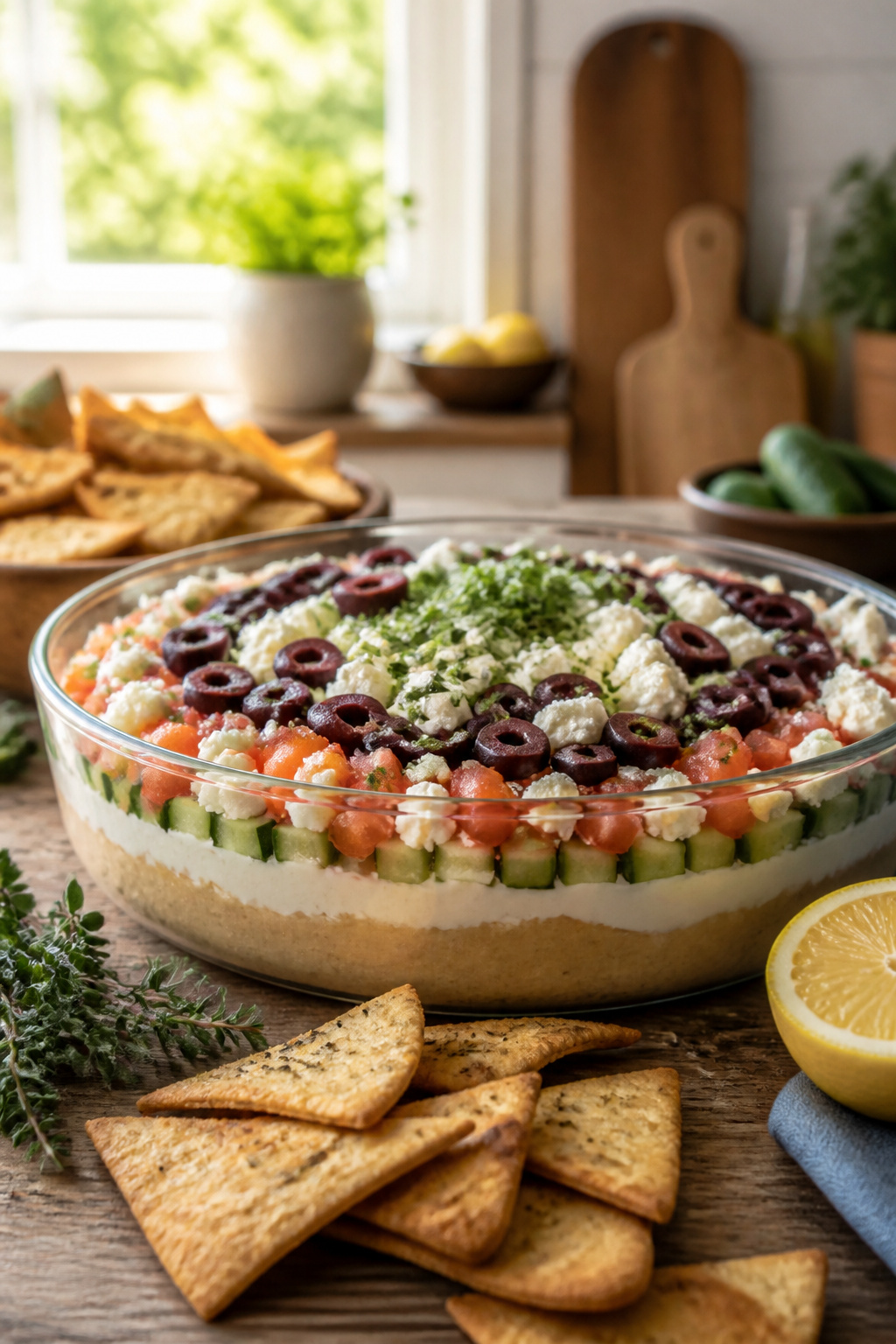
A Greek 7 layer dip is a cold appetizer built in a shallow dish, stacked from bottom to top with hummus, seasoned Greek yogurt, salted cucumber, diced tomato, crumbled feta, chopped olives, and whatever fresh garnish you have. Nothing gets cooked; everything gets assembled, which makes it the kind of dish you pull together when the oven is already full or the kitchen is too hot to turn on.
At Opa! Willow Glen, we kept this on the menu from 2008 through 2025 for exactly those nights. San Jose summers run long, and Lincoln Avenue regulars needed something they could bring to a potluck or set out for game day without hovering over a stove. The dip travels well, sits out for a couple hours without wilting, and feeds a crowd from a single dish. What separates it from the Tex-Mex version most people grew up with is the yogurt layer: thick, garlicky, and tart enough to cut through the brine of the olives and the fat in the feta. That balance is what makes people go back in with the pita chip instead of politely moving on to the next thing on the table.
Hummus Base
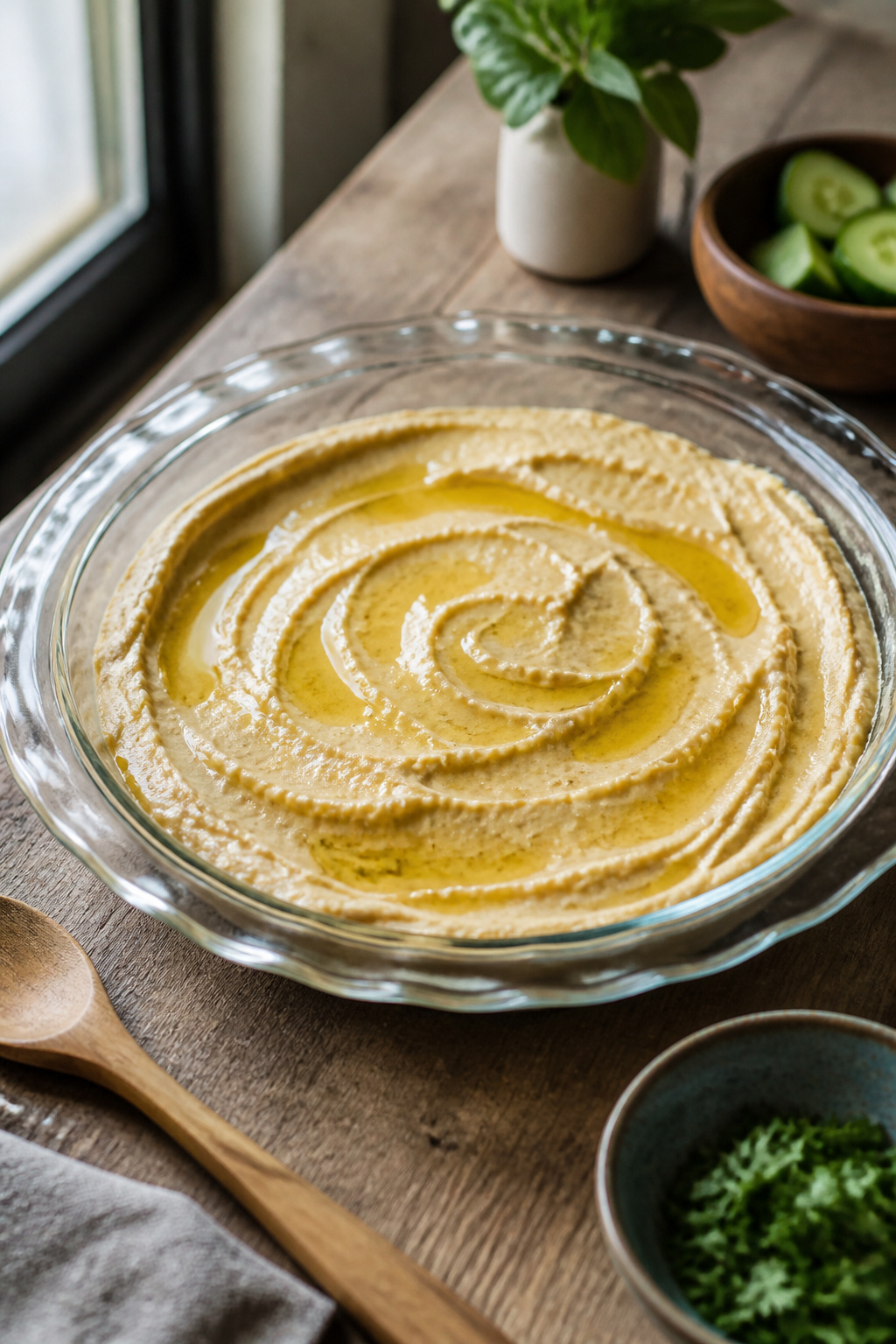
The bottom of a Greek 7 layer dip needs something sturdy enough to hold the weight above it without turning to paste. Eight ounces of hummus does that job. Spread it across a shallow serving dish, maybe a nine-inch pie plate or something similar, and work it to an even layer with the back of a spoon.
Store-bought works fine here. The sources all say so, and I would not argue, not for a dish that already has enough chopping and dicing in the layers above. If you have homemade hummus on hand, that is better, but the point of this recipe is a quick assembly that still looks like you planned it.
Some recipes suggest flavored hummus, red pepper or garlic, as a way to switch things up. I would skip that. Classic hummus lets the fresh toppings, the cucumber and tomato and feta, stay the point of the bite. Flavored hummus competes where it should stay quiet. Plain is the move.
Yogurt Layer with Garlic and Lemon
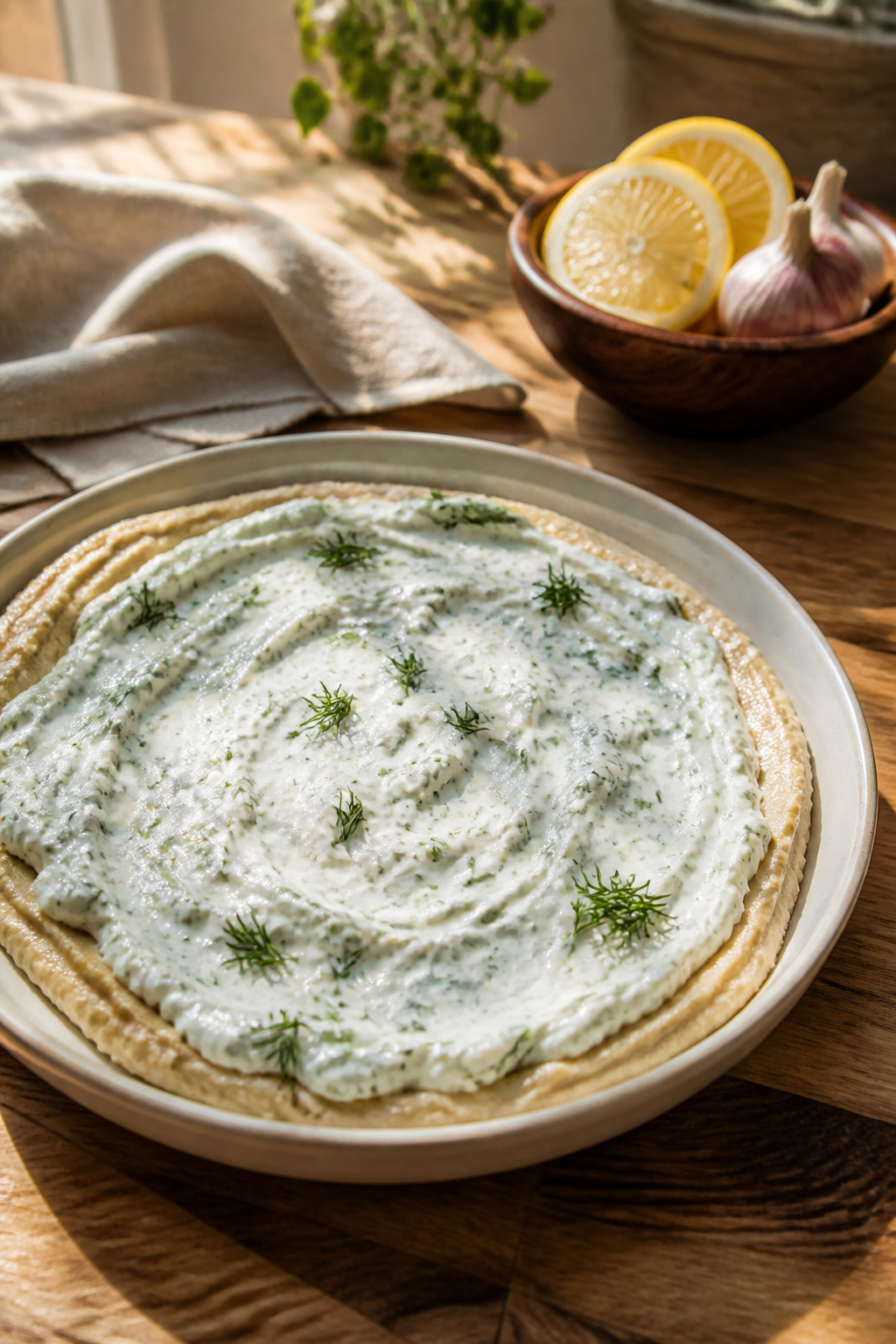
Greek yogurt needs a little help before it becomes the second layer. Three cloves of garlic, minced fine, and 1 tablespoon of fresh lemon juice cut the richness and keep the dip from tasting like straight dairy. I mix those into about a cup of yogurt with a teaspoon of dried dill, plus salt and pepper to taste. Some recipes swap in za’atar for the dill, and that works too, about 1 teaspoon if you want the earthy, sesame hit. The yogurt layer spreads easiest when it’s been sitting out ten minutes, so it doesn’t fight the hummus underneath. Too thick and it drags; too loose and the cucumbers on top sink in.
Salted and Drained Cucumbers
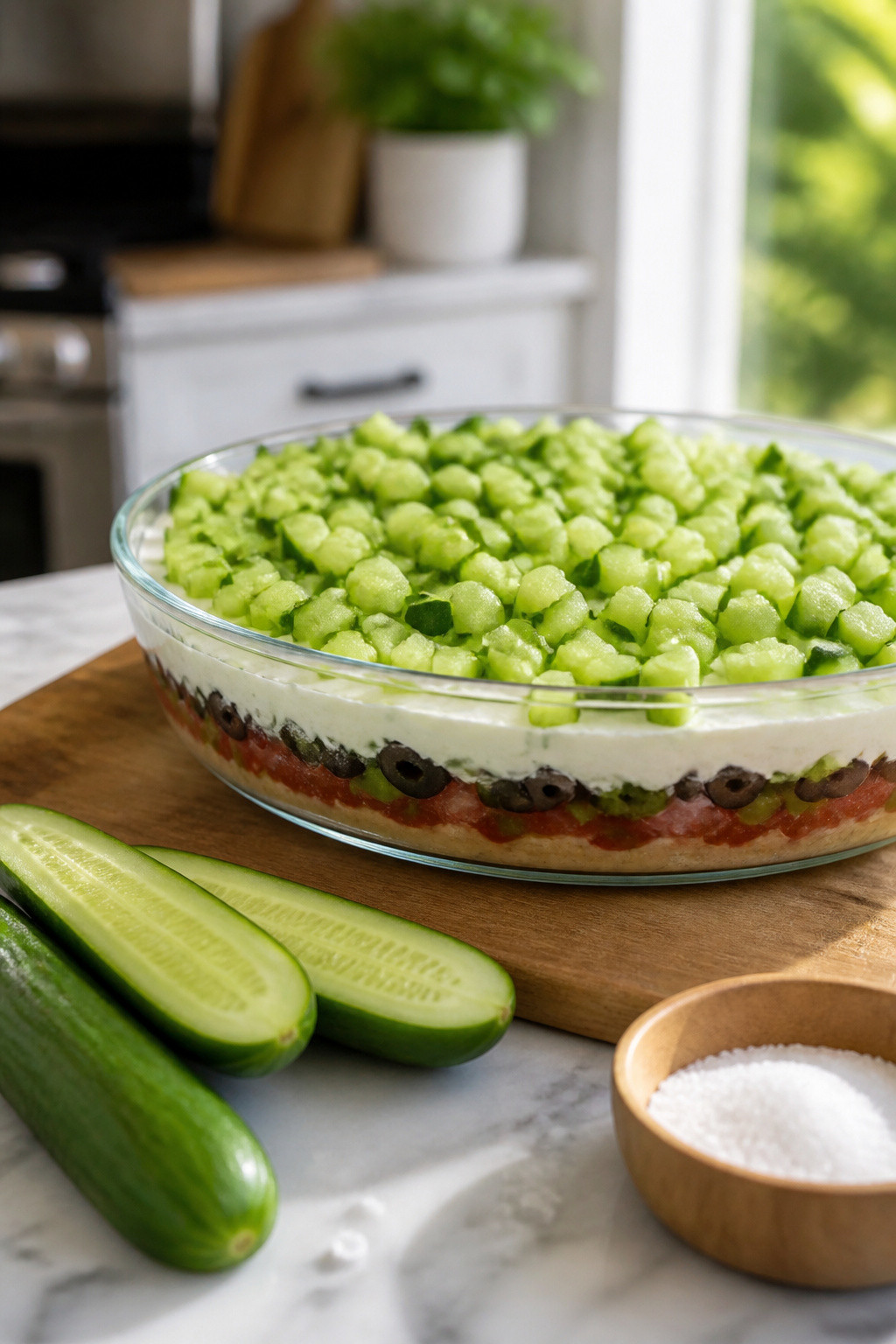
English cucumbers carry less water to begin with, which is why most recipes call for them specifically. I dice about a cup, half-inch pieces, then salt the pile and let it drain in a colander for twenty minutes. The salt draws out moisture that would otherwise pool in the dish and turn the layers watery. Mini cucumbers or the small Persian ones work the same way if that is what your store stocks; the point is choosing a variety that starts drier, then forcing out what is left.
Prep all the ingredients ahead, but layer just before serving, as the cucumbers tend to get watery if they sit too long.
That timing matters even after draining. I pat the cucumbers dry with a paper towel before they go in, one last step that costs thirty seconds and saves the whole construction.
Seeded and Diced Tomatoes
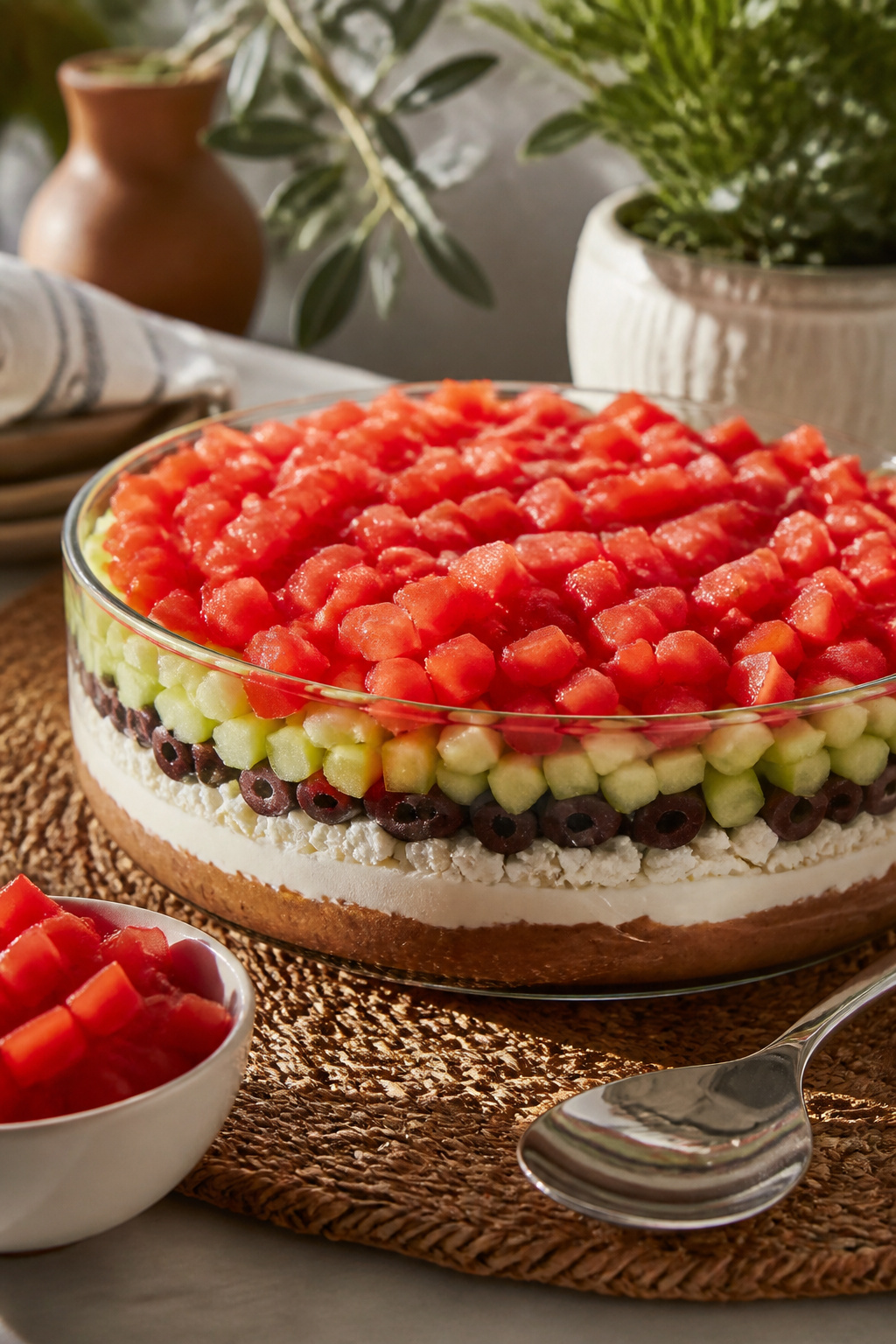
Roma tomatoes hold their shape and carry less water than the salad varieties most grocery stores stock year-round. Cherry tomatoes work too, and they save you the seeding step since a quick halving or quartering gets them dip-ready. Either way, seeding is what keeps the bottom layer from turning to soup. Cut the Roma in half lengthwise, run your thumb down the cavity to lift out the gel and seeds, then dice to about a half-inch. That one cup of clean, diced tomato sits on top of the yogurt without bleeding through, and the dip stays layered until the last chip.
Crumbled Feta
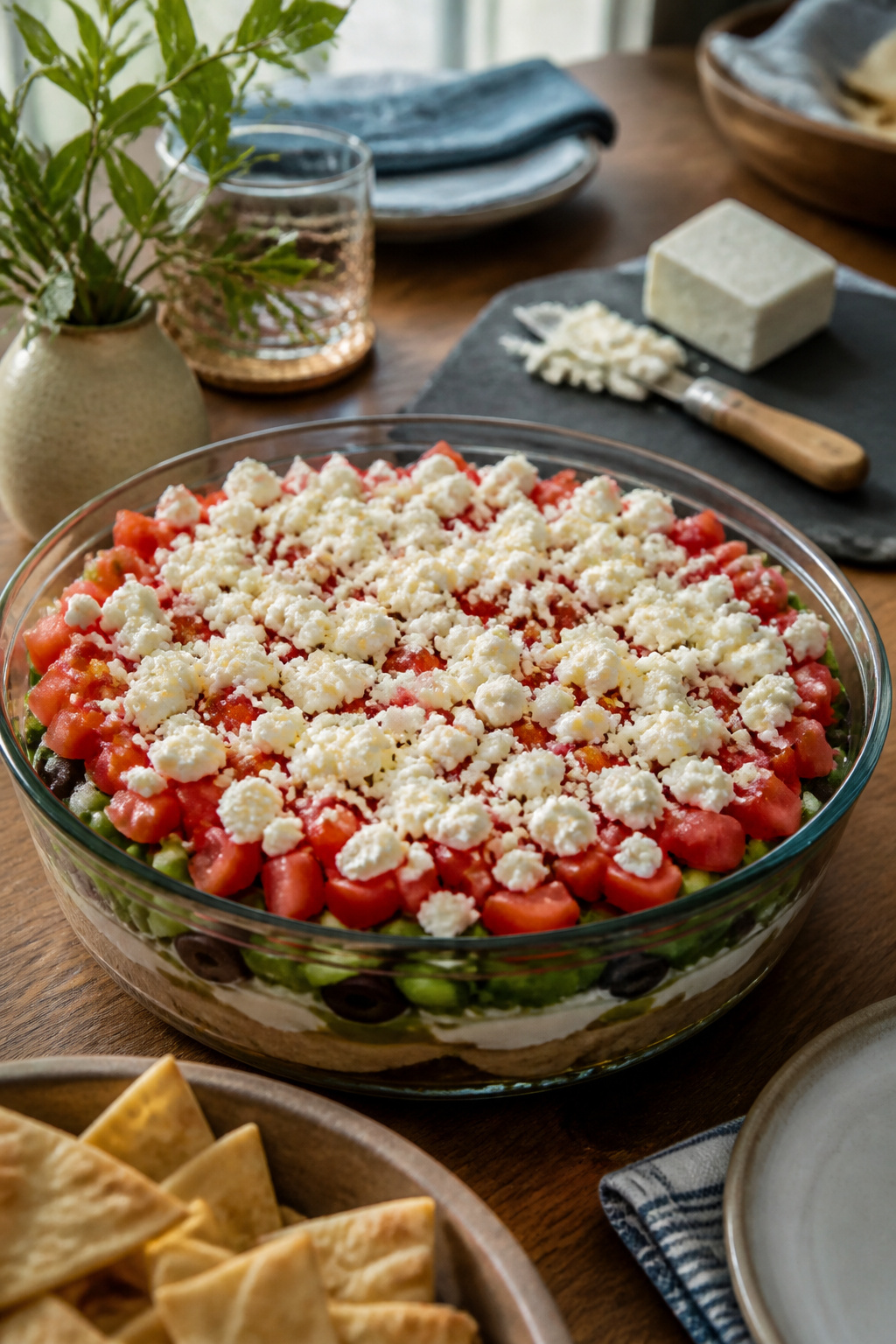
The fifth layer is 1/4 cup crumbled feta, and this is where the dip picks up its sharp, salty punch. Block feta crumbled by hand wins over the pre-crumbled bags for two practical reasons. It is packed in brine, which keeps it moister and more flavorful than the dried-out crumbles that have been sitting in a bag. It usually costs less too. The lower moisture in block feta also means this layer will not weep into the yogurt below it. I crumble it fairly fine so it distributes in a thin, even carpet rather than chunky cubes that roll off the spoon.
Kalamata Olives and Green Onions
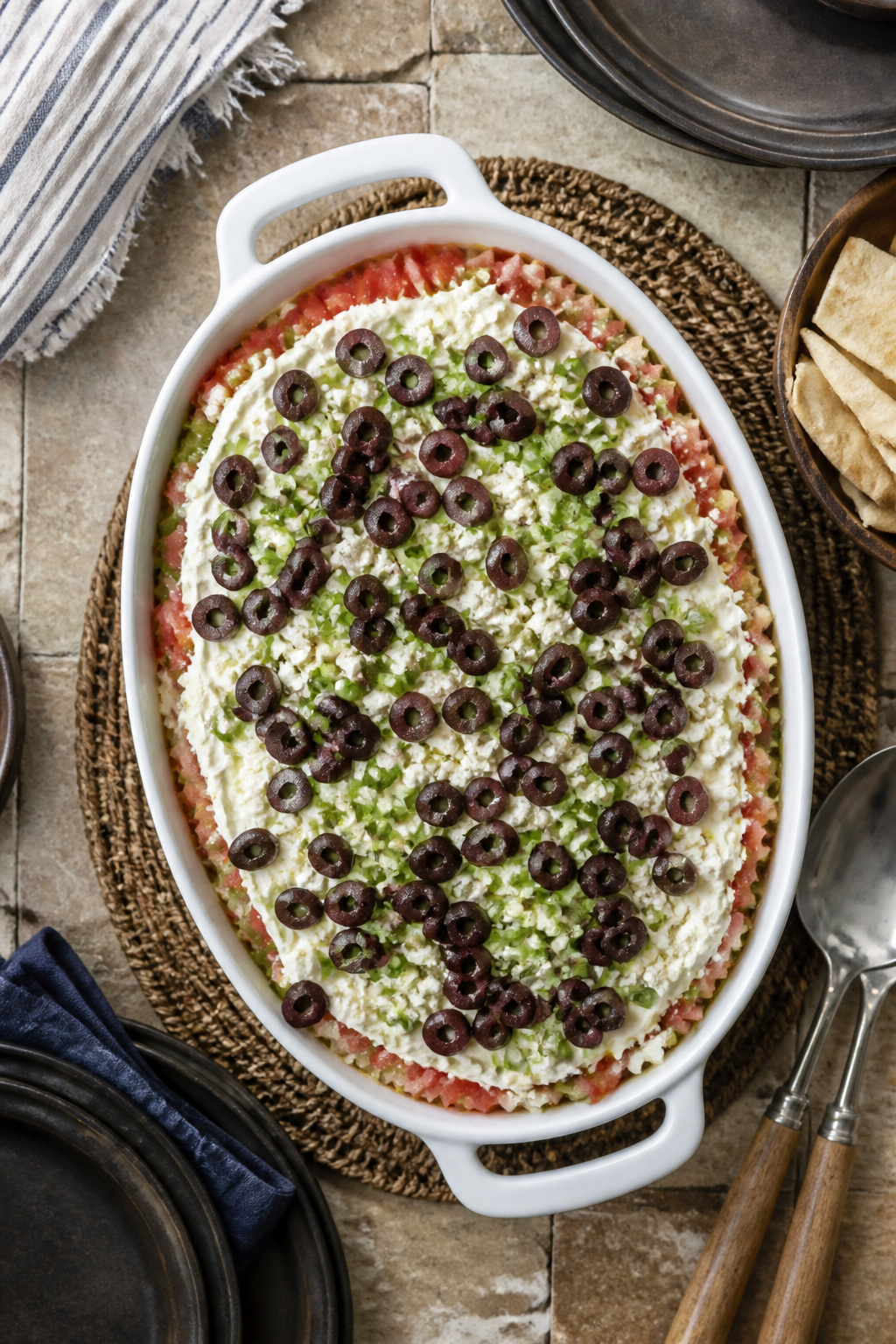
Kalamata olives are what separate this from any layered dip with a Mediterranean theme. Their briny, winey punch is the flavor that reads as specifically Greek, and a quarter cup of sliced Kalamatas is enough to cover the surface without turning the dish into an olive plate. Regular black olives from a can will not do the same work; the taste is flat and the salt hits differently. If the olive bar at your store sells them pitted and whole, slicing them yourself takes two minutes and the texture is better than the pre-sliced tubs that tend toward mush.
Green onions finish the top. Four of them, chopped white and green parts together, scatter across the olives and add a sharp note that cuts through the cream cheese and hummus below. They are optional only because some people treat raw onion as a texture issue, but the flavor lift is real and the color wakes the whole thing up. I skip them only if I know someone at the table is onion-averse; otherwise they go on every time.
Chill and Serve
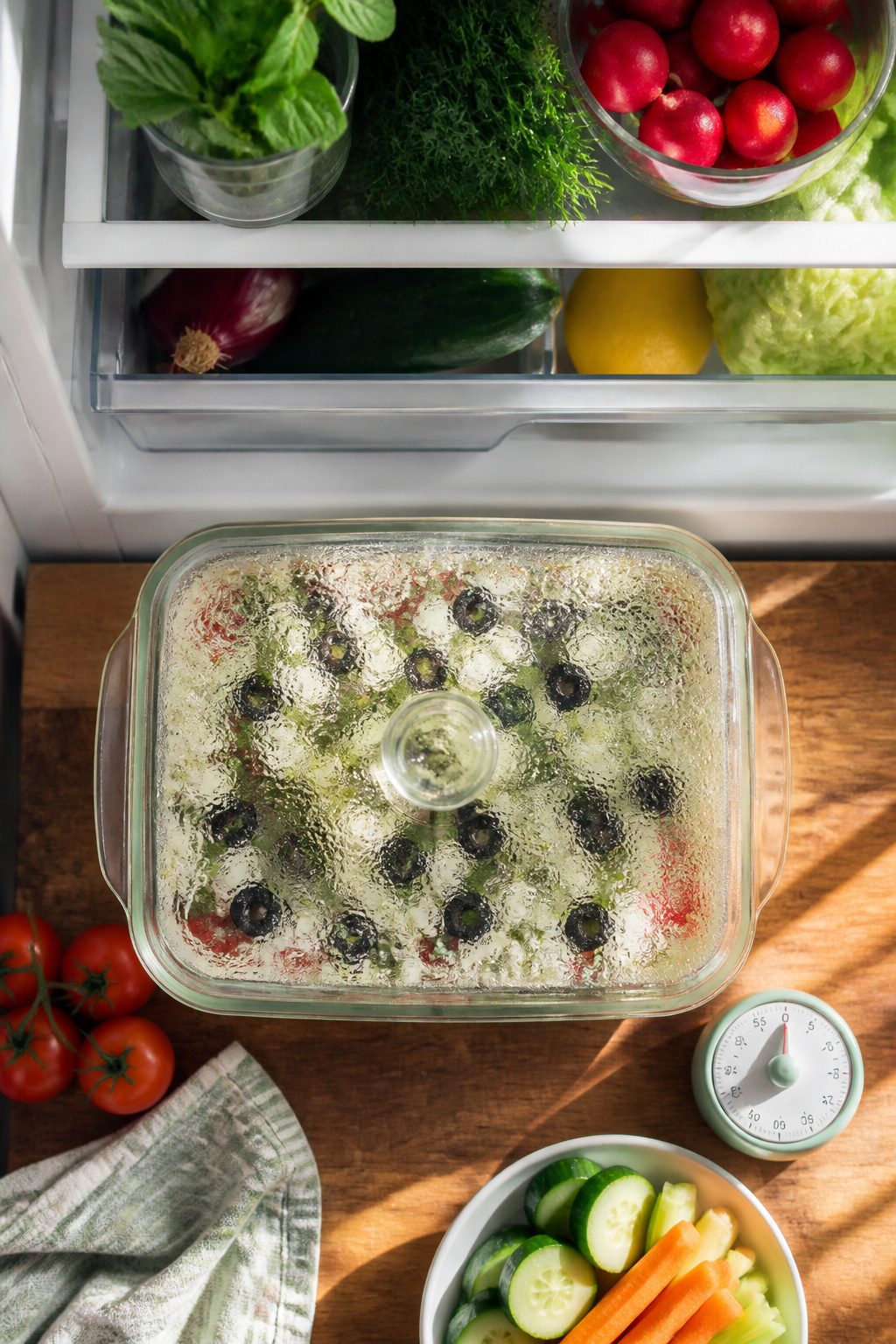
Cover the dish tightly and chill for at least four hours, or overnight if the party is tomorrow. That waiting period is what turns seven separate layers into something that tastes like a single, coherent dip. The garlic settles into the yogurt, the salt from the cucumbers drifts downward, and the feta softens just enough to bind with everything above it.
The cold also sets the texture. Without it, the tzatziki layer stays too loose and the vegetables slide apart when someone dips a chip. I have tried rushing this step for a gathering that started early, and the difference is immediate: the unchilled version reads as a salad that happens to be stacked, while the chilled one eats like an actual dip. Four hours is the minimum that gets you there.
Yield and Storage

The finished dip fills a standard 9-by-13 inch dish and feeds about 8 as an appetizer, more if it is one of several things on the table. Leftovers keep covered in the refrigerator for up to two days, though the texture is noticeably softer after the first day. Cucumbers continue to release moisture even after salting and draining, so the top layers will weep into the yogurt below. I would not promise anyone exact calorie counts or macros here; too much depends on the brand of hummus and how heavy your hand is with the feta.
If you need the dip to look its best, plan to finish it within a day. After that, the flavor is still good, but the clean layers you built will have settled into something more like a thick, herby spread.
Substitutions and Variations
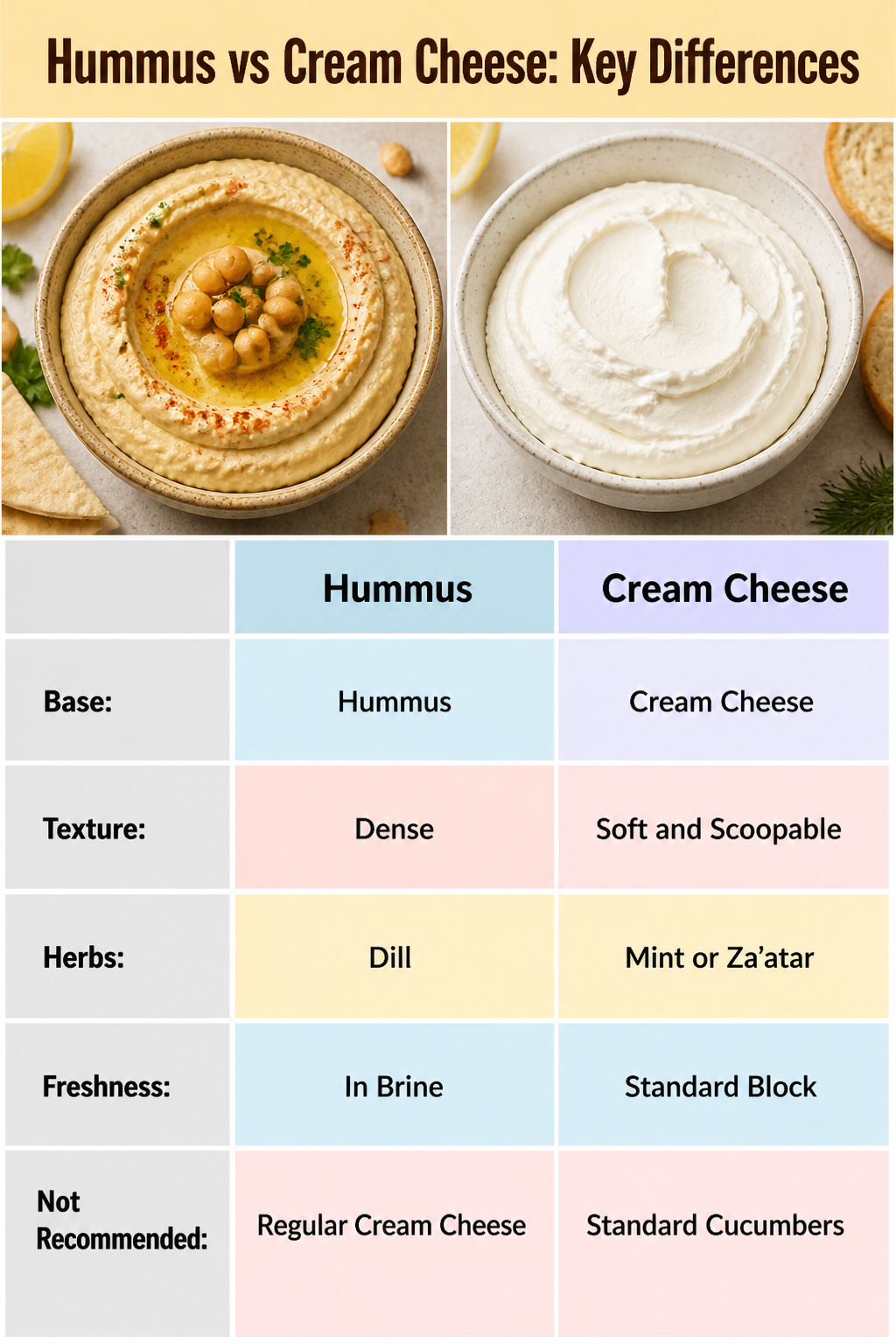
A few swaps change the dip completely, and a few fall flat.
- Hummus versus cream cheese as your base: Hummus gives a denser, more savory foundation that holds up for hours. Cream cheese, especially the whipped kind, stays soft and scoopable even after chilling and carries lemon and garlic more cleanly. Plain hummus keeps the layers from competing; save roasted red pepper or other bold flavors for another use.
- Herbs: Dill is the standard, but mint works if you want something cooler and sharper. Za’atar, a blend of herbs and sesame, belongs in the yogurt layer rather than as a sprinkle; it needs moisture to bloom. Italian seasoning, built on the same Mediterranean herbs as Greek blends, is a straight swap if that is what you have.
- Cheese: Feta in brine stays moist and fresh longer than pre-crumbled. A block cut into small cubes gives you more control over texture. Skip the feta only if you are already skipping dairy entirely; the salt and tang are doing real work in the balance.
- What does not work: Regular block cream cheese straight from the fridge stays lumpy no matter how long you stir. Cold is the enemy here. Standard cucumbers without seeding will turn the dip watery faster; English or Persian cucumbers hold their shape, and if standard is all you have, scrape the seeds out before chopping.
Make Ahead Without Sogginess
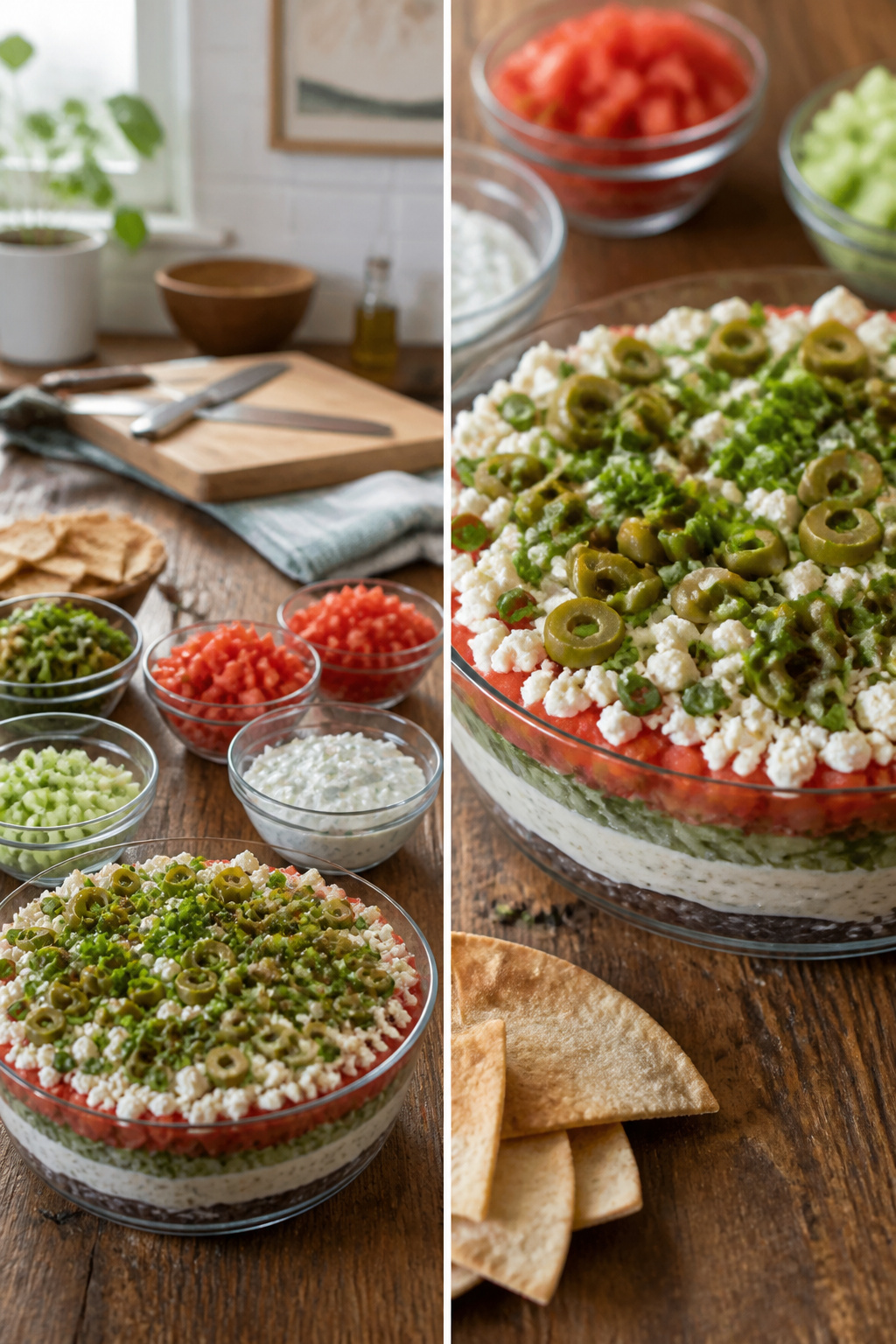
Assemble the dip just before serving if you want the crisp layers you built. The cucumbers, even salted and patted dry, will release moisture once cut. Let them sit in the bowl overnight and you get a puddle instead of a dip.
What works is prepping every component ahead. Salt the cucumbers, squeeze them, and refrigerate them in a covered container. Mix the yogurt layer with garlic and lemon and keep it separate. Seed and dice the tomatoes, crumble the feta, slice the olives and green onions. Each component holds fine for a day, sometimes two for the yogurt layer.
When guests arrive, five minutes of layering is all it takes. The tzatziki goes down first, then cucumbers, tomatoes, feta, olives, green onions. If you must build earlier, hold the cucumber layer out and add it at the last minute. Some cooks assemble up to twelve hours ahead this way, though four hours is the safer ceiling for the full stack.
Leftovers keep one to three days covered, but the cucumber will weep. Stir it all together and spoon into tortillas for pinwheels, or toss over chopped romaine. Freezing ruins the fresh vegetables and the yogurt base, so skip it.
What to Serve With It
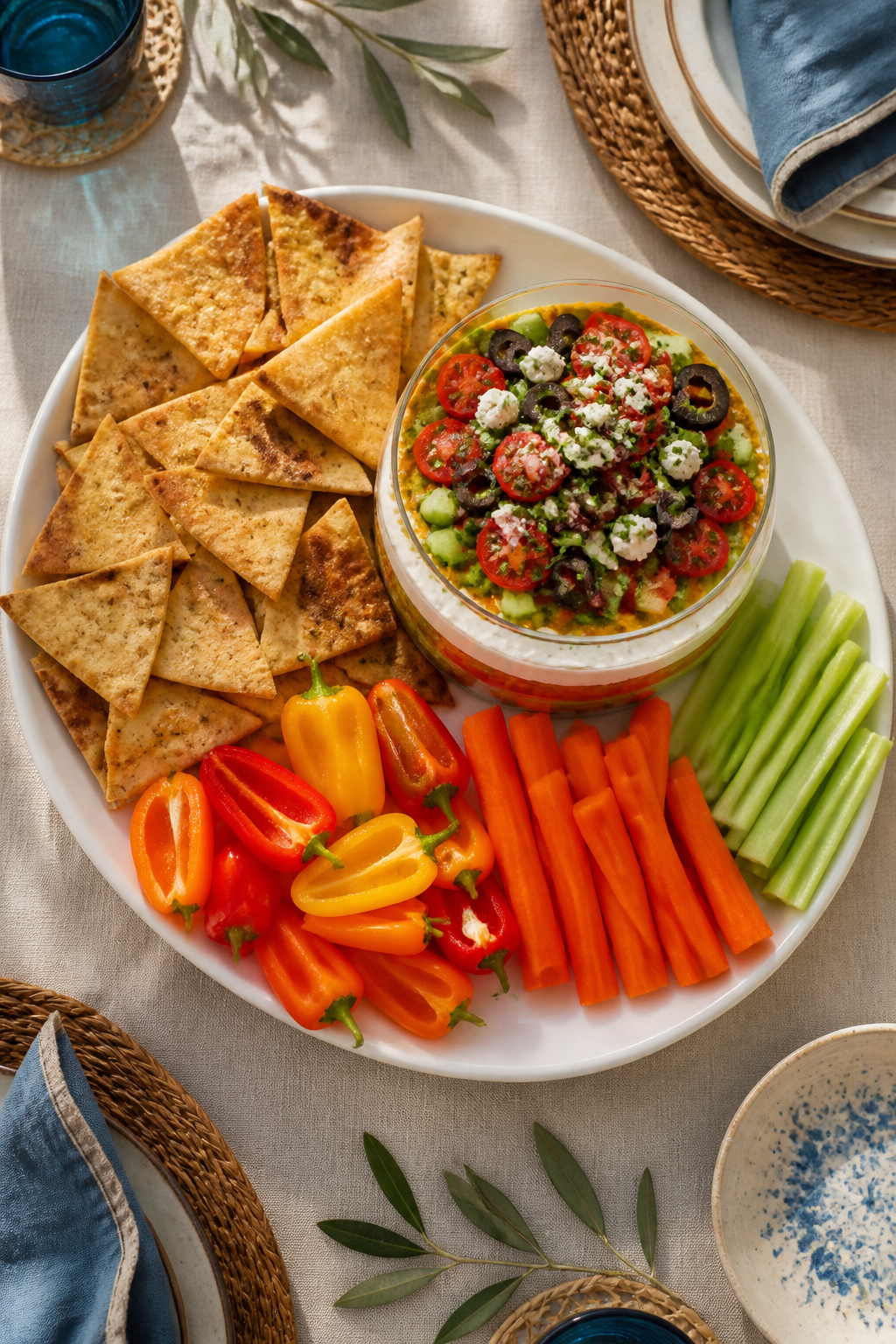
The right dipper keeps this from being the thing people pick around. Pita chips are the move here, not tortilla. The flavors land cleaner, and store-bought ones work straight from the bag if that is what the afternoon allows. Warm pita wedges take ten extra minutes and repay it.
For vegetable dippers, mini bell peppers hold up best. They do not wilt under the weight the way cucumber slices can, and they scoop without snapping. Bell pepper strips, carrot sticks, and celery all work if that is what is in the crisper.
A few things to skip or handle carefully:
- Crackers and crostini are fine, but this dip is dense. Lay out a couple of spoons so guests are not fighting broken shards.
- Bagel chips and multigrain tortilla chips show up in some versions, though they compete more than complement.
- If you are building a larger spread, this sits well alongside grilled chicken or a Mediterranean plate, but it does not need to carry the whole board alone.
Frequently Asked Questions
Can I make Greek 7 layer dip the night before?
You can prep every component the night before, but layer them just before serving. Salted cucumbers keep releasing moisture after they are cut, and even a few hours of sitting will soften the clean lines you built. If you must assemble ahead, hold the cucumber layer out and add it at the last minute.
What can I serve with Greek 7 layer dip?
Pita chips are the best match, followed by warm pita wedges if you have ten extra minutes. For vegetable dippers, mini bell peppers hold up better than cucumber slices, which can wilt under the weight. Carrot sticks and celery work too. Lay out spoons alongside crackers or crostini; this dip is dense enough to snap thin crackers if guests try to scoop with them.
How do I prevent my Greek 7 layer dip from getting watery?
Salt and drain the cucumbers for twenty minutes, then pat them dry with a paper towel before layering. Seed your tomatoes too; Roma or cherry varieties carry less water than standard salad tomatoes. These two steps keep moisture from pooling at the bottom and turning the hummus to paste.