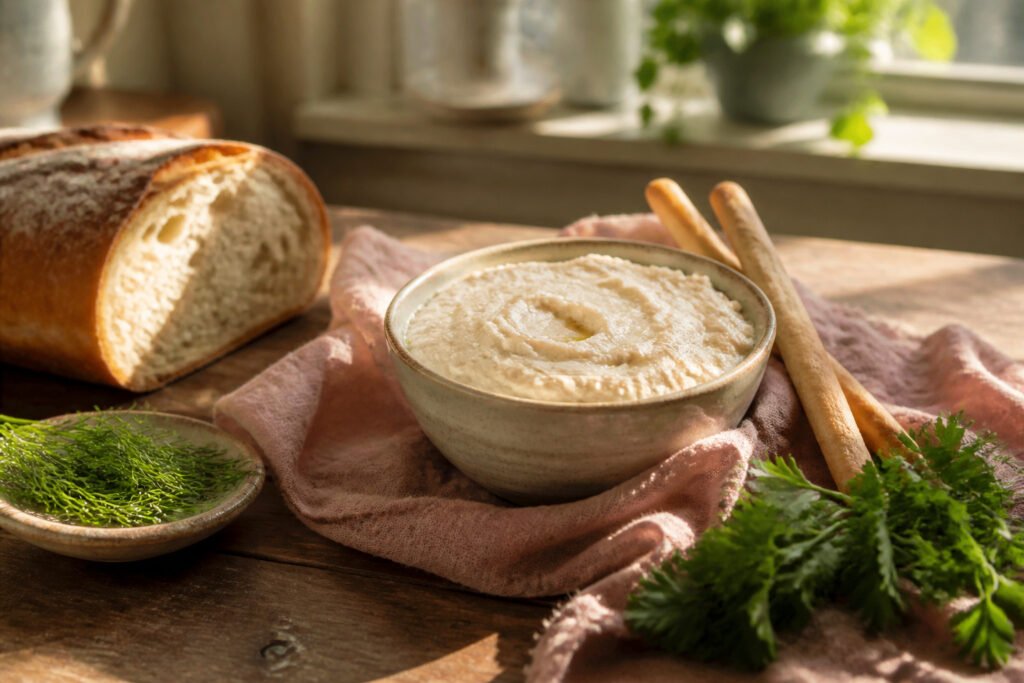
Taramosalata tastes briny and sharp, whipped into something between creamy and fluffy, and this version gets its body from squeezed stale bread rather than potato. Fifteen minutes from start to finish.
The real trick is the color of your roe. Pale beige means undyed, high-quality tarama; the bubblegum pink at most supermarkets is lower-grade fish roe cut with food dye, and the finished dip will taste harsher for it.
What Taramosalata Is
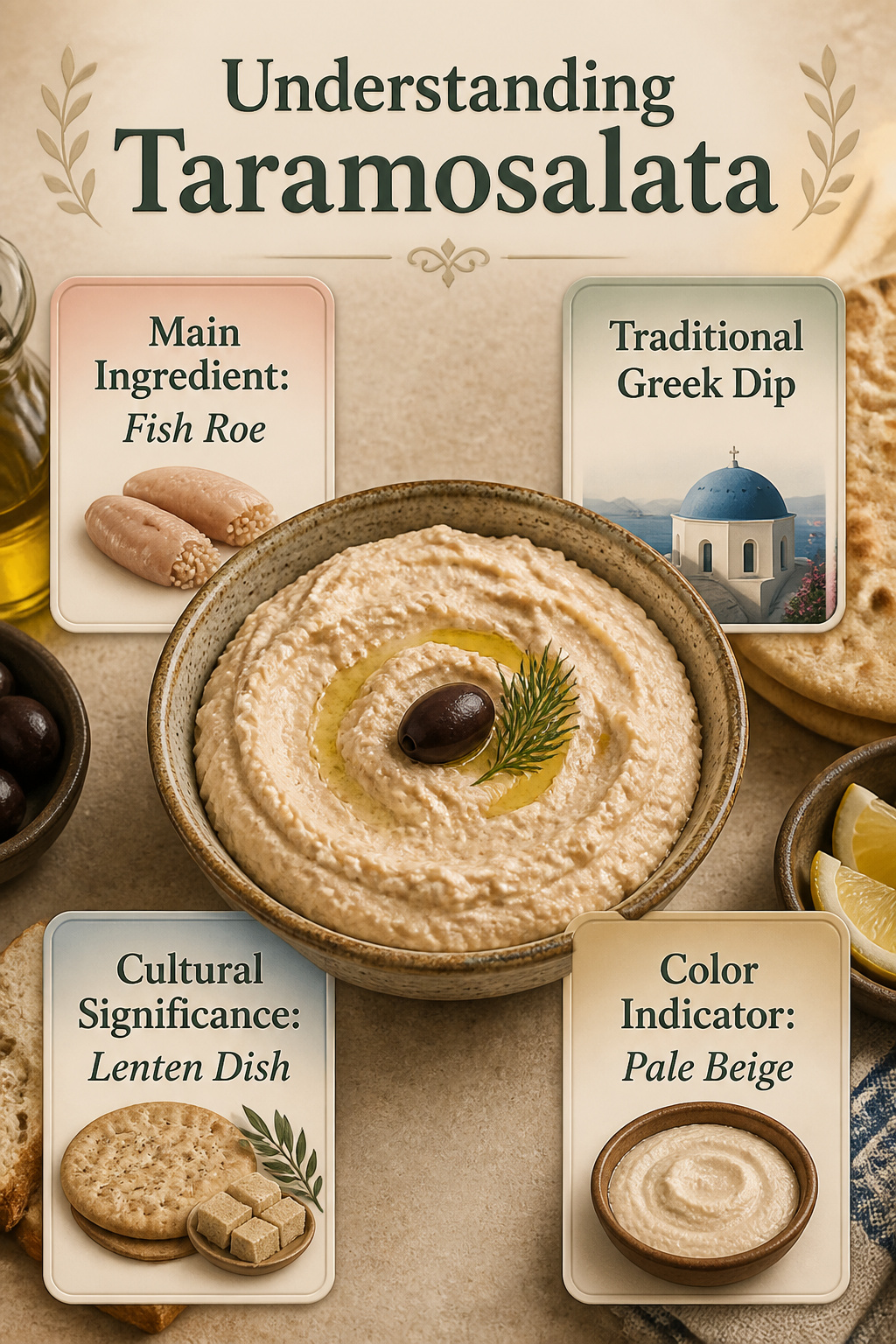
Taramosalata is a Greek dip built from salted and cured fish roe whipped with olive oil, lemon juice, and a starchy binder of soaked bread or mashed potato. The roe usually comes from cod, carp, or grey mullet, and the finished spread lands somewhere between creamy and fluffy with a sharp, briny punch that reads unmistakably of the sea.
In Greek Orthodox households, the dip carries real calendar weight. Clean Monday, the first day of Lent, traditionally opens with taramosalata on the table alongside lagana bread and halva. That forty-day fast turns the dip into something more than mezze; it becomes a permitted richness during a season of stripping back. Restaurants and home kitchens serve it year-round now, but the Lenten association still holds.
Color is where newcomers get tripped up. Proper tarama, the roe itself, runs pale beige. The bubblegum-pink tubs at supermarket delis are lower-grade roe cut with food dye, a visual shortcut that signals nothing about quality. Homemade taramosalata from the real article looks nothing like it, and tastes less aggressively salty for the difference.
Recommended Products

Gluten-Free

Creamy Perfection: Blended with the finest ingredients, our dip achieves a luxurious, velvety texture that melts in your mouth with every bite.

Ingredients (French Crackers): Wheat Flour, Rapeseed Oil, Salt, Raising Agents: Potassium Tartrates, Sodium Carbonates
Soak the Bread
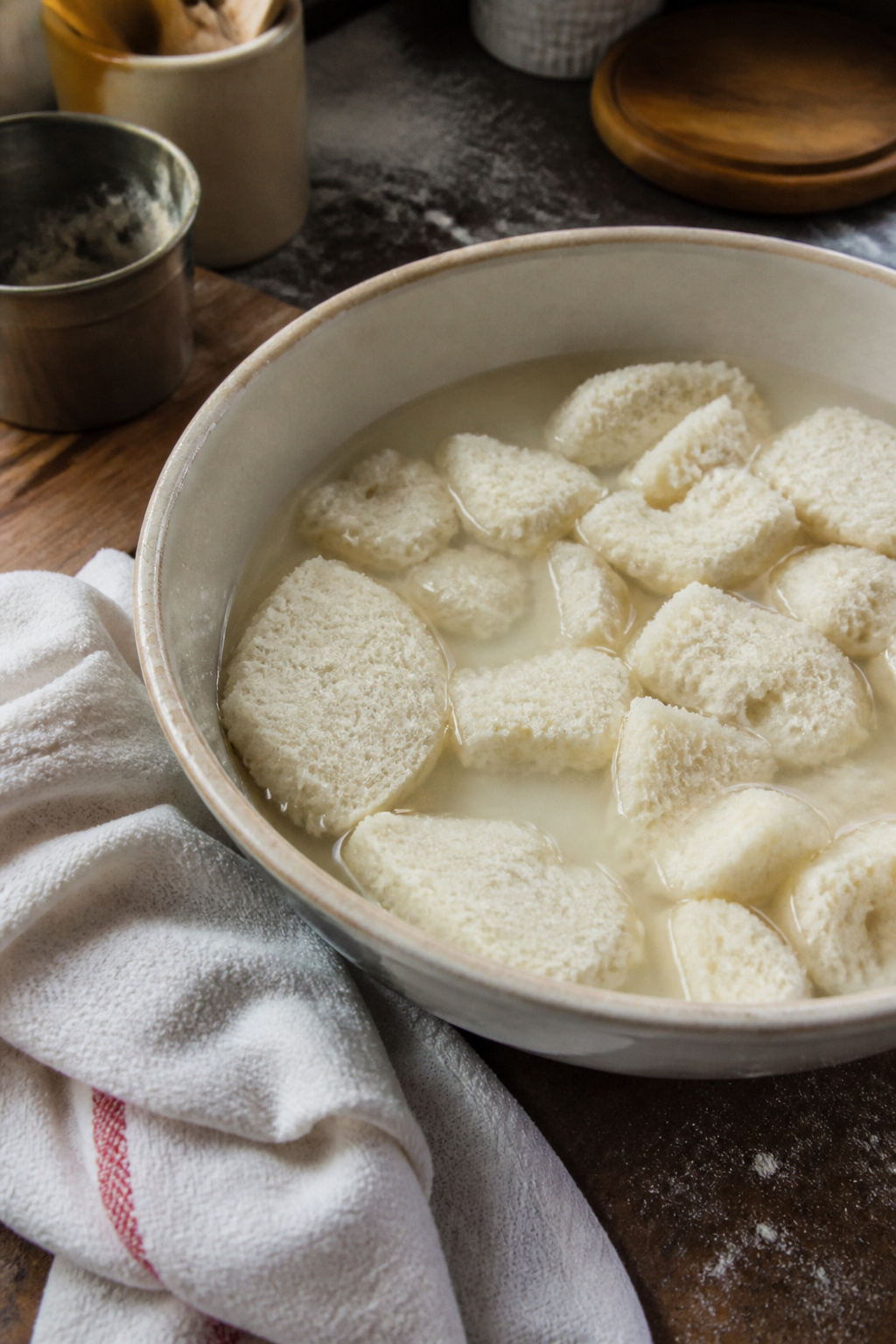
Stale white bread gives taramosalata its body without turning the dip grainy. Tear the crusts from 300g of day-old white bread, then run the pieces under cold water in a bowl until they are fully saturated. Squeeze the soaked bread hard between your palms to wring out the excess moisture. Some cooks wrap the wet bread in a clean kitchen towel and twist it tight, which removes even more water and keeps the final texture silky rather than loose. The bread should feel damp and pliable, not dripping, before it goes anywhere near the processor. Warm water works too, though cold is the traditional route. Either way, the squeezing matters more than the temperature; skip it and the dip turns watery no matter how carefully you emulsify later.
Recommended Products

Product of Italy

Exquisite Lemon-Infused Premium Extra Virgin Olive Oil by BASSO 1904

VERSATILE KITCHEN ESSENTIAL – Ideal for sautéing, roasting, grilling, baking, marinades, salad dressings, dipping sauces, and everyday cooking.
Prepare the Ingredients
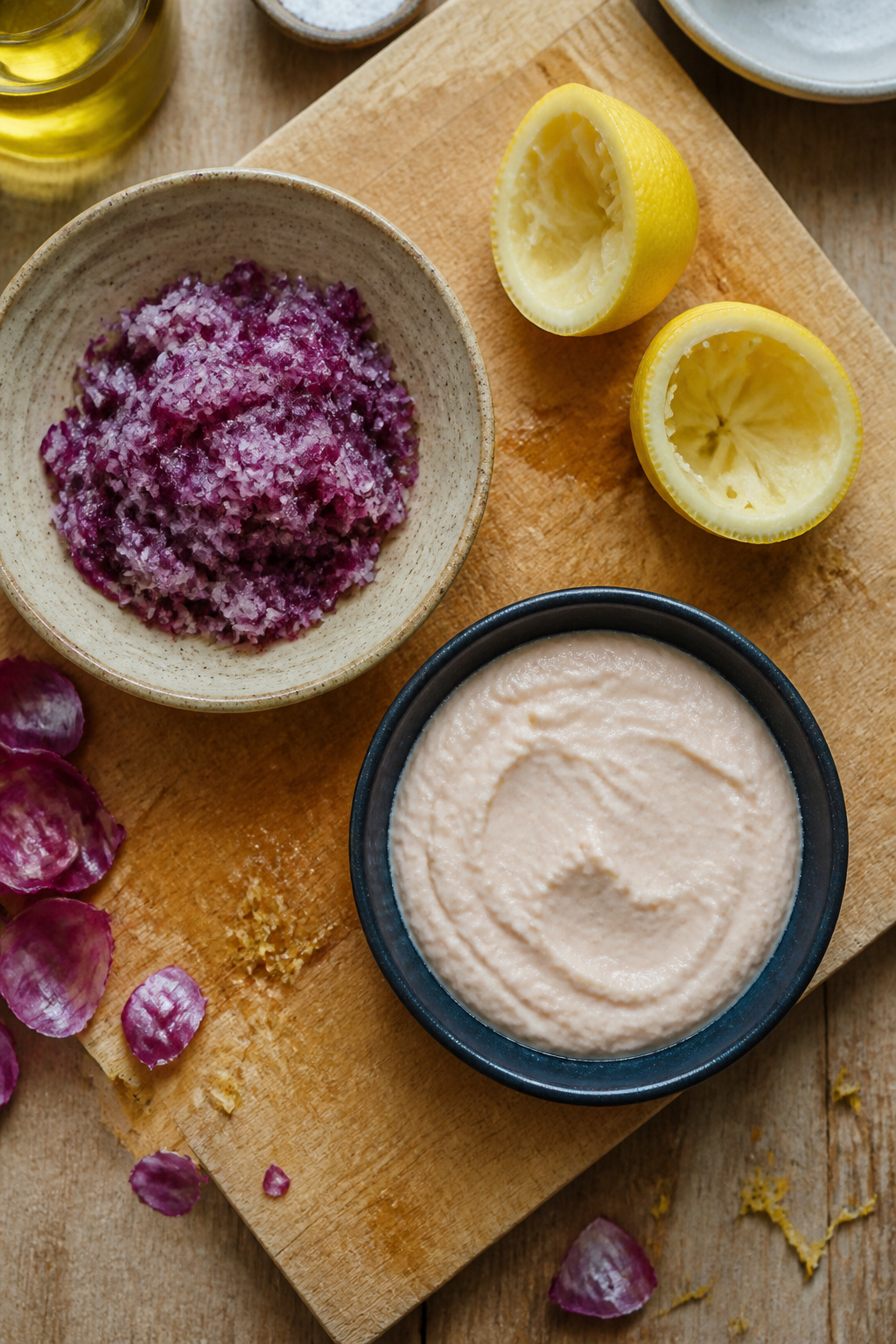
Grating the onion first lets the sharpness mellow while everything else comes together. One medium red onion, grated fine on a box grater, yields about the right bite without turning the dip into salsa. 100 grams of white tarama goes into the bowl next, and this is where quality shows up in color. The pale beige roe is what you want; the bright pink tubs in some grocery cases are lower-grade fish roe dyed to look appealing. The flavor difference is real, and the beige version blends into a cleaner, creamier dip. Squeeze the juice of two lemons, measured out so the acid balances the salt in the cured roe rather than overwhelming it. The onion, roe, and lemon are the flavor core; everything that follows is texture and body.
Recommended Products

DELICIOUS FLAVORS : Six (6) great flavors to choose from (Cracked Pepper, Green Onion, Hot & Spicy, Jalapeno Ranch, Original Ranch and Toasted Onion.) No matter which one you choose, we guarantee a great tasting seasoning dip

ONION & CHIVE DIP - Create a sour cream and onion dip with organic ingredients. This mix features onions, garlic, chives, and black pepper, designed for easy preparation and a rich, flavorful dip.

Great for Chips, Vegetables and Dry Rub Seasoning Meat or Poultry
Blend the Mixture
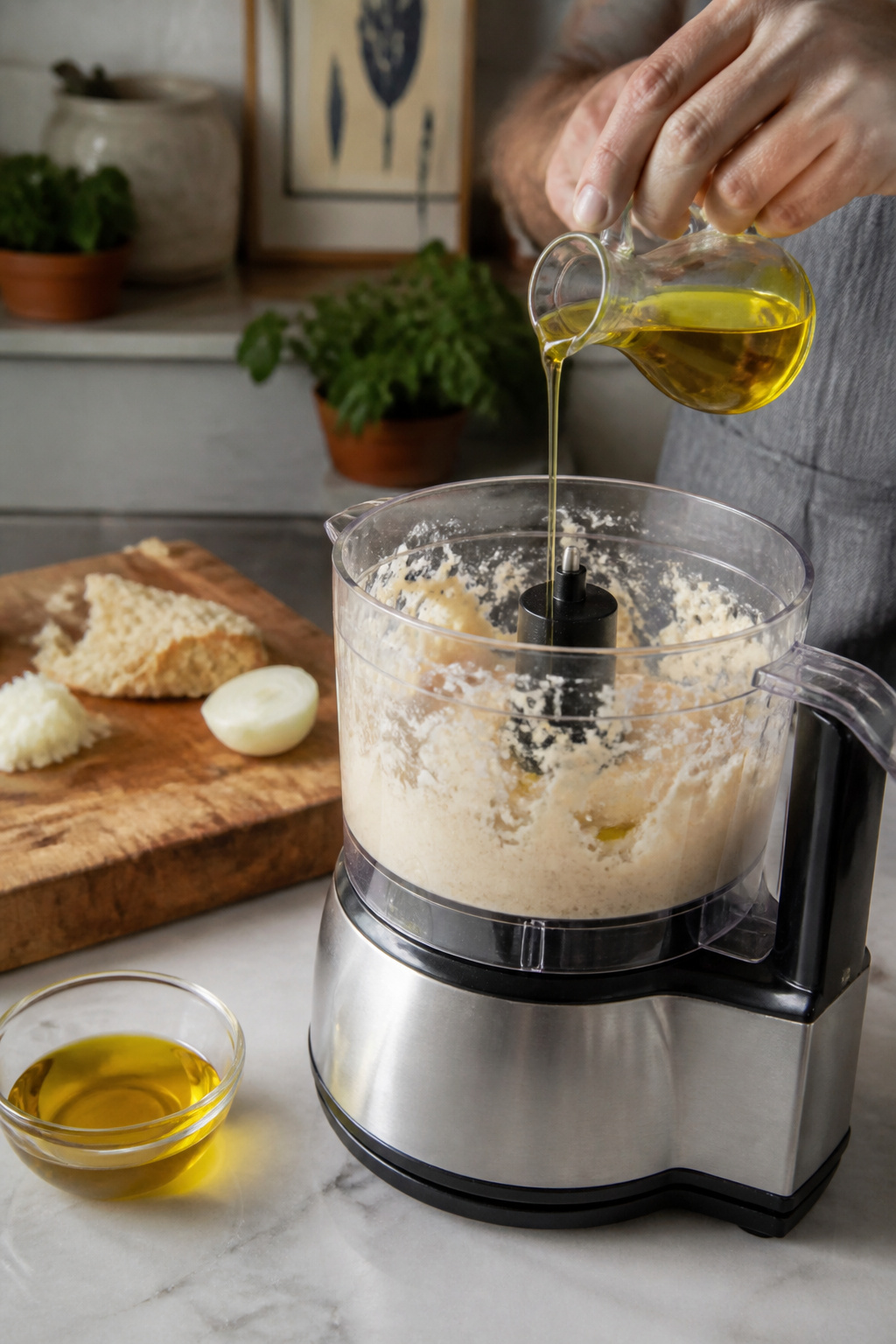
The soaked bread goes into the food processor first, squeezed as dry as your hands can manage. I add the tarama, the grated onion, and the lemon juice, then run the machine until the mixture turns smooth and free of lumps. Some recipes build the base with just the roe, onion, and juice before introducing bread; others pulse the bread in from the start. Either way works, but the bread must be fully incorporated before the oil goes in, or the emulsion breaks before it ever forms. The mixture at this stage looks pale and thick, almost like a rough paste, with the sharp saltiness of the roe still unrestrained. That intensity is expected; the oil step will mellow it. I stop the machine and scrape the sides once, checking for any hidden chunks of bread or onion that would leave the final dip gritty.
Recommended Products

Why choose Chef Anthony's Hot-Smoked Salmon Dip?

Pasteurized Caviar
Emulsify with Oil
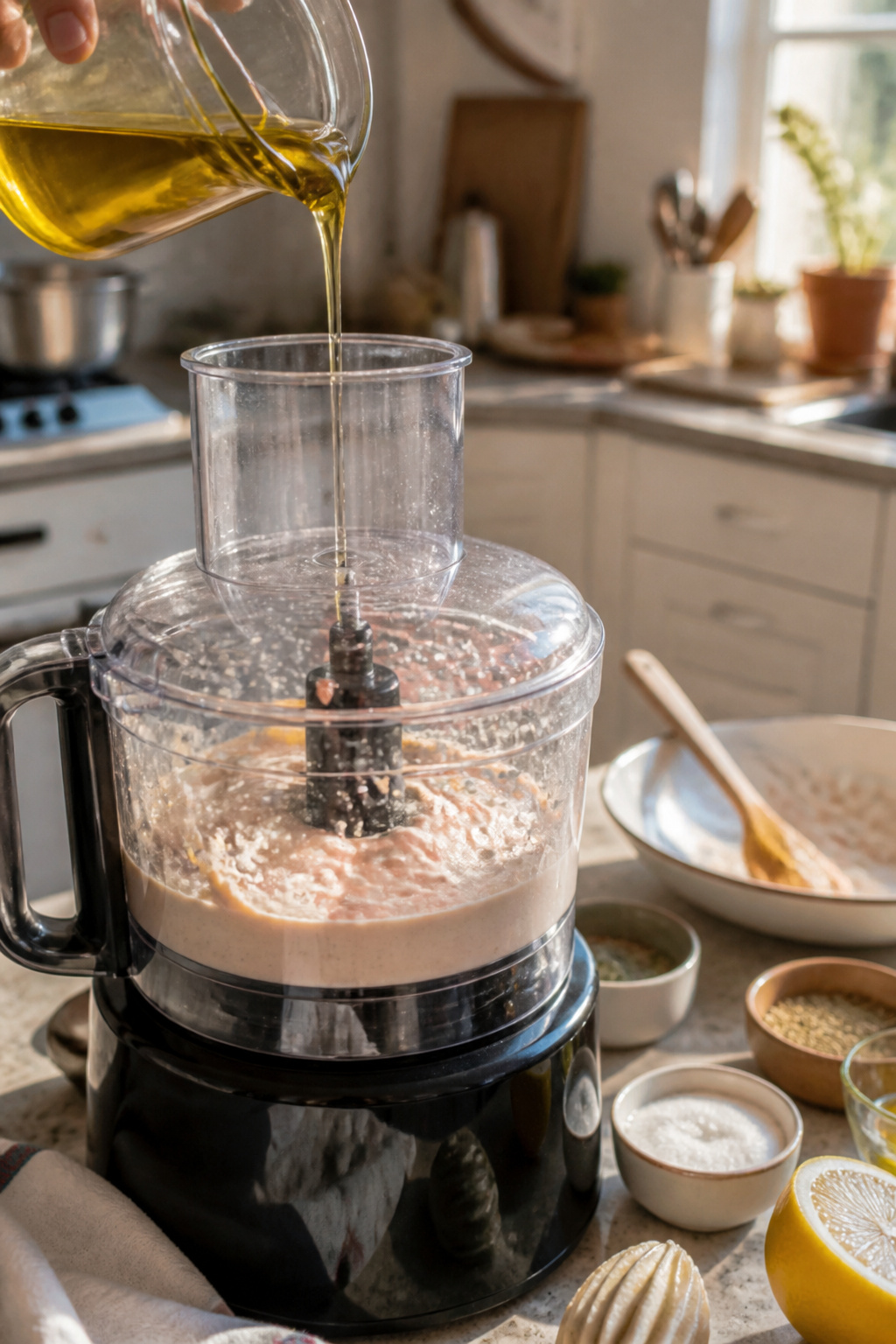
The oil goes in slowly. Pour it in a thin stream while the blender runs, and the mixture thickens from loose paste to something that holds its shape like whipped cream. 170 to 180 ml of olive oil, about three-quarters of a cup, is the amount that gets you there. Rush it and the emulsion breaks, leaving you with oily, separated taramosalata instead of the fluffy cloud you’re after.
Some recipes call for neutral oil, canola or sunflower, which gives a milder dip and lets the roe speak louder. Olive oil is the traditional route, though, and the one I reach for. It adds a peppery backbone that carries the whole thing.
Once the oil is fully incorporated, the texture should be thick enough to mound on a spoon but light enough to spread without tearing bread. That slow pour is the only trick worth worrying about.
Recommended Products

Natural Lemon Infused Olive Oil: Premium extra virgin olive oil blended with natural lemon flavor for a bright, citrusy finish

BRIGHT, REFRESHING LEMON FLAVOR - Cold pressed extra virgin olive oil infused with real Meyer lemon. Fresh, balanced, and naturally vibrant.

Ranked 4th in the World! -—-- Liokareas Estate Grown Lemon Extra Virgin Olive Oil is ranked 4th best flavored olive oil in the world by EVOO World Ranking
Taste and Adjust
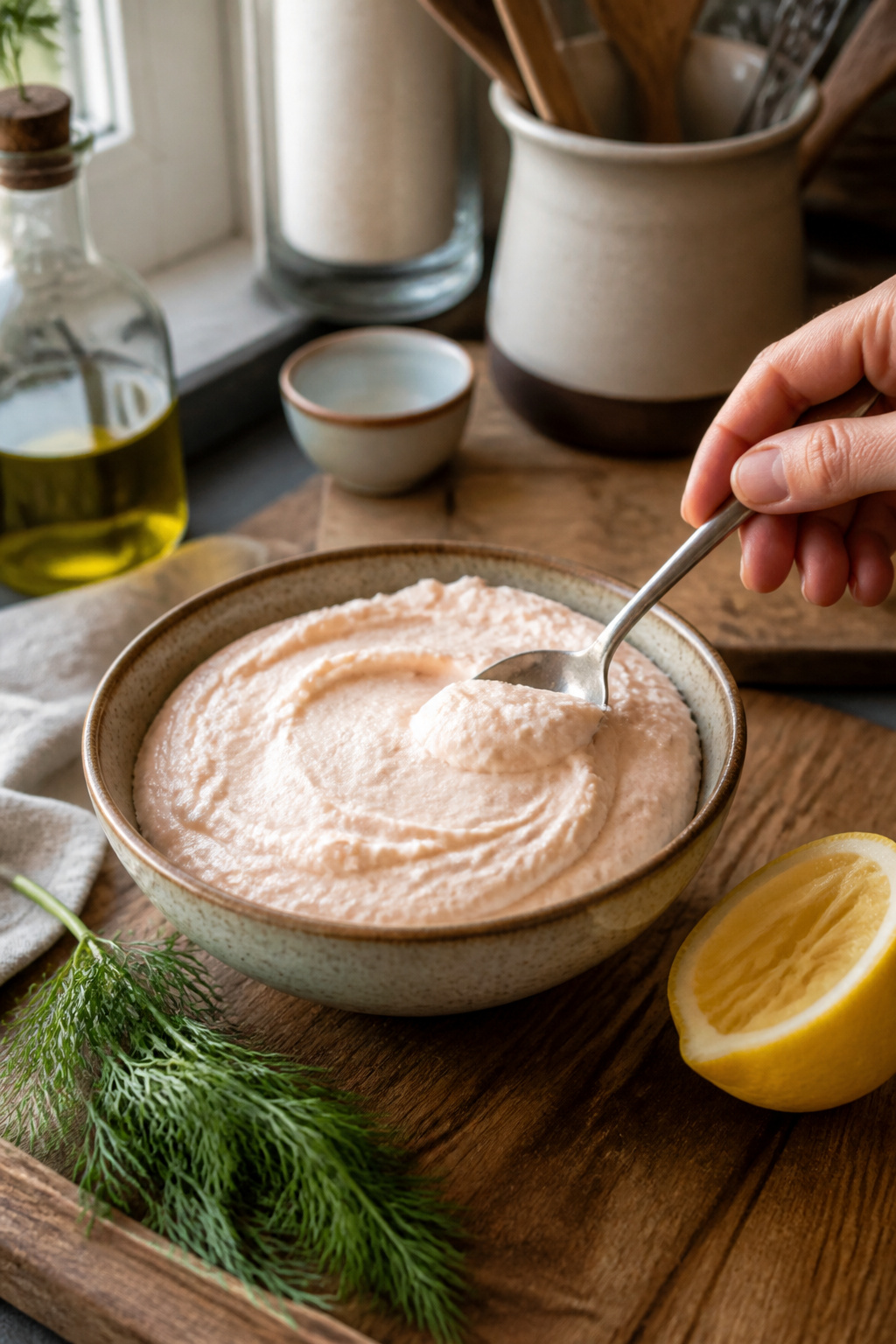
The tarama itself carries plenty of salt, so extra salt may not be necessary at all. Start with none, then taste. If the dip still needs something, lemon juice usually answers before salt does. A squeeze brightens the roe and cuts the richness in a way salt never quite manages.
The specific batch of tarama guides everything here. One jar might be mild and almost sweet; another can be so saline it tightens your jaw. That variability is why taste before you season is the only fixed rule. If you do overshoot, more bread and oil will soften the blow, plus a little lemon to balance. Some cooks soak very salty roe in cold water for 10 to 15 minutes before starting, though with a first batch you won’t know if you need that insurance until it’s too late.
Recommended Products

DELICIOUS FLAVORS : Six (6) great flavors to choose from (Cracked Pepper, Green Onion, Hot & Spicy, Jalapeno Ranch, Original Ranch and Toasted Onion.) No matter which one you choose, we guarantee a great tasting seasoning dip

Just add 2 cups sour cream.
Serve
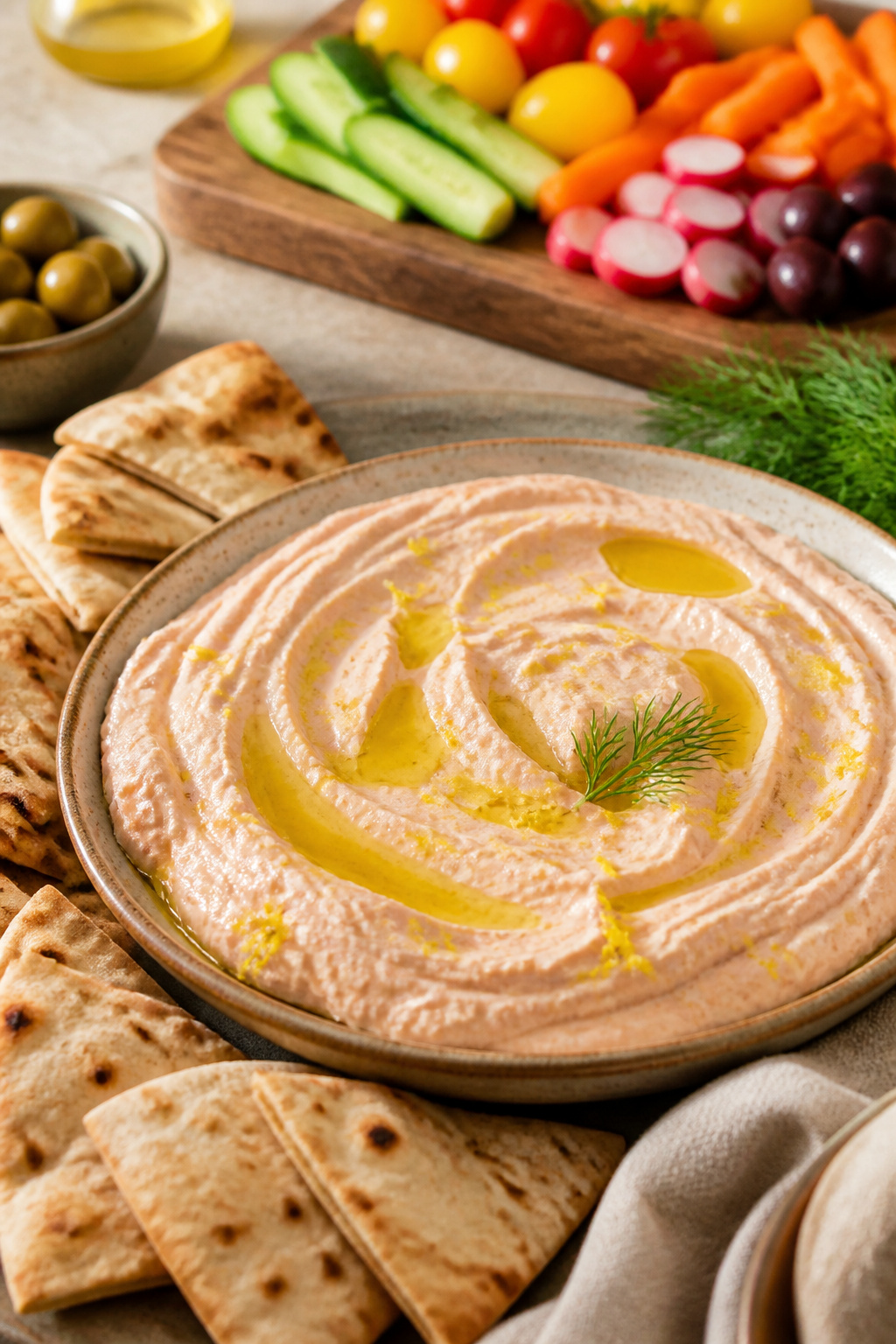
The whole process, from tearing the soaked bread to scraping the finished dip into a bowl, takes about 10 to 15 minutes. I spoon it into something shallow rather than deep; the wide surface looks better on a table and gives you room for garnish.
A thin drizzle of olive oil across the top is the classic finish. Some cooks add lemon zest or a pinch of fresh dill, though at Opa! we kept it plain more often than not. The roe already carries so much salinity and smoke that extra herbs can fight it rather than lift it.
Taramosalata belongs on a mezze spread. Pita bread is non-negotiable, warmed if you have the time. Around it, set out olives, raw vegetables, gigantes beans, or whatever else you have on hand. During Lent, Greek tables lean into this combination heavily, the dip filling in for richer dairy-based spreads. For a fuller meal, grilled shrimp or fried calamari alongside turns the platter into something substantial without much more work.
The bread matters almost as much as the dip. A chewy village loaf or even toasted pita wedges hold up better than thin crackers, which snap under the weight.
Traditional Ingredients
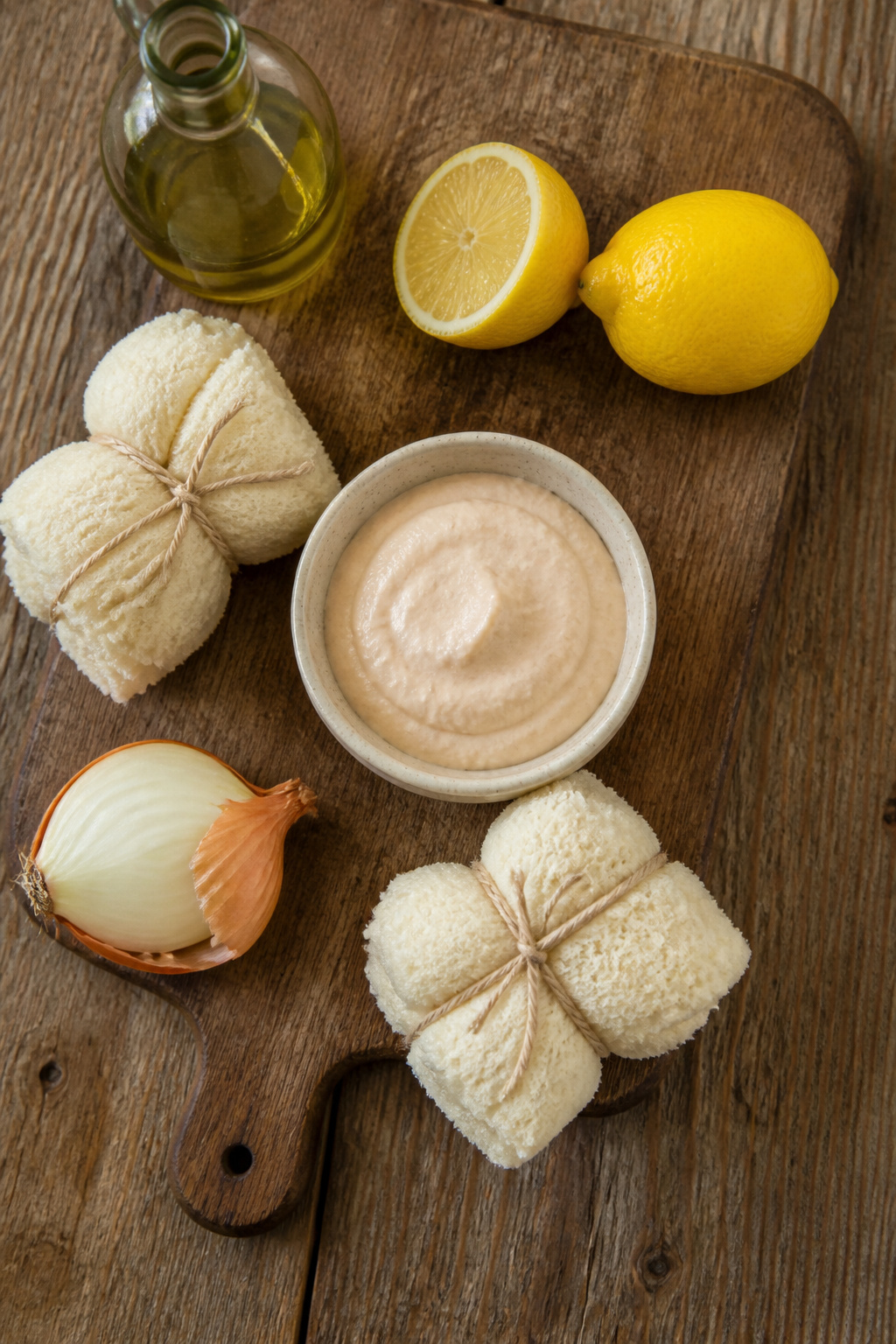
The five ingredients in traditional taramosalata each pull a specific weight in the finished dip.
- Tarama, the salted and cured roe of carp, cod, pollock, or grey mullet, supplies the briny backbone and pale beige color that marks quality. Bright pink tarama carries dye and inferior flavor; light beige is the marker to look for.
- Stale bread, crusts removed and softened in water, bulks the mixture into a creamy, silky base. Fresh bread works too, though some cooks prefer the slight chew of day-old.
- A neutral oil, such as sunflower or corn, binds without overwhelming. Extra virgin olive oil can turn bitter against the roe; if you want any olive oil presence, keep it to a small fraction of the total.
- Lemon juice sharpens and brightens, balancing the salt. White or red wine vinegar stands in if citrus is scarce.
- Raw onion, red or brown, adds a quiet bite underneath the roe. Shallots work as a milder swap.
The proportions that recur across recipes run roughly 100–120 grams tarama to 200–220 grams prepared bread, with 200–300 ml oil and the juice of one to two lemons. Half a medium onion is the usual starting point.
Recommended Products

8.45 fluid ounces of infused extra virgin olive oil

Healthy Diet & Weight Management – Olive oil is a well-known component of a healthy diet. Great for protecting the heart and brain. Healthy fats are an important component of our daily regimen that keeps our bodies and our cells hydrated.

FRESH YOUNG BASIL: Our basil infused oil is infuses with the freshest, fragrant young basil, giving you endless cooking possibilities from herbaceous salad dressings to rich marinades to bruschetta finishes
Variations

Potato-based taramosalata trades the usual bread for boiled potatoes, and the swap gives a creamier, slightly denser dip. Boil them with the skin on for about 20 minutes starting from cold water, then peel once they’ve cooled.
A few other moves worth trying:
- Use mashed potatoes instead of bread for that heavier, silkier texture. Let them cool before you blend so the roe doesn’t turn gummy.
- Add one crushed garlic clove if you want more bite, but blend in half first and taste. Too much pushes the dip toward skordalia territory and drowns the fish roe.
- Canola or sunflower oil both work in place of olive oil. One recipe calls for 1 to 1¼ cups canola, poured slowly while the blender runs.
- Tomato paste brings a sweetness that rounds out the brine, plus an umami depth that reads more modern Athenian than traditional. It also tints the dip a muted coral.
- An immersion blender on high speed saves time and builds a lighter, fluffier texture than a food processor. Hold it still at the bottom for 10–15 seconds before you start moving it up and down, and scrape the blades once or twice during the 5-minute emulsification.
Serving Suggestions
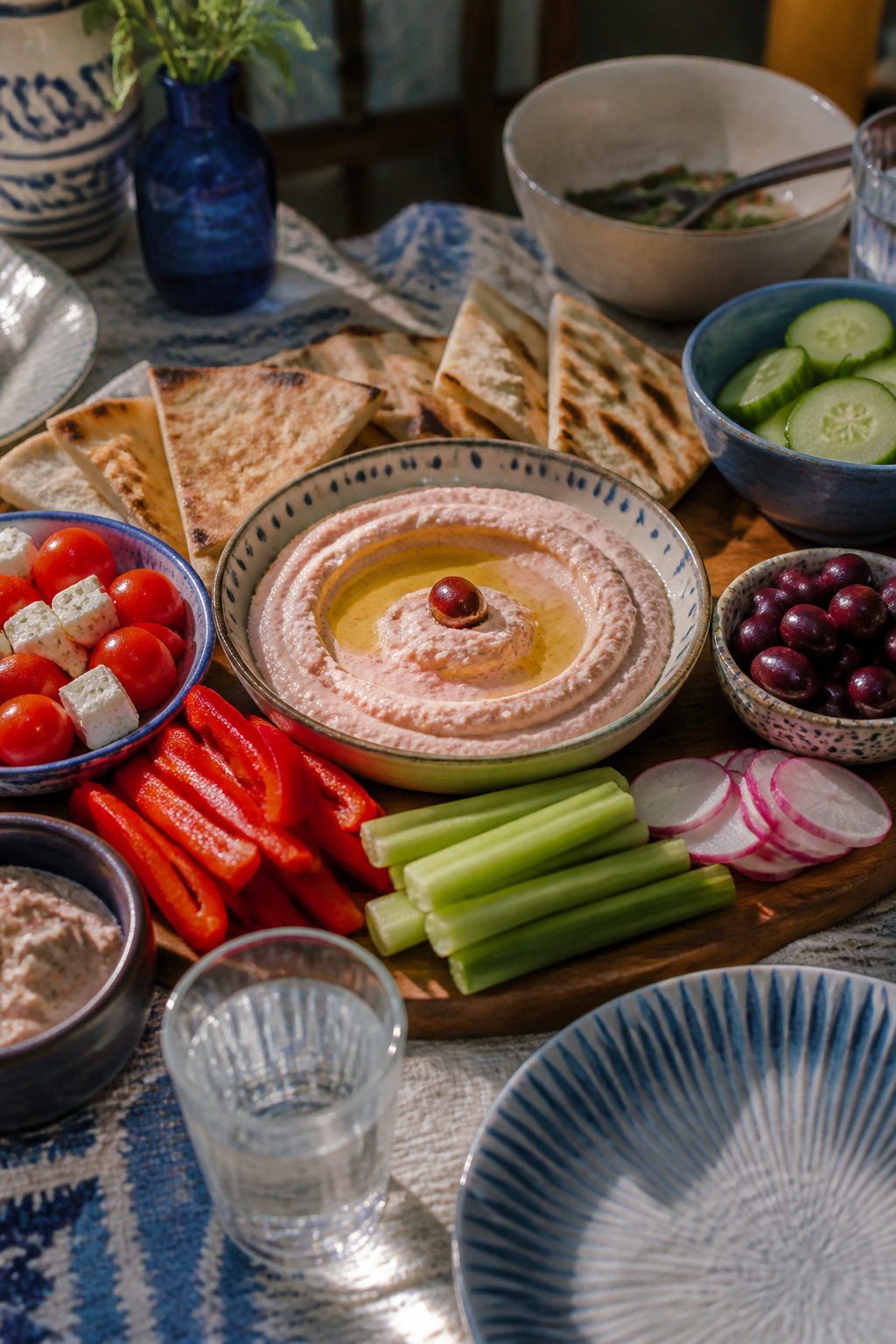
Taramosalata is traditionally eaten with warm pita bread or lagana, the flatbread Greeks bake for Clean Monday. That pairing matters most on Kathara Deftera, the first day of Lent in the Greek Orthodox calendar, when the dip sits on tables alongside olives, shellfish, and halva as part of the Koulouma picnic tradition. The forty-day fast that follows means no meat, no dairy, no eggs, so taramosalata earns its place as a rare indulgence: fish roe, olive oil, and bread or potato, nothing animal beyond the sea.
- Pita or lagana is the classic vehicle, though raw vegetables work when you want crunch against the creaminess.
- A meze platter is how most Americans will encounter it: set it out with hummus, tzatziki, dolmades, and a bowl of kalamata olives, and let people build their own bites.
- Lent gives the dip its deepest context, but the recipe works year-round; at Opa! we served it from January straight through summer, and nobody sent it back for being out of season.
- One serving runs about 279 kcal and 261.1 mg sodium, so plan accordingly if you are stacking it with other salty meze.
Quality of Tarama
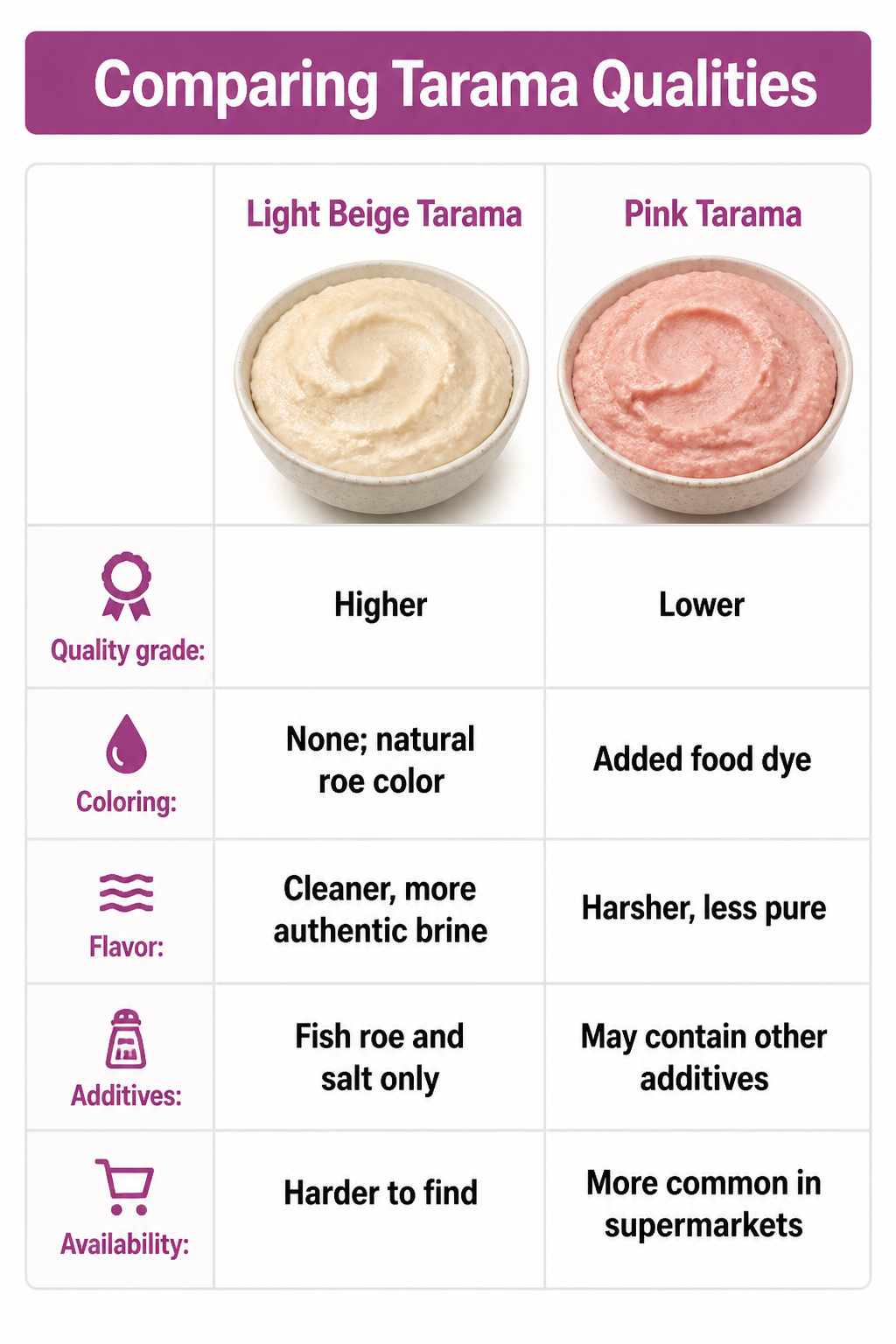
The color of your tarama is the first thing to check at the market. High-quality tarama is light beige, not pink. That pale tone means the roe is undyed and cured only with salt, which gives the finished dip a cleaner, more delicate brine. The bright pink jars on most supermarket shelves use food coloring to mask lower-grade roe, and the flavor pays for it: harsher, sometimes muddy, with an aftertaste that lingers wrong.
| Attribute | Light Beige Tarama | Pink Tarama |
|---|---|---|
| Quality grade | Higher | Lower |
| Coloring | None; natural roe color | Added food dye |
| Flavor | Cleaner, more authentic brine | Harsher, less pure |
| Additives | Fish roe and salt only | May contain other additives |
| Availability outside Greece | Harder to find | More common in supermarkets |
If you can only find pink, the dip will still work, but it will not taste like the taramosalata served in Greek homes. A good fishmonger can often order beige roe with a few days’ notice, and the difference in the bowl is worth the wait.
Storage

Taramosalata keeps up to 5–7 days in the refrigerator in an airtight container, and the flavor actually improves after a day or two as the lemon and roe settle together. I make it the night before when I can; it firms up and tastes deeper by the next evening.
Use a clean spoon every time. The dip spoils fast if you double-dip or let crumbs in, and fish roe is not something you want to push on shelf life.
Freezing does not work here. The emulsion breaks when it thaws, and the texture turns grainy and oily. If you have leftovers past day five, I would not risk them.
Frequently Asked Questions
What is taramosalata?
Taramosalata is a Greek dip made from salted and cured fish roe whipped with olive oil, lemon juice, and a starchy binder of soaked bread or mashed potato. The roe typically comes from cod, carp, or grey mullet, and the finished spread sits between creamy and fluffy with a sharp, briny flavor. It is traditionally served as part of a mezze spread, especially on Clean Monday, the first day of Lent in the Greek Orthodox calendar.
How long does taramosalata last?
Taramosalata keeps for 5 to 7 days in the refrigerator when stored in an airtight container. The flavor actually improves after a day or two as the lemon and roe settle together. Use a clean spoon every time you serve it, since crumbs or double-dipping will make it spoil faster. Freezing does not work here; the emulsion breaks when thawed and the texture turns grainy and oily.
Why is taramosalata pink?
Commercial taramosalata is often pink because manufacturers dye lower-grade fish roe with food coloring to make it look more appealing. High-quality tarama is naturally pale beige, and that undyed color is what you want for the cleanest, most authentic flavor. The bright pink tubs in supermarkets signal added dye and inferior roe, while homemade taramosalata from beige tarama tastes less aggressively salty and more purely of the sea.