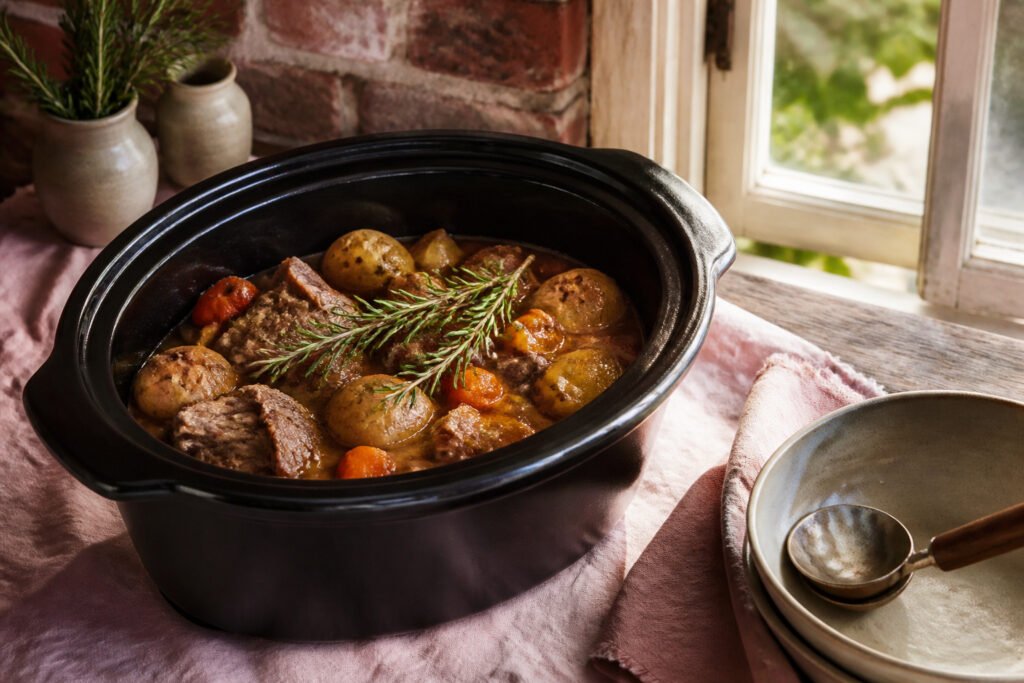
Slow cooker lamb is a braised roast that turns tough cuts tender over six to ten hours, but only if you match the cut to the clock. The shoulder breaks down silkier than the more common leg because of its connective tissue, yet most recipes still call for the easier-to-carve boneless leg. A three- to four-pound piece feeds four to six, with enough left for sandwiches the next day.
1. Prepare the Lamb
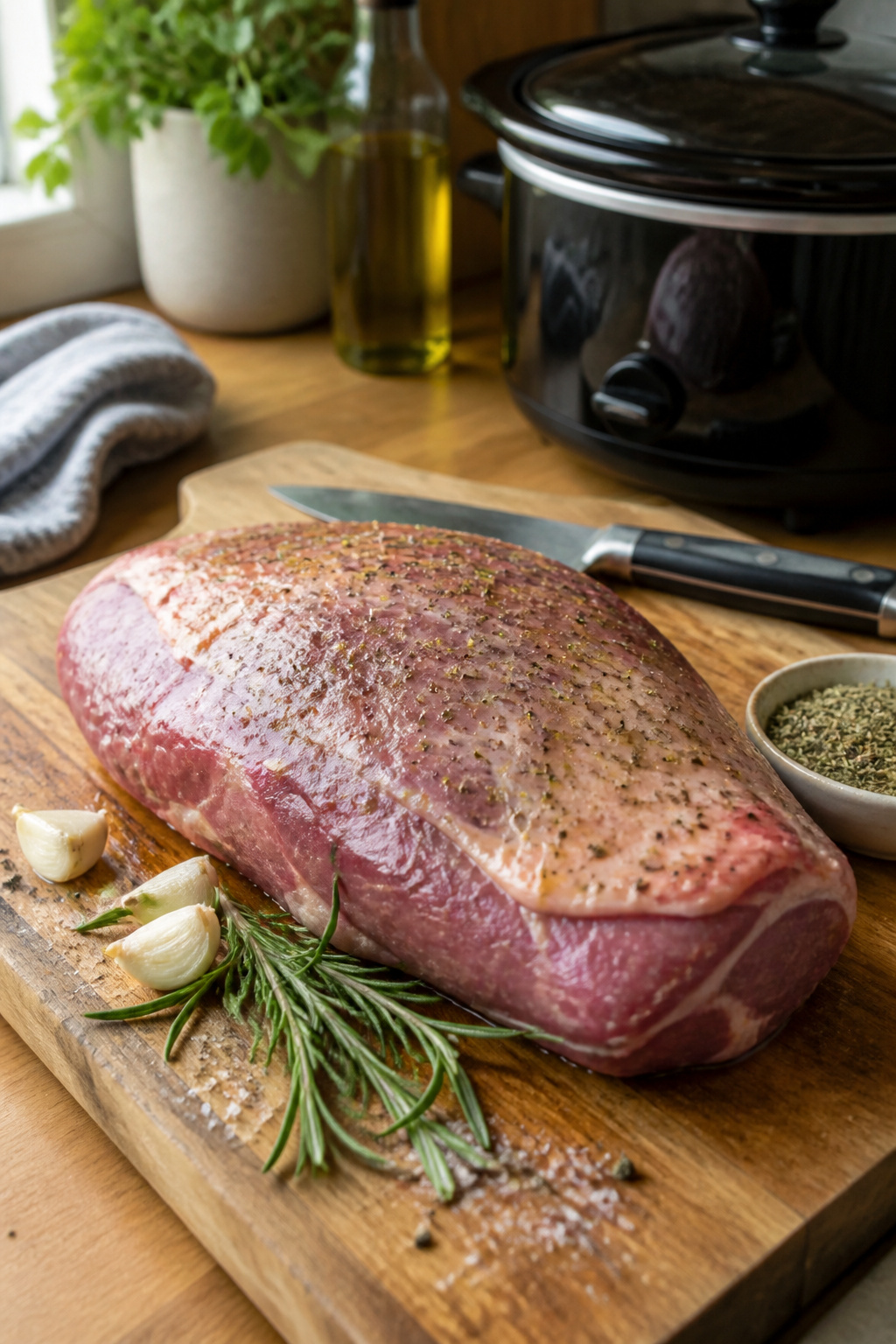
A 3-4 lb boneless leg is what most slow cooker lamb recipes call for, and it is what I reach for when I want predictable timing. The shoulder, though, is the cut that actually breaks down best in a slow cooker. It has more connective tissue, which means it turns silkier over those long hours, but the leg remains the more common choice simply because it is easier to find and easier to carve.
Trimming comes first. I cut away the thick fat cap and any silvery membrane, leaving just enough to keep the meat from drying. A boneless leg can be opened up flat, which lets salt and pepper reach every surface instead of just the outside. For the aromatics, I use garlic, rosemary, and dried oregano, the combination that reads as Greek to me without needing anything from a specialty store. Fresh rosemary works if you have it; dried does the job and keeps. I make small slits across the meat and push thin garlic slices inside, then rub the herbs and oil across every fold. The salt needs time, if you have it. An hour on the counter before cooking lets it penetrate past the surface, though the slow cooker will extract plenty of flavor either way.
Recommended Products

Tender and flavorful no-antibiotics-ever 100% grass-fed New Zealand lamb ready for your favorite preparation

New Zealand Origin: Raised on New Zealand’s lush, open pastures, delivering exceptional flavor, tenderness, and quality.

New Zealand Origin: Raised on New Zealand’s lush, open pastures, delivering exceptional flavor, tenderness, and quality.
2. Sear or Skip It
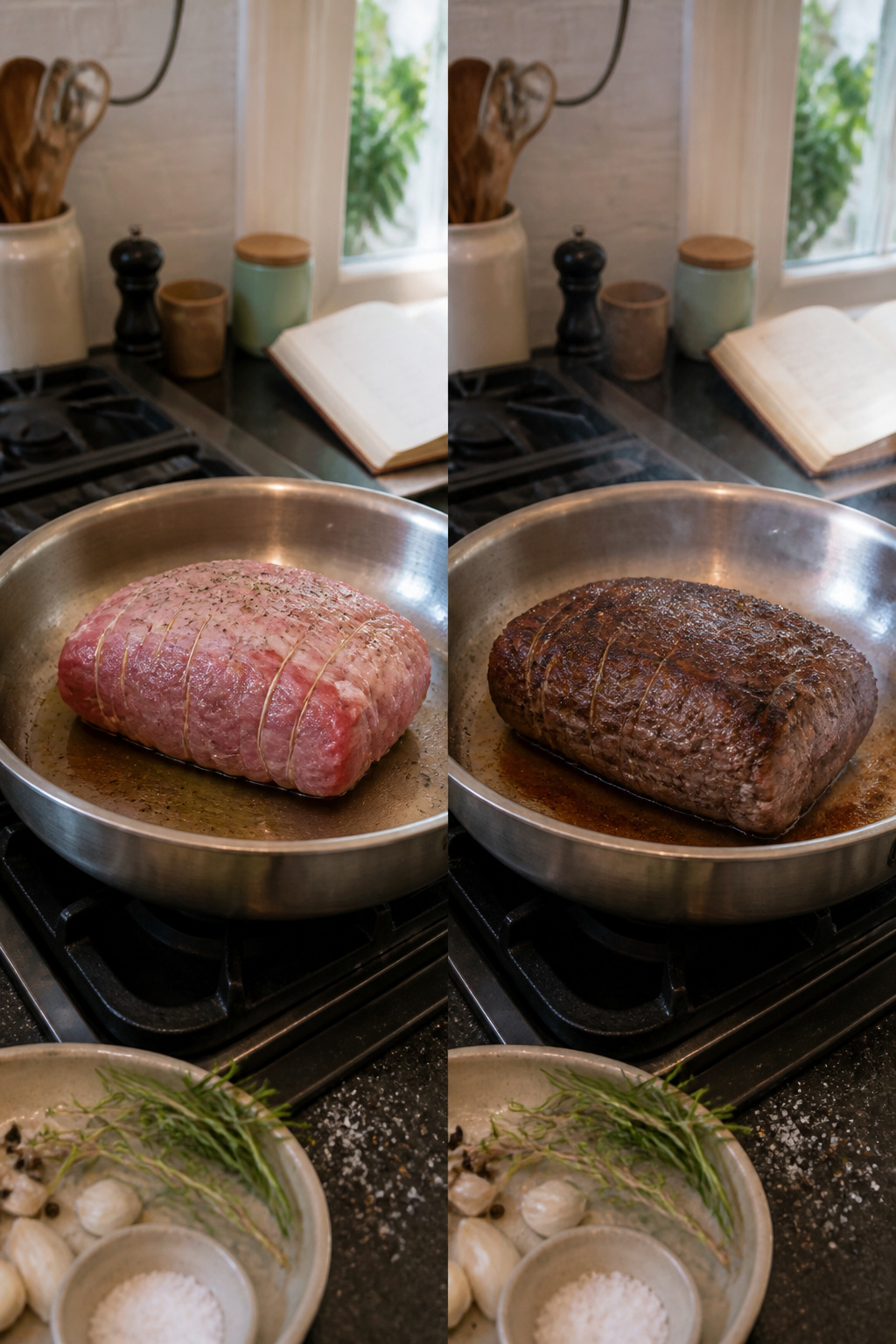
A hot skillet and three to seven minutes per side will give you the crust and caramelized flavor a slow cooker simply cannot create on its own. I do this on weekends, or when the leg is big enough to justify the extra pan. Weeknights, I usually skip it. The lamb still braises tender without that step; you lose depth, not dinner. If you do sear, season the meat first and do not crowd the skillet, or the surface steams instead of browning. The trade is time against complexity, and either choice lands you somewhere good.
Recommended Products
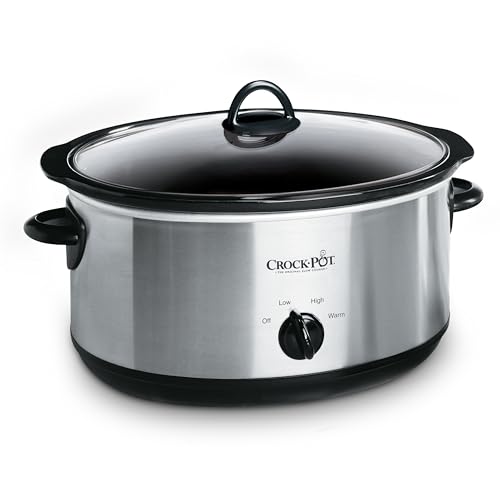
Generous Capacity: 7-quart slow cooker that comfortably serves 9+ people or fits a 7-pound roast

REPLACES 12 COOKING TOOLS & APPLIANCES: This cooker replaces the need for a slow cooker, food warmer, nonstick pot, sauté pan, cast iron skillet, saucier, saucepan, stock pot, Dutch oven, roasting pan, bread maker, and utensil
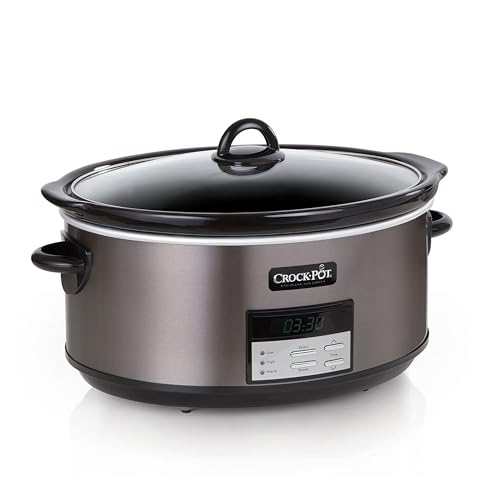
Cooking Capacity: Prepares food for over 10 people, making it a holiday dinner hosting essential.
3. Load the Slow Cooker

A boneless leg goes into the slow cooker easier and cooks faster than bone-in, though you lose the visual drama of the whole joint. Either way, figure about a kilo feeds 4–6 people, which for most families means a 1.5 kg piece with enough left for the next day.
I set the lamb on the bottom, fat side up if there is one, then wedge onions, carrots, and potatoes around it. The vegetables hold the meat off the base so it does not sit in its own rendered fat for six hours. Pearl onions work well here; they collapse into a sweet, jammy layer by the end.
Liquid comes last, and not much of it. A slow cooker traps moisture, so half a cup of broth or wine is usually plenty. I pour it down the side, not over the top, so the seasoning I put on earlier does not wash off into the pool below. The meat will release more liquid as it goes; what you end up with is the start of a sauce, not a soup.
Recommended Products

Highly aromatic and grounded, Thyme Leaves release a rustic, woody fragrance punctuated by refreshing citrus notes and a cool mint finish.

Warm, Aromatic & Fragrant Moroccan Flavor – A rich, traditional blend inspired by North African cuisine, adding warm spice, earthy depth & beautiful golden colour to everyday dishes.

4. Cooking Time and Heat
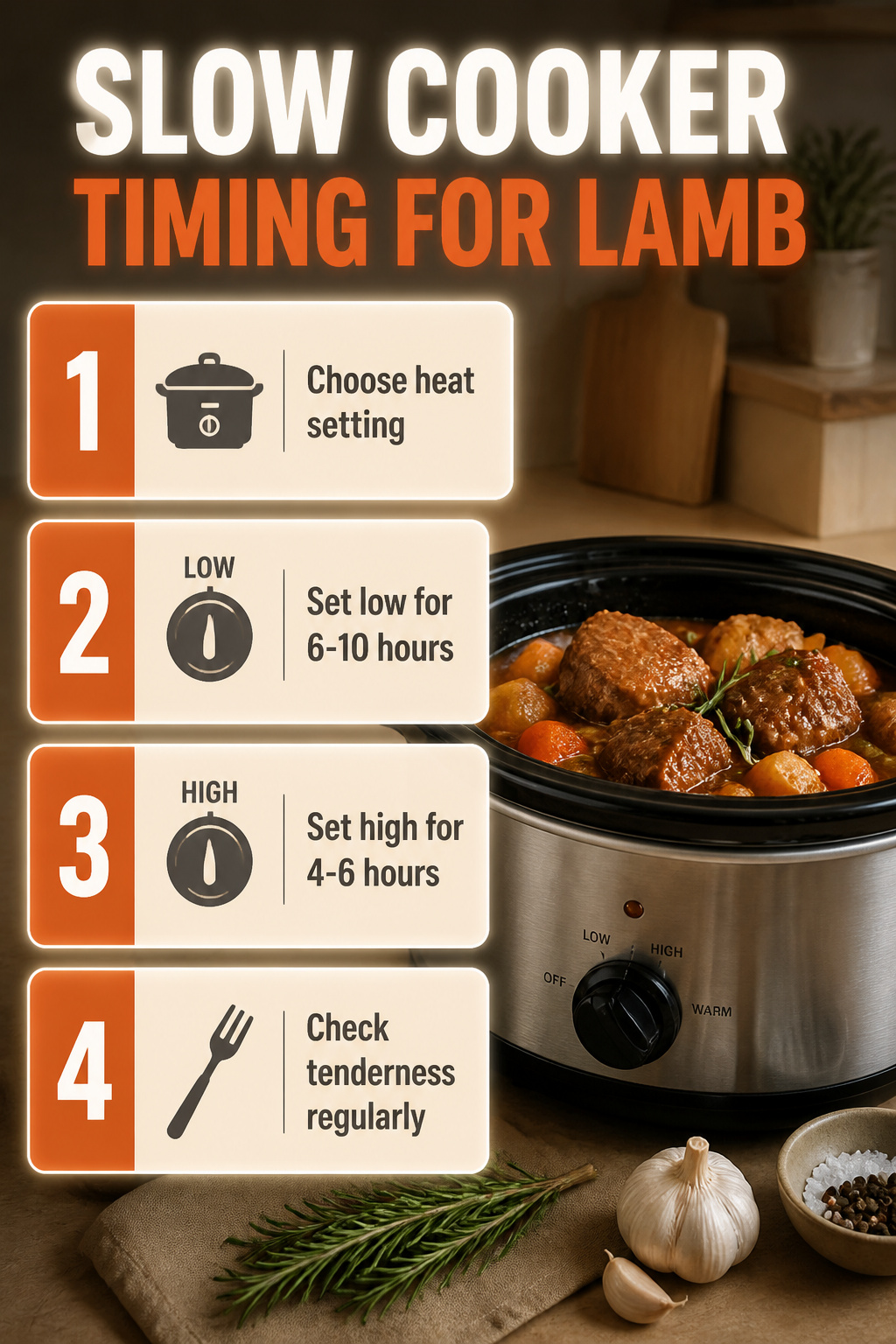
Most slow cookers have two settings, and the choice between them shapes the whole afternoon. Low runs 6 to 10 hours, high runs 4 to 6 hours, and either will get you to the same place: meat that yields when you press it and pulls apart without a knife. The longer end of the low range, around 6 to 8 hours, is what gives you that fall-apart texture red meat really wants from this method.
No one publishing these recipes gives an internal temperature to hit. Slow cookers don’t work that way. The heat stays gentle and consistent, so time and feel are your only reliable markers. Start checking at the short end of the range, then let it go until a fork slides in like butter. The machine is forgiving; an extra hour rarely hurts, and coming home late to an already-finished pot beats the alternative.
Recommended Products


EASY DROP-IN COOKING: No measuring needed—just add one seasoning bomb to your pot and let it dissolve into a rich, curry-style broth for consistent flavor every time.
5. Make the Gravy

By the time the lamb comes out, the slow cooker holds two cups of deeply flavored cooking juices that are too good to pour down the drain. Making gravy is optional, but it takes about five minutes and saves the best part of the meal.
Melt ¼ cup butter in a saucepan until it foams, then stir in ¼ cup flour. Cook the roux over low heat for one minute to knock out the raw taste. Turn the heat off and add the juices a quarter-cup at a time, stirring each addition smooth before the next goes in. Once the mixture loosens to the consistency of cream, pour in the rest and simmer until it coats the back of a spoon. Cornstarch works too if you keep it gluten-free, though flour gives a silkier body and stands up to reheating better the next day.
Recommended Products

New Zealand Origin: Raised on New Zealand’s lush, open pastures, delivering exceptional flavor, tenderness, and quality.

New Zealand Origin: Raised on New Zealand’s lush, open pastures, delivering exceptional flavor, tenderness, and quality.

New Zealand Origin: Raised on New Zealand’s lush, open pastures, delivering exceptional flavor, tenderness, and quality.
6. Serve and What Comes After
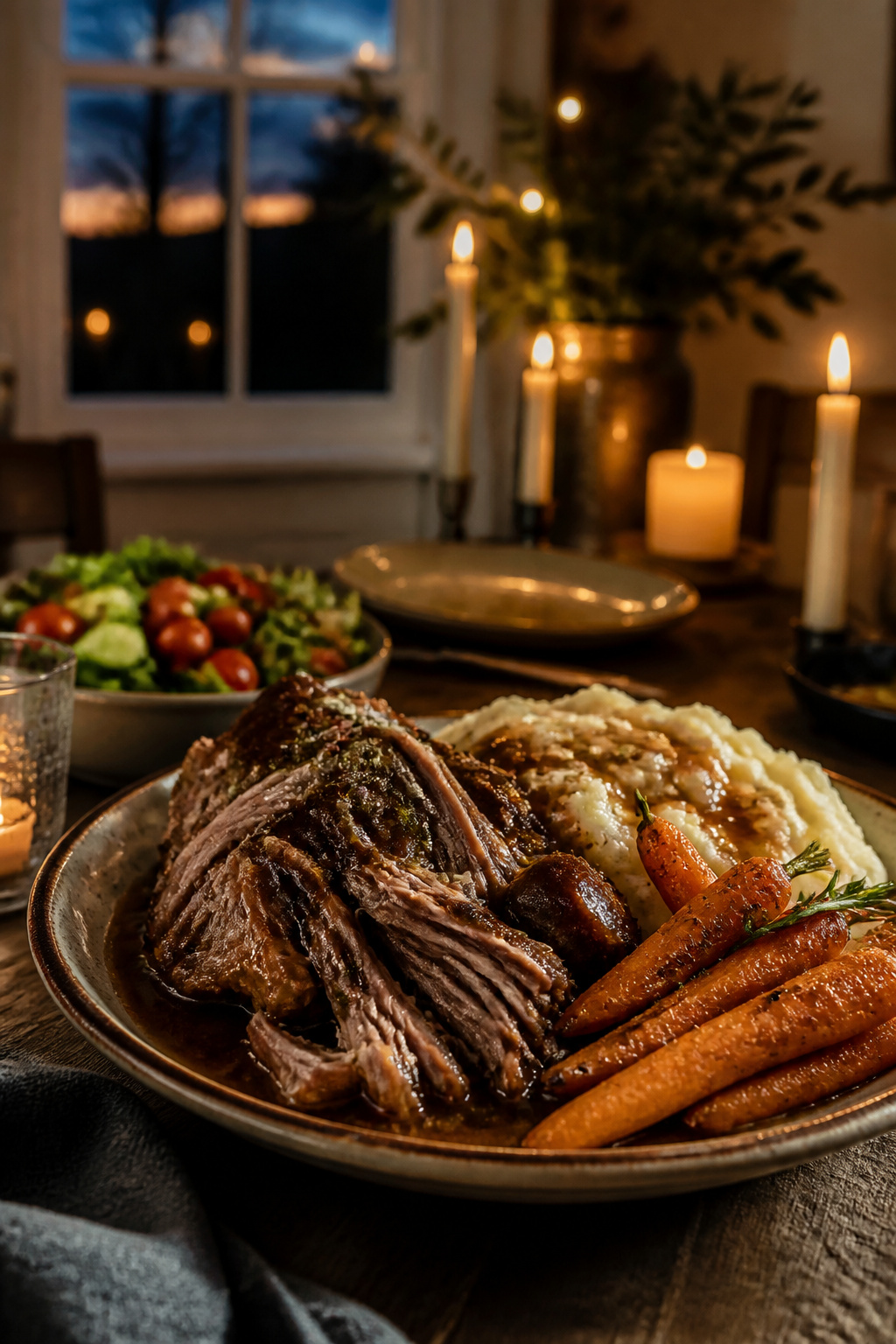
The meat will tell you whether to slice or shred. A leg with some firmness left holds clean slices against mashed potatoes or steamed rice. Shoulder and shank, cooked long enough, collapse into strands that want crusty bread to catch the juices or a bed of couscous to soak them up. I keep sides minimal: green beans with a little feta, maybe roasted carrots, since the lamb carries the meal.
Leftovers are where slow-cooker lamb pays back the time. The chilled juices firm into a savory jelly that melts back into sauce when reheated. Pile cold pulled lamb into sandwiches, or toss it warm into a salad with whatever vegetables need clearing. For a second hot meal, layer it under mashed potatoes for a quick shepherd’s pie, or spoon it into a pita with yogurt and tomato. Three days in the refrigerator is the safe window, reheated with a splash of water if the gravy tightens.
Recommended Products
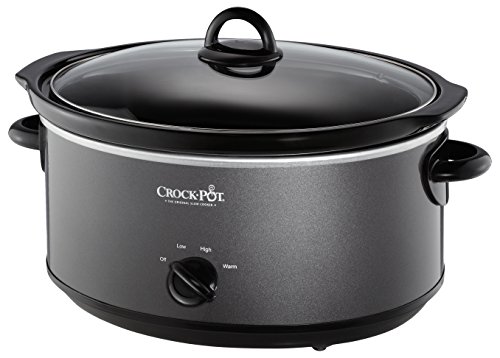
Spacious 7-quart manual slow cooker serves 8+ people or fits a 6-lb. roast

PERSONAL 1.5 QUART slow cooker makes cooking fork-tender roasts and poultry a breeze. Cool-touch handles and knob protect hands and allow you to safely transport your slow cooker.

PERSONAL 2 QUART slow cooker makes cooking fork-tender roasts and poultry a breeze. Cool-touch handles and knob protect hands and allow you to safely transport your slow cooker.
Cuts Compared
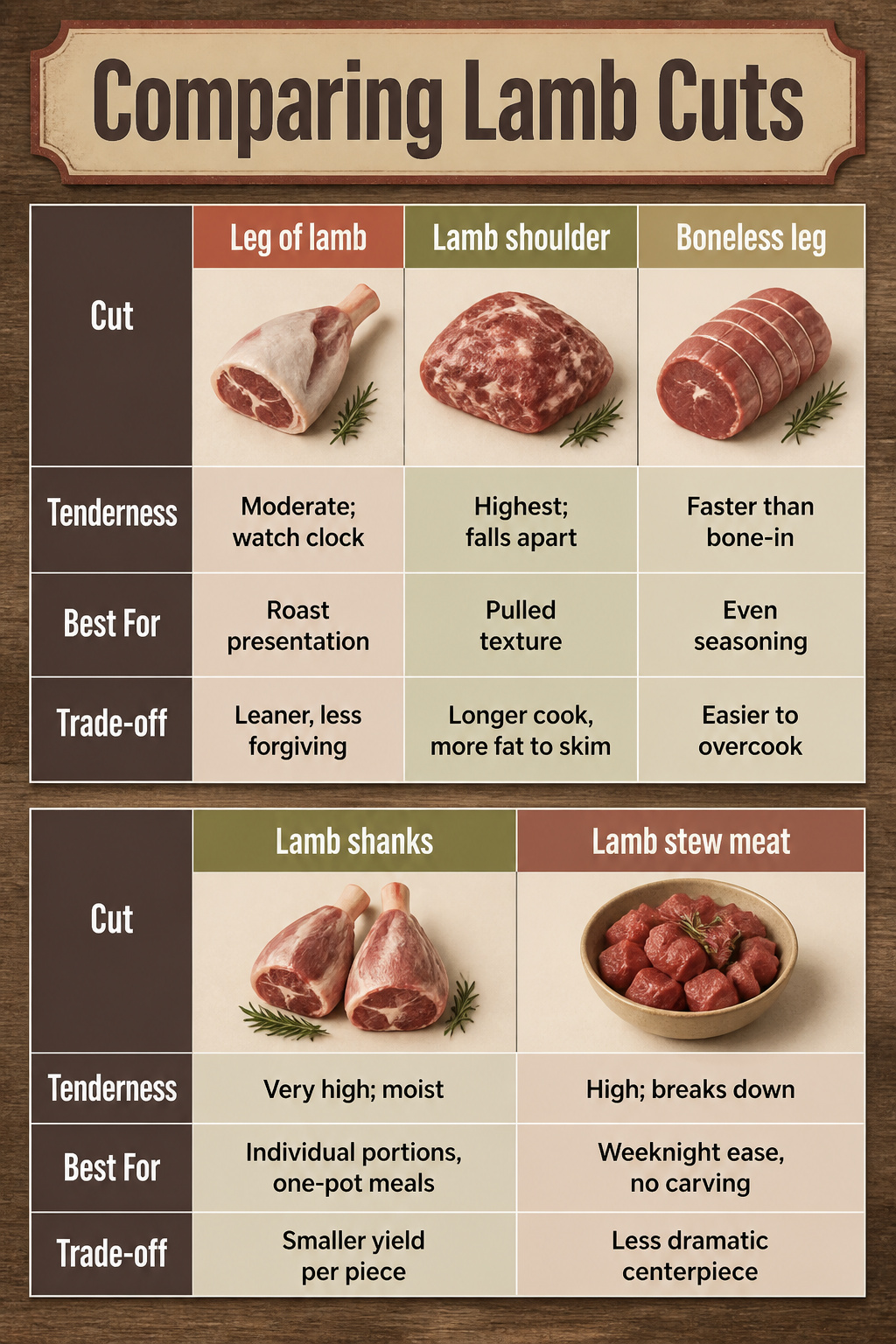
Leg of lamb dominates recipe searches, but shoulder wins on texture once it hits the slow cooker. The shoulder’s fat and connective tissue break down into that fall-off-the-bone result, while the leaner leg can turn chewy if the timing slips. Boneless leg cooks faster than bone-in and takes seasoning inside and out if you butterfly it, though you lose the bone’s flavor shield. Shanks and stew meat need the full slow-and-low treatment too, but shanks reward you with built-in handles for pulling meat free, and stew meat skips the carving step entirely.
| Cut | Tenderness | Best For | Trade-off |
|---|---|---|---|
| Leg of lamb | Moderate; watch the clock | Roast presentation, slicing | Leaner, less forgiving |
| Lamb shoulder | Highest; falls apart | Pulled texture, big flavor | Longer cook, more fat to skim |
| Boneless leg | Faster cook than bone-in | Even seasoning, quicker start | Easier to overcook |
| Lamb shanks | Very high; moist | Individual portions, one-pot meals | Smaller yield per piece |
| Lamb stew meat | High; breaks down | Weeknight ease, no carving | Less dramatic centerpiece |
For a Sunday dinner where the lamb is the occasion, shoulder or shank gives you the melt-in-your-mouth payoff. For sandwiches or a neater plate, leg slices cleaner if you nail the window.
Recommended Products


SCHWARTZ DRIED MIXED HERBS: Ideal for stews, freshly grilled fish, pasta, dips, dressings and more. Add hefty shake at the beginning of the cooking process to get a full Mediterranean flavour

Warm Moroccan-Inspired Flavor - A bold, aromatic Ras El Hanout seasoning made to add rich flavor to meats, vegetables, grains, and stews.
What Works for Weeknight Dinners

A slow cooker earns its spot on the counter only if it matches real schedules, not ideal ones. The low setting needs six to eight hours, which works for a morning start before work but leaves you hanging if the day runs short. High runs five to six hours, and one source pushes that to four or five for a leg that fits before school pickup. The meat still softens, though the connective tissue has less time to melt into the sauce. For weeknights, that trade is usually worth it.
Cleanup stays simple if you keep the potatoes out, which several commenters asked about and the recipe allows. One less dish to scrub, and the lamb itself needs no specialty equipment beyond the cooker you already own. The wine, garlic, and oregano are grocery-store staples; no butcher relationship required, though a trusted source helps if you have one nearby.
What breaks the weeknight promise is overcooking past those windows. Lamb goes from tender to stringy faster than pork or beef, especially on high. Check at the low end of the time range, and pull it when a fork slides through without resistance.
Recommended Products

NOT YOUR MOM’S SLOW COOKER: Smart technology allows you to cook a recipe to either a desired cooking time or specific temperature, before automatically switching to Warm when it’s done.

BIG BATCH COOKING: The 6-quart capacity is perfect for cooking large batches of soups, chili, or even a whole roast chicken. Ideal for family meals or meal prepping, this programmable crock pot makes feeding a crowd easy and stress-free

EASILY COOK FLAVORFUL MEALS: This Hamilton Beach slow cooker has simple manual controls that make it easy to create flavorful meals with minimal effort and great results. Just turn the dial. No watching needed.
Seasoning That Sticks

Rosemary, thyme, oregano, and garlic are the core set that actually shows up across the recipes that work, and the proportions are forgiving. A tablespoon of minced garlic plus a teaspoon each of the dried herbs covers a 4-pound leg or shoulder nicely, rubbed with a little oil to help it adhere. Overnight is ideal when you remember it, but the same-morning rub still delivers plenty of flavor by dinner, and I have run both versions more times than I can count without anyone at the table noticing the difference. The salt matters more than the clock: get it into the crevices along the bone and the fat cap, where the meat is thickest, or the center stays bland no matter how long it sat.
Recommended Products

New Zealand Origin: Raised on New Zealand’s lush, open pastures, delivering exceptional flavor, tenderness, and quality.
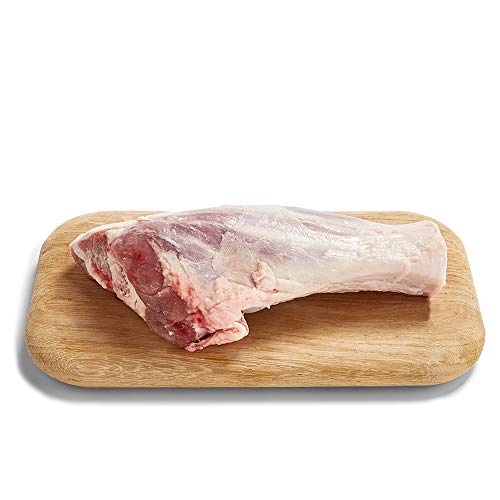
Meets standards for animal welfare, feed, and more, so you can know about what you're buying (and eating)

Tender and flavorful no-antibiotics-ever 100% grass-fed New Zealand lamb ready for your favorite preparation
What I Do With the Leftovers
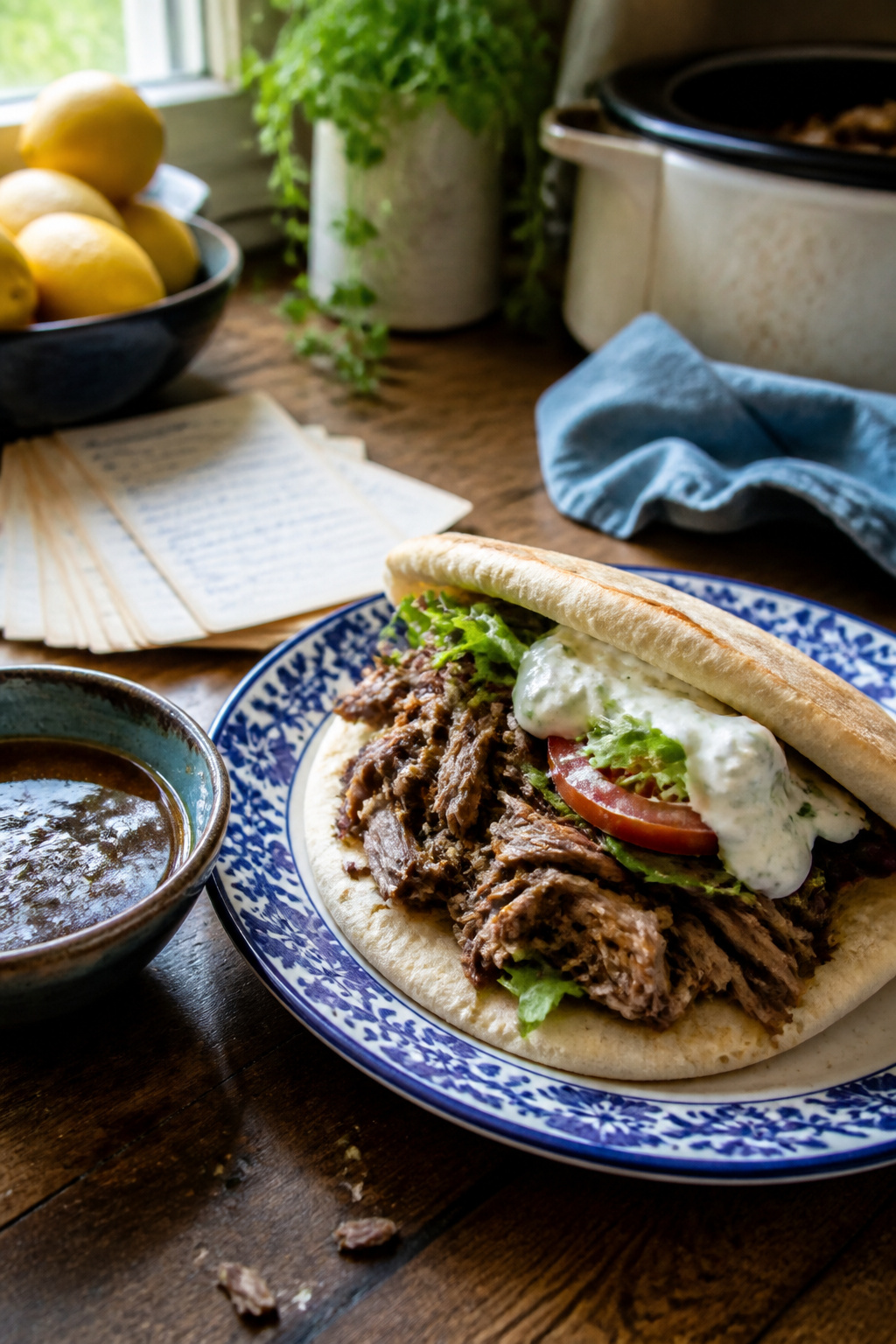
Leftover slow cooker lamb keeps in the refrigerator for 3 days, or in the freezer for 2 months. Reheat it covered with a splash of broth so the meat does not dry out, either in the microwave or in a 300°F oven.
The next day, the meat juices firm into a savory jelly that melts back into gravy once warmed. That gravy is the starting point for most of what follows.
- Sandwich or wrap: Cold or reheated lamb with yogurt sauce, tucked into pita or a flatbread. The sources mention tzatziki specifically; plain Greek yogurt with a little lemon and garlic works if that is what is in the fridge.
- Salad: Chopped lamb over cucumber and tomato, dressed with whatever juices you saved. The meat is already seasoned, so the salad needs little else.
- Hot plate over rice: Reheat the lamb in its own gravy and ladle it over rice. One source builds freezer dinners this way, portioned into individual containers.
- Pasta bake: Shredded lamb stands in for rotisserie chicken in a creamy pasta bake. The slow-cooked meat breaks down enough to distribute through the sauce without extra chopping.
- Stuffed peppers: Mix leftover lamb with rice or grains, fill red peppers, and bake until the peppers soften.
Recommended Products

Elevated Design: Streamlined, modern-vintage aesthetic, and earthy Desert Sage green color
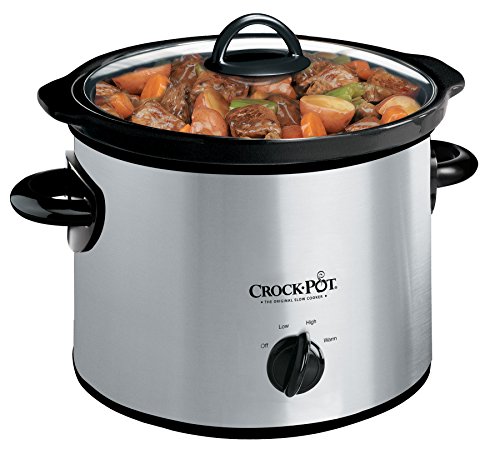
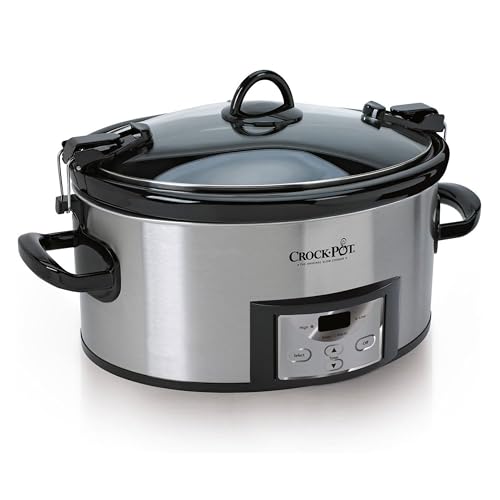
Programmable Digital Timer: Control cooking times from 30 minutes up to 20 hours
Frequently Asked Questions
How long should I cook lamb in a slow cooker?
Cook on low for 6 to 10 hours, or on high for 4 to 6 hours. The longer end of the low range, around 6 to 8 hours, gives you that fall-apart texture. Start checking at the short end of the time range and pull the meat when a fork slides in without resistance.
What cut of lamb is best for slow cooking?
Lamb shoulder wins on texture because its fat and connective tissue break down into silky, fall-apart meat over long hours. The leg remains more common simply because it is easier to find and easier to carve, though it can turn chewy if you miss the timing window.
Can I use boneless lamb for slow cooking?
Yes, boneless lamb is easier to work with and cooks faster than bone-in. A boneless leg can be butterflied open so salt and seasoning reach every surface, and it fits into the slow cooker more neatly. The trade-off is losing the bone’s flavor shield and the visual drama of the whole joint.