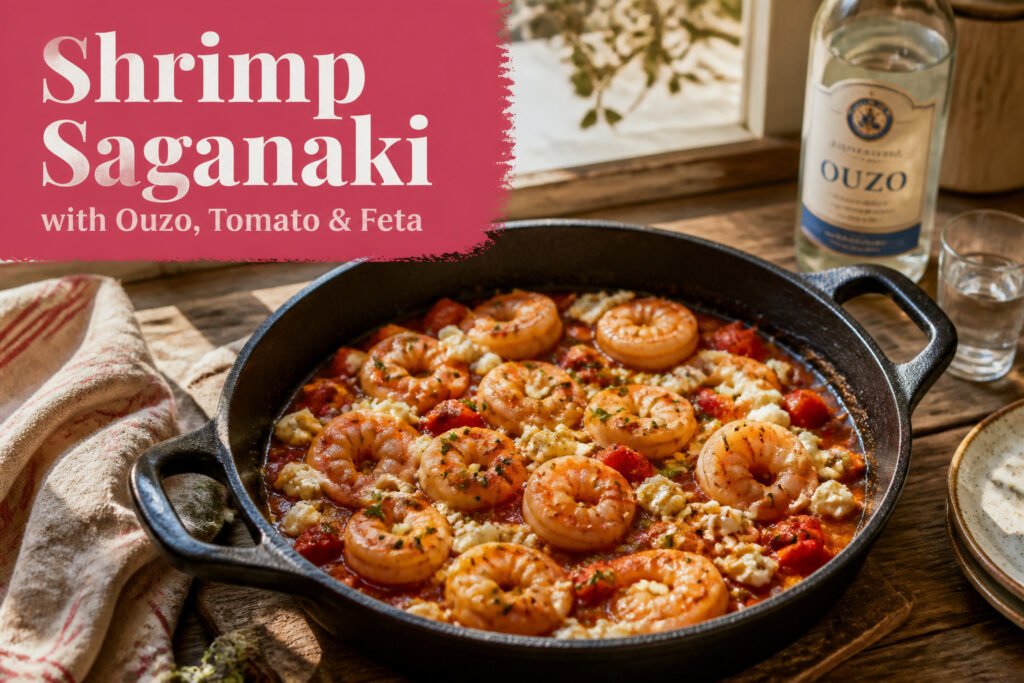
Shrimp saganaki is a Greek skillet dish of shellfish, tomato, and feta finished under the broiler, built from the same two-handled pan that gives it its name. The version worth making at home relies on an oven finish that keeps the shrimp plump while the feta softens into the sauce, a detail most quick recipes skip. U26 shrimp, brined feta, and a splash of ouzo separate a proper taverna dinner from a rushed weeknight approximation.
What Shrimp Saganaki Means
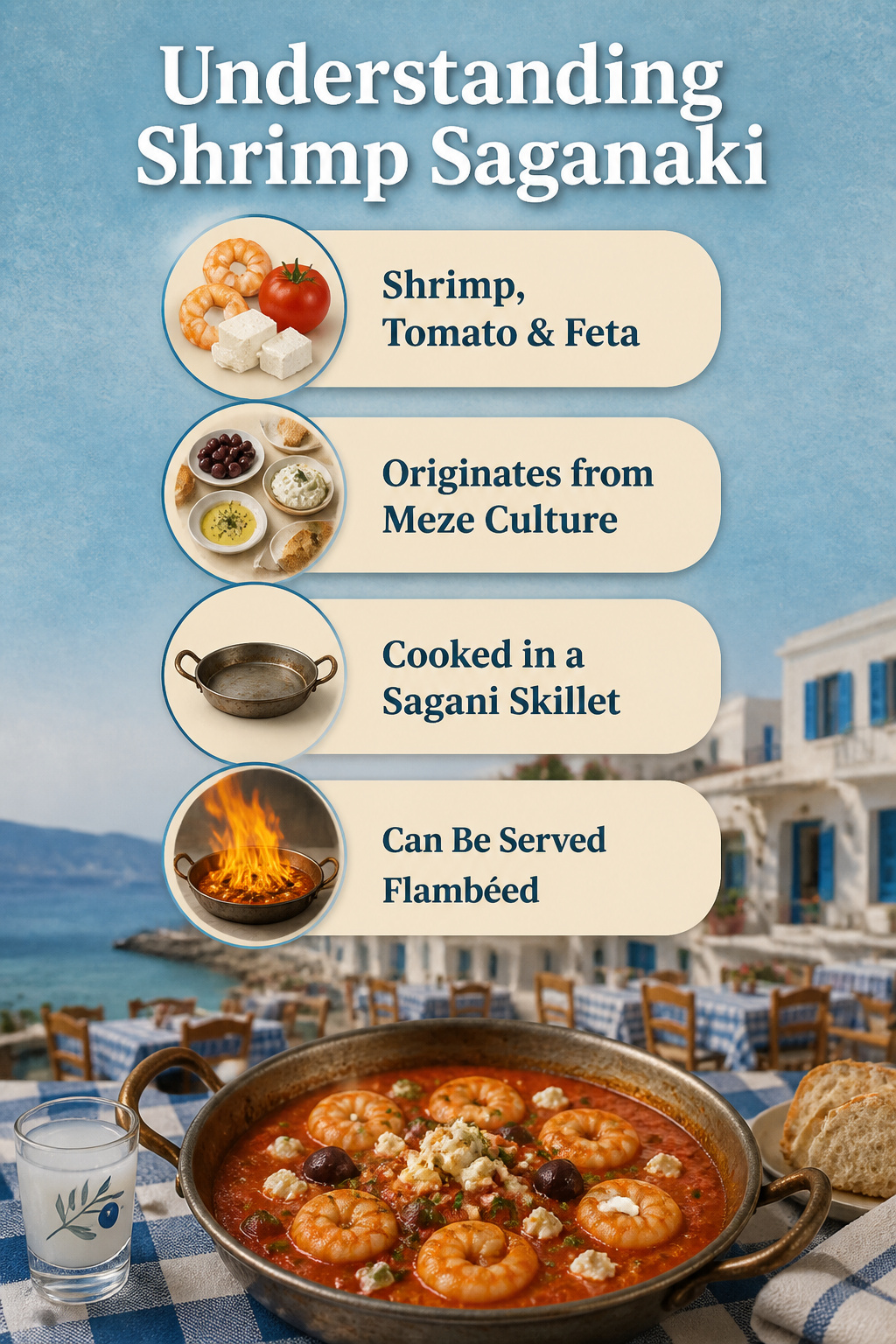
The word saganaki names the pan, not the cheese, though most American diners learned it first as the flaming kasseri brought tableside. A sagani is a small, two-handled skillet; the "aki" ending just means "little." Anything cooked and served in one earns the name, which is why shrimp saganaki sits right alongside the cheese version in Greek tavernas.
Garides saganaki, the shrimp kind, holds to three things that do not bend: shrimp, tomato, and feta. The dish belongs to meze culture, the spread of small plates that turns dinner into a long, lazy affair, and it shows up reliably in coastal tavernas where the shrimp came in that morning. Some versions hit the table flambéed, but the one that made its way to weeknight tables is sautéed first, then finished in the oven so the feta softens into the sauce and the shrimp stay plump.
Built for a weeknight but worthy of company, this Greek dish coddles shrimp in a delicate tomato sauce that gains depth from olives, ouzo and feta.
That oven finish matters for home cooks. It buys you forgiveness on timing, and it turns a taverna appetizer into something that can anchor a meal if you want it to.
Prepare the Shrimp
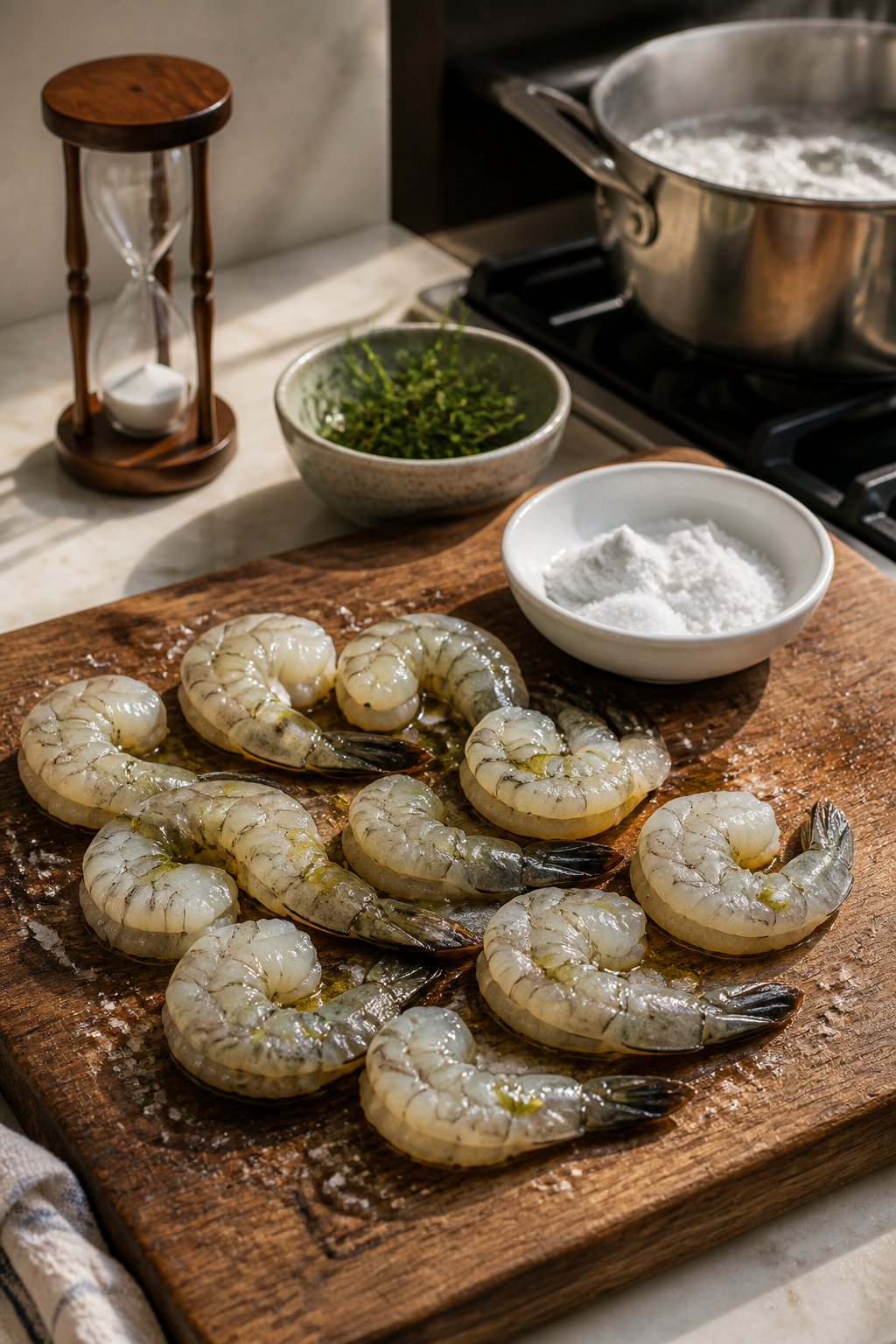
Peel and devein 1 to 2 pounds of shrimp, U26 or larger (that’s roughly 16–20 count per pound). The size matters here: smaller shrimp crowd the pan and overcook before they sear. Frozen shrimp work fine, but they need to thaw completely first, then get patted dry with paper towels. Any lingering moisture steams them instead of searing, and it thins the sauce later.
Toss the cleaned shrimp with olive oil, baking soda, and salt. The baking soda is what gives shrimp that firm, snappy bite you notice in a good restaurant. Without it, they can turn soft and mealy against the tomatoes and feta. Let them sit for 10 to 15 minutes, no longer. This is where timing discipline starts: the baking soda keeps working, and past 15 minutes the texture turns rubbery. Set a timer. When it goes off, the shrimp should hit the pan within a couple of minutes.
Sauté the Aromatics
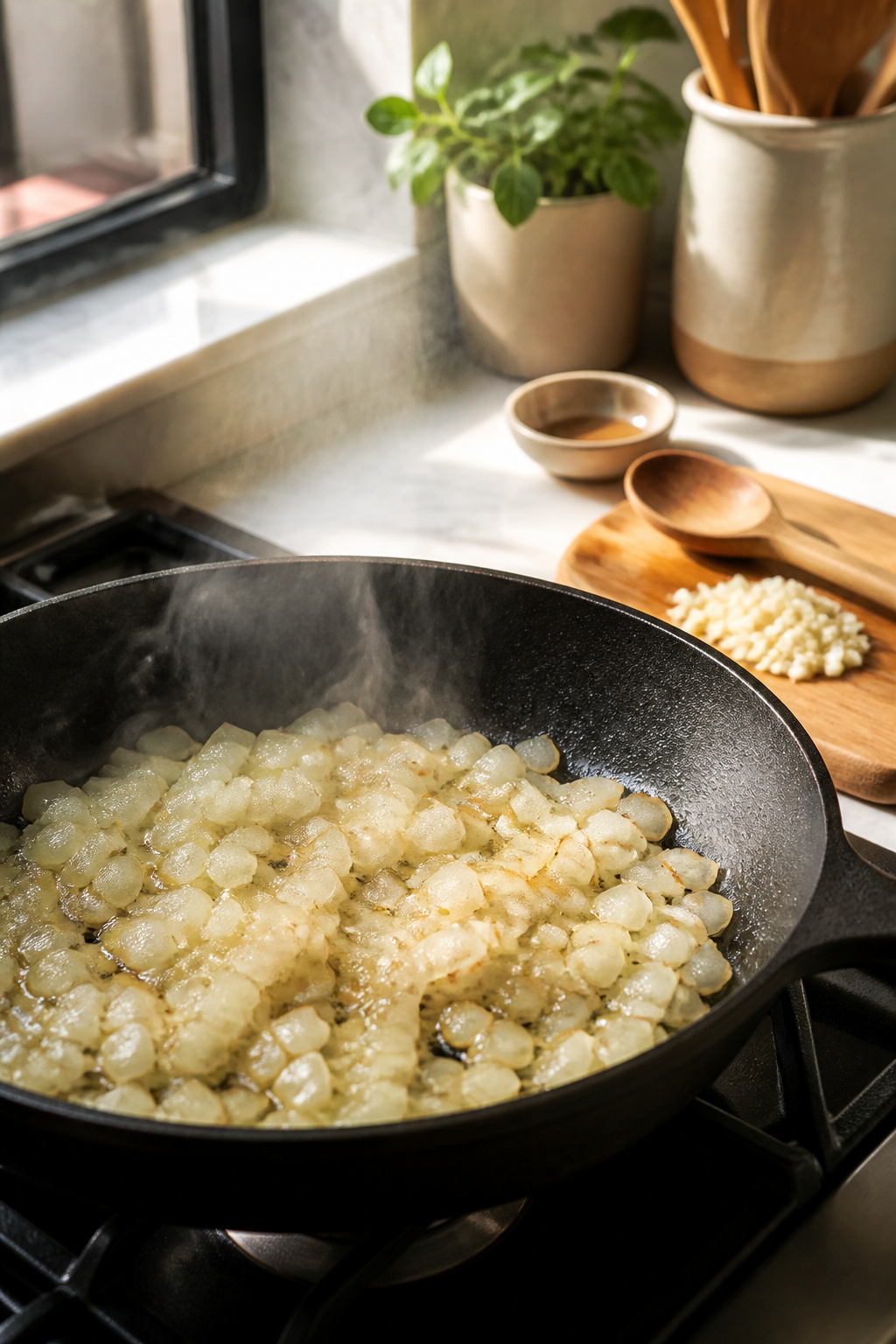
A heavy skillet over medium heat takes a few minutes to wake up. I wait until the olive oil shimmers, then drop in diced onion. Five to eight minutes is the real window, not the two minutes some recipes suggest. The pieces turn translucent, then faintly golden at the edges, and the whole kitchen starts to smell sweet rather than sharp.
Garlic goes in only when the onion is fully soft. Sixty seconds is plenty. Past ninety, the little bits brown fast and leave a bitter edge that no amount of tomato or ouzo will mask. This base is what separates a sauce that tastes like a Greek taverna from one that reads as harsh and rushed.
Build the Tomato Sauce

Chopped tomatoes go in next, fresh or canned or a mix of both, along with a pinch of red pepper flakes and a generous shake of dried Greek oregano. If the color looks thin, a spoonful of tomato paste will deepen it without tipping the sauce toward sweetness. San Marzano tomatoes are worth the extra dollar here; the flavor is closer to summer tomatoes than standard canned, and the liquid clinging to them carries more body than watery alternatives. Let everything bubble gently for five to ten minutes, stirring now and then, until the sauce thickens enough to coat the back of a spoon rather than running straight off.
Deglaze With Ouzo or Wine

The pan is hot, the aromatics have softened, and now the liquid goes in. Use ¼ to ⅔ cup ouzo if you have it; the anise note is what makes this dish taste unmistakably Greek rather than generically Mediterranean. White wine works fine as the practical substitute most home cooks already have open, and the range covers both a modest splash and a more generous pour depending on how saucy you want the finished dish.
What "let it evaporate slightly" actually looks like matters. The harsh alcohol smell rises first, sharp and aggressive. That bite fades within thirty seconds to a minute, and the liquid itself should still pool in the pan, not cook down to nothing. You’re not making a reduction here; you’re burning off the raw edge so the sauce stays bright and doesn’t taste like a bar pour. The tomatoes and shrimp still need moisture to cook in, so stop while there’s clearly liquid left. If the pan looks almost dry, you’ve gone too far and the sauce will tighten up before the shrimp are even close to done.
Cook the Shrimp Through
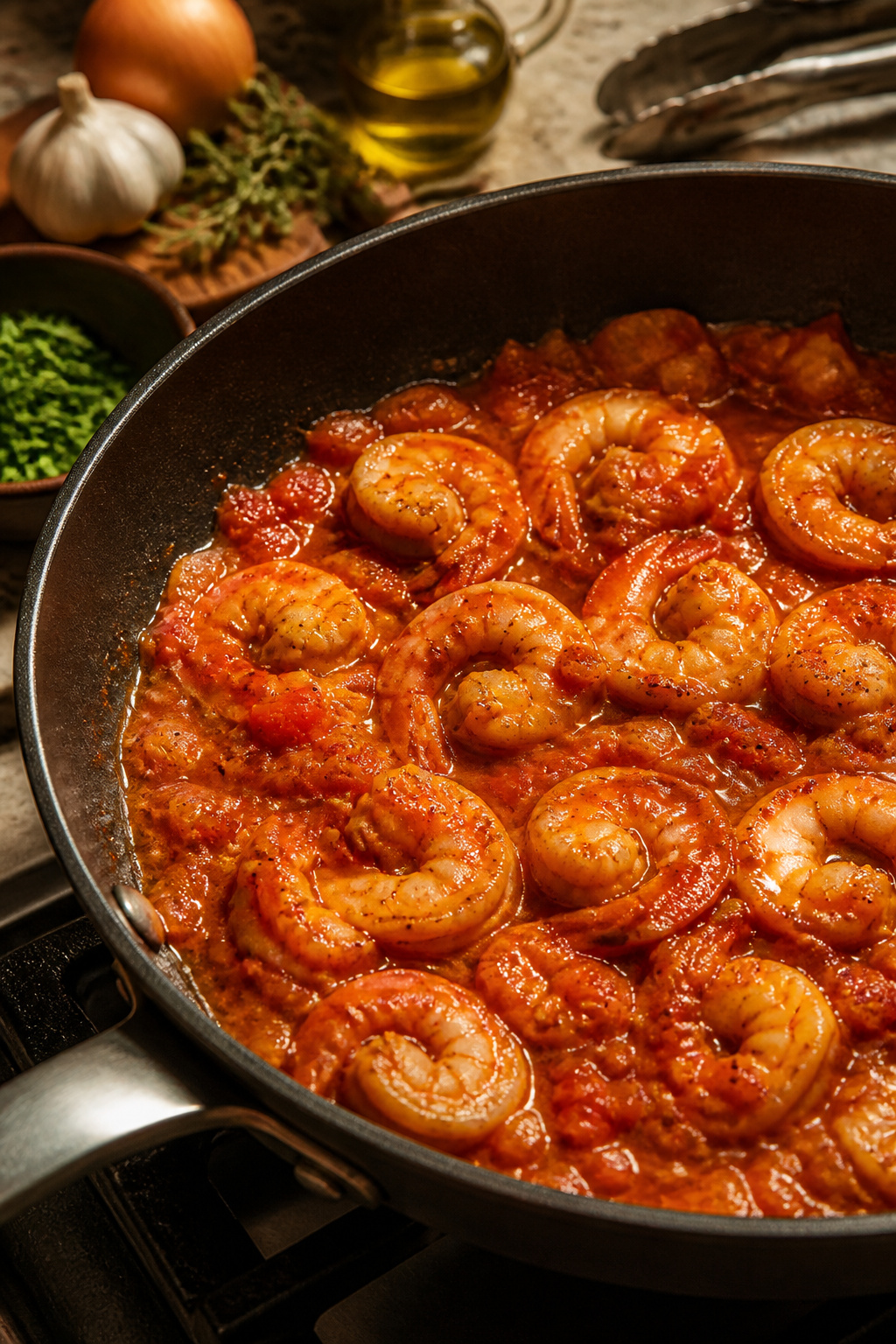
The shrimp go in once the sauce is at a steady simmer. Spread them flat to the pan bottom instead of crowding or stacking; each piece needs direct contact with the hot surface to cook evenly in the three to five minutes that follow. Stirring feels productive but mostly cools things down and risks the shrimp curling into tight O-shapes, which means they have crossed into rubber. What you want is a relaxed C-curve, pink and just opaque at the center. That visual cue is the whole timer. Past five minutes, the texture turns from resilient to bouncy in a way no sauce rescues, so watch the shape more than the clock. Once the last gray spot disappears, pull the pan from the heat. The residual warmth finishes them while you move to the feta.
Feta and the Final Heat

Greek feta in brine, not the pre-crumbled dry kind, is the difference between melted and merely warmed. The brine keeps the cheese intact enough to hold its shape through a few minutes of heat while still softening into the sauce. Pre-crumbled feta tends to sit on top like gravel.
Scatter 1/2 to 3/4 cup crumbled feta over the simmering shrimp and sauce. The wider range matters if you want more cheese to drag bread through, less if the shrimp themselves are the point. A 400°F broiler for a few minutes until bubbles show at the edges and the cheese browns lightly is optional but worth the extra step. The pan goes straight from stovetop to oven only if the handle is oven-safe; otherwise transfer to a baking dish first and accept that you will lose some sauce to the pour.
Ouzo or White Wine

The choice between ouzo and white wine changes the whole personality of the sauce. Ouzo brings an anise-forward punch that reads unmistakably Greek; white wine keeps things drier and more neutral, letting the tomato and feta do more of the talking. In the restaurant, we kept both on hand, but at home I reach for whichever I already have.
| Ouzo | White Wine | |
|---|---|---|
| Flavor | Strong licorice/anise from the spirit | Dry, neutral, lets tomato lead |
| Availability | Harder to find in smaller grocery stores | Usually already in the home kitchen |
| Tradition | The classic choice for saganaki | A practical substitute |
| Amount used | ⅔ cup (or 2 tablespoons in smaller recipes) | Same measure, swapped 1:1 |
Neither option is wrong. The ouzo version tastes like a taverna by the Aegean; the white wine version is still a solid weeknight dinner. If your store doesn’t stock ouzo, pastis or sambuca will carry that same anise note, though they read less Greek on the palate.
What to Serve With It

Crusty bread is the fastest weeknight move. A good sourdough or village bread holds up when you drag it through that tomato-feta sauce; anything softer disintegrates before you finish the bowl. Bread is non-negotiable here, and it turns the dish into a twenty-minute dinner you eat straight from the skillet.
Pasta stretches the same recipe into a full family meal. Orzo absorbs the sauce best, though a handful of chickpeas tossed in with the tomatoes adds protein and fiber if you are feeding more than two. A Greek horiatiki salad alongside rounds it out without adding pans to the sink.
The meze spread is weekend or company territory. Tzatziki cools the warm spice, fried zucchini or crispy potatoes add crunch, and horta or a simple green salad cleanses between bites. It is more dishes and more planning, but that is what Saturday night is for.
Ingredient Quality That Matters

Greek feta in brine is the one ingredient where the extra dollar is non-negotiable. The pre-crumbled tubs in the dairy aisle are dry, flavorless, and not actually Greek feta at all. A block swimming in brine crumbles in seconds and carries the salt and tang that makes the dish taste like something from a taverna in the Peloponnese, not a suburban strip mall.
For tomatoes, the rule is simple. Canned San Marzano tomatoes are worth seeking out in every season except one: when ripe heirlooms are actually in season and sitting on the counter perfuming the kitchen. The rest of the year, the San Marzano can with its juices builds a sauce that fresh January tomatoes never will.
Olive oil splits the same way. Extra virgin is for finishing, for that last drizzle over the feta before it goes under the broiler. For the initial sauté of onion and garlic, a standard olive oil does the same work without burning money.
U26 or larger shrimp hold their texture through the simmer in tomato and ouzo. Anything smaller tightens up and turns mealy while you are still adjusting the heat. Kalamata olives are optional in most versions of this dish, but if you do use them, the wrinkled bulk-bin specimens are a false economy. Buy the ones packed in decent brine and pit them yourself.
Variations Worth Trying

Bell peppers soften right alongside the onion in several versions I came across, and the sweetness works well against the ouzo. One cook uses five assorted mini peppers; another reaches for a single red pepper cut into strips. Both give the sauce more body than onion alone.
The heat level is yours to set. A half teaspoon of chili flakes keeps things mild; a full tablespoon brings real warmth. Both are traditional, depending on which taverna you happened into.
Parsley stirred in at the end, not oregano, gives a brighter finish. The dried oregano belongs earlier, in the sauce itself.
The baked version starts stovetop and finishes under the broiler to brown the feta. The stovetop-only route skips that step: you cover the pan after crumbling the cheese, let it soften for three to five minutes, and call it done. The cheese stays intact rather than melting in, which some prefer. Cast iron handles both methods without a second pan, but any oven-safe skillet works for the broiler finish if you want it.
Leftovers and Reheating

Leftover shrimp saganaki keeps covered in the refrigerator for 2 to 3 days. The tomato sauce actually improves as it sits; the shrimp, less so.
Reheat gently in a covered skillet with a splash of water to loosen the sauce back to its proper consistency. The microwave works in 30-second bursts if you are in a hurry, though the shrimp will tighten further each time. I have reheated this both ways, and the skillet is the kinder choice.
Do not freeze it. The texture of both shrimp and feta suffers significantly in the freezer, and the dish you thaw will not be the one you made. If you want to plan ahead, make the sauce alone and freeze that for up to 2 months, then add fresh shrimp and feta when you reheat.
Timing and Cleanup

Active time on shrimp saganaki runs 30 to 50 minutes, depending on whether you peel your own shrimp and how fast you dice onion. The 15-minute recipe titles floating around assume purchased frozen cooked shrimp, which turns rubbery in a hot sauce. Raw shrimp, peeled or not, needs its moment in the pan.
One skillet handles the whole build: aromatics, sauce, deglaze, shrimp, feta finish. A cutting board and one bowl for the shrimp prep are the only other items dirtied. While the tomato sauce simmers down for those ten to twelve minutes, the cutting board gets wiped, the bowl gets washed, and the shrimp are patted dry on a fresh paper towel. By the time you slide the skillet under the broiler or lid it for the final heat, the sink is nearly clear.
No specialty equipment is required. A 12-inch stainless or nonstick skillet with a lid is what most cooks already own. The broiler step for browning the feta is optional; the lid method works fine and keeps it a true one-pan meal.
Frequently Asked Questions
What is shrimp saganaki made of?
Shrimp saganaki is built from three non-negotiable ingredients: shrimp, tomato, and feta. Most versions also include onion, garlic, olive oil, and oregano, with ouzo or white wine for deglazing and kalamata olives as a common addition. The dish is named for the small two-handled skillet it is cooked and served in, not for any particular ingredient.
Can I use frozen shrimp?
Frozen shrimp work fine as long as they thaw completely first and get patted dry with paper towels. Any lingering moisture will steam them instead of searing and will thin the sauce. Choose U26 or larger shrimp, roughly 16 to 20 count per pound; smaller shrimp crowd the pan and overcook before they develop color.
What can I serve with shrimp saganaki?
Crusty bread is the essential partner for dragging through the tomato-feta sauce. For a fuller meal, orzo absorbs the sauce well, or a handful of chickpeas stretches the recipe. A Greek horiatiki salad alongside rounds things out without adding pans to clean. For company, build a meze spread with tzatziki, fried zucchini, and horta or a green salad.