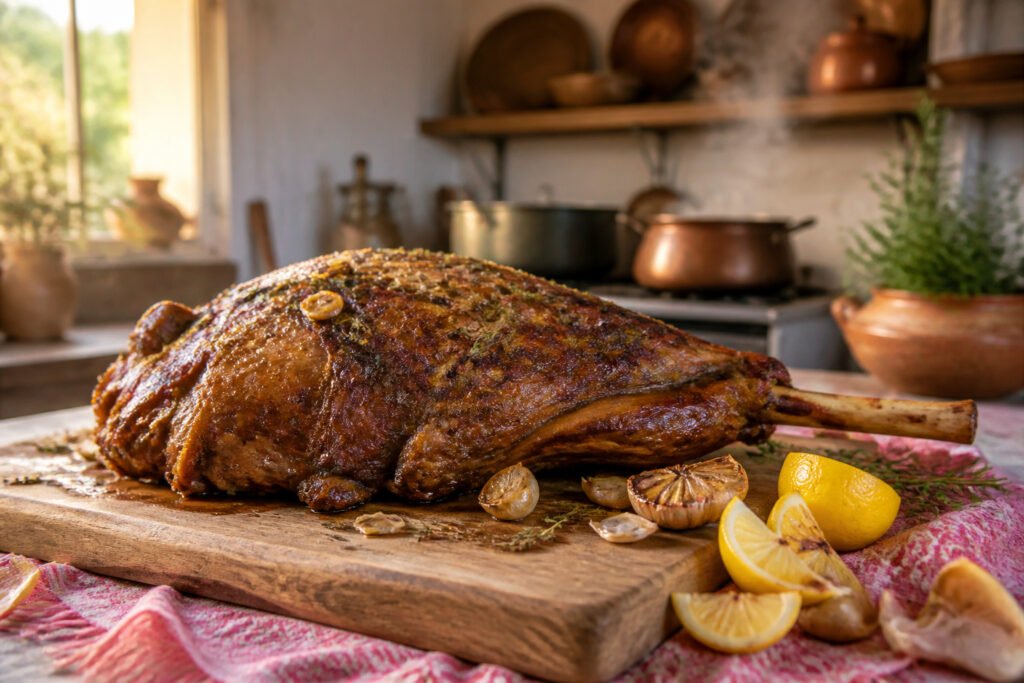
A Greek roast leg of lamb is a bone-in leg marinated in garlic, lemon, and white wine, then slow-roasted at low heat until the meat pulls apart with a fork. The method only works if you start at 450°F to build a crust before dropping to 250°F for the long covered roast; skip that initial blast and the surface steams to gray. Twelve cloves of garlic go into the marinade, and the leg needs seven hours at the lower temperature for the collagen to fully break down.
Marinate the Lamb

The marinade starts with 12 cloves of garlic, ½ cup lemon juice, 1½ cups white wine, and 2 cups chicken broth. Pulse the garlic with olive oil and herbs first, then work in the liquids. The mixture should be loose enough to pour but thick enough to cling to the meat.
Rub it everywhere, including the crevices. Some cooks make deep vertical cuts and stuff each with a rosemary sprig and a garlic slice; the marinade seeps in deeper that way.
Cover and refrigerate for 3 to 12 hours. Overnight is where the flavor really sets, especially if your lamb is closer to the larger end. Pull it from the fridge an hour before roasting so it can lose the chill.
Recommended Products

New Zealand Origin: Raised on New Zealand’s lush, open pastures, delivering exceptional flavor, tenderness, and quality.

Tender and flavorful no-antibiotics-ever 100% grass-fed New Zealand lamb ready for your favorite preparation

Tender and flavorful no-antibiotics-ever 100% grass-fed New Zealand lamb ready for your favorite preparation
Preheat and Brown

Set the oven to 450°F before the lamb goes in. The blast of dry heat at the start is what turns the surface brown and builds the crust that holds the juices in later.
Lay the leg in the roasting pan uncovered. Some recipes call for covering at this stage, but an open pan gives you better browning on the top and sides. Let it roast for 20 to 30 minutes until the outside has real color. In the restaurant, I checked at 20 minutes and usually let it go the full half hour if the fat cap still looked pale.
That crust is insurance. Once you drop the heat and cover the pan for the long slow roast, the surface would otherwise steam to a dull gray. The high-heat start fixes that in advance.
Recommended Products

You will receive (1) 16 Oz Lemon-Garlic Marinade

Delicious Garlic & Lemon flavors.

Refined Sugar Free Dressing & Clean Ingredients - Enjoy a refined sugar free salad dressing made with simple, recognizable ingredients. This lemon garlic vinaigrette delivers bold flavor without seed oils, artificial additives, or unnecessary fillers.
Slow Roast Covered

A seven-pound leg needs a full afternoon, and the oven temperature decides how you spend it. Drop to 250°F, cover the pan tight with foil, and the meat will give way to a fork in seven hours. The fat renders slowly, the connective tissue softens without drying, and the lemon-garlic broth underneath reduces to a thin, bright jus that needs no last-minute gravy work.
At 350°F, the same cut finishes in 2 to 2.5 hours with a firmer slice and more chew. Both methods demand the foil tent; without it, the surface dries before the center cooks through. If the skin lacks crackle after the covered stage, pull the foil for a final few minutes or run the leg under the broiler just until the fat blisters. The lower oven forgives timing mistakes better. The higher one rewards a cook who wants dinner before nine.
Recommended Products

Healthy Material - The Tifanso heavy-duty turkey roasting pan with rack is made of high-quality, non-toxic stainless steel and contains no chemical coatings, ensuring that no harmful substances leach into your food. This turkey roasting pan can withstand temperatures up to 450℉ and is corrosion-resistant, promising a long service life without easy deformation. The oven pan heats quickly and distributes heat evenly, allowing you to make delicious gravies directly on an induction stove.

【SMALL ROASTING PAN】 This roasting pan is 13" long and 8" wide (11.4" x 6.9" inside). Holds up to 5 lbs of poultry with the lid on, 7 lbs without the lid. Lightweight but durable, this roaster pan can heat up quickly and distributes that heat evenly, made for faster and high efficient cooking.

【MEDIUM ROASTING PAN】 This roasting pan is 15.4" long and 10.5" wide (14.4" x 8.9" inside). Holds up to 8 lbs of poultry with the lid on, 10 lbs without the lid. Lightweight but durable, this roaster pan can heat up quickly and distributes that heat evenly, made for faster and high efficient cooking.
Rest Before Carving

A leg of lamb pulled straight from the oven will bleed its juices across the cutting board the moment a knife touches it. The muscle fibers, tightened from hours of heat, need time to relax and draw that moisture back inward. A 20 to 30 minute rest gives them that window, and the meat finishes climbing another five degrees or so as it sits.
Tenting loosely with foil traps warmth without steaming the crust you’ve built. I set the roast on a cutting board, pan juices reserved, and use that window to finish whatever sides have been holding. The potatoes that shared the pan can keep roasting if they need more time, or they can rest alongside the meat.
Greek tables are not precious about this stage. The lamb does not need a carving station and ceremony. It needs a cook who can wait. Those same sources that call for well-done lamb at 150–165°F still insist on this pause, and the ones pulling at 125°F for medium rely on it even more, since carryover cooking gets you to 130°F without overshooting. The wait is insurance against dry meat, and it costs nothing but patience.
Recommended Products
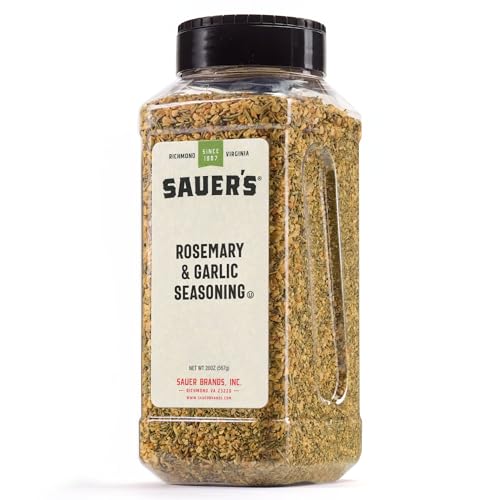
Aromatic herbs come together with garlic for a unique, all-purpose blend

Aromatic garlic taste: Brings a bold, savory flavor to your meals with the convenience of minced garlic paired with parsley

PREMIUM FLAVOR: Lawry's Salt-Free Garlic and Herb Seasoning features a premium blend of herbs and spices including garlic, rosemary, basil and a touch of citrus to deliver fresh, robust taste
Marinade Variations

Most Greek roast leg of lamb marinades start from the same place and then split into three workable paths.
- Garlic and lemon base: Olive oil, lemon peel, a couple of garlic cloves, rosemary leaves, and salt and pepper pulsed to a rough paste. This is the overnight marinade, the one that goes on first and sits for 3 to 12 hours.
- Dijon mustard addition: A second marinade applied right before roasting adds Dijon mustard, more garlic, rosemary, and thyme leaves. If the thyme sprigs are soft, the whole sprig goes in. The two marinades mix on the meat, and that is fine.
- Herb combinations: Rosemary appears in both stages; thyme joins at the second. One northern Greek variation skips the mustard entirely and instead stuffs slits in the lamb with garlic, graviera or kefalograviera cheese, allspice, and black pepper.
Recommended Products


New Zealand Origin: Raised on New Zealand’s lush, open pastures, delivering exceptional flavor, tenderness, and quality.

Cooking Methods Compared

Slow roasting and regular roasting give you two different meals from the same cut. Low and slow at 250°F for roughly 6–7 hours breaks the collagen down until the meat pulls apart with a fork and the edges caramelize deeply. That is the Greek way, and it is the method I would pick for a Sunday table where people are eating at a set time and you want the lamb to hold without stress.
Regular roasting at 360°F gets you there in about 2 hours, covered for the first 1½ hours then uncovered to crisp. The center stays pink if you pull it early enough, though the sources I trust treat this method as the path to well-done lamb with some give in the meat rather than fall-apart tenderness.
| Slow Roast | Regular Roast | |
|---|---|---|
| Oven temp | 250°F / 120°C | 360°F / 180°C |
| Covered time | Full roast, then rest | 1½ hours |
| Uncovered time | None needed | 15–30 minutes |
| Total active time | ~6–7 hours | ~2 hours |
| Texture goal | Fall-off-the-bone | Tender, well-done |
| Best for | Easter, make-ahead meals | Weeknight or shorter window |
The slow roast has one hidden advantage: you can run it overnight, let it rest on the counter covered in foil, and reheat at 350°F for an hour before serving. The regular method does not forgive a missed timer quite so easily.
Recommended Products

Premium Quality: Chef-crafted from carefully selected ingredients, our Lemon Pepper Garlic Sauce & Marinade boasts a pure taste with soy sauce, and flavors, experience the richness of authentic flavors in every bite.

Premium Quality: Chef-crafted from carefully selected ingredients, our Lemon Pepper Garlic Sauce & Marinade boasts a pure taste with soy sauce, and flavors, experience the richness of authentic flavors in every bite.

Gluten free. Lactose free. Vegan.
Bone-In or Boneless

The bone conducts heat from the inside out, which means more even cooking and a depth of flavor in the pan juices that the boneless cut simply does not replicate. Boneless legs run about 2 pounds lighter, carve cleaner, and cook faster; ask your butcher to butterfly one open and the marinade gains surface area to work with. For a Greek Easter dinner or any gathering where the roast is the centerpiece, bone-in still wins on presentation.
| Attribute | Bone-In | Boneless |
|---|---|---|
| Typical weight | 5–7 lb | About 2 lb less |
| Cooking time | Longer | Shorter by 45 min–1 hr |
| Evenness of cooking | More even (bone conducts heat) | Less even |
| Carving | More work | Easier, cleaner slices |
| Flavor | Deeper, richer juices | Standard |
| Presentation | More dramatic | Neater, uniform |
Plan on 350–400 g (12–14 oz) of uncooked bone-in meat per person; the bone accounts for part of that weight, so the yield after carving lands closer to what you’d expect from a smaller boneless portion.
Recommended Products

EXCEPTIONAL DESIGN: The Cuisinart 16-inch rectangular roaster is made with a high-performance stainless steel exterior and riveted stainless steel handles. The steel rack is large enough to handle a big Thanksgiving turkey and perfect for slow-roasting root vegetables

VERSATILE ROASTING PAN – A cookware essential. This big 15 inch roaster is ideal for cooking turkey, chicken or beef, along with other meats and vegetables.

Ideal Size for Roasted Chicken & Small Roasts – This 13-inch oval roaster pan (11-inch inner diameter) is perfectly sized for whole chickens, Cornish hens, pork roasts, and hearty vegetable medleys. The included lid traps heat and moisture, delivering tender, juicy results for everyday meals and holiday dinners alike
Internal Temperatures

A meat thermometer removes the guesswork from a cut this size. Greeks traditionally roast lamb well done to 150–165°F (66–74°C), which is the range where the meat slides easily when pierced and no blood appears. If you prefer it less done, pull it earlier and let carryover heat finish the job during the rest.
| Doneness | Internal Temp | Texture | Notes |
|---|---|---|---|
| Well done | 150–165°F (66–74°C) | Tender, fully set | Traditional Greek preference; juices run clear |
| Less roasted | Below 150°F | Pinker center | Reduce roasting time; not the classic preparation |
Rest the lamb 15 minutes before carving so the juices settle back into the meat rather than pooling on the board.
Recommended Products

VERSATILE BLEND: Premium cilantro lime seasoning perfect for Mexican dishes, grilled meats, seafood, vegetables, and rice dishes

Bold Flavor Profile: This savory and smoky seasoning blend combines the nutty richness of sesame seeds with the fiery kick of chili peppers and the aromatic depth of garlic, creating a complex taste experience that elevates any dish with layers of flavor

✅ Aromatic & Versatile Flavor: A gourmet blend of dried garlic and rosemary that enhances the natural flavors of your everyday recipes.
What to Serve With It

A Greek roast leg of lamb needs sides that can hold their own without stealing the show. Here is what works.
- Roasted potatoes are the classic choice, cooked right alongside the lamb so they catch the drippings and turn crunchy outside, fluffy inside. Every source insists on them, yet none bothers to name a specific potato type. That gap tells you something: the method matters more than the varietal. Use what the store has.
- A Greek salad cuts the richness. In cooler months, a classic green salad with feta works; in summer, the full tomato-cucumber version. Either way, keep the dressing sharp.
- Tzatziki belongs on the table, and a second dip rounds things out. Tirokafteri, the spicy whipped feta, adds heat for guests who want it.
- Spanakopita or tiropita turns the meal festive, though for a weeknight dinner, this is the piece to skip if time is short.
- Good bread, olives, and a wedge of cheese are the quiet finishers that let people eat at their own pace.
The lamb stays warm for about an hour after it comes out, which is enough time to roast potatoes or pull together a salad without everything going cold at once.
Recommended Products

Tender Roast: Bone-in leg provides exceptional moisture and flavor for your roast.


Coliander, Thyme, Garlic, Sugar, Salt, Red Chilly Peppers, Potato Starch, Rosemary
Making It Ahead

A Greek roast leg of lamb actually improves with a night in the refrigerator. The flavors settle and deepen, and the meat stays just as tender when you reheat it properly.
Cool the lamb completely, then wrap it tightly or transfer it to an airtight container. It keeps for up to 4 days refrigerated. Store any potatoes separately if you can; they reheat more evenly that way.
For reheating, place the lamb in a covered baking dish with a splash of water or chicken broth to keep it moist. Warm it at 350°F for 20 to 30 minutes, or closer to an hour if you’re bringing the whole roast back to temperature from cold. The covered dish traps steam and prevents the meat from drying out at the edges.
Leftovers this good rarely go to waste, but if you need longer storage, the lamb freezes well for about 2 to 3 months. Carve the meat off the bone first, pack it in freezer bags or containers, and thaw it overnight in the refrigerator before reheating the same way.
Recommended Products

Wegmans Organic, Lemon & Garlic Marinade 16oz. (Pack of 4)

AUTHENTIC MIDDLE EASTERN FLAVOR - SHUUG Harissa captures the deep, time-honored flavors of the Middle East, blending savory notes of garlic, olive oil, and cumin with the heat of roasted red peppers, guajillo peppers, and dried chili. This is Mediterranean Sauce flavors at their best!

Dietary Features: NON GMO and Gluten Free formulation suitable for various dietary preferences and restrictions
Easter and Celebration

In Greece, lamb on the table marks something worth gathering for. The sources describe it as the centerpiece for Christmas, Thanksgiving, birthdays, and above all, Greek Easter, when the roast leg carries particular weight. One cook notes that her family would only turn to the spit instead for that holiday, which tells you how central the oven-roasted version remains.
The tradition runs deeper than preference. Meat itself was prized, lamb especially so, and Greeks have long been particular about it: smaller animals, well-done rather than pink, and known provenance. Families with land often raised their own, so the Easter lamb arrived with its source already understood.
What reaches the modern American kitchen is the drama of that centerpiece. The slow-roasted leg fills the house with garlic, lemon, and rosemary while it cooks, and it arrives at the table over gold potatoes that have soaked up the drippings. The meal is not everyday food; it is food for the days that matter.
Frequently Asked Questions
Can I make Greek roast leg of lamb ahead of time?
Yes, and it actually improves overnight. Cool the lamb completely, wrap it tightly, and refrigerate for up to 4 days. Reheat in a covered baking dish with a splash of broth at 350°F for 20 to 30 minutes, or closer to an hour if bringing the whole roast back from cold. The flavors settle and deepen, and the meat stays tender.
What is the best internal temperature for Greek roast leg of lamb?
Greeks traditionally roast lamb well done to 150–165°F (66–74°C), where the meat slides easily when pierced and juices run clear. If you prefer less done lamb, pull it below 150°F and let carryover heat finish it during the 20 to 30 minute rest. A meat thermometer removes guesswork from a cut this size.
How do you like your lamb cooked?
That depends on texture and time. For fall-apart tenderness, slow roast at 250°F until the internal temperature reaches about 175°F, roughly 6 to 7 hours. For a firmer, sliceable roast, cook to 150–165°F in about 2 hours at 350°F. The well-done range is the classic Greek preparation; pinker centers require pulling earlier and trusting carryover cooking.