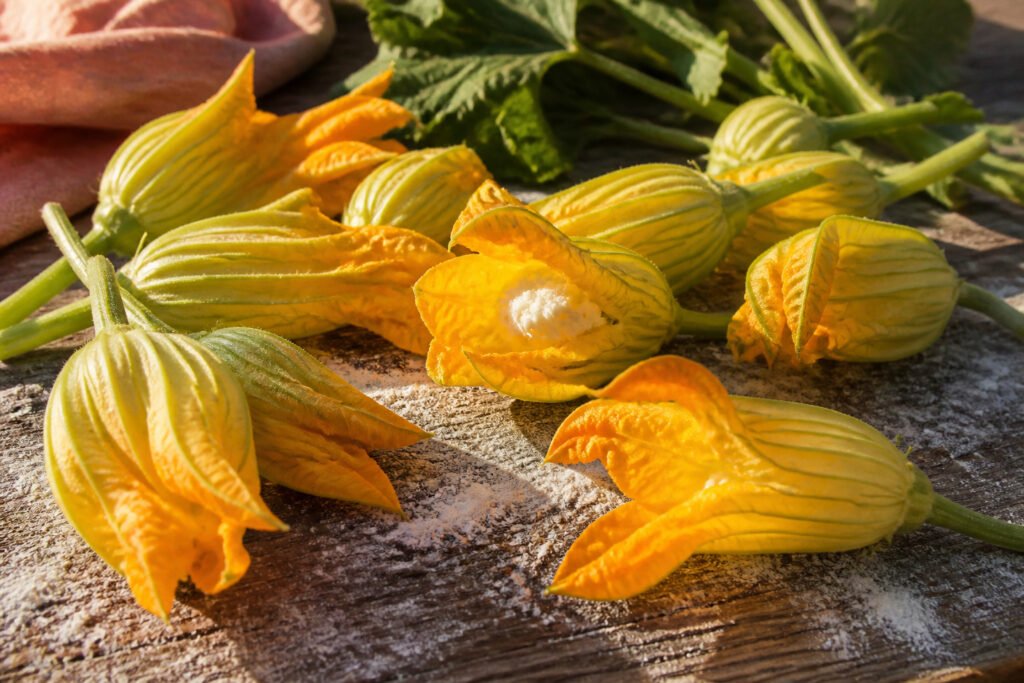
Stuffed zucchini flowers are edible squash blossoms filled with cheese or rice, dipped in batter, and fried until the crust turns crisp and golden. The catch is the window: they must be picked before the bloom opens and used within two to three days, or the petals wilt and lose the structure that holds the filling. Male flowers, the ones on long bare stems without a baby zucchini attached, work best.
Pick and Clean the Flowers
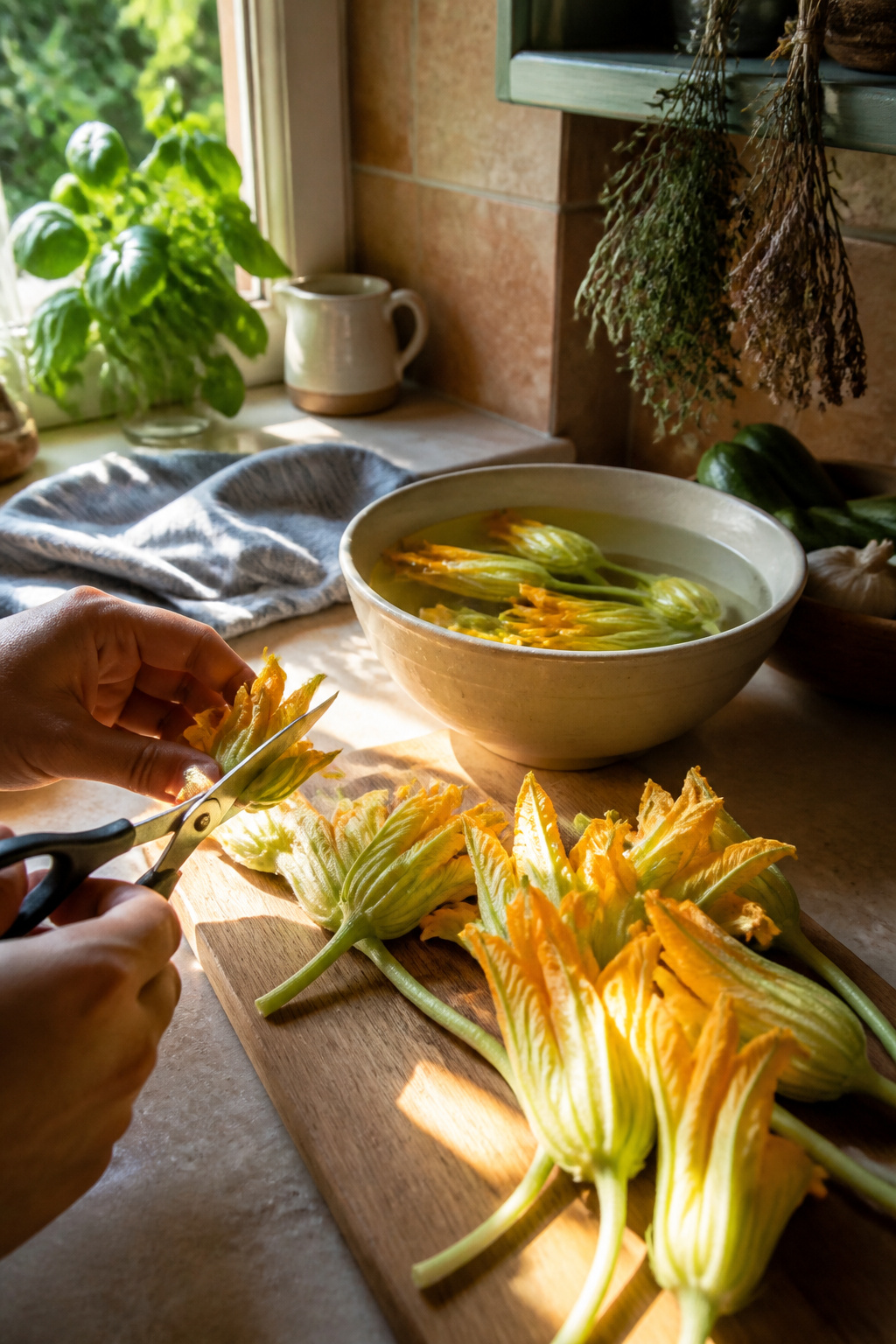
Male flowers are the ones to pick, identified by the long stem and the small bulb absent. Female flowers carry that bulb, the nascent zucchini, and the sources split on whether they are fair game. My mother, reading one account, would have sided with the strict constructionists; the practical voice says the smaller females work if males are scarce. Either way, harvest early, before the bloom opens, when the petals are still tight and the flower holds its shape.
Rinse gently under cool water, then pat completely dry. Moisture left in the petals turns the oil angry later, so this step earns its time. Lay the flower on a cutting board, snip the top to open the cavity, and cut down the middle to reach the stamen inside. Remove it with scissors, leaving roughly half an inch of stem as a handle. Some stems fall off on their own; those flowers are not ruined, only harder to maneuver in the pan.
The workable window is short: two to three days after picking, at most. Store them unwashed, nested one inside another like ice cream cones, wrapped in paper towels or a paper bag somewhere cool and dark. Wash only when you are ready to stuff and fry.
Mix the Filling
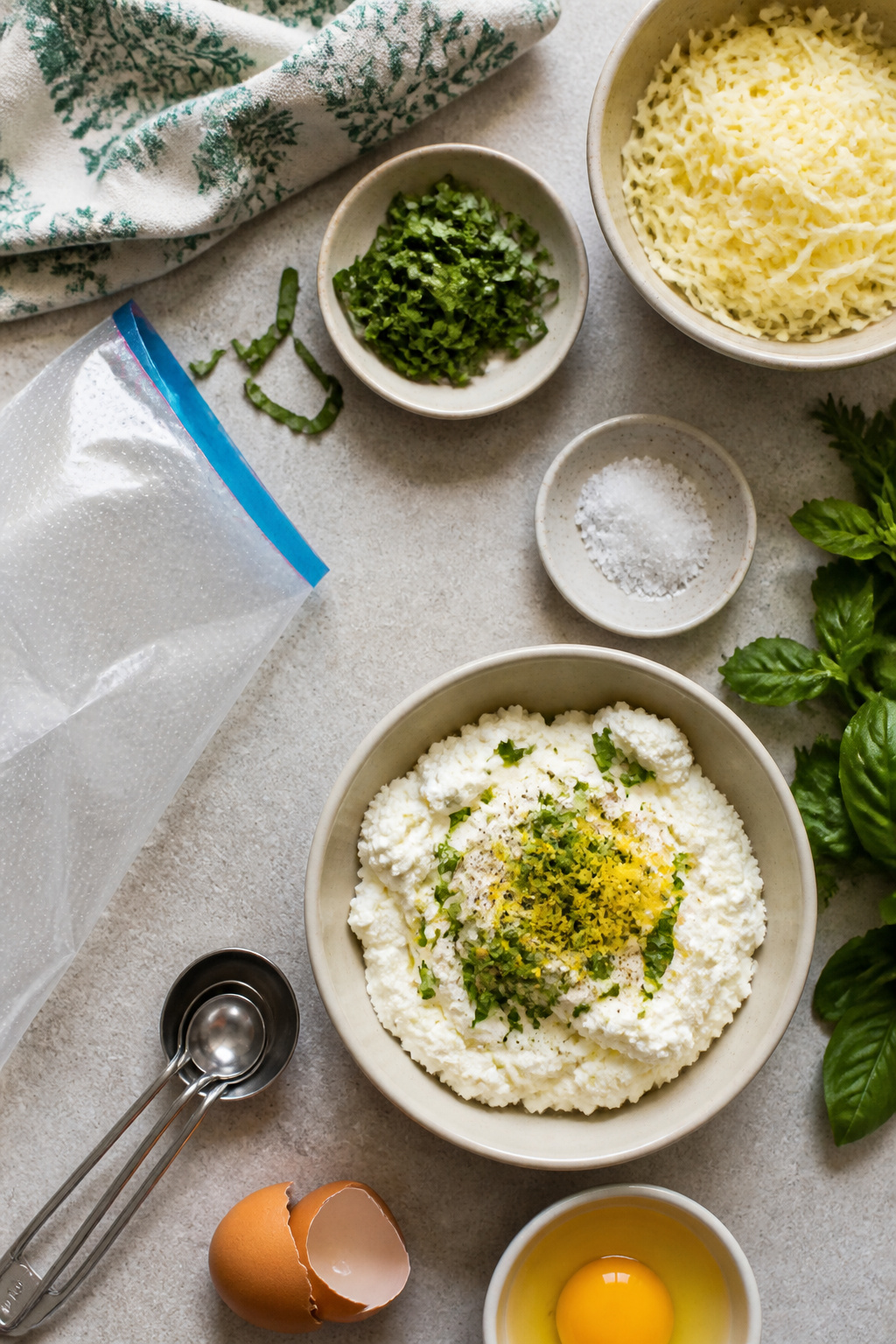
Ricotta and herbs show up most often as the pairing for stuffed zucchini flowers, and for good reason. The mild cheese takes whatever you throw at it: lemon zest, fresh sage, a beaten egg yolk to keep everything from running out during frying. Plan on roughly 1-2 tablespoons of filling per flower, scaled to the blossom’s size. A small Ziploc bag with the corner snipped off beats a spoon for getting it in cleanly and with less mess.
Mozzarella and prosciutto is the other backed option if you want something saltier and more substantial. Feta, whipped until smooth, works too, though the sources I trust on this treat it as a variation rather than the main path. Parmesan or Pecorino grated in adds depth either way. What you don’t want is an overstuffed blossom; the petals tear, the filling leaks, and you’re left with fried cheese in the pan instead of inside the flower where it belongs.
Make the Batter

A cold batter with bubbles in it fries up lighter than one made with plain water. I keep seltzer in the fridge for this, though a pale lager works just as well and leaves a faint malt sweetness behind. The basic ratio is one large egg to a third-cup of flour and a quarter-cup of beer; if you are out of beer, swap in milk and add a third-teaspoon of baking powder to get some lift.
Whisk the flour in a tablespoon at a time so you do not get lumps. The mixture should coat the back of a spoon and hold there a few seconds before sliding off. Too thin, and it drips right off the flower in the oil, leaving bare patches that scorch. Too thick, and you get a doughy sleeve around the blossom instead of a crisp shell. If you drag your finger through the coating on the spoon and the line fills in immediately, add another spoonful of flour. If it sits there like pancake batter, thin it with a splash more liquid. Let it rest five minutes while you heat the oil; the bubbles settle just enough to behave.
Fry at 360 to 375°F

A heavy-bottomed pan with about a quarter inch of oil gives you the most even heat for stuffed zucchini flowers, and a clip-on thermometer takes the guesswork out. 360 to 375°F is the zone where the batter turns crisp and golden before the cheese inside goes molten and starts to leak. Below that, the flowers soak up oil and turn sodden; above it, the outside scorches while the filling stays cool.
Dip each stuffed flower stem-first into the batter, let the excess run off for a second, then lay it gently away from you in the oil. Crowding the pan drops the temperature fast, so three or four at a time is the practical limit in a standard skillet. Two to four minutes per side gets you that deep gold color; the second side usually finishes faster, so start checking at the two-minute mark. A spider skimmer or slotted spatula lifts them out without tearing the fragile crust. Drain on a wire rack if you have one, or paper towels if you don’t. Either way, serve them within ten minutes. The crackle doesn’t survive a steamy pile.
Drain and Eat Hot

Lift the flowers out with a slotted spoon and let them drain on paper towels. Serve them immediately, because the crisp batter turns tough within minutes of cooling. That short window is the one point every source agrees on.
A paper towel-lined plate does the job; no rack needed. The flowers hold enough residual heat that they finish crisping as they sit, so pile them in a single layer if you have the space.
Some cooks say cold flowers are still edible. They are, but the texture collapses into something leathery and the cheese inside sets into a dense lump. The difference between hot and lukewarm is the difference between a dish worth the effort and one that tastes like reheated fair food. If your batch is large, work in shifts and serve each round straight from the towel while the next one fries.
Cheese, Meat, and Vegan Fillings

Four filling routes cover most of what you’ll find, and they split cleanly into cheese-forward and plant-based camps.
- Ricotta with herbs is the baseline most recipes start from. A good quality ricotta, an egg for binding, parmesan or Romano, garlic, salt and pepper. Fresh herbs fold in at the end so they stay bright against the warm cheese.
- Mozzarella with prosciutto turns the flower into a sealed packet. The meat goes in first, the cheese melts against it, and the whole thing fries up like a crisp envelope. This one reads more appetizer than side; the salt from the cured meat does a lot of the work.
- Feta with herbs shifts the flavor sharper and saltier. The cheese crumbles rather than spreads, so the texture stays more varied inside the petal. Oregano, mint, or dill all make sense here, though none of the sources specified which they reached for.
- Rice with vegetables is the least common route, showing up in only two of the Greek sources. Grated tomato, herbs, and short-grain rice get simmered inside the flower for an hour or more. The result is closer to a light lunch than a finger food, and the cook time jumps from minutes to well over an hour.
The rice version demands more planning. The cheese versions let you decide at noon and eat by six.
Beer, Seltzer, or Plain Batter

The batter you choose decides whether the coating shatters, puffs, or sits thin and crackly against the flower.
- Beer batter adds egg and a quarter-cup of clear beer to the flour, and the yeast and sugars left in the beer brown fast and deep. That extra color comes with a softer, slightly thicker shell. If you open the fridge and find only milk, a third of a teaspoon of baking powder swaps in for the beer’s lift.
- Seltzer batter, or soda water, keeps the coating lighter than beer because the carbonation has no sugar to accelerate browning. Some cooks add a pinch of baking powder to the flour first; the bubbles still puff the batter, but the finished color stays paler gold and the crunch stays drier.
- Plain flour and water is the spare Greek version: no egg, no bubbles, just cold water whisked almost smooth with salted flour. The coating fries up thin and shattery, closer to a tempura shell than a fritter. It is the fastest to mix and the least likely to mask the flower itself.
My own preference leans toward the seltzer or plain water when the filling is strong, like feta with mint and dill. The batter’s job then is to hold the flower together, not to compete. Beer batter wins when I want the fried blossom to eat more like bar food, something to drag through tzatziki and finish with a second glass of wine.
Fried Against Baked
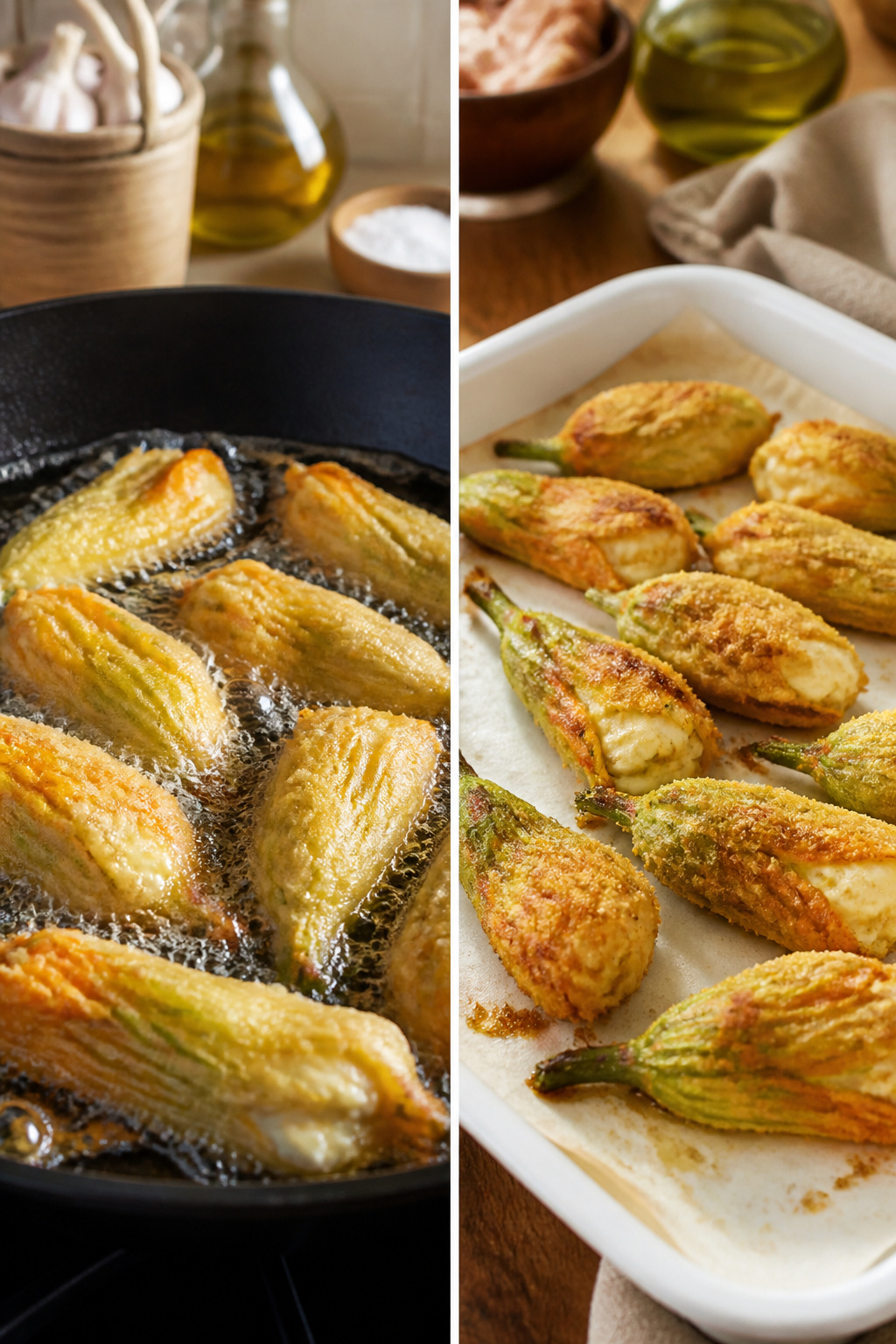
Frying wins by a wide margin in the recipes I looked through, roughly ten to four, and the reason is texture. A hot oil bath gives stuffed zucchini flowers that puffed, shattering crust you want against the soft cheese inside. Baking trades that away.
What baked flowers gain is calm. You can stuff them ahead, lay them on a sheet, and slide them into a hot oven once guests arrive. No spattering oil, no standing at the stove in batches. The crust still turns golden, though it stays closer to crunchy than truly crisp, more breadcrumb coating than tempura shell.
If you want to go that route, a hot oven is non-negotiable, and you still need some fat for browning. A light brush of oil or a melted butter drizzle over the stuffed flowers before they go in keeps them from drying out. Sources that bake them use high heat, around 400°F, for roughly 12 to 15 minutes, watching for the color to turn. The filling heats through faster than the exterior browns, so the real risk is pulling them too early and serving warm cheese in a pale, leathery petal.
For weeknight cooking, frying costs you ten minutes of active time and one pan to wash. Baking buys peace of mind for a party, but only if your crowd will not miss the crackle.
Keep Flowers Fresh

Zucchini flowers collapse fast once heat or light hits them, so use them within 2–3 days and treat that window as hard. I store mine in a cool, dark spot, not the refrigerator door where the light flicks on every time someone hunts for yogurt. A shallow container matters more than the material: something wide enough that the blossoms do not stack or crush each other, with a little breathing room so moisture does not rot the petals. I line it with a paper towel, lay the flowers in single, and cover the top loosely with another towel or a light lid. Sealed airtight traps condensation and turns them slimy; left completely open, they wilt flat against the dry air. The male flowers, the ones on plain stems without a baby zucchini attached, stay tender longest and open wide for filling. Female flowers work too if they are small and fresh, but they close up tighter and tear more easily once you start spooning in cheese.
Sauces That Go With Them

A hot fried flower needs something cool and sharp to cut the richness. I keep two sauces on rotation, and both come together in the time it takes the oil to heat.
- Tzatziki is the classic Greek move: thick yogurt, grated cucumber squeezed dry, garlic, olive oil, and dill. The cucumber water will ruin the texture if you skip the squeezing step, so don’t.
- A simple yogurt sauce works when you want less fuss. Chop whatever herbs you have, stir them into Greek yogurt, drizzle olive oil on top. Done.
- Lemon and salt finish almost every version I have seen. A squeeze of fresh lemon and a pinch of sea salt right before serving lifts the whole plate. The sources that skip this step always read like an oversight, not a choice.
Serve the sauce in a small bowl on the side. The flowers stay crisper that way, and guests can dip or drizzle as they like.
Frequently Asked Questions
How do you clean zucchini flowers?
Rinse the flowers gently under cool water, pat them completely dry, then lay each one on a cutting board. Snip the top to open the cavity, cut down the middle, and remove the stamen inside with scissors, leaving about half an inch of stem as a handle. Complete drying matters; any moisture left in the petals will cause the oil to spatter and splatter during frying.
Can you bake stuffed zucchini flowers instead of frying?
Yes, though baking trades away the hallmark crisp texture. A hot oven at 400°F for 12 to 15 minutes works if you brush the stuffed flowers with oil or melted butter first. The crust turns crunchy rather than shattering, closer to a breadcrumb coating than a tempura shell. Filling heats through faster than the exterior browns, so watch for color rather than time.
What is the best way to store zucchini flowers?
Use them within two to three days and store them unwashed until you are ready to cook. Nest the flowers inside one another like ice cream cones, wrap them in paper towels or a paper bag, and keep them somewhere cool and dark. Avoid the refrigerator door, where the light flicks on frequently. A shallow container lined with paper towels, covered loosely rather than sealed airtight, prevents both wilting and sliminess from trapped moisture.