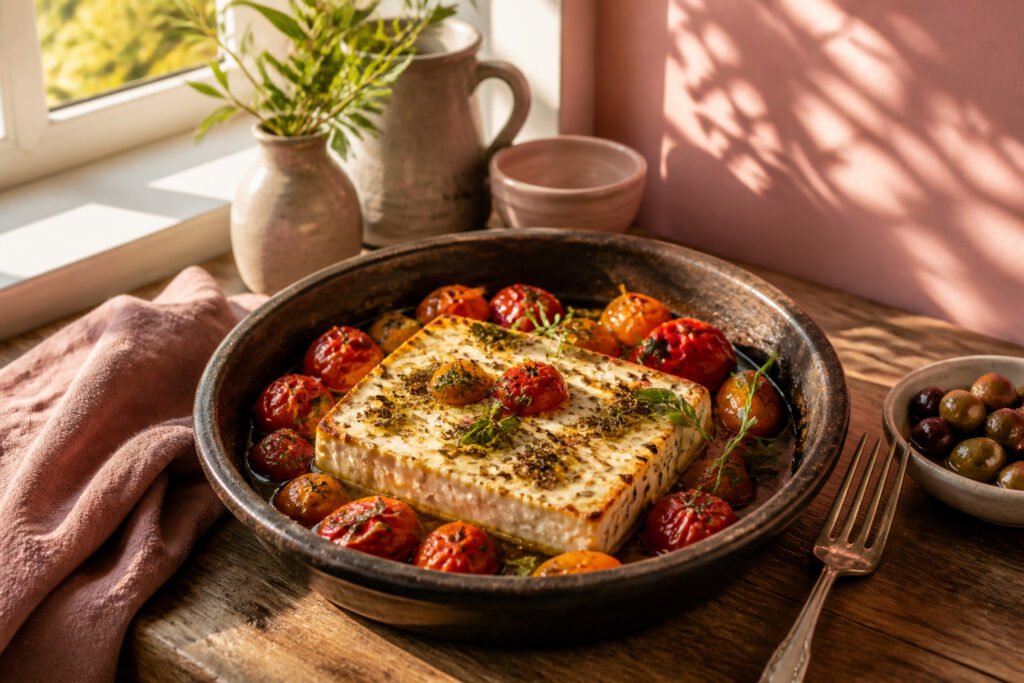
Baked feta is a whole block of the cheese softened in the oven until it turns creamy and spreadable while still holding its shape. The catch is that pre-crumbled feta will not work; it dries out and turns rubbery instead of yielding under a spoon. Most recipes call for an 8-ounce block baked at 400°F, with the timing stretching anywhere from 8 to 30 minutes depending on whether you want it warm and sliceable or fully soft with bronzed edges.
What Baked Feta Is

Baked feta starts with a whole block of feta, not the pre-crumbled kind, set in a dish and baked until the center turns warm and creamy. The cheese holds its shape while the heat softens its naturally crumbly texture into something you can spread with the back of a spoon. That resistance to melting is why feta works here when most cheeses would separate into oil and solids.
The sharp, salty punch of raw feta mellows in the oven, and the surface takes on whatever you spoon around it: olive oil, tomatoes, honey, herbs. Most recipes call for an 8-ounce block, which feeds four to six people as a mezze or appetizer, though a smaller 4- to 4½-ounce portion works for two to four if you are keeping the spread light. The bake itself runs anywhere from 10 to 30 minutes depending on the topping and whether you want the edges just softened or browned and bubbling.
Baked Feta with Cherry Tomatoes

Cherry tomatoes and a block of feta in a hot oven give you the savory, slightly tangy version most people picture first. Firm tomatoes hold up better than ripe ones, and halving them cut-side down lets excess moisture drain instead of pooling in the dish. Some cooks go further and scrape out the seeds; it helps, especially if your tomatoes are late-season soft.
An 8 oz block of feta goes in whole, never crumbled. Two tablespoons of olive oil, a few thyme sprigs, and 20 minutes at 400°F will soften the cheese to a spoonable texture. Push it to 30 minutes if you want more color on top, or finish under the broiler for 5 minutes. The range matters because ovens vary and because "softened" means different things depending on whether you’re spreading it or cubing it.
Crusty bread or pita chips are the usual vehicles. Warm the bread if you have a minute; the temperature difference between hot feta and room-temperature bread is half the pleasure.
Baked Feta with Honey and Pistachios

Sweet and nutty baked feta lands on the table when you want the cheese to feel like dessert without leaving the savory world entirely. An 8-ounce block of feta, a couple tablespoons of olive oil, a tablespoon of honey, and a handful of chopped pistachios come together in the same 400°F oven, though here the range matters more: eight minutes keeps the center cool and sliceable, while pushing toward thirty minutes gives you a spreadable pool with bronzed, candied edges. The honey doesn’t just sweeten; it cooks down against the hot ceramic into something almost burnt and bitter, which is exactly what makes the warm, salty feta underneath taste brighter rather than cloying. Pistachios do the textural work that tomatoes would do in the classic version, but drier, with a crack against the soft cheese that breadcrumbs can’t quite match. Chop them rough, not fine, or they disappear into the oil. Serve this one immediately, straight from the dish, with bread or crackers that can handle a drag through the honey pooled at the edges. It cools fast, and once the temperature drops the whole thing turns from compelling to merely pleasant, which is a real loss for the extra two minutes of waiting.
Simply Perfect Honey Baked Feta

The fastest route to baked feta needs only what most kitchens already hold. An 8-ounce block of feta, a drizzle of honey, a splash of olive oil, and a few thyme sprigs if you have them. That’s the whole ingredient list. Bake at 400°F for 8 to 10 minutes if you want it warm and holding its shape, or let it go closer to 30 if you prefer the center soft enough to spread like a dip. No special dish required; any oven-safe plate or small skillet works.
The honey caramelizes slightly at the edges while the feta softens underneath without collapsing. Thyme holds up better than rosemary here, which can turn bitter in the dry heat, and oregano goes dusty fast. Bread is non-negotiable for serving, but the kind barely matters. A torn loaf of whatever is on hand, pita from the grocery store bread aisle, or even sturdy crackers will do. The feta carries the weight; the bread just delivers it.
Warm Baked Feta with Roasted Cherry Tomatoes and Olives

The richer version of baked feta builds a whole mezze dish in one pan. An 8 oz block of feta goes into a baking dish with cherry tomatoes, olives, sliced red onion, and 2 tablespoons of olive oil. The olives are what separate this from the simpler tomato version; their brine pools in the dish and seasons everything without extra salt. I keep red pepper flakes optional, since the olives already carry heat and depth.
Same oven, same starting point: 400°F for 8 to 30 minutes, depending on how much you want the tomatoes to burst and the onion to soften. The wide range matters. At 8 minutes the feta is warm and holding its shape; at 30 the tomatoes have collapsed into sauce and the cheese spreads like soft butter. If the top hasn’t turned golden by the time the vegetables are where you want them, run the dish under the broiler for a few minutes. Watch it; the oil can flare.
Serve this as part of a mezze platter with bread or pita chips. The tomatoes and olives have made their own sauce in the dish, so set the whole thing on the table and let people spoon it onto their plates.
Greek Style Baked Feta

Greek-style baked feta keeps the cheese at the center, not the vegetables around it. An 8-ounce block goes into a small oven-safe dish, gets drizzled with olive oil, and takes a scattering of fresh oregano and thyme. A thin lemon slice on top turns almost candied in the heat. Same 400°F oven, 15 to 20 minutes, until the feta softens without collapsing.
Sheep’s milk feta from a Greek market gives the creamiest center, with that balanced saltiness that doesn’t read as harsh. Grocery-store feta, usually cow’s milk, works fine; the texture firms up more and the salt runs sharper, so ease up on any extra seasoning.
What separates this from the tomato-heavy versions is restraint. No cherry tomatoes bursting into sauce, no honey turning it toward dessert. Just fat, salt, herbs, and the slight funk of good feta. Serve it straight from the dish with warm pita torn into pieces. The bread sops up the oil and any cheese that slumps against the side of the pan, which is the best part to fight over.
Baked Feta in Foil

Foil turns baked feta into a weeknight move you can actually clean up from before the oven cools. Lay an 8 oz block on a large sheet, pile on whichever toppings match your mood, and drizzle 2 tablespoons olive oil over the top. Crimp the edges into a sealed pouch and slide it onto a baking sheet at 400°F for 8 to 10 minutes.
The foil does two jobs at once: it traps steam so the cheese softens without drying, and it catches every drop of oil and burst tomato so your dish never sees the sink. Serve straight from the pouch or slide the whole block onto a plate if you want it to look like you tried harder. Either way, the same flavor profiles work here, and the only thing left to wash is your fork.
Baked Feta with Vegetables

A block of feta set in a nest of peppers, zucchini, and red onion turns the same 400°F bake into something that eats like dinner rather than a warm starter. The vegetables soften and sweeten while the cheese warms through, all in one pan, and the timing lands in that same 8 to 30 minute window depending on how much you crowd the dish. Less density means quicker softening; a packed pan needs the longer end to drive off enough moisture.
I start the onion and peppers underneath or alongside so their juices run toward the feta, then add zucchini in thinner pieces so it does not water out the bake. The result is a complete dish that still wants bread, but now the bread is sopping up vegetable juices as much as it is chasing cheese. A foil packet works, though an open baking dish gives you more surface for browning. Either way, the cleanup stays minimal, which matters on a weeknight when this moves from appetizer idea to main course.
Baked Feta Pasta

The 8 oz block of feta baked with cherry tomatoes at 400°F is what turned this into a full dinner, and it went viral for a reason. The timing window is wide, anywhere from 8 to 30 minutes depending on how much char you want on the tomatoes, but that flexibility ends once you commit to pasta. The dish needs the feta warm and spreadable, the tomatoes burst, and the pasta ready at the same moment. Cook a pound of pasta while the feta bakes, save the cooking liquid, and toss everything together straight from the oven. The warm feta breaks into a sauce when stirred, thick and salty against the sweet tomatoes. Thin it with that reserved liquid if it clings too tightly. Serves 4 to 6 as a main, though the timing is less forgiving than the appetizer version. I cut the oil back by half from the original, and the pasta still carries it fine.
Quality Feta and Olive Oil

Greek sheep’s milk feta gives baked feta its creamiest center, the kind that yields under a knife instead of crumbling apart. The blocks sold at most grocery stores work fine for weeknight cooking, though the texture tightens slightly. What matters more than provenance is the form: buy a whole block, not the pre-crumbled kind. Crumbled feta dries out in the package and steams rather than softens in the oven, leaving you with a rubbery center and weeping edges.
Extra virgin olive oil carries almost half the flavor in this simple dish, so the bottle on your counter matters. Look for a harvest date within the last eighteen months, an acidity under 0.8 percent, and a dark glass bottle. A few tablespoons across the top pool and caramelize at the edges, turning grassy and rich without needing more than that. I keep one mid-priced Greek oil for cooking and a sharper, peppery one for finishing, but either alone will do the job here.
400°F and the Right Bake Time

400°F is the temperature every source lands on, and the bake time stretches from 8 minutes up to 30 depending on what you want from the cheese. At 8 to 10 minutes the feta is warmed through and just starting to soften, still holding its block shape. Push toward 25 or 30 minutes and it goes fully creamy inside with a slight brown on top. The danger zone sits past that point: overbaking dries the cheese rather than keeping it spreadable. A quick pass under the broiler, 2 to 3 minutes, gives you a golden top without the wait. This range applies whether you are baking in a dish, a skillet, or sealed in foil with tomatoes and olives.
Bread, Crackers, and Mezze

Crusty bread is the classic choice for baked feta, and for good reason. A warm, lightly toasted sourdough or ciabatta gives you something sturdy to drag through the oil and scoop up the soft cheese without collapsing. Pita chips work the same way but add a little salt and crunch that plays against the feta’s tang. Crackers keep things lighter, which matters when the feta is rich with olive oil and you’re already building a larger spread.
That spread is the mezze context: baked feta belongs on a table with olives, roasted vegetables, maybe some cured meat, where people pick at what they want and the dishes share space rather than standing alone. The cheese is the center, but it is not the whole meal.
The dish must be served immediately. The sources agree on this, and the reason is texture. Baked feta softens into something spreadable in the oven, but it sets and cools fast. Wait ten minutes and you have a lukewarm block that crumbles instead of yielding. Pull it when the oil is still bubbling, have the bread ready, and accept that this is not a make-ahead appetizer. That urgency shapes how you use any of the baked feta variations: the timing is part of the recipe.
Frequently Asked Questions
Can I use crumbled feta for baking?
No. A whole block of feta softens into something you can spread with the back of a spoon, while crumbled feta dries out in the package and turns rubbery in the oven. The pre-crumbled kind steams rather than softens, leaving you with a weeping edge and a center that never gets creamy.
How do I prevent baked feta from becoming too watery?
Use firm cherry tomatoes rather than ripe ones, and halve them cut-side down so excess moisture drains away. If your tomatoes are late-season soft, scrape out the seeds before they go into the dish. The same rule applies to zucchini; slice it thin so it does not water out the bake.
What can I serve with baked feta?
Crusty bread or pita chips are the usual choice, warmed if you have a minute so the temperature gap between hot cheese and bread stays wide. Crackers work for a lighter bite, and the cheese also belongs on a mezze platter with olives, roasted vegetables, or cured meat where dishes share the table rather than standing alone.