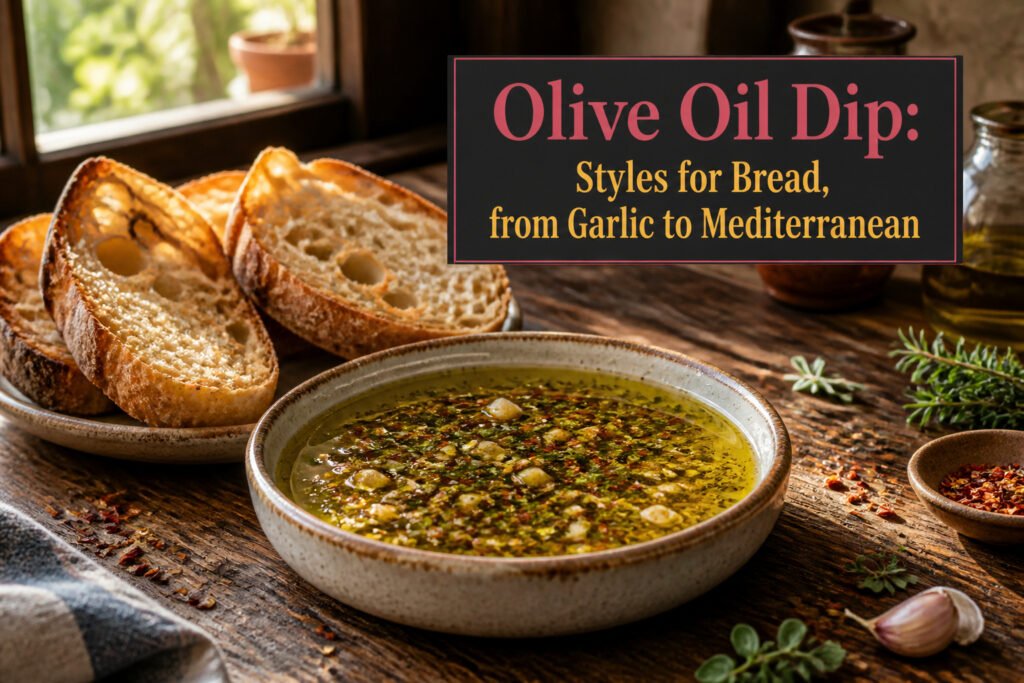
A good olive oil dip tastes sharp and alive, with a peppery catch at the back of the throat, and it comes together in under five minutes. The catch is the oil itself: if the bottle doesn’t say extra virgin with a harvest date within the last 18 months, you’re working with cooking oil, not something worth serving naked. At Opa! Willow Glen, I paid $18–$22 per liter for Greek extra virgin in dark glass, stored below 60°F, because that one decision mattered more than any herb or spice I added after.
Garlic Olive Oil Dip
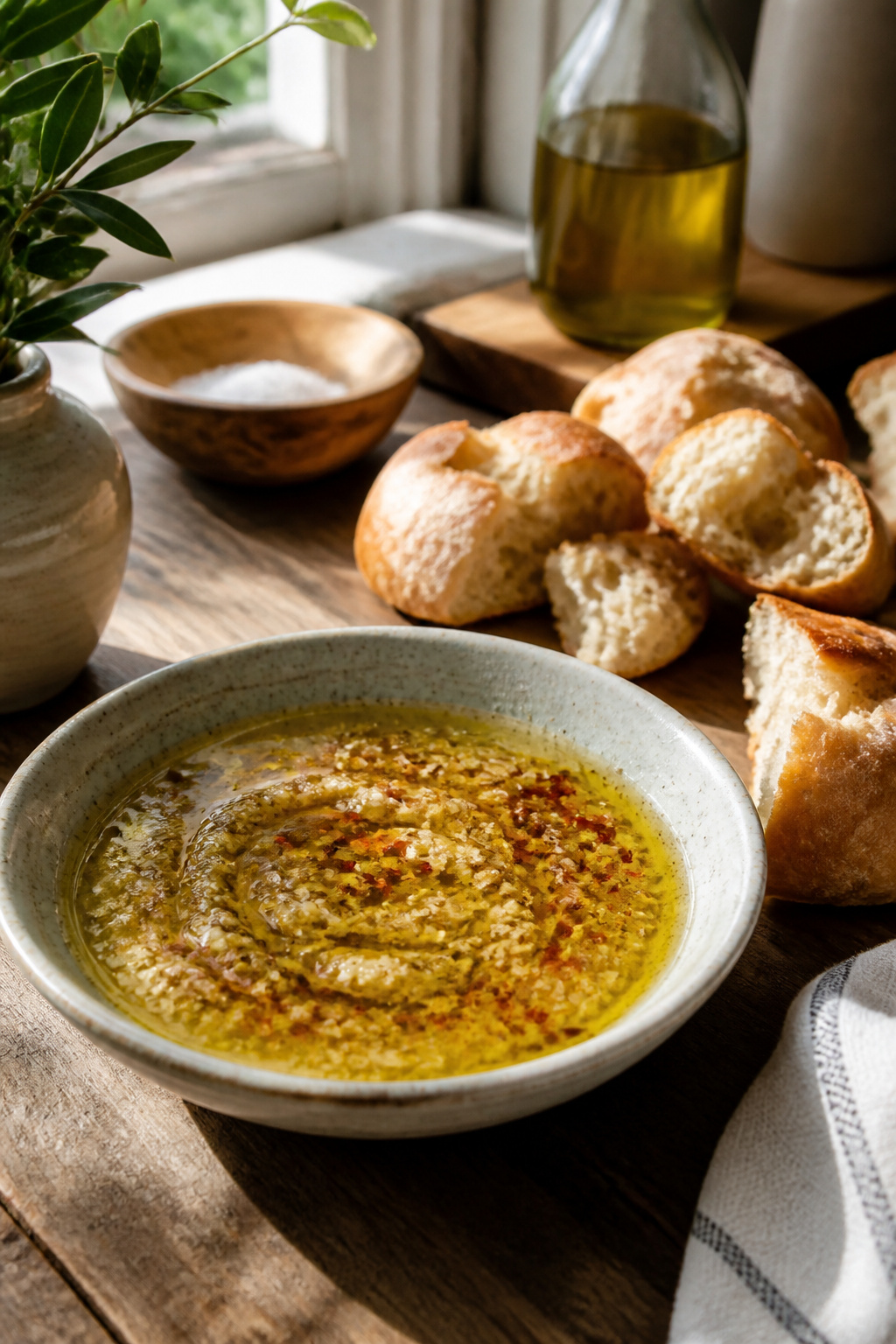
The first olive oil dip I ever set on a table at Opa! Willow Glen, back in 2008, was this exact garlic version. 1 to 2 cloves of minced garlic go into a small bowl with 1/4 teaspoon red pepper flakes, 1 teaspoon dried oregano, and 1/4 cup freshly grated parmesan. Pour 1/4 cup olive oil over the pile, then swirl it together right at the table so the garlic doesn’t have time to turn bitter in the oil.
That bitterness is the thing to watch. Fresh minced garlic left sitting in oil for more than a few minutes starts to oxidize and take on a harsh edge. At the restaurant we kept the components separate until service, then mixed them in the moment the bread hit the table. For a weeknight at home, I still mix it fresh. The parmesan sinks a little, the oregano floats, and the red pepper streaks the oil. That’s the look people remember from restaurant bread service.
This dip demands a sturdy bread. A soft supermarket baguette will collapse under the oil; a crusty loaf with some chew gives you something to drag through the cheese and garlic that settles at the bottom of the bowl. Cleanup is one small bowl and a knife.
Chunky Olive Oil Dip
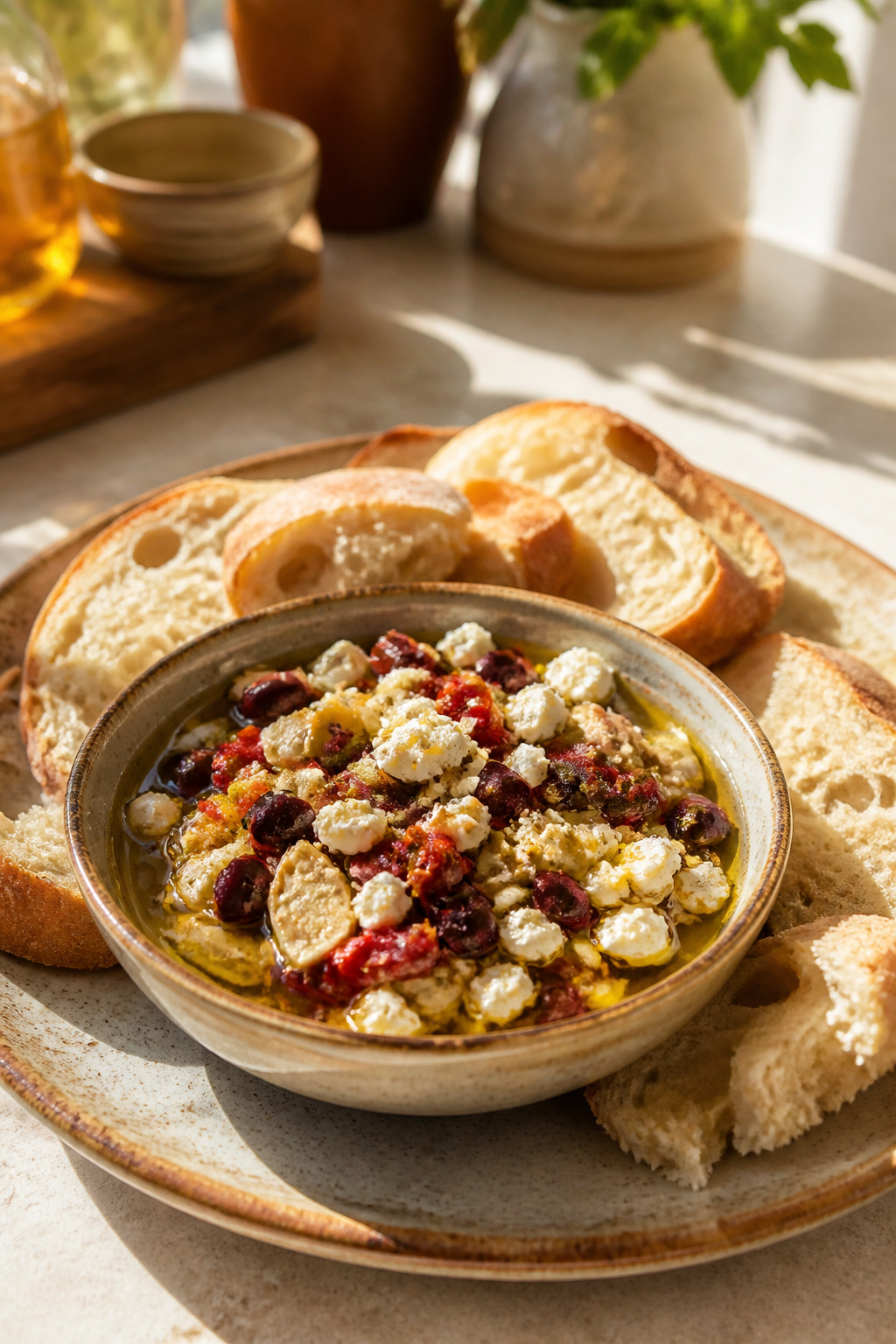
This is the dip that eats like a meal, the one customers at Opa! asked to take home in containers before the night was through. Chopped tomatoes, olives, artichokes, and feta get folded into a pool of olive oil sharpened with balsamic vinegar, and the result is less a starter than a salad you scoop with bread. Four ounces of feta is the measurement that matters more than you’d expect; less and the salt level falls flat against the vinegar, more and the brine crowds out the tomatoes. The feta should crumble, not disappear, so every bite still carries a little cheese, a few olives, and that herby oil. Drag a torn piece of crusty bread through, squeeze it closed like a taco, and the bread becomes part of the dish rather than just the vehicle.
Herbed Olive Oil Dip
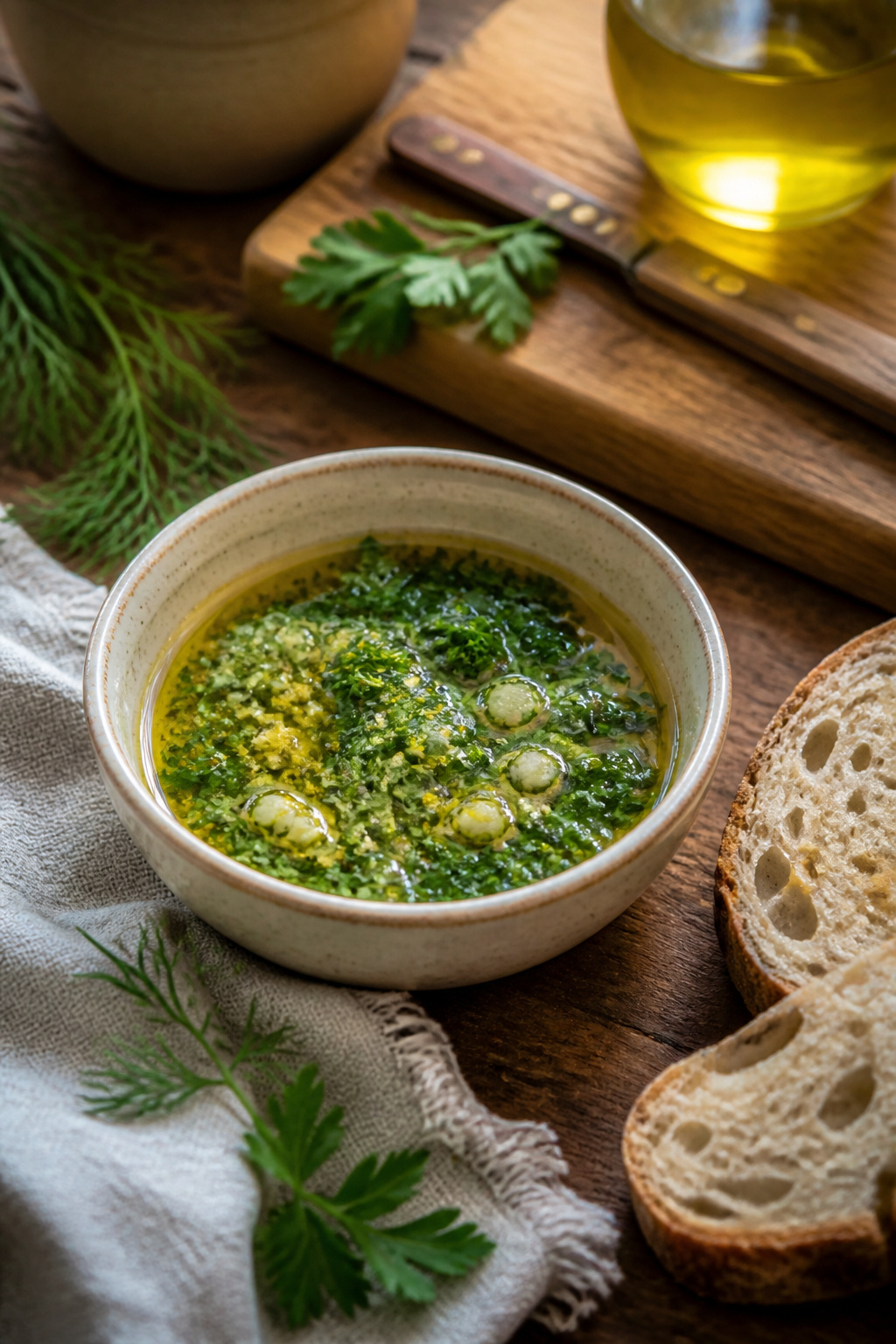
Young herbs carry a brightness that older, woodier stems lose by midsummer. 3 tablespoons each of dill and parsley, measured with a light hand, fill a small bowl with enough volume to matter against the oil without turning to paste. I used to run the knife through them until they were nearly dust, thinking refinement meant smaller pieces. The dip turned murky, and the oil separated within minutes. Coarser leaves hold their structure; they ride the surface instead of sinking, and the lemon zest you add at the end has something to cling to.
Garlic needs restraint here. One small clove, grated on a Microplane, disperses evenly without the harsh bite of a mince. The zest of half a lemon, not the juice, keeps the mixture bright without thinning it.
Late spring is the window. The dill fronds are still soft, the parsley flat and not yet flowering, and neither has developed the bitter backbone that arrives with heat and longer days. The difference is immediate in the bowl: a green that tastes alive rather than merely seasoned.
Olive Oil and Balsamic Vinegar Dip

Good extra virgin olive oil needs almost nothing beside it. At Opa!, this was the dip we fell back on when the feta ran low or the herb delivery was late, and it taught me that the quality of the oil matters more than the length of the ingredient list.
The ratio that works is three parts olive oil to one part balsamic, maybe a hair less vinegar if the bottle is sharp. Season it with a pinch of dried oregano, a little salt, and cracked black pepper. Swirl it on a small plate, not a bowl; you want a shallow pool that bread can skim across, not a deep well where the crust comes up dripping.
Too much balsamic and the mix turns thin and sweet, sliding off the bread instead of clinging. Half a teaspoon of minced garlic helps the oil coat, but add it at the last minute or it sinks and the first dip gets nothing but heat. Taste before you serve; this one has nowhere to hide.
Mediterranean Olive Oil Dip

Mediterranean olive oil dip keeps its ingredients whole and distinct, not chopped fine and stirred together. A slab of feta sits in the pool of oil, whole kalamatas ring the edge, and oregano leaves cling to the surface rather than disappearing into it. The bread does the work, picking up a little of each in one pass through the bowl.
At the restaurant, this was the version I put out when the bread itself deserved attention. A fresh loaf from a local bakery, still crackling from the oven, needs a dip that adds flavor without turning into the main event. The chunky olive oil dip, with everything minced and merged, was what I served when the bread was day-old or store-bought and needed more help. Whole ingredients for good bread, chopped and mixed for bread that needs cover. That was the rule, and guests could tell the difference even if they never asked why one table got a different style than another.
What Olive Oil to Buy
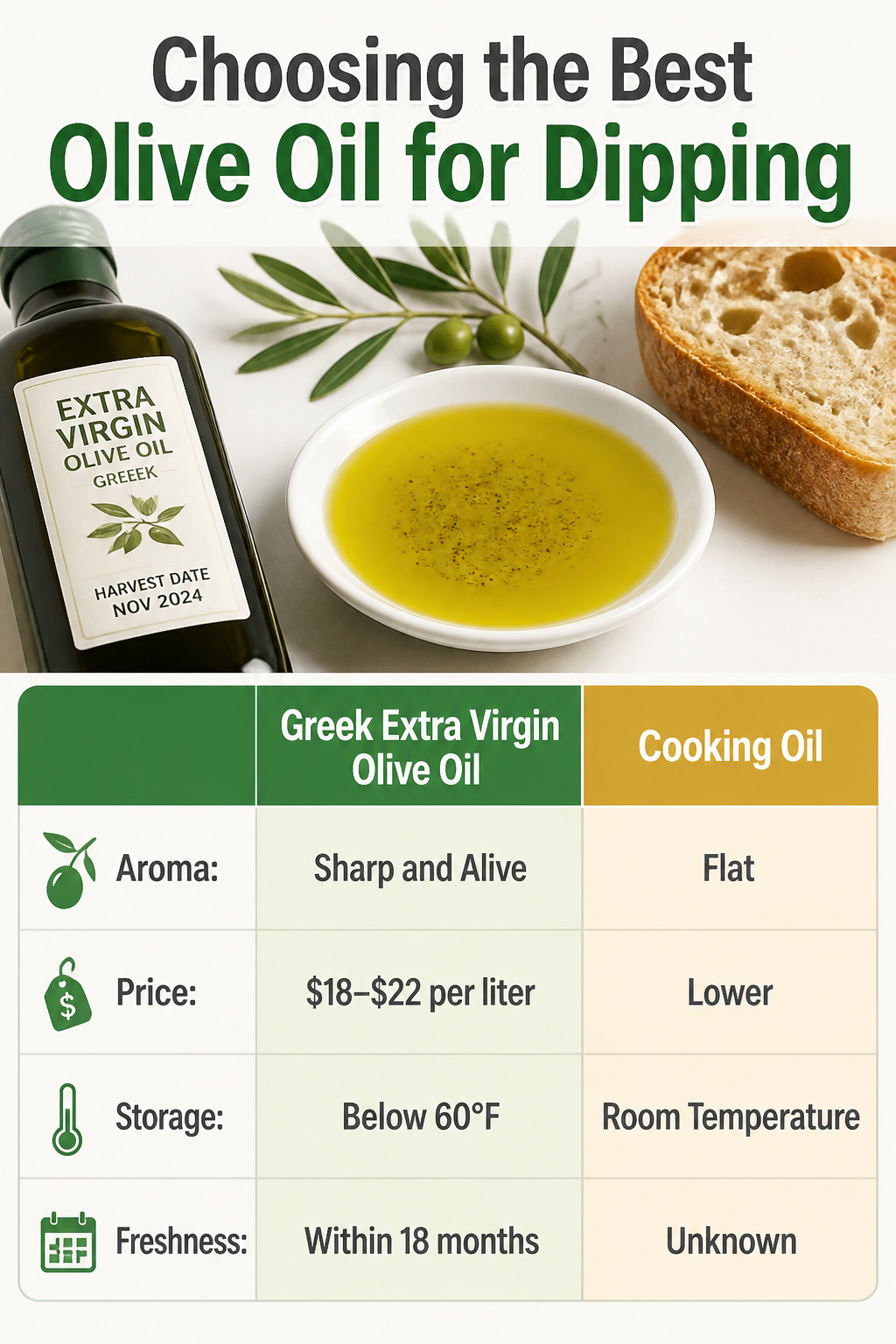
Extra virgin olive oil is the only grade worth bringing to the table for dipping, and quality swings the flavor more than any herb or spice you add after. At Opa! Willow Glen, I bought Greek extra virgin, cold-pressed, in dark glass bottles, paying roughly $18–$22 per liter through a specialty importer. The oil arrived with a harvest date stamped on the label, not just a bottling date, and I stored it below 60°F in the back of the walk-in. Color never told me much; a fresh oil can run from pale gold to deep green depending on the olive variety. What mattered was the aroma, sharp and alive, and the peppery catch at the back of the throat when I tasted it straight.
I skip the "pure" or "light" olive oils shelved at eye level in most grocery stores. They are refined, heat-treated, and flat by design. If the bottle does not say extra virgin and list a harvest date within the last 18 months, it is cooking oil, not dipping oil.
Look for the COOC seal on bottles of California Extra Virgin Olive Oil to make sure you’re getting delicious 100% Extra Virgin Olive Oil.
That seal means the oil passed both chemical testing and a sensory panel, under stricter rules than international minimums. For home cooks, it is the fastest way to confirm you are buying something fresh enough to serve naked, with nothing but bread to hide behind.
Making It Ahead
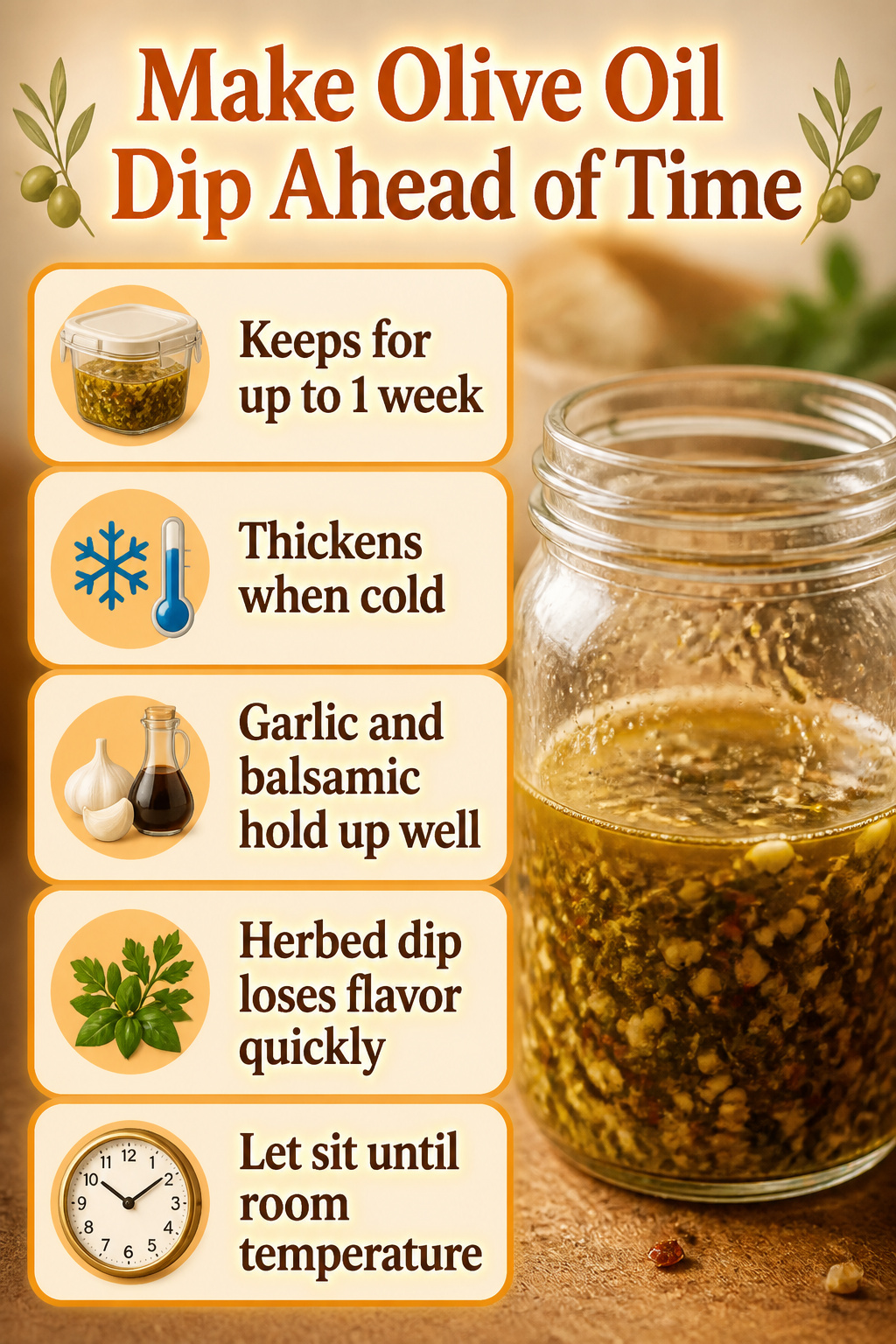
Stored in an airtight container, leftovers keep up to one week in the refrigerator. The olive oil will thicken and may look lumpy when cold, which is normal; it returns to its proper texture as it warms.
Not every dip handles the wait equally well. The garlic and balsamic styles hold up fine, since their flavors come from stable ingredients. The herbed dip fades fastest, because fresh herbs lose their brightness within a day and can turn slightly bitter. If you are making that one ahead, you are better off chopping the herbs and garlic in advance, then stirring them into the oil at the last minute.
Let any refrigerated dip sit out until it nears room temperature before serving. Cold oil tastes flat, and the aromatics need that warmth to open back up.
Bread and What Else to Serve

Warm bread turns a bowl of olive oil dip into the kind of appetizer that quietly becomes dinner if nobody’s paying attention. At Opa!, we set out loaves from a bakery two blocks down Lincoln Avenue, and the crusty rounds disappeared faster than anything else on the table. Go sturdy: ciabatta’s airy pockets soak up oil without going limp, and a chewy baguette holds its shape through repeated dipping. Focaccia works too, though its own oil competes a little. Soft sandwich bread falls apart; skip it.
For gatherings, a full mezedes spread beats a lone bowl. Feta, olives, hummus alongside, and the dip becomes part of a table people linger over. Leftovers? The garlic and herbs are already there, so drizzle what’s left over grilled vegetables or roasted potatoes. A crisp white wine or cold beer finishes it, and you’ve spent almost no time in the kitchen.
Frequently Asked Questions
What is the best olive oil for dipping?
Extra virgin olive oil is the only grade worth bringing to the table. Look for cold-pressed oil in a dark glass bottle with a harvest date stamped on the label, not just a bottling date. If you are buying California oil, the COOC seal confirms it passed both chemical testing and sensory review under stricter standards than international minimums.
How long does olive oil dip last?
Leftovers keep up to one week in the refrigerator in an airtight container. The oil will thicken and may look lumpy when cold, which is normal; it returns to its proper texture as it warms to room temperature.
Can I make olive oil dip ahead of time?
Yes, though some dips handle the wait better than others. Garlic and balsamic styles hold up fine, while the herbed version fades fastest because fresh herbs lose brightness within a day and can turn slightly bitter. For that one, chop herbs and garlic in advance, then stir them into the oil at the last minute.