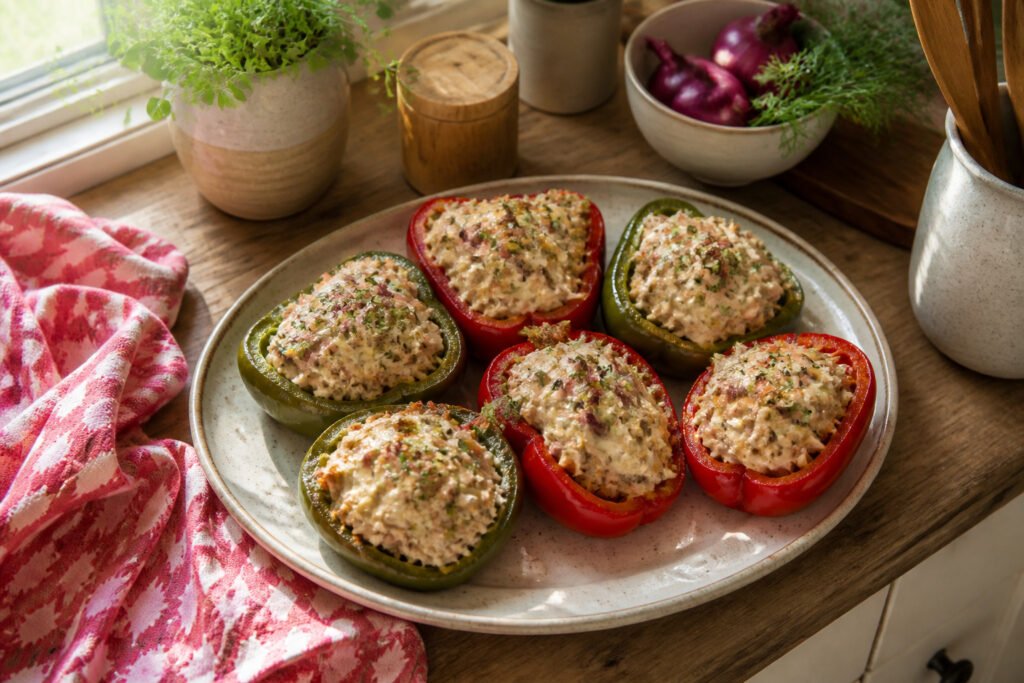
Tuna stuffed peppers are bell pepper halves filled with seasoned tuna salad and baked until the shell softens. The catch is timing: the filling is already cooked, so the oven only needs to soften the pepper, not the whole dish, which means 20 minutes at 350°F is the ceiling before collapse. Greek yogurt replaces mayo in the lighter base version, and the six variations run from a tuna melt style with shredded cheddar to a chickpea swap for nights the pantry has no fish.
Prep the Peppers

Bell peppers give you two ways to open them, and the choice shapes what lands on the plate. Cut lengthwise, stem to bottom, and each half sits flat like a boat with the walls low enough to crisp and color in the oven. This is the move when you want more roasted surface and a quicker bake. Cut horizontally instead, right through the middle, and the pepper becomes a deeper cup that holds more filling and keeps the juices pooled. The stem stays on either way; it acts as a handle and keeps the walls from collapsing.
Five recipes back this as the opening step, so the split before anything else is not negotiable. Seeds and pale ribs come out with a paring knife or your thumb. Green peppers work if that is what the store has, though red and yellow carry more sweetness once they soften.
Prepare the Filling

A large bowl and a fork are all you need to pull the filling together. Two cans of drained tuna go in first, then the binding ingredient that holds everything in place. Most recipes default to mayonnaise, but Greek yogurt substitutes for mayo as a lighter option that still gives you the creaminess you want. Two tablespoons of plain Greek yogurt is the standard starting point, though you can swap in mayo if that is what you have on hand.
The supporting cast varies by what is in your crisper drawer. Diced celery and green onions add crunch, a teaspoon of grainy Dijon mustard gives it bite, and lemon juice, salt, and pepper round it out. Some versions mix in cooked rice, chopped tomatoes, cucumbers, olives, or a spoonful of hummus for a more Mediterranean profile. The key is tasting as you go. The tuna is already cooked, so you can adjust salt, acid, or creaminess before the mixture ever sees a pepper.
Stuff the Peppers

A spoonful of tuna filling goes into each pepper half, packed just to the rim so nothing spills over during baking. The sources split on what happens next. Some leave the peppers bare on the sheet, letting the cheese do all the work on top. Others crowd any extra filling around the halves, which I like for the people at the table who always want more stuffing than pepper. Pack them level, not domed, and the cheese melts where it belongs instead of sliding onto the pan. If you do have loose mix left, tuck it between the peppers; it bakes into crisp-edged bites while the stuffed halves stay moist. Feta goes on now if you are using it, or shredded cheddar, or nothing at all if the filling already has enough going on.
Bake the Peppers
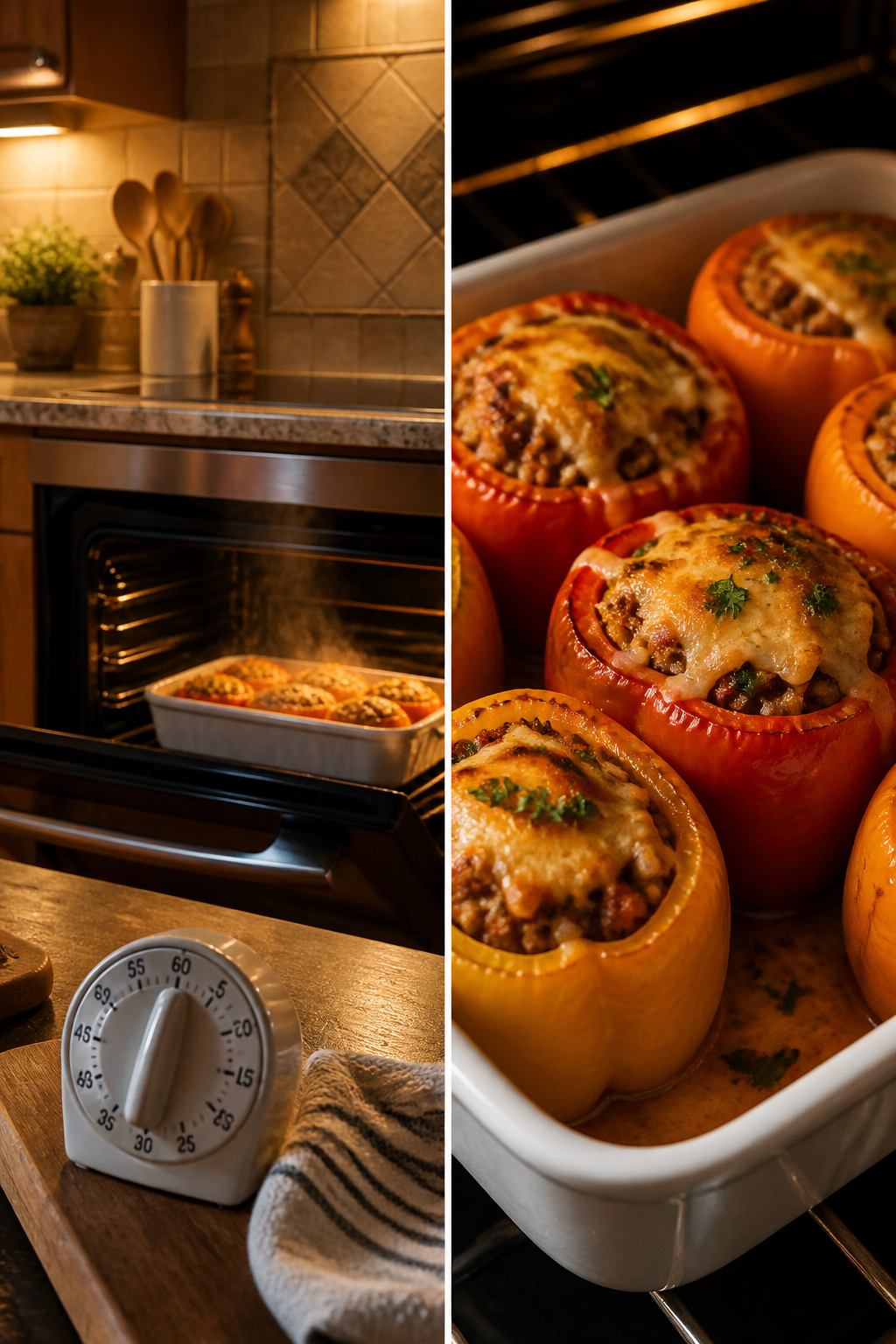
A 350°F oven gives the peppers time to soften without collapsing, which matters when the filling is already cooked and you just need the shell to turn yielding. The 8" x 8" dish from the classic version holds four upright peppers snugly enough that they do not tip.
Bake in preheated oven for 15 minutes. Top with cheese and bake for 5 additional minutes to melt the cheese.
— StarKist
That 20-minute total is the ceiling, not the floor. At 425°F, which some recipes favor, the peppers will be ready in about 15 minutes total, but you have to watch them: the line between tender and collapsed is narrow. Cheese goes on late, after the initial bake, or it overcooks while the pepper still has bite.
Serve
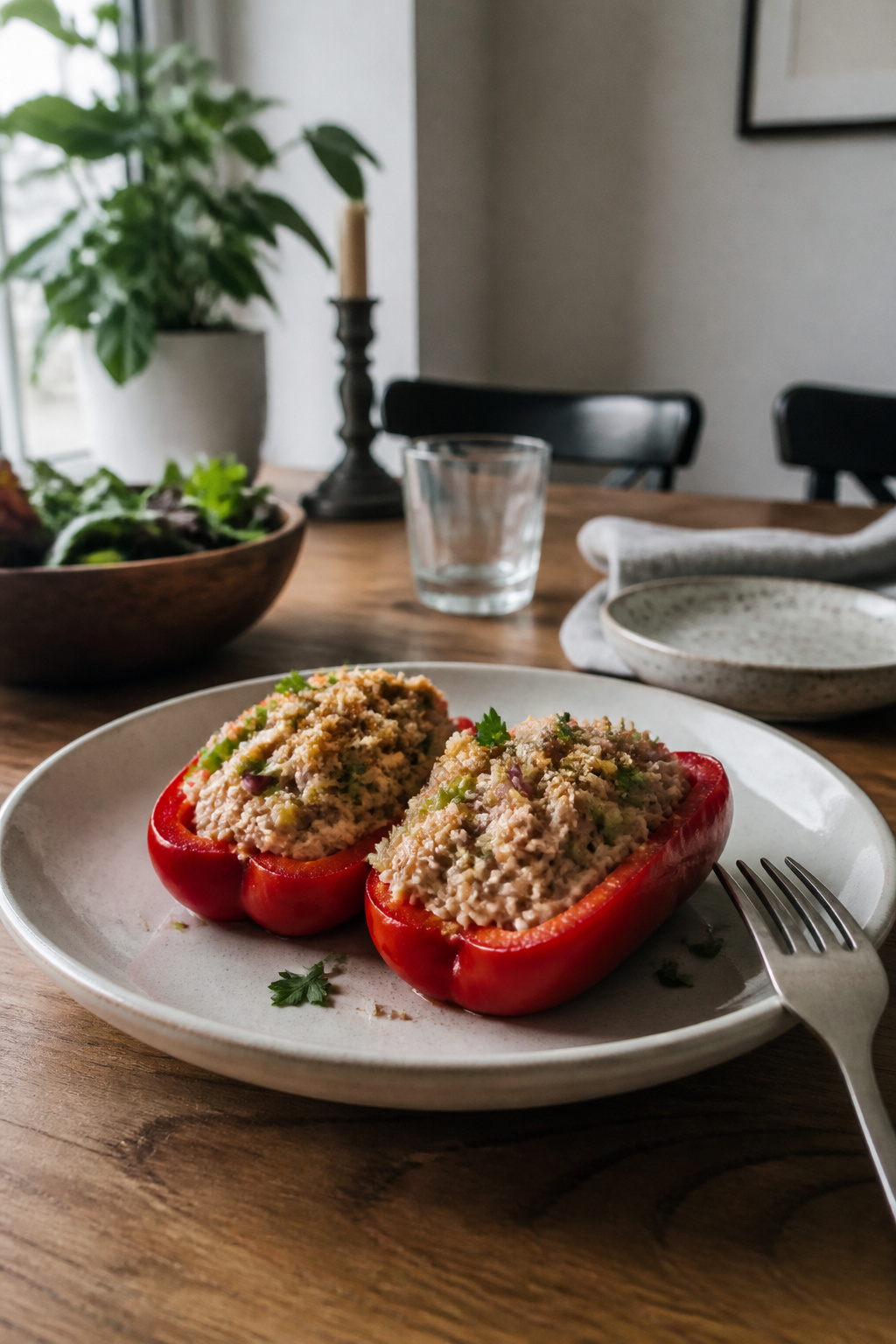
A stuffed pepper straight from the oven splits open and spills its filling the second a fork touches it. Five minutes of patience on the plate lets the tuna set back up so you can actually eat it with dignity. Two halves make a full serving, which lands right where a weeknight dinner should: substantial enough that nobody raids the pantry an hour later, light enough that you don’t want to skip the evening walk. The tuna melt variation, with its thin layer of melted cheese on top, runs about 205 kcal per serving. That number matters less than the ratio, really. The protein from the tuna carries the meal, so the peppers don’t feel like a side dish pretending to be dinner. Room temperature works fine for packed lunches the next day, though the cheese firms up and loses that pull you get when it’s warm. If you’re serving to kids, cut the halves crosswise into thick rings; they cool faster and fit small hands better than a whole pepper half sliding around the plate.
Tuna Melt Style

Cheese turns the tuna stuffed pepper into something that eats like a sandwich without the bread. I make the filling the same way I would for a tuna melt on rye: tuna, mayonnaise, a little diced celery and onion, maybe a pinch of salt and pepper. The pepper halves go into a hot oven first, just until they start to soften, which takes about the same time as mixing the salad. Spoon the filling in, top with shredded cheddar, and bake only until the cheese turns melty, five minutes or so. The Starkist version runs the pepper through two stages, fifteen minutes bare then five under cheese, which gives you a softer shell. The quicker route skips that first bake and still works; the pepper stays firmer, almost crisp, and the cheese does its job. Either way, the cheddar needs to be shredded, not sliced. It melts faster and covers the tuna without sliding off.
Classic Tuna Salad Style
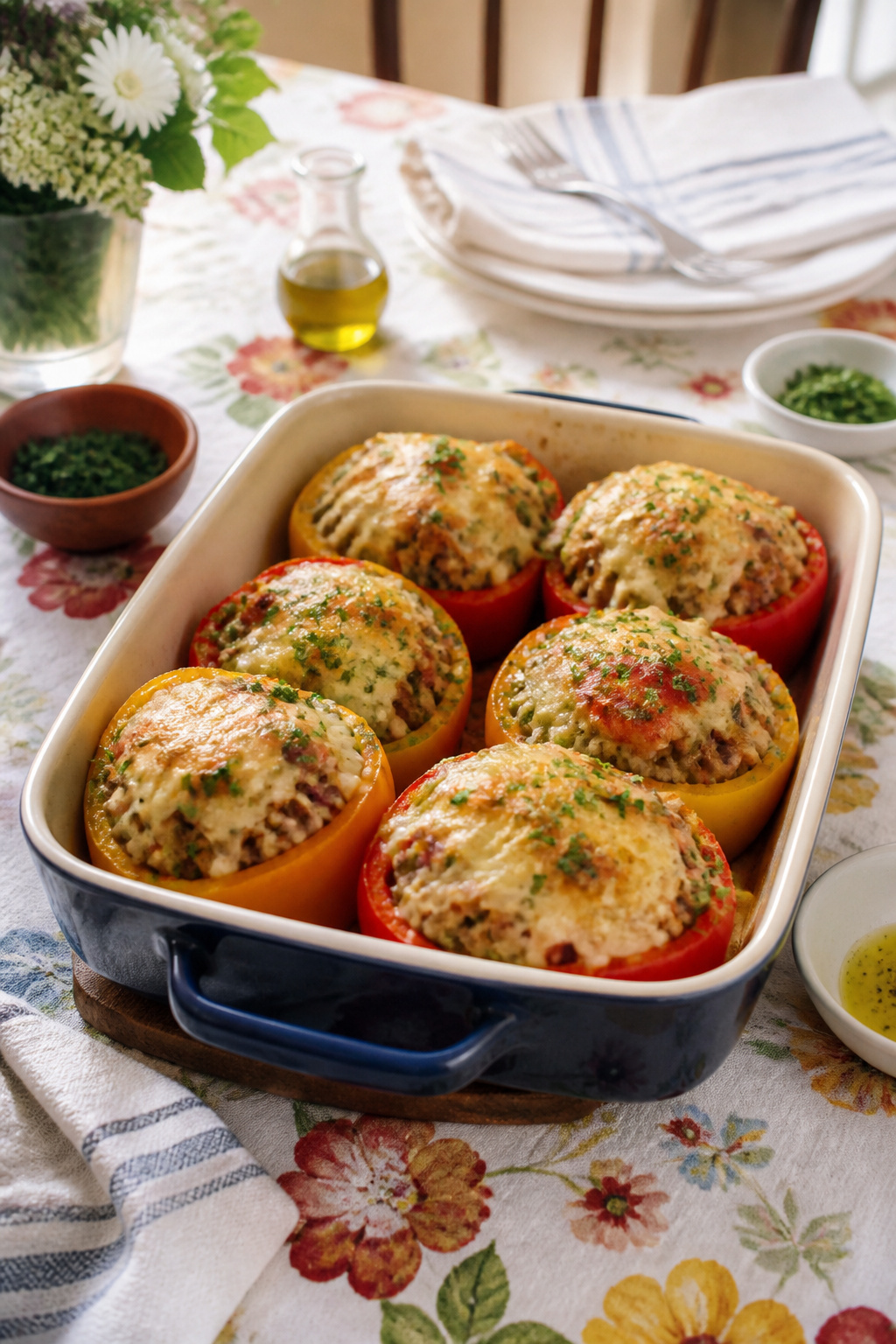
Classic tuna salad filling starts with two cans of drained tuna, mayonnaise, mustard, red onion, parsley, salt, and pepper. Mix everything in a bowl with a fork until the ingredients are well combined, and the texture is loose enough to spoon but tight enough to stay put when the pepper tilts.
Some recipes call for baking the peppers first until they soften before you add the filling. Others skip that step and run the stuffed peppers under the cheese melt for about five minutes. The first route gives you a sweeter, more collapsed pepper; the second keeps more snap and saves a pan. For weeknight dinner with kids at the table, I take the shortcut.
Shredded cheddar on top is standard, though any melting cheese works. The bake itself is brief: just until the cheese turns melty and the filling warms through. The whole point of this build is speed and pantry reliance; if you have tuna, mayo, and a bell pepper, you are already most of the way there.
Mediterranean Style
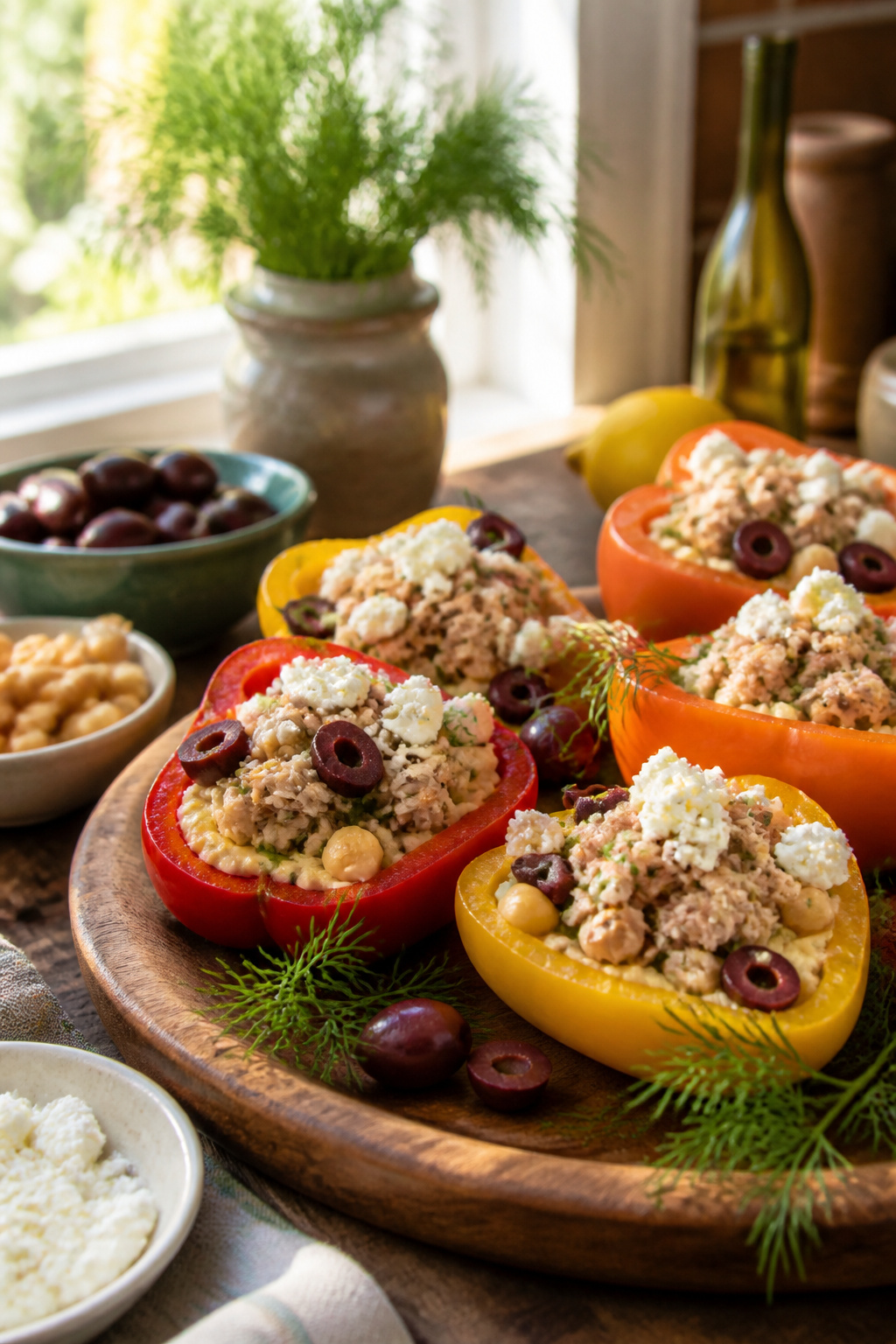
Hummus, olives, and feta turn tuna stuffed peppers into something that actually tastes like the Mediterranean rather than just claiming it on the label. A quarter-cup of hummus per pepper binds the tuna and rice while adding the garlic and tahini depth you’d otherwise chase with a longer ingredient list. Kalamata olives, chopped rough so their brine distributes in pockets rather than a uniform saltiness, do the work of both caper and anchovy. Feta crumbles on top, not mixed in, so it browns and holds its shape through baking.
Brown rice makes the filling substantial enough for dinner, not just lunch. The peppers themselves should be summer sweet bells, the kind that go soft and jammy in the oven rather than holding a crunch. This was the weeknight construction at Opa!, where the goal was always pantry familiarity pushed a step past the expected.
Buffalo Style

Buffalo sauce turns tuna stuffed peppers into something sharp and immediate, the kind of heat that wakes up a weeknight rather than building slowly. Most tuna pepper recipes stay mild, which makes this the outlier worth knowing about if your household runs hot. A few tablespoons of buffalo sauce in the filling is enough to matter without drowning the tuna, and the vinegar base keeps it bright rather than just brutal.
The cheese question gets interesting here. A standard melty layer on top works, but crumbled feta underneath the heat makes more sense than you’d expect; the salt and tang stand up to the sauce instead of melting into it. If you’re skipping cheese, avocado after baking cools the burn and adds the fat that buffalo flavor wants.
One practical limit: buffalo sauce thins the tuna mixture more than mayo or olive oil would, so the pepper walls need to be sturdier. Larger bell peppers hold the looser fill better than minis, and a quick drain on the tuna keeps the whole thing from weeping in the oven.
Chickpea Swap
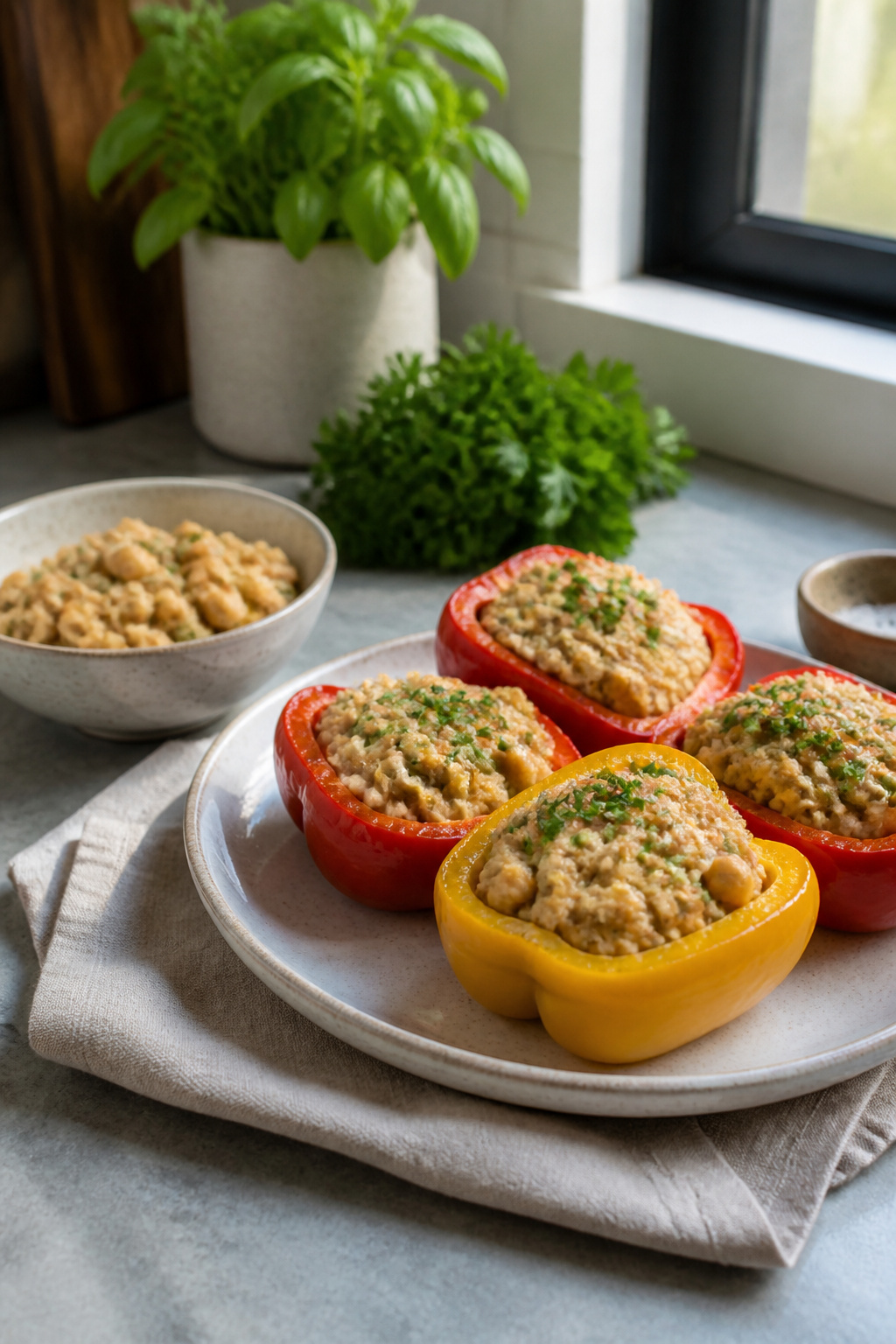
A can of chickpeas stands in for tuna on nights the pantry is bare of fish or when a guest at the table does not eat it. Mash the chickpeas slightly before folding them into the filling so they take on the same soft, spreadable texture and actually meld with the vegetables and sauce instead of rolling around loose. The swap keeps the dish vegetarian without sending you to the store for specialty ingredients, and the rest of the recipe stays exactly as written. White beans work too if chickpeas are not what you have, though they break down a little more and make a creamier, less textured stuffing.
Ingredients to Keep Ready
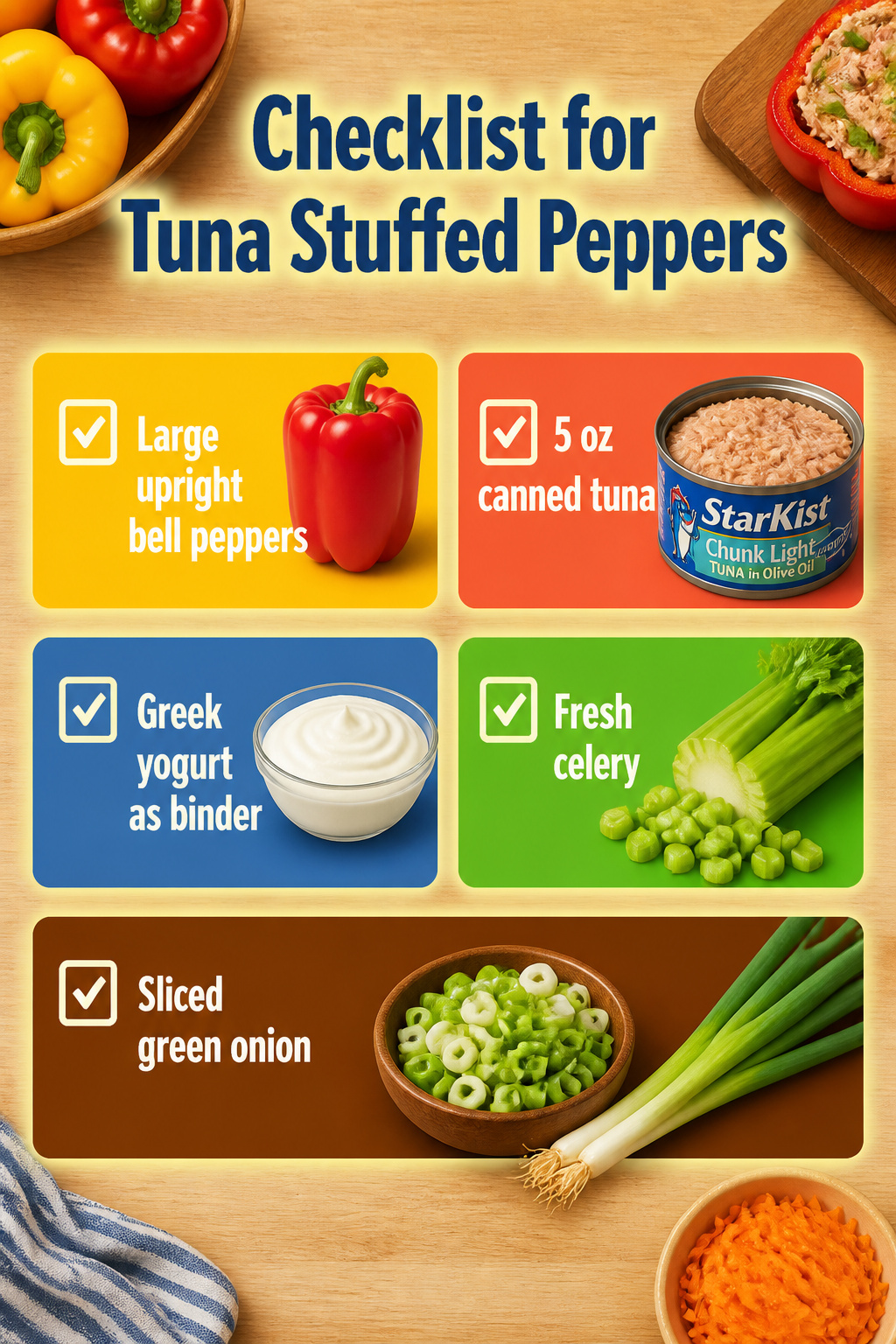
Bell peppers carry the whole structure, so buy the biggest ones that still stand upright and have flat, stable bottoms. Red bells are the sweetest and pair best with savory tuna, though any color works if that is what the store has. Two large peppers, halved and cored, feed four as a light main.
Tuna runs in 5 oz cans, the standard size every brand stocks. StarKist and Bumble Bee both came up in the recipes I read, and either will do. Tuna packed in olive oil stays more flavorful and moist than water-packed, though water works if you drain it very well.
For the binder, Greek yogurt replaces mayonnaise cleanly. It adds moisture and a protein boost without the same fat load, and it takes on other flavors without fighting them. A little Dijon mustard and whatever hot sauce or seasoning you are using will cover any tang.
Celery and green onion give the filling crunch and freshness. One rib of celery, finely chopped, plus a couple of sliced green onions, whites and greens together, is enough for a standard batch. Shredded carrot can stretch it further if the crisper drawer demands to be emptied.
Make Ahead and Store
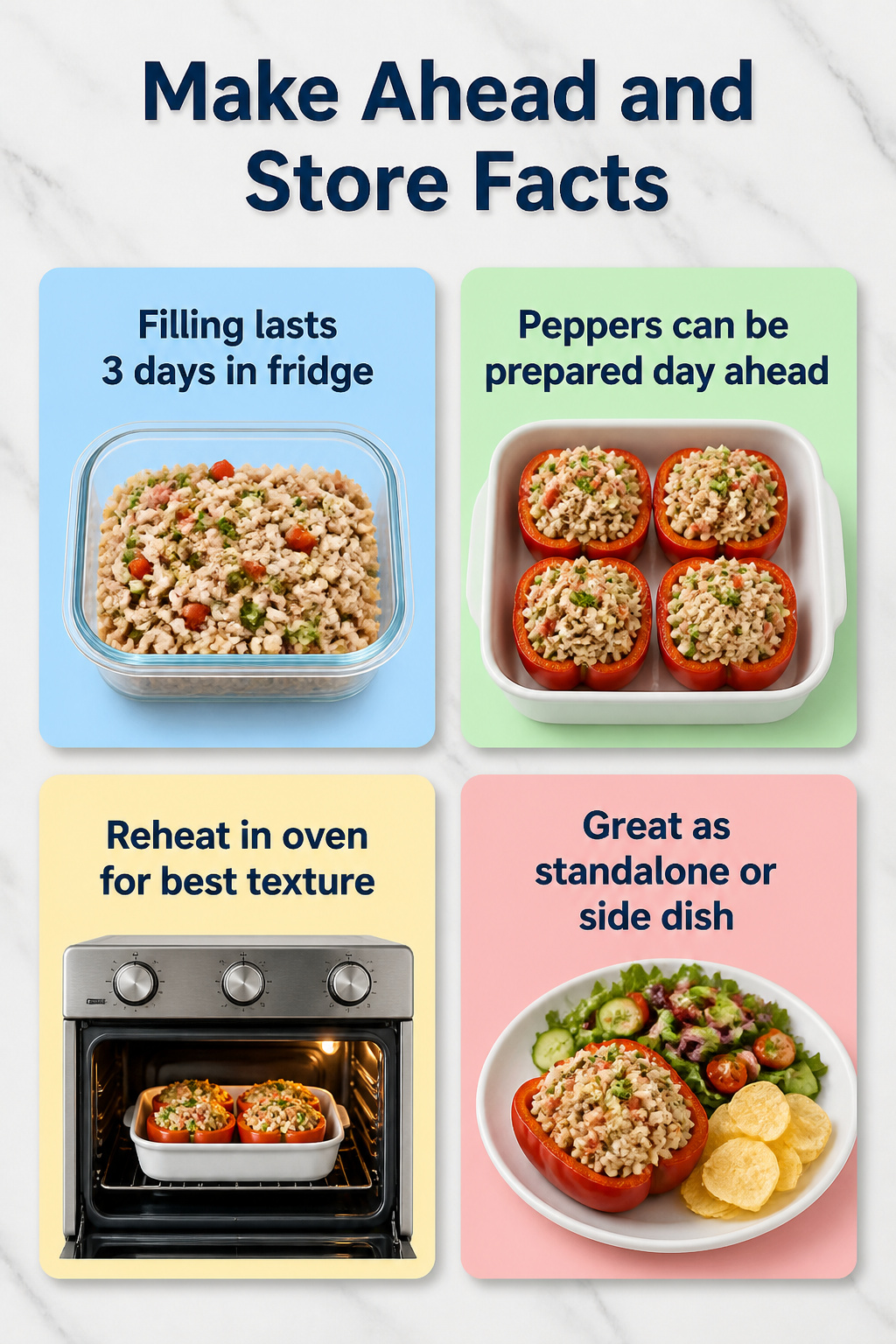
The filling keeps for up to three days covered in the refrigerator, and the peppers themselves can be stuffed a day ahead and held until you are ready to bake. That makes this a viable option for a weeknight if you tackle the prep on Sunday afternoon or the night before. One approach is to combine the tuna, rice, and hummus in one container and keep the chopped vegetables and parsley separate, mixing and stuffing just before the peppers go into the oven. Another is to build the peppers completely and refrigerate them raw, which saves the final step but means the peppers will soften slightly where they contact the filling.
Serving these is flexible enough that they work as a standalone lunch, alongside a simple salad, or with chips for a lighter dinner. Cold leftovers hold up well for meal prep, though reheating in the oven preserves more texture than the microwave, where the peppers tend to turn soggy. Most versions are at their best the same day, and refrigerated leftovers generally keep for two to three days in an airtight container.
Tuna Type and Pepper Type
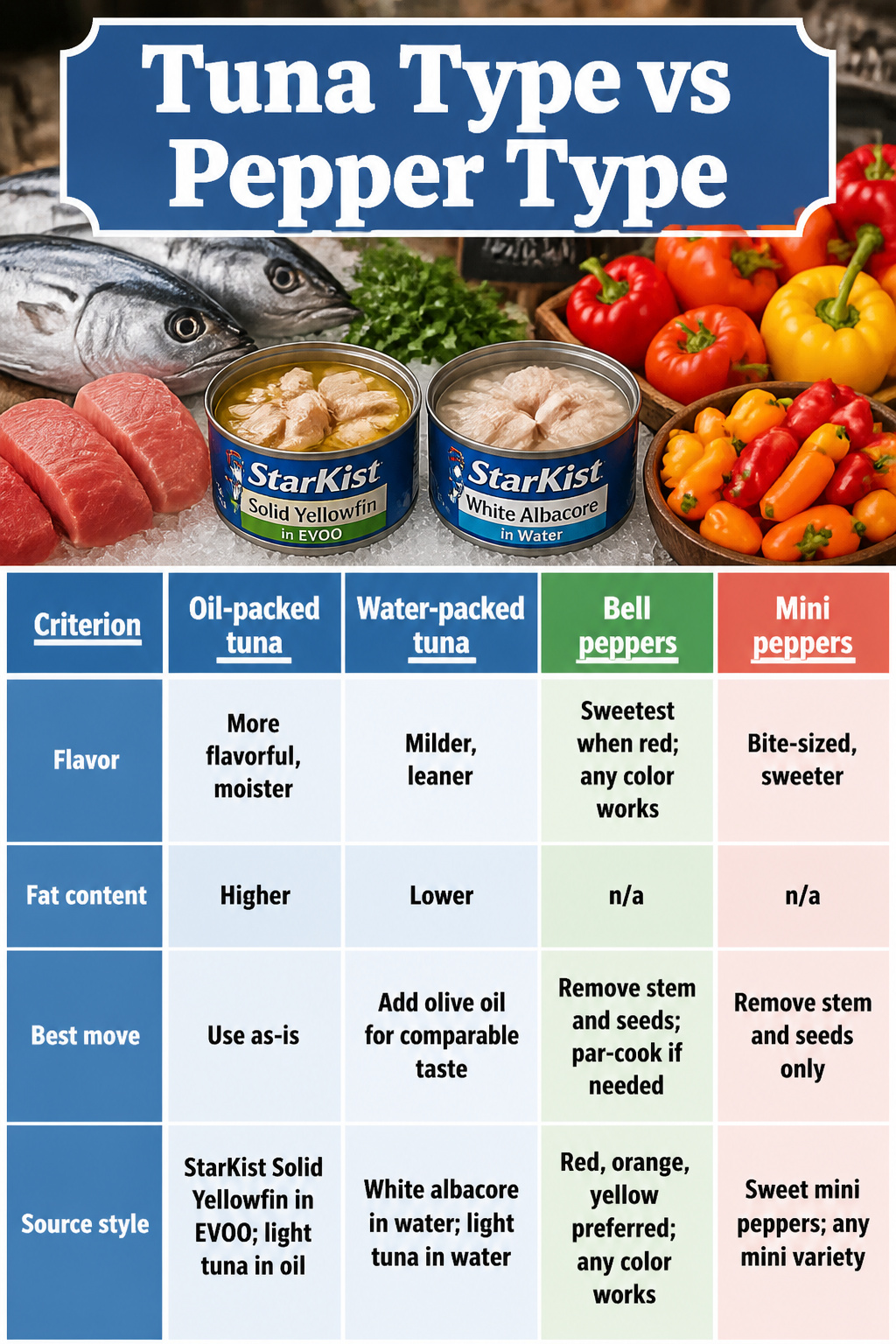
Oil-packed tuna carries more flavor and moisture into the filling, while water-packed tuna keeps the fat lower but can dry out faster under the broiler. The same tradeoff shows up in pepper choice. Mini peppers turn into quick, two-bite snacks that need no par-cooking; bell peppers hold more filling and stand upright on their own, though their thicker walls take longer to soften.
| Oil-packed tuna | Water-packed tuna | Bell peppers | Mini peppers | |
|---|---|---|---|---|
| Flavor | More flavorful, moister | Milder, leaner | Sweetest when red; any color works | Bite-sized, sweeter |
| Fat content | Higher | Lower | n/a | n/a |
| Best move | Use as-is | Add olive oil for comparable taste | Remove stem and seeds; par-cook if needed | Remove stem and seeds only |
| Source style | StarKist Solid Yellowfin in EVOO; light tuna in oil | White albacore in water; light tuna in water | Red, orange, yellow preferred; any color works | Sweet mini peppers; any mini variety |
I reach for oil-packed when the filling has no other fat source, and for mini peppers when I want the oven on for fifteen minutes, not forty. Water-packed with bell peppers is the leaner, longer-haul combination; just expect to add a drizzle of oil or a spoon of yogurt to keep the tuna from tightening up in the bake.
Frequently Asked Questions
Can you make tuna stuffed peppers ahead of time?
Yes. The filling keeps for up to three days covered in the refrigerator, and you can stuff the peppers a day ahead and hold them until you are ready to bake. One prep strategy is to combine the tuna, rice, and hummus in one container and keep chopped vegetables separate, mixing and stuffing just before baking.
What do you serve tuna stuffed peppers with?
They work as a standalone lunch, alongside a simple salad, or with chips for a lighter dinner. The protein from the tuna carries the meal, so they do not feel like a side dish pretending to be dinner.
Are tuna stuffed peppers low carb?
Yes, they are generally low in carbohydrates. The recipe contains no bread, and the protein from the tuna anchors the meal. Skipping the cheese or rice keeps the carb count even lower, though the cheese is standard on most variations.