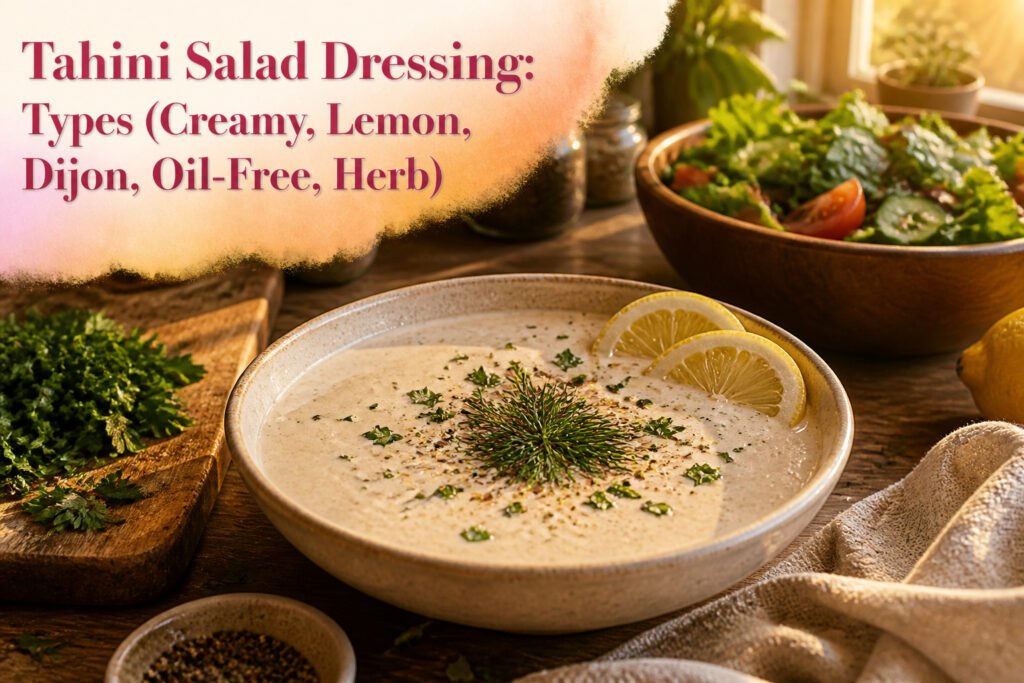
Tahini salad dressing tastes nutty and rich, with a creamy pull that clings to leaves rather than sliding off. The difference between a smooth pour and a clumpy mess is the tahini itself: runny, well-stirred brands like Soom or Cedar’s behave, while the stiff paste at the bottom of an old jar seizes the moment water hits it. Five minutes of whisking gets you from jar to bowl, and the cold-water trick, 2 tablespoons of it, turns a thin, streaky mixture into something almost fluffy.
Creamy Tahini Dressing
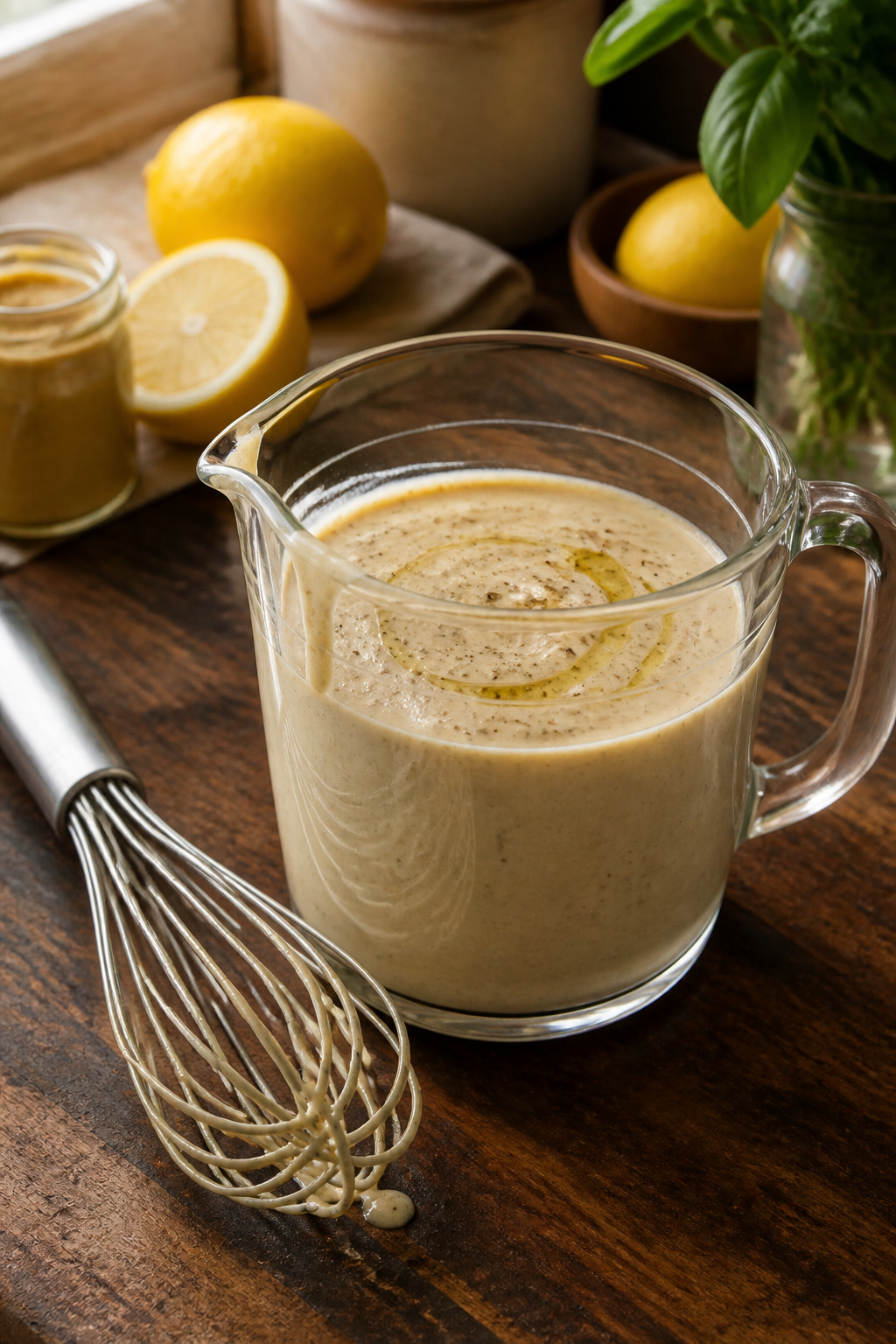
Smooth, runny tahini makes the difference between a dressing that pours and one that clumps. The stiff paste at the bottom of an old jar will seize up no matter how hard you whisk.
1/4 cup extra-virgin olive oil and 1/4 cup tahini go into a jar or liquid measuring cup first. Add 2 to 3 tablespoons lemon juice, 2 teaspoons Dijon mustard, 2 teaspoons maple syrup or honey, and 1/2 teaspoon fine sea salt. A few grinds of black pepper help too.
Whisk until the color evens out and nothing streaky remains. The mixture will look thin and a little separated at this stage.
Pour in 2 tablespoons ice-cold water and whisk again. The tahini reacts with the water and the whole thing turns remarkably creamy, almost fluffy. If it thickens more than you want, add another tablespoon of cold water. Taste for lemon and salt, adjust, and use immediately or refrigerate for up to a week. It tightens in the cold; loosen it with a splash of cool water before serving.
Recommended Products

Soft, fragrant and light creamy sesame dressing that can be drizzled over thinly sliced beef, pork, fresh tuna or salmon
One 15 fl oz bottle of Wish-Bone Creamy Italian Dressing

AUTHENTIC JAPANESE‑STYLE SESAME DRESSING: KEWPIE Deep‑Roasted Sesame Dressing & Marinade delivers a rich, bold sesame flavor with a nutty aroma that enhances salads, cold pasta, grilled veggies, and more.
Lemon Tahini Dressing
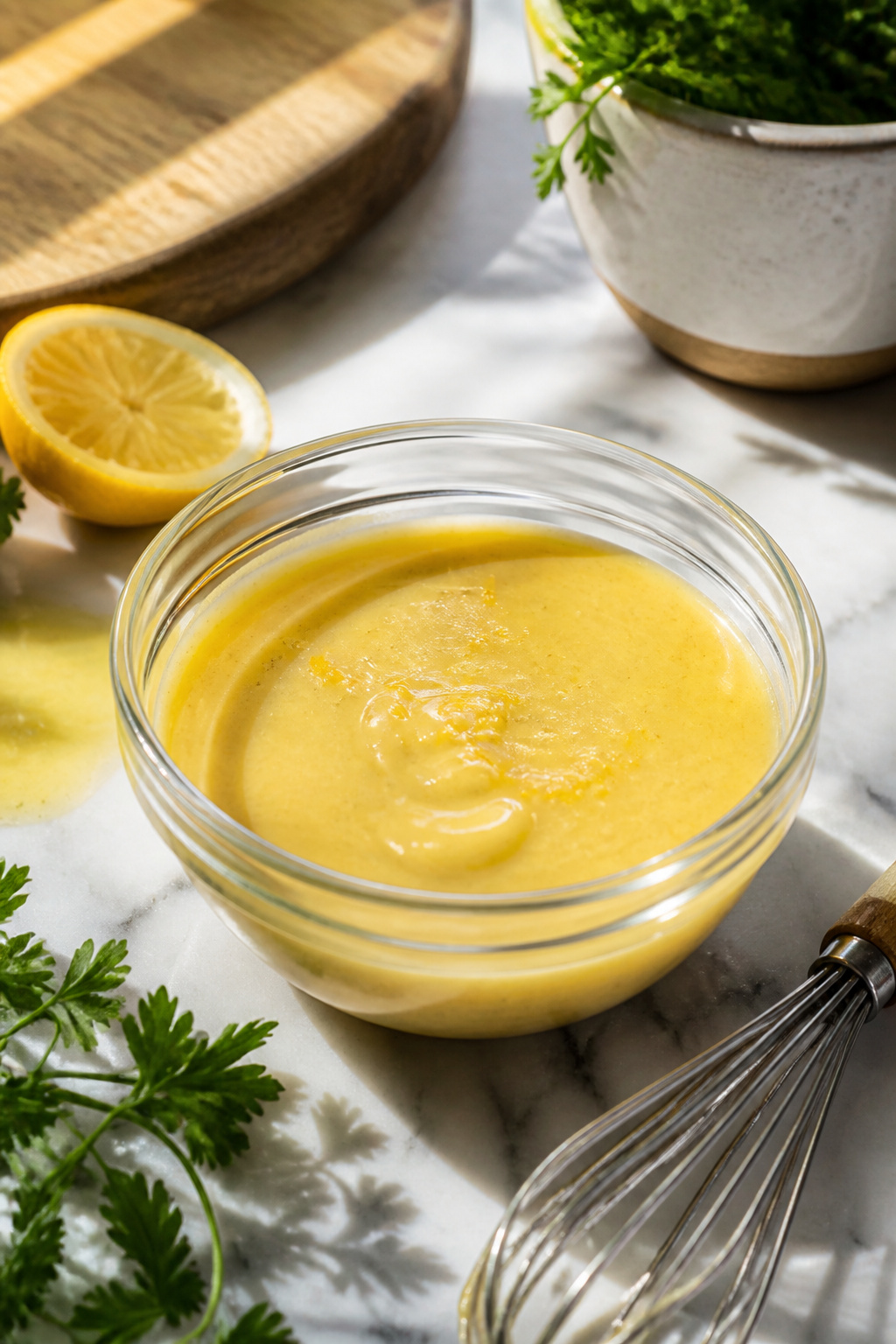
Lemon tahini dressing shifts the balance hard toward acidity, and that changes how you build it. Where a creamy base leans on olive oil for richness and body, this version gets most of its lift from fresh lemon juice and lets the tahini carry the texture alone. The result is thinner, sharper, and brighter across a bowl of greens.
Start with tahini that pours easily. The stiff, dry paste at the bottom of a jar seizes when lemon hits it and never smooths out. Soom, Cedar’s, Trader Joe’s, and Seed+Mill are the brands that behave here. Fresh lemon juice matters just as much; the bottled kind tastes flat and leaves the dressing one-note. Squeeze it yourself.
The proportions run roughly three parts tahini to two parts lemon juice, plus a small splash of water to thin. Whisk in a teaspoon of maple syrup if the lemon bites too hard, and a grated clove of garlic for depth. The tahini will tighten and look broken at first. Keep whisking; it comes back together into a smooth, pourable sauce. Add water a half tablespoon at a time if it still coats a spoon too heavily. Taste last for salt, and use it quickly; this version lacks the fat that helps a creamy dressing hold for days.
Recommended Products

One 9 fl oz bottle of lemon herb tahini sauce
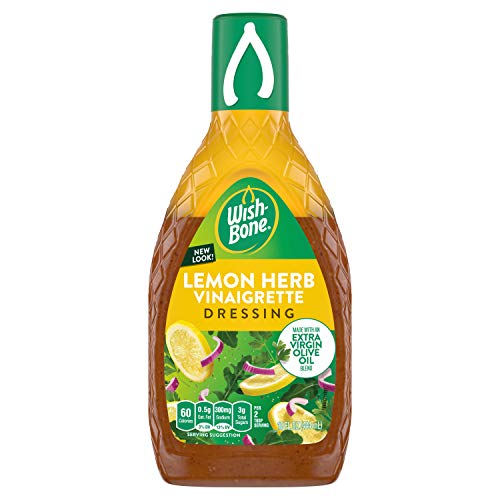
One 15 fl oz bottle of Wish-Bone Extra Virgin Olive Oil Blend Lemon Herb Dressing

Dijon Tahini Dressing

Dijon mustard does something plain tahini dressing never quite manages on its own: it holds the emulsion steady and adds a sharp bite that cuts through the richness. The base recipe already calls for 2 teaspoons of Dijon, but shifting it to the foreground means leaning on that amount rather than treating it as background noise.
- Start with the same ¼ cup tahini and 2 to 3 tablespoons lemon juice, then add the full 2 teaspoons Dijon right up front with a grated garlic clove.
- The mustard’s emulsifiers bind the tahini and olive oil into a creamier, more stable dressing than lemon alone achieves, so the ¼ cup oil streams in smoothly without breaking.
- A teaspoon of maple syrup or honey balances the heat; taste after whisking, since Dijon brands vary in sharpness and some need more sweetening than others.
- Thin with ice-cold water, one tablespoon at a time, until the consistency pours rather than gloops. The mustard keeps it from separating even after refrigeration.
- Store up to a week; it thickens cold, so let it sit out ten minutes and whisk in a splash of water before serving.
Recommended Products
Nothing beats the powerful flavors of Dijon mustard and honey

DIJON HONEY MUSTARD DRESSING: BRIANNAS Dijon Honey Mustard Salad Dressing is bursting with the uniquely delicious combination of robust Dijon mustard and sweet honey - perfect for topping or dipping foods of your choice

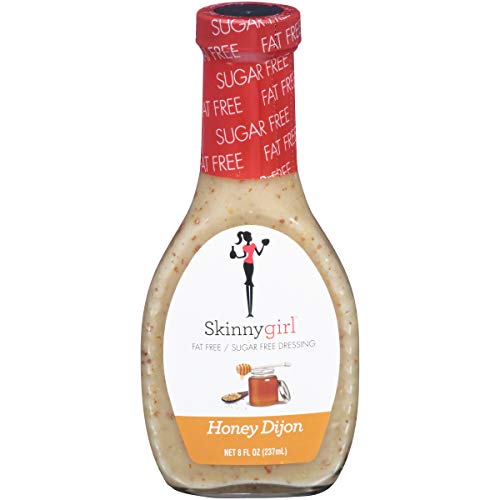
In a perfect world salad dressings would pack big, delicious flavor with out the fat. Well now you can live in a perfect world with our delicious Fat Free Honey Dijon dressing
Oil-Free Tahini Dressing

- Aquafaba replaces oil entirely in this version: ¼ cup of the liquid from a can of chickpeas goes into a small blender first, blended until frothy before anything else touches it.
- That froth gives the emulsion structure fat would normally provide. Add ¼ cup lemon juice, ½ teaspoon apple cider vinegar, ¼ cup well-stirred tahini, 1 teaspoon Dijon, 1 crushed garlic clove, 1 tablespoon plus 1 teaspoon maple syrup, ¼ teaspoon kosher salt, and pepper.
- Blend again until the mixture turns creamy and holds together. The tahini itself carries enough fat to keep it from breaking immediately, but the aquafaba does the work of binding water and acid into something that coats a leaf instead of running off it.
- Taste and adjust. More maple syrup softens the sharpness; more tahini adds richness. Even 1 tablespoon of olive oil improves the mouthfeel noticeably, though the dressing functions without it.
- The dressing thickens after a day or two in the refrigerator. Whisk in cold water to loosen it back to pouring consistency.
Recommended Products

One 2.4 oz box of Good Seasons Zesty Italian Dry Salad Dressing and Recipe Mix

BRAGG SALAD DRESSING: A simple, yet wholesome twist to your everyday dressings and marinades, made with Bragg Organic Apple Cider Vinegar

SAVORY MEDITERRANEAN FLAVOR MADE EASY: Creamy Soom tahini blended with aromatic Mediterranean-inspired herbs for a savory, herbaceous tahini sauce that adds balanced flavor to everyday meals you already make. With just one squeeze, add herby and savory depth to all kinds of dishes without the extra chopping, mixing, or cleanup.
Herbed Tahini Dressing

Fresh herbs turn the basic tahini formula into something else entirely. Dill gives you a cool, almost grassy edge that works against roasted beets or a cucumber-heavy salad. Parsley keeps it brighter and more neutral, the kind of dressing you can keep in a jar and pour over whatever grain bowl needs saving. Cilantro and mint together push toward a green-goddess territory that some sources treat as its own category, and they are not wrong; the combination is that distinct from the others.
The texture changes too. Herbs need to be minced fine, almost to a paste, or the dressing reads chunky in a way that splits opinion. I have seen this called a flaw and a feature by different cooks, and both are right. A smooth herb blend needs a blender or a very patient knife; a rustic chop leaves little green flecks that announce themselves.
Start with two tablespoons of finely chopped herb to a half-cup of base dressing, then taste. Basil goes sweet and can cloy if you overdo it. Mint needs acid to keep it from tasting like dessert. The payoff is a dressing that does not read as tahini first, which extends the basic formula further than the citrus or mustard variations manage.
Recommended Products

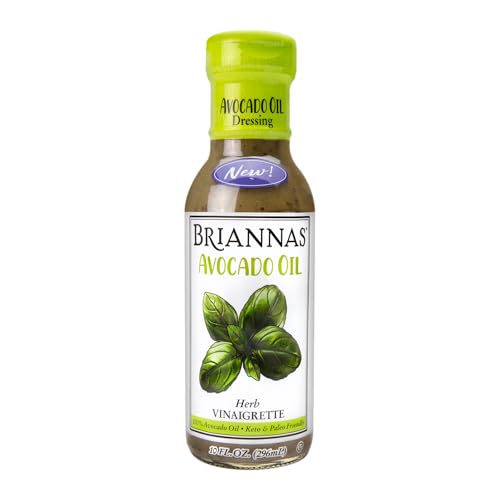
AVOCADO OIL HERB VINAIGRETTE: With a little of this and a dash of that… BRIANNAS Avocado Oil Herb Vinaigrette is an herb dressing blend of avocado oil, basil, honey, and other spices that's just right for all your favorite dishes

Creamy sesame richness meets an aromatic blend of dried thyme, oregano, garlic and spices. Visible herb flecks give this Lebanese tahini sauce its distinctive character, with a savory finish for dipping and drizzling.
Ingredients and What to Buy
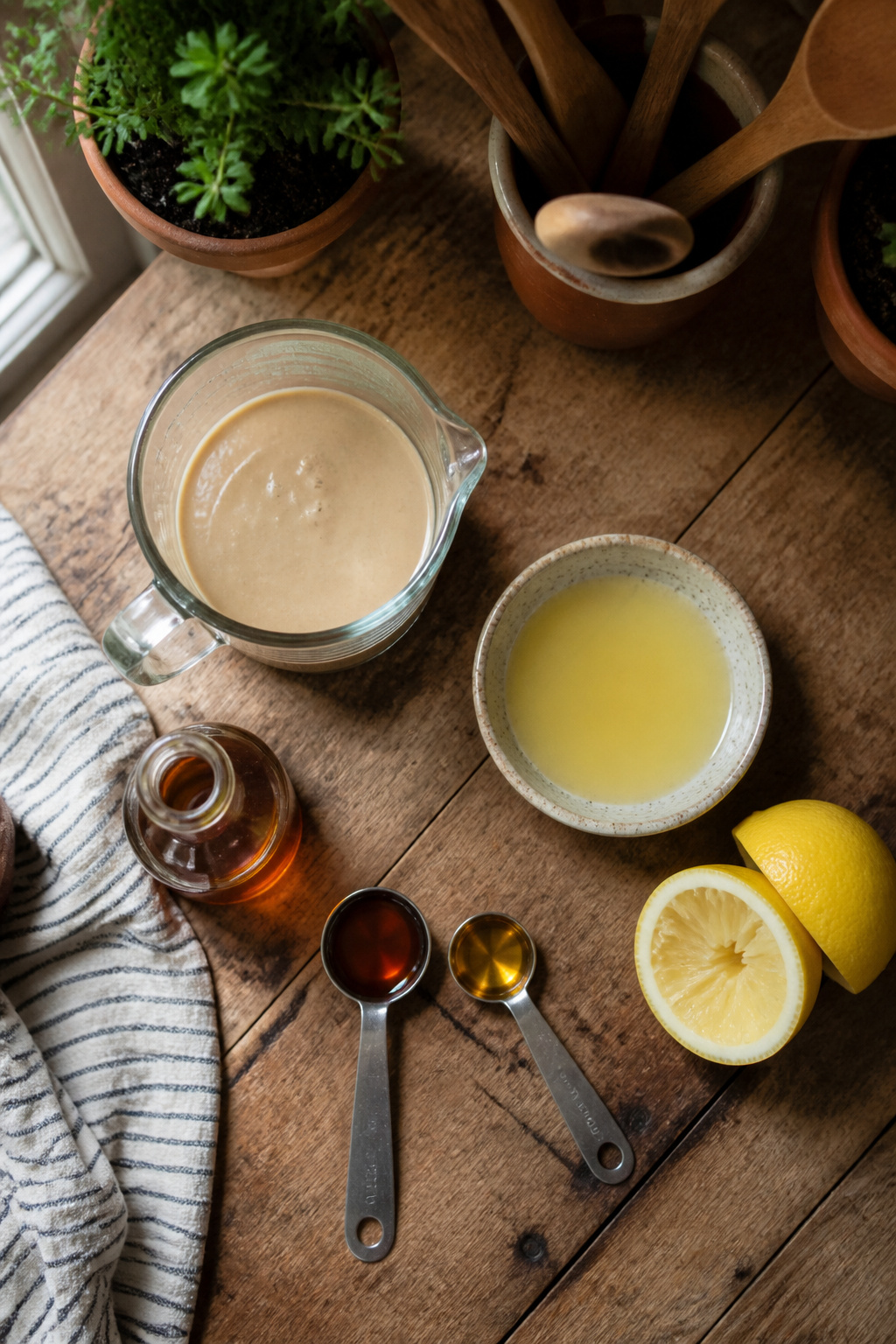
The base for any tahini salad dressing starts with ¼ cup of smooth, runny tahini. Thick, bitter tahini fights the blender and leaves a chalky finish, so the pourable kind is worth hunting for in the nut-butter or international aisle. Fresh lemon juice matters just as much: 2 to 3 tablespoons of it, never the bottled stuff, which tastes flat against sesame’s depth. Some recipes add a tablespoon of apple cider vinegar alongside the lemon for extra punch, though lemon alone works fine if that is what is in the crisper.
For sweetness, maple syrup and honey split the difference across recipes. Two teaspoons of either softens tahini’s natural bitterness and keeps the acidity from running sharp. A few recipes bump this to a full tablespoon, which is the better call if the lemons are especially sour. Garlic, Dijon mustard, and salt fill out the rest: one grated clove, 2 teaspoons of mustard, and ¼ teaspoon of kosher or fine sea salt. The mustard doubles as emulsifier, so the oil and acid hold together without separating. Olive oil, when you use it, matches the tahini measure at ¼ cup; skip it and you will need ice-cold water, 2 tablespoons to start, to thin the paste into something that coats a leaf instead of clumping.
Recommended Products

One 8 oz bottle of Skinnygirl Caeser salad dressing
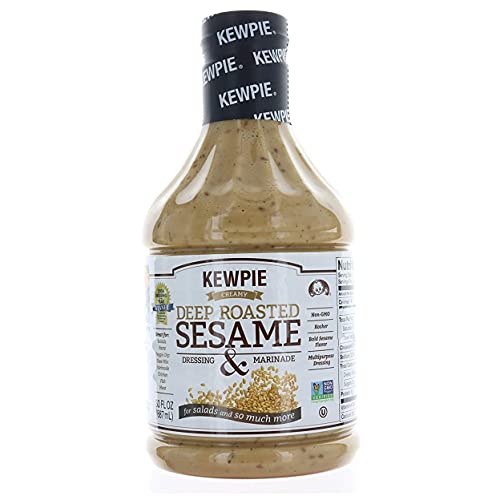
Roasted Sesame Dressing & Marinade

365 by Whole Foods Market products give you that dance-down-the-aisles feeling, virtual aisles too! Our huge range of choices with premium ingredients at prices you can get down with makes grocery shopping so much more than tossing the basics in your cart.
Storage and Reheating
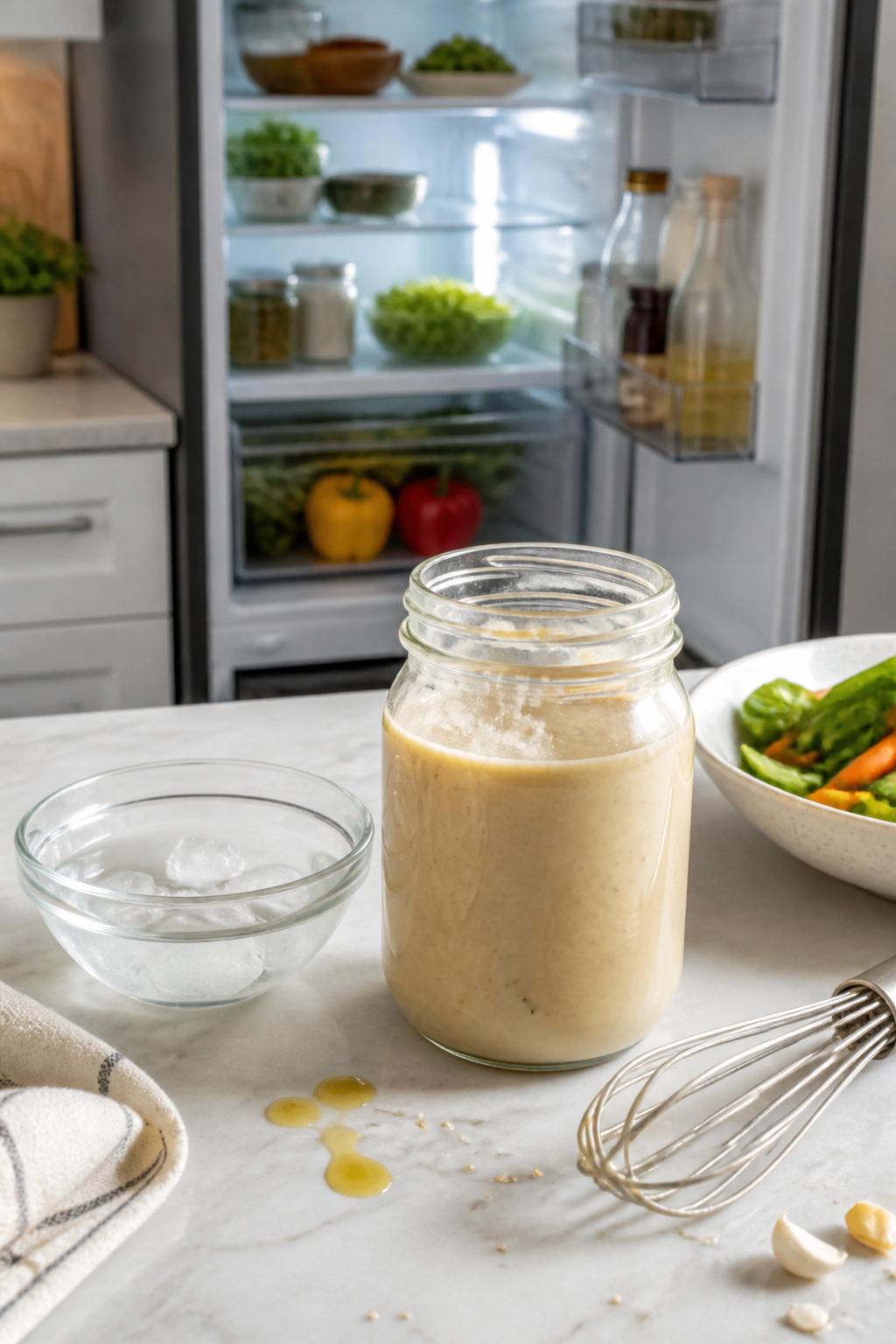
Tahini dressing keeps in the refrigerator for 5 to 10 days depending on what’s inside. The simpler formulas, ones built mostly on tahini, lemon, and water, sit at the longer end. Add-ins like fresh garlic or herbs pull that window toward the shorter side.
"This dressing will keep well in the refrigerator, covered, for about 1 week." That’s the safe middle ground most recipes land on. A few push it to 10 days, and the range itself is worth noting: "Store in the fridge for up to 10 days."
Cold thickens tahini. It seizes in the jar overnight, sometimes to the point of spoonability rather than pourability. The fix is cold water, whisked in a tablespoon at a time until the dressing moves again. Room temperature helps too; pulling the jar out 30 minutes before dinner makes the whisking easier.
Recommended Products


BOLD, SAVORY HEAT MADE EASY: Creamy Soom tahini blended with warm, smoky harissa-inspired spices for a rich, savory tahini sauce that adds balanced heat and depth to everyday meals — no chopping, mixing, or seasoning required. It brings just enough kick to keep meals interesting while still being balanced and approachable

Ways to Use It

A jar of tahini dressing in the fridge solves the dinner question more often than you’d expect. What can I use tahini dressing on? The honest answer is just about anything that needs a creamy, nutty layer.
- Salads of any construction — leafy greens, kale, roasted cauliflower, beet, butternut squash, or pomegranate salads all take it well
- Grain and Buddha bowls — quinoa, farro, brown rice, or millet with roasted vegetables and a protein like baked tofu, lentils, or chickpeas
- Roasted vegetables — sweet potatoes, carrots, Brussels sprouts, broccoli, eggplant, zucchini, tomatoes, or beets, either hot from the oven or at room temperature
- As a dip or spread — raw vegetables, pita, falafel, sweet potato fries, or smeared on a veggie burger
- Warmed grains and beans — lentil and rice dishes, chickpea rice, or couscous salads
- Pasta salad or smashed beans on toast — unexpected but solid applications when you want creaminess without dairy
The pattern is straightforward: when a dish tastes flat or too lean, tahini dressing adds fat and acid in one pour.
Recommended Products

Creamy texture has a spicy and sweet flavor profile
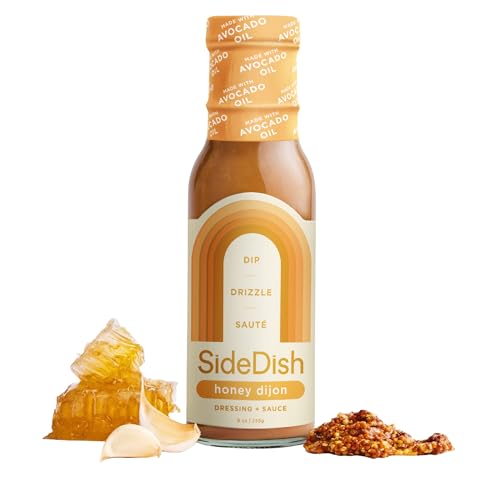
Honey Dijon Dressing: Savor the delicious flavor and silky texture of our Honey Dijon Mustard marinade dressing crafted with love and clean ingredients. This paleo, refined sugar free dressing is made using heart healthy avocado oil and natural honey.

No hydrogenated fats or high fructose corn syrup allowed in any food
Frequently Asked Questions
Recommended Products

Convenient, no-measure, single-use pouches

ALL-NATURAL – Mezete tahini sauce is made from pure, natural ingredients with no preservatives or additives. Delivering the real taste in every bite.

ALL-NATURAL – Mezete tahini sauce is made from pure, natural ingredients with no preservatives or additives. Delivering the real taste in every bite.
How long does tahini dressing last?
Tahini dressing keeps in the refrigerator for 5 to 10 days depending on what is inside. Simpler formulas with just tahini, lemon, and water stay fresh longer, while versions with fresh garlic or herbs should be used up sooner. Cold thickens the dressing; loosen it with a splash of cool water before serving.
Can I make tahini dressing oil-free?
Yes. Replace the olive oil with aquafaba, the liquid from a can of chickpeas. Blend ¼ cup aquafaba until frothy first, then add ¼ cup lemon juice, ½ teaspoon apple cider vinegar, ¼ cup tahini, 1 teaspoon Dijon, garlic, maple syrup, salt, and pepper. The aquafaba gives the emulsion structure that oil normally provides. Even 1 tablespoon of olive oil improves the mouthfeel noticeably, though the dressing works without it.
What can I use tahini dressing on?
Tahini dressing goes on leafy salads, grain bowls, roasted vegetables, and works as a dip or spread. Pour it over kale, cauliflower, beets, butternut squash, or pomegranate salads; drizzle it on sweet potatoes, carrots, Brussels sprouts, broccoli, or eggplant; spoon it into quinoa, farro, or brown rice bowls with baked tofu or lentils; or use it with falafel, pita, raw vegetables, pasta salad, or smashed beans on toast.