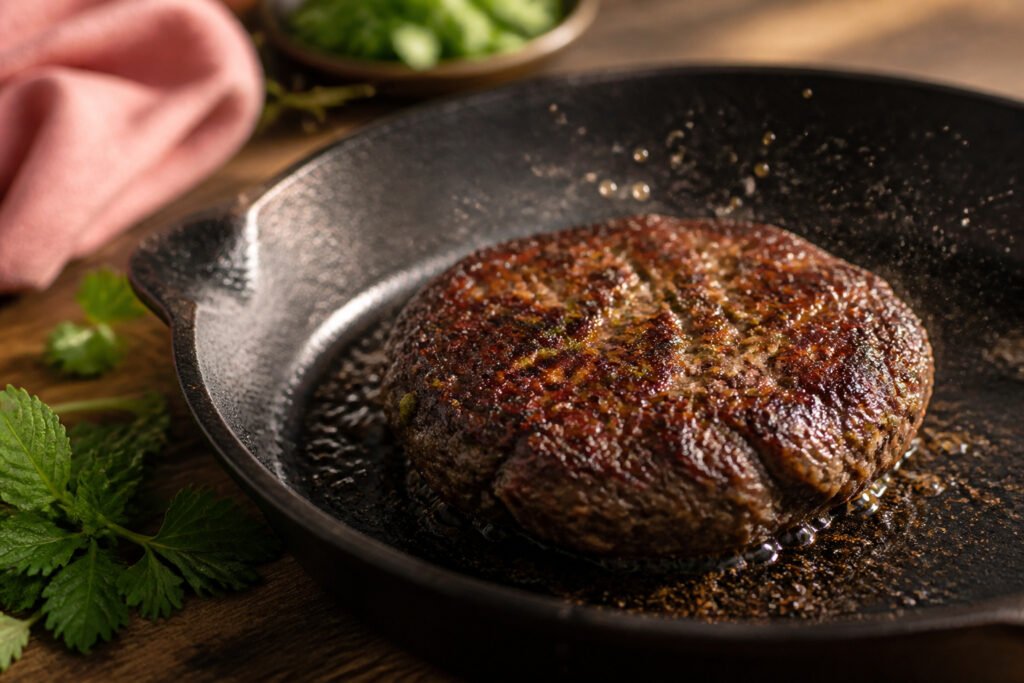
A lamb burger is a ground-lamb patty seasoned with herbs and cooked fast over high heat, either on a grill or in a cast-iron skillet. The catch is the meat itself: lamb’s fat content varies by package, and a looser grind can slump or crumble without a cold rest or a handful of breadcrumbs worked in. One pound makes four substantial patties when you mix in red onion, garlic, parsley, mint, and cumin, then chill them for thirty minutes before searing.
Gather lamb, herbs, and toppings

Ground lamb runs richer than beef, so one pound makes four patties that still feel substantial on the bun. I like the ratio from the Greek-style builds: half a cup of chopped red onion and three minced garlic cloves mixed into the meat, plus half a cup of parsley and a packed tablespoon of mint, roughly eight to ten large leaves. Dried oregano, salt, and pepper finish the patty itself; cumin belongs in there too if you want the warmer, earthier register.
For the build, tzatziki sauce or a simple aioli covers the richness, and standard burger buns do the job. Lettuce, tomato, and feta round out the optional toppings, though pickled red onion and arugula make a sharper case if you have them. Lamb carries solid nutritional value: protein, iron, zinc, vitamin B12, and omega-3 fatty acids all come in meaningful amounts.
Mix lamb with seasonings

Ground lamb takes seasoning differently than beef, so I start with the texture in mind rather than a fixed recipe. Most sources skip exact teaspoon counts for a reason: lamb’s fat content varies by package, and a 90/10 grind needs more help than an 85/15. I work in minced garlic, chopped parsley and mint, coriander, cumin, and salt, then add lemon juice last so the acid doesn’t tighten the proteins too early. The mixture should feel cohesive and smell bright, the herbs distinct but not punching above the lamb.
If the grind looks loose or the patties slump when tested, a small handful of breadcrumbs or one beaten egg binds without turning the burger into meatloaf. I mix by hand, gently, just until the streaks disappear. Overworking makes a dense patty, and lamb’s subtle enough that you notice the difference.
Shape patties with a thumbprint

Divide the ground lamb mixture into four equal portions, roughly five and a half ounces each if you are weighing. I form them into rounds slightly wider than the bun by about an inch, since the meat will draw inward as it cooks. Press a thumb into the center of each patty to leave a shallow indentation. That dimple keeps the surface flat instead of doming into a meatball shape over the heat.
Chill the shaped patties in the refrigerator before cooking. The cold firms up the fat and helps the patty hold together when it hits the grill or skillet, especially with lamb, which can be looser than beef. Thirty minutes is enough if that is the window you have.
Grill or pan-fry at medium-high heat

A medium-high flame gives you the sear without torching the outside before the center catches up. On a grill, that lands around 400°F. I oil the grates with a paper towel dipped in avocado oil and held by tongs; a little goes a long way, and too much risks a flare-up that leaves soot on the meat.
Cook the patties 3–5 minutes per side, then pull them at 160°F internal temperature. The range covers thickness and how cold the lamb was going on. If you do not own a grill, a cast-iron skillet on the stove over the same medium-high heat works equally well; the crust is comparable, and you lose nothing. Some cooks air-fry at 375°F for 8–10 minutes, flipping halfway through. I find the crust suffers, but it is a legitimate weeknight alternative when standing at a stove is not happening.
Build the burger

A warm patty straight off the heat goes onto the bottom bun first. Tzatziki brings the cooling, herby punch you’d expect from a Greek-style build, though aioli works if you want something richer and less sharp. Feta and tomato are the usual additions, and thin cucumber slices or pickled red onion keep it from going heavy.
Some cooks use straight ground lamb; others blend in beef for a milder, less gamy patty. The Greek-style preparation clocks in at about 368 calories per burger, which lands lighter than most beef versions once you factor in the yogurt-based sauce. Either way, the bun should hold up without splitting, because a lamb patty carries more juice than the average burger and a soggy bottom ruins the last three bites.
What lamb brings to the plate

Lamb carries a flavor that beef simply cannot replicate: a mild grass-fed gaminess that stays interesting bite after bite, especially when the patty is grilled hard and fast over high heat. That same grass-fed upbringing gives the meat a nutritional edge. Lamb packs protein, iron, zinc, vitamin B12, and selenium into a single patty, plus omega-3 fatty acids that support heart health and help keep inflammation down. The CLA, or conjugated linoleic acid, in grass-fed lamb may also aid in maintaining lean muscle mass. Ground lamb behaves almost exactly like ground beef at the stove or on the grate, so the swap is painless once you locate it in the butcher case.
Keep patties from falling apart

Cold meat holds its shape because the fat stays firm and the proteins tighten up, so refrigerate shaped patties for at least 15 minutes before they hit the heat. That chill time makes the difference between a burger that lifts off the grate in one piece and one that crumbles into the fire.
If the ground lamb feels loose while you’re shaping, a small handful of breadcrumbs or one beaten egg worked into the mix will bind it without changing the flavor much. The oats some recipes call for work too, though they add a faint sweetness you may or may not want. I reach for breadcrumbs first; they’re already out if I’m making burgers, and the egg is my backup when the grind looks especially wet.
Store and reheat

Cooked lamb burgers keep in the refrigerator for 3–4 days in an airtight container, and they freeze well for up to 3 months. Stack patties with parchment paper between them before bagging so they separate cleanly later.
Reheating works best in a covered skillet over medium-low heat. The lid traps moisture that would otherwise escape, and the gentler temperature keeps the lamb from tightening into something dry and sad. A quick flip halfway through is usually enough. The microwave is faster, but the texture pays for it.
Store components separately, never as assembled burgers. The bun soaks up sauce and grease overnight, and you end up with a reheated sandwich that is simultaneously soggy and unevenly warm. Fresh toast on the bun, fresh assembly, and the leftover patty tastes intentional rather than like a concession.
Frequently Asked Questions
How do you keep lamb burgers from falling apart?
Refrigerate the shaped patties for at least 15 minutes before cooking so the fat firms up and the proteins tighten. If the grind still feels loose while shaping, work in a small handful of breadcrumbs or one beaten egg as a binder. The cold step matters most: it is the difference between a burger that lifts off clean and one that crumbles into the fire.
Can you eat lamb burgers rare?
You should not eat lamb burgers rare. The USDA recommends cooking ground lamb to an internal temperature of 160°F, which puts the patty in the well-done range. That temperature is necessary for food safety with ground meat, though pulling the patties right at 160°F keeps them juicy rather than dry.
Can you make lamb burgers on the stove?
Yes, a cast-iron skillet over medium-high heat works equally well and produces a comparable crust. Cook the patties 3 to 5 minutes per side, the same timing as on a grill, and pull them at 160°F internal. The article notes you lose nothing by skipping the grill.