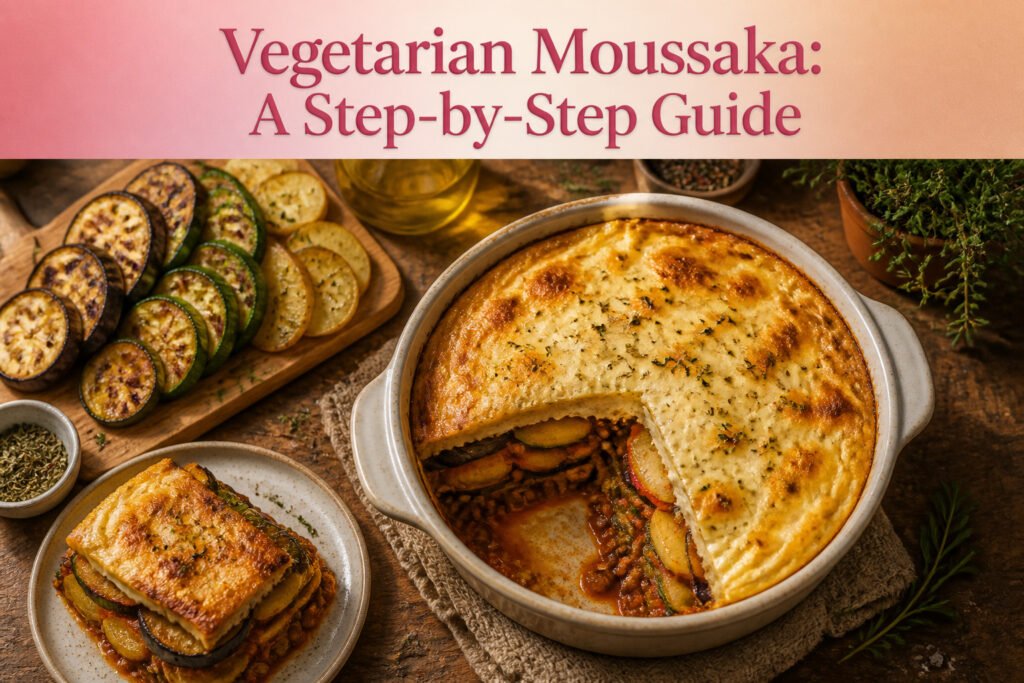
Vegetarian moussaka is a layered Greek casserole where roasted eggplant, potatoes, and zucchini replace the meat, held together by a lentil-tomato sauce and a sliceable béchamel enriched with egg yolks. The catch is moisture control: raw vegetables will turn the bake soupy, so every slice needs that 20-to-30-minute salt sweat and a 400°F par-roast before the dish ever sees the casserole.
Prepare the Eggplant
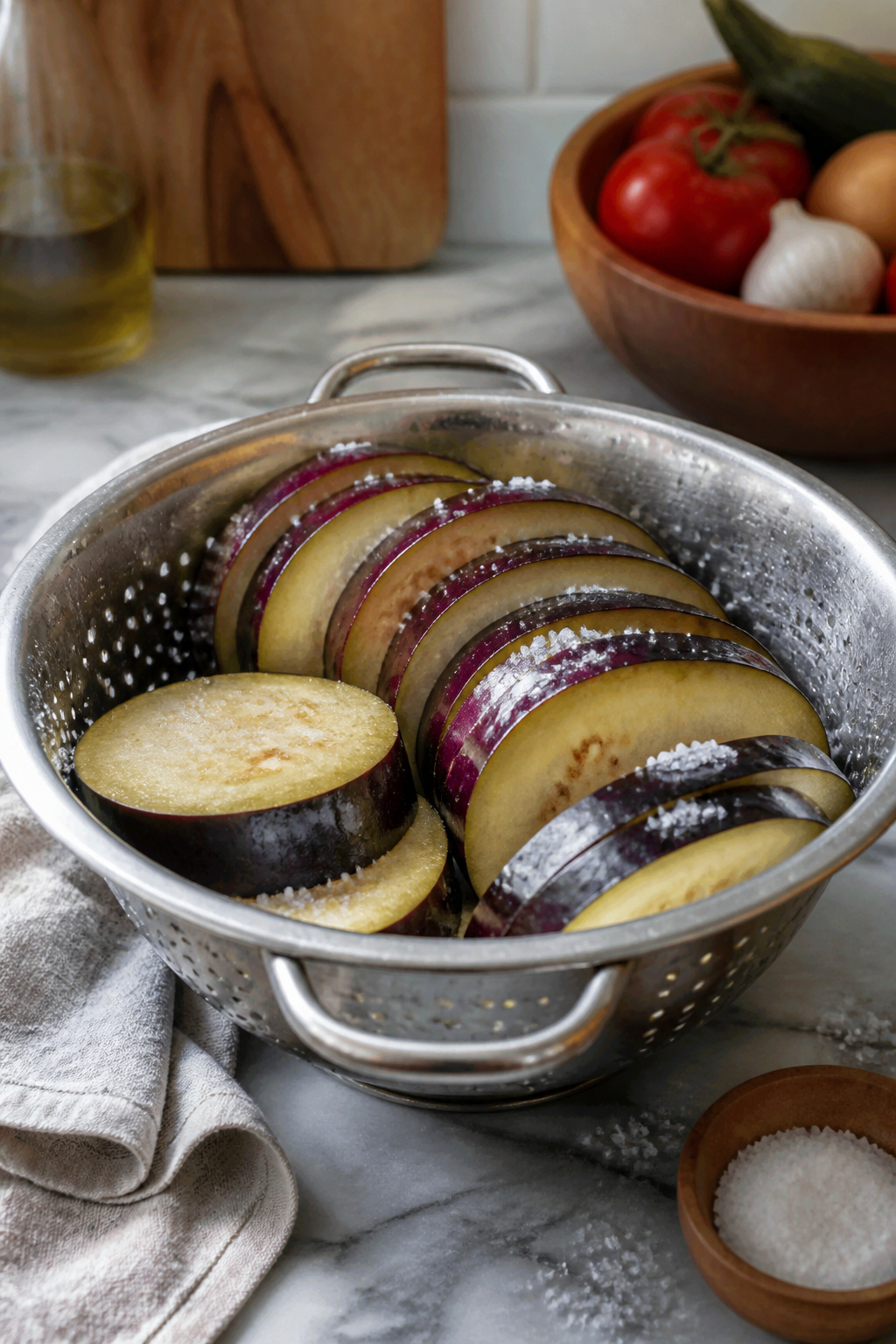
Two medium eggplants, sliced lengthwise about a centimeter thick, are what you need here. The slices go into a colander, salted on both sides, and left alone for 20 to 30 minutes while the bitter liquid draws out. Eggplant holds more moisture than most people expect, and that water will wreck the texture of your finished dish if you skip this step.
Once the sweating is done, rinse the salt off with plenty of water and squeeze the slices gently with your hands. Pat them dry with a towel before they hit the oven or the pan. The bitterness fades, the flesh turns milder and sweeter, and the slices hold their shape through the roasting and layering ahead instead of turning to mush.
Recommended Products

AU GRATIN POTATOES: Betty Crocker's thinly sliced potatoes in a rich, creamy cheese sauce; A family favorite food and pantry staple for generations

JULIENNE POTATOES: Enjoy Betty Crocker's thinly sliced potatoes combined with the perfect blend of cheeses; A family favorite food and pantry staple for generations

SCALLOPED POTATOES: Enjoy Betty Crocker's thinly sliced potatoes in a creamy seasoned sauce; A family favorite food and pantry staple for generations
Roast the Vegetables

A hot oven does the heavy lifting before the dish ever sees a casserole. Once the eggplant has sweated and dried, lay it out on sheet pans with 3 russet potatoes and 2 large zucchinis, all sliced lengthwise to match. Everything goes into a 400°F oven for 15 to 20 minutes.
This partial roast is not a formality. Raw vegetables shed too much water into the pan and come out of the final bake either soupy or still firm at the center. Giving them this head start drives off excess moisture and softens the flesh just enough that the layers collapse into each other without turning to mush. The potatoes in particular need it; they take longer than eggplant or zucchini to go tender, and boiling them separately, as some recipes suggest, risks waterlogging. A par-roast keeps the interior intact and the flavor concentrated.
Pull the pans when a knife slides through with only slight resistance. The vegetables will cook again under the béchamel, so full tenderness here is actually too far.
Recommended Products
One 15 ounce can of Tomato Sauce

Organic tomato sauce

Organic tomato sauce
Make the Tomato-Lentil Sauce
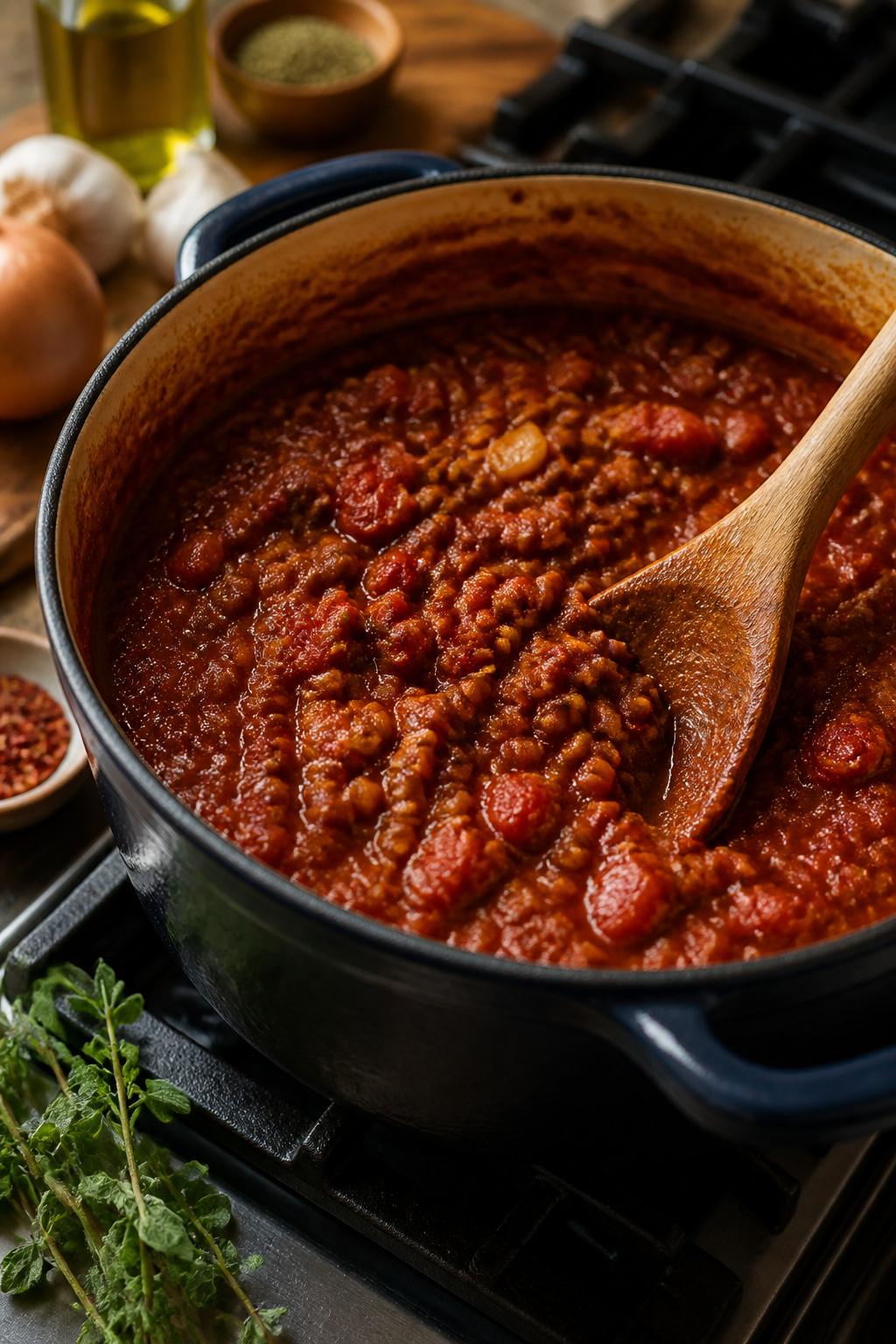
A large pot or Dutch oven over medium heat gets you started. Two tablespoons of olive oil go in first, then the onions soften in about two to three minutes. Garlic follows for one more minute. This is where the sauce builds its base.
The lentils need to be ready before this step. Half a cup of dry black lentils in one and a half cups water simmers for 20 to 25 minutes until tender but not falling apart. That timing keeps them intact through the rest of cooking.
Add those cooked lentils to the pot with diced tomatoes, one tablespoon dried oregano, chili flakes, half a teaspoon salt, and a quarter teaspoon black pepper. Some cooks reach for a pinch of nutmeg and cinnamon here too, which warms the sauce in a way that reads Greek rather than Italian. Let everything bubble gently for 15 to 20 minutes, stirring often, until the liquid reduces and thickens enough to hold its shape in the assembled dish. The lentils carry the protein load that ground meat would in the classic version, and the longer simmer gives them time to take on the tomato and spice rather than just sitting in it.
Recommended Products

A classic French white sauce

Just add milk - making a mother sauce has never been this easy

🍒 - 4 Packs - Each Pack 2.11 oz / 60 gm Total : 8.46 oz / 240 gm - Halal - Product Of Egypt
Prepare the Bechamel

A proper béchamel starts with a roux: two-thirds cup of flour and one-third cup of olive oil, cooked until it turns a pale gold and smells like toasted bread. Some kitchens use butter, but olive oil holds up better against the sharp cheeses and roasted vegetables already in the moussaka.
The milk goes in slowly, and warm milk added bit by bit is what keeps the sauce smooth. Cold milk shocks the roux into clumping; dump it all at once and you will be standing there with a whisk for ten minutes chasing lumps. Four cups total, poured in a steady stream while the whisk keeps moving, until the sauce thickens enough to coat the back of a spoon.
Only then do you pull the pan off the heat for the egg yolks. Two large ones, beaten separately and whisked in quickly. The residual heat sets them gently; add them over the burner and you risk scrambled eggs floating through your cream layer. Season once the yolks are fully incorporated, and the béchamel is ready to pour.
Recommended Products

THREE CHEESE POTATOES: Enjoy Betty Crocker's thinly sliced potatoes in a savory sauce with cheddar, parmesan, and blue cheese; A family favorite for generations

LOADED POTATOES: Enjoy Betty Crocker's thinly sliced potatoes with the flavors of cheese, smoky bacon, sour cream, and chives; A family favorite food and pantry staple for generations

Made with 100-Percent Real Idaho potatoes
Assemble the Moussaka

A thin layer of lentil sauce on the bottom of a 9-by-13-inch dish keeps the first vegetables from sticking. Eggplant goes down first, then zucchini, then potatoes. Some builds repeat that order and add another round of sauce; others run eggplant, zucchini, sauce, more eggplant, then a spinach and feta layer before the potatoes. Both work. Feta, Parmesan, or Kefalotyri can go between layers or on top, or both. The bechamel spreads last, smoothed flat with a spoon or spatula so it seals the top completely.
Recommended Products

Organic tomato basil pasta sauce with no added sugar

Organic 3-Bean Madras Lentils: Black lentils coupled with garbanzo, kidney and black-eyed beans, slow-simmered with tomato and spices; Full Plant Proteins, this chunky organic entrée is Vegan

WHAT'S INSIDE: One 8 ounce can of Tomato Sauce, No Salt Added
Bake

The oven at 350°F does the final work of turning assembled layers into something that holds together when you cut it. 45 to 60 minutes is the window; start checking at 45. The bechamel should look set, not liquid, with brown spots across the top where the cheese and sauce have bubbled and caught. A knife slid into the center should come out hot to the touch, not warm.
Some cooks finish under the broiler for a deeper color, but that last minute goes fast and the line between golden and burnt is thin. I skip it unless the top is stubbornly pale at the 50-minute mark.
Resting is not optional. Twenty minutes on the counter lets the layers settle and the bechamel firm up enough to slice cleanly. Cut too soon and the squares slump into each other on the plate. A 9 x 13 dish yields 12 portions once it has cooled to something you can handle without a burn.
What Goes In

A vegetarian moussaka breaks into three stations: vegetables, two sauces, and cheese. Keeping them straight makes the assembly feel like layering rather than chaos.
- The vegetable layer starts with eggplant, the defining slice of any moussaka. Zucchini and potatoes bulk it out, spinach wilts down between layers, and mushrooms are optional but worth including if you want something meaty to bite against.
- The tomato-lentil sauce replaces the usual ground lamb. Brown lentils and canned plum tomatoes form the base, with onion, garlic, bay leaves, oregano, cinnamon, and cumin running through it. Some cooks add carrot for sweetness; others keep it to alliums and herbs.
- The béchamel is butter, flour, and milk cooked to a smooth white sauce, then enriched with egg yolks so it sets sliceable in the oven. A little nutmeg goes in here, not the red sauce.
- Cheese splits by layer. Feta crumbles into the vegetable or sauce layers for salt and tang. Parmesan, Kefalotyri, or Pecorino goes on top for a browned, salty crust. Kefalotyri is the traditional Greek choice if you can find it; Pecorino is the easier substitute that still delivers the sharp, sheep’s-milk bite.
Recommended Products
SCALLOPED POTATOES: Enjoy Betty Crocker's thinly sliced potatoes in a creamy seasoned sauce; A family favorite for generations

Good for baking, roasting, pan-frying, and smashing

perfect for an array of uses
Make-Ahead and Storage

The sauce and roasted vegetables both hold well in the refrigerator, so you can break the work across two nights without any loss in quality. Store the components in separate containers, then assemble and bake when you are ready. The bechamel is the one piece I would rather make fresh; after a night in the fridge it thickens to something almost gelatinous, and you will spend more time rewarming and thinning it with extra milk than you would just whisking up a new batch.
Yes, the assembled moussaka can be frozen. Wrap the baked and cooled casserole first in foil, then in plastic wrap. It keeps for six months. Thaw it overnight in the refrigerator and reheat it covered so the top does not dry out. Leftovers in the fridge last three to four days in an airtight container, and the flavors actually settle and improve by the second day.
Recommended Products

A DELICIOUS INDIAN ENTRÉE: Maya Kaimal's Everyday Dal recipes are carefully crafted and cooked, layering in Maya’s favorite Indian ingredients and spices. Enjoy all five varieties on their own or with any veggie, grain or flatbread.

Taste the difference in pastas, meatballs, and more with Hunt's vine-ripened tomato flavors

PASTA SAUCE: Whole tomatoes are cooked down into a sauce with organic sweet basil and five complementary spices.
How to Serve It
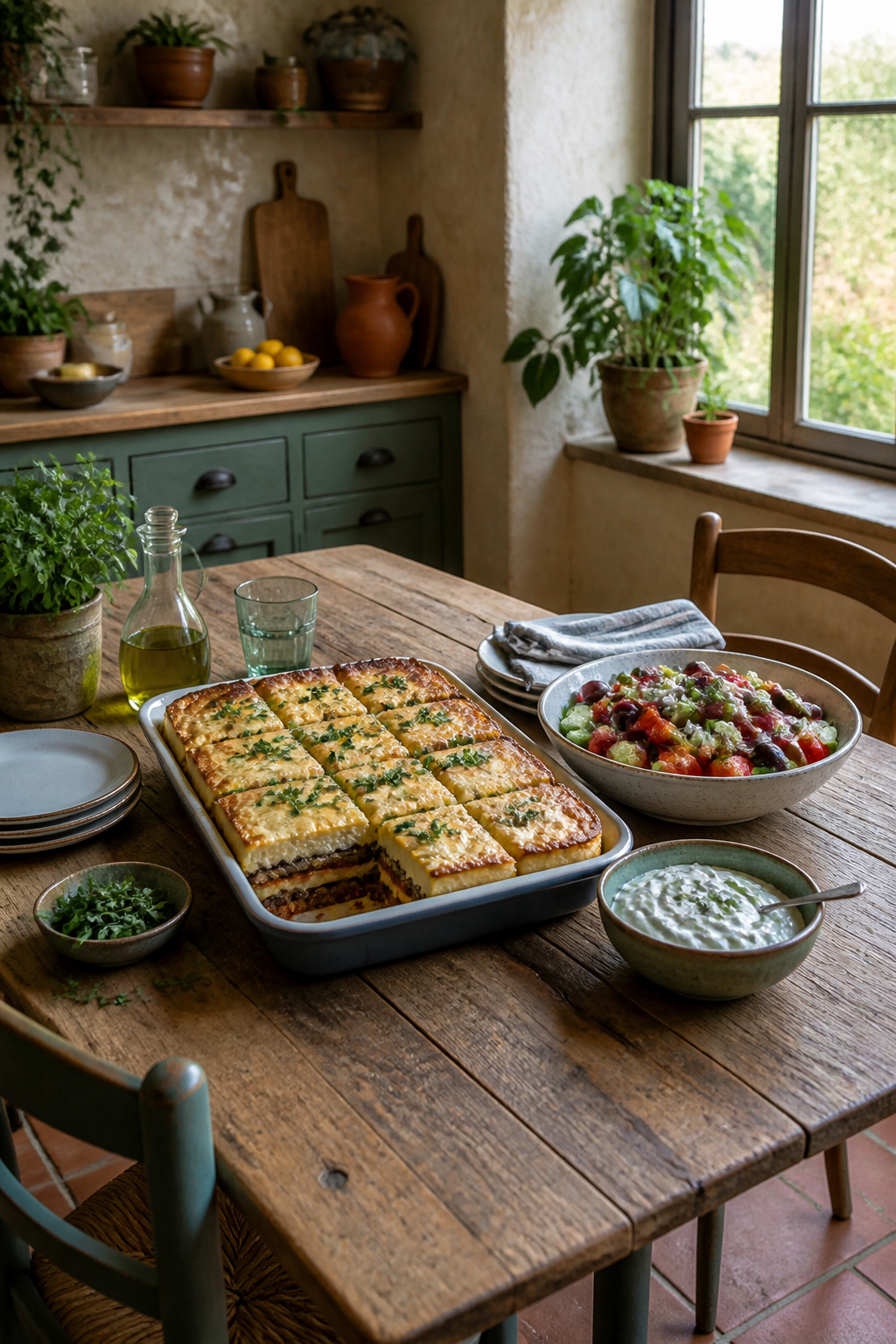
A vegetarian moussaka already carries everything a plate needs: vegetables, starch, cream, cheese. Most nights I set it down as the main event and call the meal complete.
When I do add something alongside, the move is sharp against rich. A green salad with lemon vinaigrette cuts through the béchamel faster than anything creamy or sweet. Crusty bread works too, though mainly as a tool for the last of the sauce on the plate. A traditional Greek salad, heavy on tomato and vinegar, is the pairing that makes sense to me: it mirrors the dish’s own flavors instead of competing with them. Tzatziki on the side is another route, cool against the warm casserole.
If someone at the table insists on meat, a few skewers of souvlaki or a small plate of keftedes keeps the Greek theme without rebuilding the whole meal around them.
Frequently Asked Questions
Recommended Products
Russet potatoes high in starch perfect to cook mashed potatoes good for baking
Can vegetarian moussaka be made ahead and frozen?
Yes. The sauce and roasted vegetables hold well in the refrigerator for a couple of days, and the fully baked and cooled casserole can be frozen for up to six months. Wrap it first in foil, then in plastic wrap, and thaw overnight in the refrigerator before reheating covered so the top does not dry out.
What vegetables go into vegetarian moussaka?
Eggplant, zucchini, and russet potatoes form the base, with spinach as a common addition between layers. Mushrooms are optional but add a meaty texture. The eggplant is essential; other vegetables can be adjusted to preference.
How do you make the bechamel sauce for vegetarian moussaka?
Start with a roux of flour and olive oil cooked to pale gold, then add warm milk slowly while whisking constantly to avoid lumps. Once the sauce thickens enough to coat a spoon, pull it off the heat and beat in two egg yolks quickly so they set gently rather than scramble. Season with nutmeg after the yolks are fully incorporated.