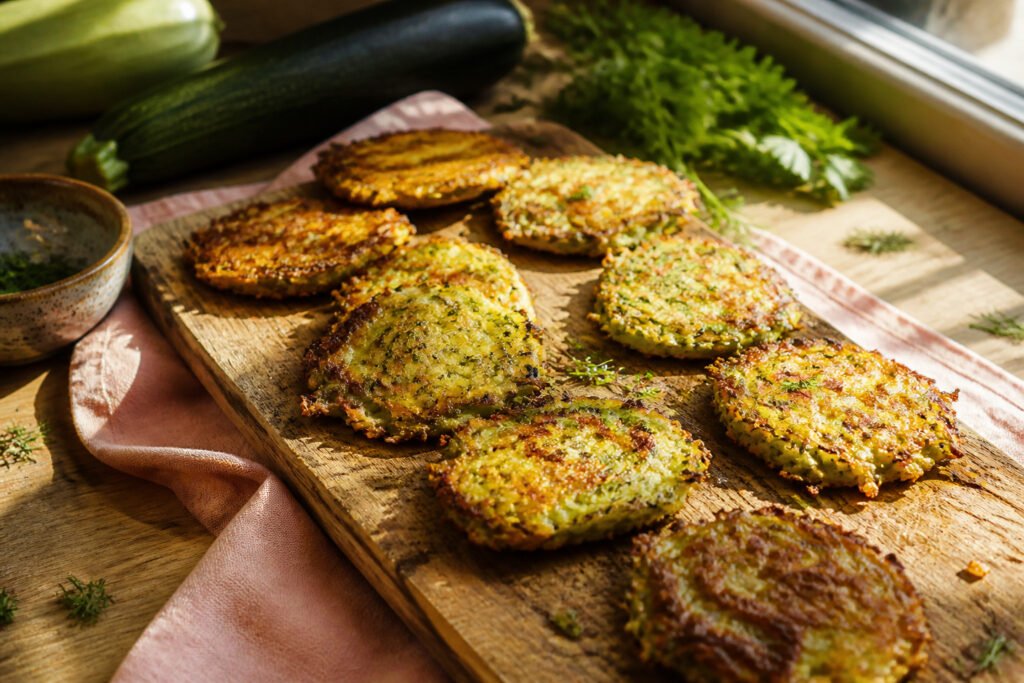
Zucchini fritters fry up crisp and lacy at the edges in about half an hour, but only if the grated zucchini is salted, rested, and squeezed almost dry before it ever touches the batter. The box grater leaves thicker strands that hold their shape through frying, while a food processor’s finer shred risks mush. Three to four medium zucchini yield a dozen three-inch fritters, enough for four as a side or a small gathering as appetizers.
What Zucchini Fritters Are and When to Make Them

Zucchini fritters are small fried cakes made from grated zucchini bound with egg and a little flour, crisp on the outside and moist inside. They belong to that useful category of food that can be a side dish, a light dinner alongside a simple salad, or something to set out with drinks when people come over. The whole thing comes together in about half an hour, which is why they keep landing on my weeknight list.
The Greek version, kolokithokeftedes, usually folds in herbs and sometimes feta. What you are making here is the simpler home adaptation, the one that relies on just a few grocery-store ingredients and a single skillet. That simplicity is the point. A box grater, a bowl, and a frying pan are all the equipment involved, and cleanup is one cutting board and the skillet you cooked in.
The real draw is the texture. Grated zucchini carries a lot of water, and managing that moisture is what separates a fritter that fries up crisp and lacy around the edges from one that steams in its own juices and comes out soft all the way through. The steps that follow are built around that single problem: getting the water out before the batter hits the oil.
Grate the Zucchini

A box grater and a food processor both work here, but the shred comes out different. The box grater’s large holes leave the zucchini in slightly thicker strands that hold their shape through mixing and frying. The food processor’s grating disk is faster, ten seconds and done, and the result is finer. For fritters that stay together without turning mushy, I reach for the box grater.
1½ pounds of zucchini is 3 to 4 medium ones, enough to yield 3½ to 4 cups after draining. Rinse them, trim the ends, and grate straight down or on the diagonal for longer strands. Either way, the goal is uniform shreds that will release their water evenly in the next step.
Salt and Drain

Grated zucchini holds more water than you’d think, and that moisture is what turns fritters soggy in the pan. The fix is simple and costs nothing but ten minutes. Toss the grated zucchini with about a teaspoon of salt in a bowl and let it sit. The salt draws the liquid out through the cell walls, pooling at the bottom of the bowl while you prep everything else. Ten minutes is the minimum that actually works; shorter rests leave too much water behind, and the fritters steam instead of crisp. Some cooks line a colander for this step, which lets the liquid drain away on its own and saves you a squeeze later. Either way, you’ll notice the volume shrink and the strands soften, both signs the salt has done its job. Skip this and you’re fighting the zucchini all the way through; do it and the batter stays thick enough to hold its shape when it hits the oil.
Squeeze Out Excess Liquid

The squeezed zucchini should feel almost dry before it ever touches the batter. I use my hands and work in batches, twisting handfuls over the sink until the last drops stop coming. A clean kitchen towel or cheesecloth does the same job with less mess; wrap the grated zucchini tight and squeeze in pulses, repositioning the bundle each time to find dry fabric. Skipping this step or stopping too early is the single reason fritters turn soggy in the pan. The salt has already drawn the water out; now your job is removing it. Ten minutes of resting means nothing if half the liquid stays in the shreds. What remains should feel like damp paper, not wet leaves.
Mix the Batter

The wrung-out zucchini goes into a large bowl with two large eggs, a half-cup of all-purpose flour, and a half-teaspoon of baking powder. Scatter the flour rather than dumping it in one spot; this keeps pockets of dry flour from hiding in the shreds. Mix until the flour is just incorporated and the batter feels thick but still soft.
At this point, the flavoring is up to you. Most recipes add scallions, a half-cup of grated Parmesan, garlic, and fresh dill or basil. I like dill when I have it, but a combination works too. Some cooks fold in panko for extra crunch, or coat the formed patties in it before frying. The batter will seem loose; it firms up once it hits the hot oil.
Yield:12 (3-inch) fritters
1½ pounds zucchini (3 to 4 medium), ends trimmed
Salt and pepper
2 large eggs
½ cup grated Parmesan
½ packed cup fresh basil or dill, or a combination, chopped, plus more for serving
⅓ cup chopped scallions (about 2 large)
1 large lemon, zested and cut into wedges
½ teaspoon garlic powder or 1 large garlic clove, grated
½ cup all-purpose flour
½ teaspoon baking powder
Olive oil, for frying
Tzatziki, for dipping (optional)
That ingredient list is compact enough for a weeknight grocery run, and everything except the herbs and zucchini is probably already in your kitchen.
Heat the Oil

Olive oil in the skillet over medium heat needs to reach that shimmering but not smoking stage before the first fritter hits the pan. That shimmer is the cue: the oil is hot enough to set the exterior the moment batter makes contact, but not so hot that it scorches before the inside cooks through. A non-stick pan helps here, though any skillet with a heavy bottom will do the job if you stay attentive. If wisps start rising, pull the pan off the burner for thirty seconds and dial the heat down a notch. The goal is a crisp shell, and that shell starts with oil at the right temperament, not the highest number the dial will reach.
Fry Until Golden

A heaping tablespoon of batter goes into the skillet, pressed gently with the back of the spoon until it is about four-fifths of an inch thick. Overcrowding the pan is the mistake that turns a crisp fritter soggy: too many at once drops the oil temperature, and the zucchini steams in its own moisture instead of frying. Three or four per batch is the practical limit in a standard skillet. The first side needs two to three minutes to go deep golden; the second side wants about the same. A thin spatula and a patient flip keep the shape intact. The full batch yields roughly twelve fritters, which is dinner for four or appetizers for a small gathering. I slide finished ones onto a wire rack set over a baking sheet; the oven at its lowest setting holds them crisp while the rest cook.
Serve

Warm fritters hit the plate straight from the skillet, while the edges still crackle. A bowl of tzatziki sits in the middle of the table, or sour cream if that’s what the fridge holds, or marinara for anyone who wants a sharper dip. At the restaurant we set them out with tzatziki and lemon wedges, and the lemon was non-negotiable. The squeeze wakes up the dill and cuts the fry.
These work as a snack for two people picking at the counter, an appetizer before lamb or fish, or a side dish beside grilled chicken. The fritters don’t care about the meal’s formality; they only care that you eat them before they cool past the point of crisp.
Tips for Crispiness

Three things separate a crisp fritter from a soggy pancake.
- Squeeze the zucchini thoroughly. Excess moisture is the fastest way to ruin the texture. If the zucchini still feels wet after the first squeeze, salt it early and squeeze a second time.
- Start with a hot skillet. The oil needs to be hot before the batter goes in, or the edges will not crisp and the fritters may stick.
- Do not crowd the pan. Leave space between each fritter so they fry instead of steam-cooking each other.
- Flatten the patties slightly. Thin centers cook through before the outside turns too dark.
- Keep them small. A 1/4-cup scoop makes patties that hold together and crisp evenly.
Substitutions and Variations

Yellow squash works as a straight swap for zucchini, though the color shifts to something brighter on the plate. Gluten-free flour substitutes 1:1 for all-purpose, and dropping the Parmesan entirely makes the fritters dairy-free without changing the technique.
- Yellow squash: use in place of zucchini, or mix the two together
- Gluten-free flour: replace all-purpose at a 1:1 ratio
- Parmesan: omit for dairy-free fritters
- Fresh herbs: mint, parsley, or oregano all stand in for dill
- Panko: skip it, or crush crackers for the same light texture inside and crunchy coat outside
Storage and Reheating

Leftover zucchini fritters hold up up to 2 days in the refrigerator or up to 3 months in the freezer if you lay them in a single layer first, then transfer them to a bag once they are solid. The refrigerator buys you a little time, but the texture starts to slide after day two.
For reheating, a 375°F oven or a hot skillet will bring the crispness back. The microwave will turn them rubbery, so skip it. I learned this the hard way at the restaurant, where we fried every order to order for a reason. These fritters are at their best the moment they leave the pan, and no storage method fully recovers that.
Frequently Asked Questions
How do I keep zucchini fritters from being soggy?
Squeeze out excess moisture from the grated zucchini before mixing the batter, then make sure your skillet is fully heated and don’t crowd the pan. The article emphasizes that skipping the squeeze or stopping too early is the single reason fritters turn soggy in the pan; the zucchini should feel almost dry, like damp paper, before it ever touches the other ingredients.
Can I use yellow squash instead of zucchini?
Yes, yellow squash works as a straight swap for zucchini in this recipe. The color on the plate will be brighter, but the technique and timing stay exactly the same.
What can I serve with zucchini fritters?
Serve them warm with tzatziki, sour cream, or marinara for dipping, plus lemon wedges on the side. They also work well as a side to grilled chicken or fish, or paired with a simple salad for a light dinner.