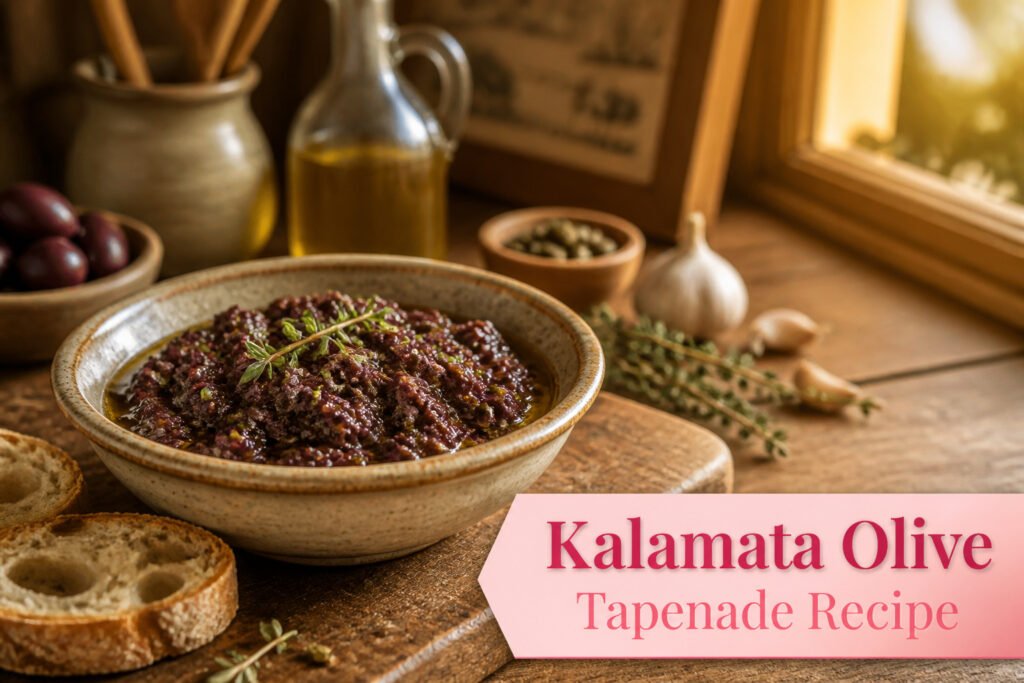
Kalamata olive tapenade is a coarse olive spread made in the food processor from pitted Kalamata olives, capers, garlic, and extra-virgin olive oil. The common mistake is adding everything at once, which leaves chunks of raw garlic buried in the paste. Giving the garlic a solo pulse first, before the olives ever hit the bowl, distributes its flavor through the oil instead of concentrating it in surprise bites.
A two-tablespoon serving runs about 232 calories and 307 milligrams of sodium, nearly all of it from the olives themselves, so rinsing the capers beforehand is one of the few real fixes for salt watchers.
Prepare the Ingredients
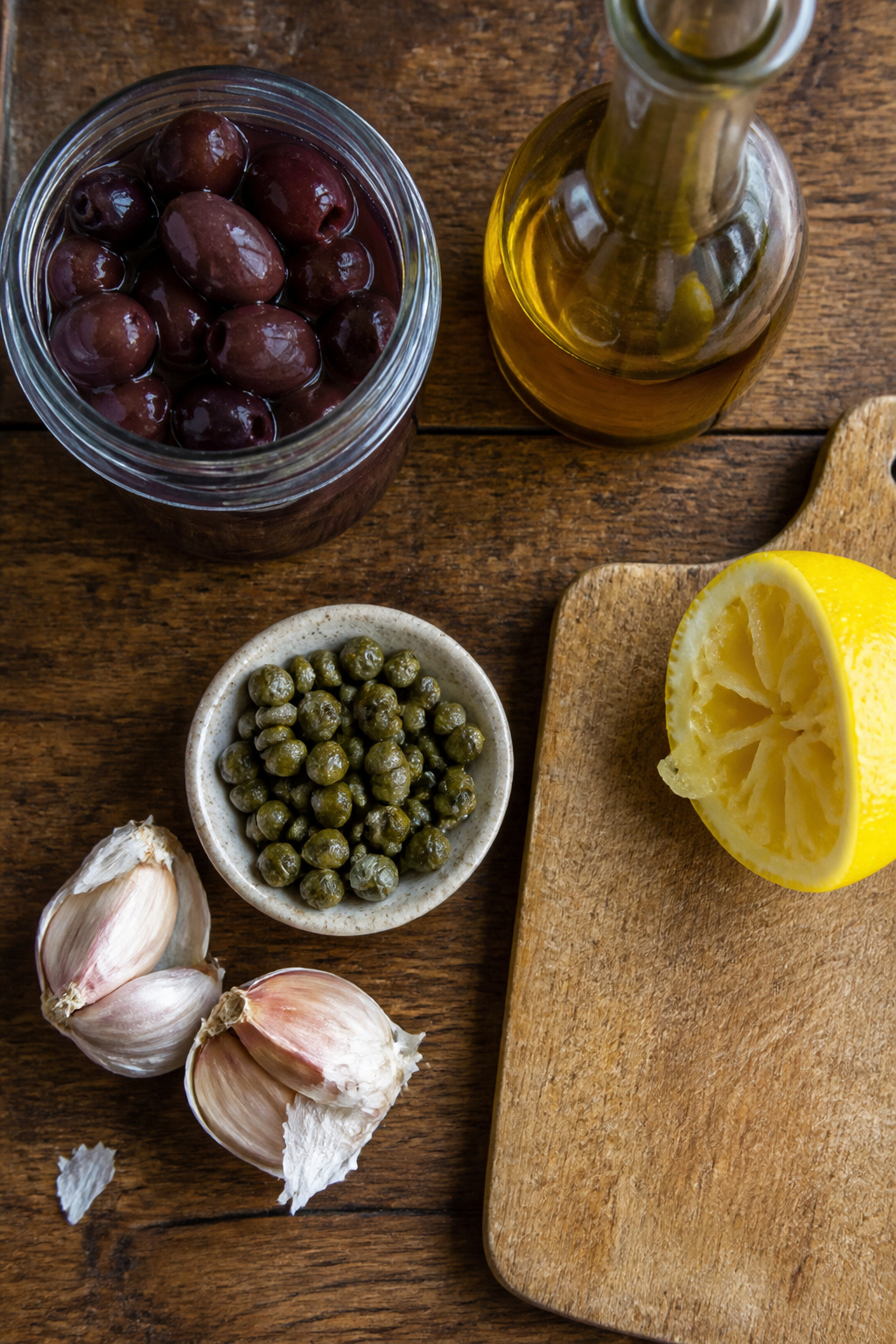
A 7 oz. jar of pitted Kalamata olives is the base, drained and dropped straight into the food processor. Two tablespoons of drained capers go in next, and 1 to 2 cloves of garlic depending on how sharp you want it. Extra-virgin olive oil matters more here than in most recipes you will make this week; it is cold pressed, so it keeps its flavor and nutrients, and since the tapenade is mostly olives and oil, that flavor is what you taste. Start with 2 tablespoons and keep the bottle out; you will likely add up to 4 tablespoons to get the paste loose enough to spread without turning it soup.
Optional additions are where you can steer the batch. A tablespoon of lemon juice brightens it, fresh parsley adds color, pine nuts give body, and half a teaspoon to a teaspoon of anchovy paste deepens the savoriness if you keep it around. I do not add extra salt; the olives bring plenty from their brine, and anything more leaves the finished tapenade harsh on the tongue.
Recommended Products

Authentic Greek Flavor: Savor the rich, smoky, and fruity taste of these premium Kalamata olives, harvested from sun-drenched groves in western Greece and cured for up to six months to enhance their natural sweetness and depth.

DELIGHTFUL APPETIZER: These Kalamata black olives are smoky, and fruity with hints of red wine, and are perfect for tossing/topping into/onto salads, pasta, pizza, wraps, and more

One 9.5-ounce jar of Pitted Kalamata Olives
Process the Garlic

Garlic needs a head start in the food processor, or you end up with jagged chunks hiding in otherwise smooth tapenade. I drop the cloves in alone and pulse until they are properly minced, nothing more than fine grit, before the kalamata olives ever hit the bowl. This step matters because the blade has an easier time reducing garlic evenly when it is the only thing moving. Once those olives and capers join the mix, the processor chops in bursts and leaves larger pieces of whatever was already smallest. Garlic that goes in late stays chunky, and a sudden bite of raw garlic throws off the whole spread.
The minced garlic also has time to release its flavor into the olive oil that follows. Oil carries fat-soluble compounds, so starting the garlic early lets it season the oil itself rather than just sitting in it. That distribution happens while the machine runs, not after. Skip this sequence and you get pockets of sharp garlic and pockets of plain olive, which is exactly the uneven result this recipe is trying to avoid.
Recommended Products

SMOOTH EXTRA VIRGIN OLIVE OIL BULK SIZE: Expertly crafted by The Olive Oil People using first cold pressed olives, Smooth EVOO with naturally occurring polyphenols


One 51 fluid ounce bottle of Extra Virgin Olive Oil, Cold Extracted
Combine and Pulse the Olives and Capers

A cup of pitted Kalamata olives goes into the food processor with capers and whatever extras you want in the mix. Parsley, pine nuts, and anchovy paste are the usual suspects, though none of them are required. The olives carry enough salt and depth on their own, so the add-ins are really about steering the flavor. One anchovy or a dab of paste will deepen things without making the tapenade taste fishy; skip it if you want a cleaner olive flavor.
Pulse everything together until the pieces are coarsely chopped, not paste. The texture matters here. You want distinct bits of olive and caper that still have some bite to them, because the olive oil comes next and will smooth things out from this point. Stop and scrape the bowl once or twice so you are not chasing whole olives around the blade while the rest turns to mush.
Recommended Products

No hydrogenated fats or high fructose corn syrup allowed in any food

The information below is per-pack only

Light and savory - Made with California grown kalamata olives and capers, this blend is light in flavor with hints of citrus on the finish
Add Olive Oil to Finish

With the motor running, I slowly drizzle in 2 to 4 tablespoons of extra virgin olive oil until the tapenade looks like something I’d actually spread on bread. Some cooks take it nearly smooth, almost a purée they can paint onto crostini; others stop while it still has visible chunks, the better to sit on top of grilled fish or get folded into warm pasta where the olives keep their bite. The more oil you add, the creamier it gets, so the stopping point is really a judgment call about what dinner looks like tonight. Taste once the blade stops. More oil will loosen and enrich the mix; a quick squeeze of lemon will cut through the salt if the olives are especially assertive.
Recommended Products

ERGONOMIC SLIP RESISTANT HANDLE FOR AN EASY SQUEEZE: garlic press oversized handle is ergonomically designed for a comfortable hold and slip resistant grip; added finger notches on the handle make it easier to hold and squeeze

Sturdy, die-cast zinc construction for durability

SIMPLE TO USE & BUILT TO LAST: Our premium quality garlic press is constructed from food-grade, rust-resistant materials meant to be among your favorite kitchen gadgets for years to come. This garlic and ginger mincer is designed with built-in studs to extract more paste within seconds. It is great for both professional and home kitchens.
Taste and Adjust

The tapenade needs a taste before any salt goes in. Kalamatas carry plenty on their own, and adding blindly is the fastest way to a spread that only a cracker can save.
If the flavor reads flat, a squeeze of lemon juice or another drizzle of olive oil usually wakes it up. The acid and fat do the lifting, not the salt shaker.
When the whole batch tastes too salty, the fix is not in dilution. The sodium was already in the olives you opened. Next time, check the jar labels for lower-sodium options before you buy. Some brands pack their kalamatas in brine with a heavier hand than others, and that difference shows up once everything is pulsed together.
Recommended Products

One 4 ounce bag of Pine Nuts

Raw Pine Nuts: Known for their rich yet light and buttery flavor, pine nuts are ideal for incorporating into your favorite recipes, like pesto and pine nut hummus, or sampling straight from the bag; Enjoy about 2 servings per bag

100% NATURAL WHOLE PINE NUTS: Nature’s Eats Pine Nuts are carefully sourced and gently prepared to maintain their smooth texture and buttery flavor. These whole nuts are ready to enjoy straight from the pouch or as an ingredient in your favorite recipes. No shells, no preservatives, only pure freshness.
Serve or Store

The tapenade goes straight into a serving bowl if you’re using it now. Otherwise, cover it and refrigerate up to one week; the flavors settle and deepen after a day in the cold, so making it ahead is often the better move. For longer storage, some cooks freeze portions in an airtight container. The texture shifts slightly on thawing, which I notice more on bread than when the tapenade is stirred into pasta or used as a filling. If you do freeze it, plan to bring it to room temperature before serving, since the oils wake back up once they lose the chill.
Recommended Products

PICKED RIPE: Freshly picked, slit, brine-cured, and packed in vinegar for your family to enjoy


Item Package Length: 32.004cm
Serving Suggestions
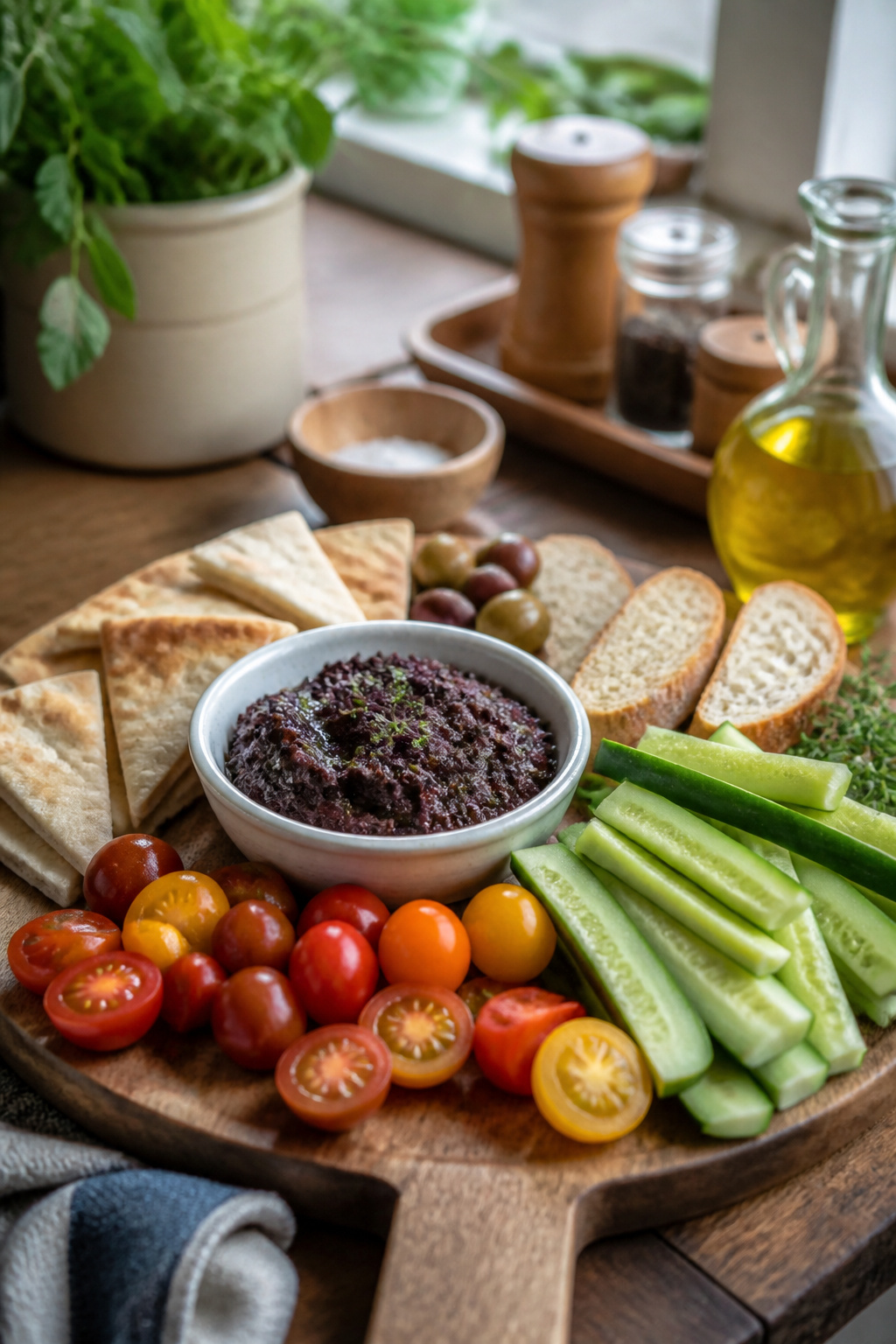
A jar of kalamata olive tapenade in the fridge solves more weeknight problems than it looks like it should. Homemade tapenade is naturally gluten-free, which matters more than you’d think; guests ask that question repeatedly at the table, and it’s nice to have an answer ready.
- Spread it thick on toasted baguette slices or crackers for the fastest possible appetizer.
- Thin it with a little olive oil and serve as a dip for carrots, cucumbers, and cherry tomatoes.
- Use it instead of mustard or mayo on roasted vegetable sandwiches, turkey wraps, or panini.
- Spoon it over grilled fish, chicken, or roasted eggplant and zucchini right before serving.
- Stir a quarter cup into a can of tuna for a Mediterranean tuna salad, or work it into hot pasta with a splash of cooking water and butter.
- Dot it onto pizza after the sauce, or mix half a cup into marinara for a quick puttanesca.
- Set it out on a charcuterie board where its salt and garlic cut through richer meats and cheeses.
Recommended Products


ROBUST EXTRA VIRGIN OLIVE OIL BULK SIZE: Expertly crafted by The Olive Oil People using first cold pressed olives; Bold EVOO extra virgin olive oil with naturally occurring polyphenols

One 32 fl oz bottle of Bertolli Non-GMO Extra Virgin Olive Oil, Rich Taste
Variations Worth Trying

A few tweaks to the base recipe turn out to be worth the extra thirty seconds.
- Orange zest brightens the whole batch without making it sweet; use the zest only, not the pith or juice, or the tapenade turns watery
- Balsamic vinegar adds a depth that reads as more complex than straight lemon, though I would keep it to one tablespoon so it does not take over
- Fresh oregano stands in for parsley, or split the herbs between the two if you have both on hand
- Two cloves of garlic is the safer starting point than one; you can always pulse in more, but you cannot take it back once the blade hits it
- Crushed red pepper flakes at a quarter teaspoon give a slow heat that builds, not the sharp burn of fresh chile
Recommended Products

80% local French Olives, 6% Capers, Olive Oil., Anchovy Paste
80% local French Olives, 6% Capers, Olive Oil., Anchovy Paste
Nutritional Notes

A two-tablespoon serving of kalamata olive tapenade lands at approximately 232 calories and 307.4 mg sodium, which is worth knowing before you start swiping it across bread. Most of that count comes from the olive oil and the olives themselves, not from fillers, so the richness is real and it satisfies quickly.
For a weeknight dinner, that means a little goes a long way. Spread thin over grilled chicken or stirred into warm lentils, the tapenade reads as a condiment rather than a centerpiece, and the numbers stay manageable. Piled thick on crostini as a pre-dinner snack, the sodium can stack up before the main course hits the table.
The sources do not break down fiber, fat, or micronutrients beyond what sits in the raw ingredients, so I would not treat this as a full nutritional profile. What matters for planning is the calorie density and the salt. If you are watching sodium, rinse the capers before they hit the food processor; it shaves a noticeable amount without flattening the flavor.
Recommended Products

[Effortless Garlic Mincing & Chopping]- Say goodbye to tedious hand slicing—this mini garlic chopper and press lets you effortlessly mince and crush garlic cloves with precision and speed.

MULTIFUNCTIONAL DESIGN - Manual garlic chopper, crusher and mincer for garlic, ginger, herbs and nuts.

🧄GARLIC PRESS SET: Choose the ergonomic and streamlined design garlic press for easy and comfortable gripping and pressing, easy to operate; the silicone peeler can Easier peeling; and the brush can help you clean the garlic press better. Greatly save your time in the kitchen.
Frequently Asked Questions
Recommended Products

Organic, grown in Russia

Unsalted pine nuts
【Material】Men bowling shirts retro is made of 100% polyester, soft, quick-dry, lightweight, durable, and comfortable to wear all day.
How can I make tapenade less salty?
Do not add any extra salt to the recipe. The olives already carry plenty from their brine. If the finished batch still tastes too salty, squeeze in some lemon juice or add another drizzle of olive oil to balance the flavor. Next time, check jar labels for lower-sodium olives before you buy.
Is tapenade gluten-free?
Homemade kalamata olive tapenade is naturally gluten-free. The ingredients are olives, olive oil, garlic, capers, and optional herbs or citrus, none of which contain gluten. That makes it easy to serve to guests who ask.
Can I puree the tapenade to make it smooth?
Yes. Start by pulsing the olives and capers until coarsely chopped, then drizzle in olive oil while the motor runs until you reach the texture you want. Two tablespoons keeps it chunky; up to four tablespoons takes it nearly smooth, almost a purée you can spread thin on crostini.