
Tyrokafteri lands salty and sharp, with a slow burn from chili that the feta tames without extinguishing. The version here keeps it thick enough to hold a ridge on pita, no yogurt, so it stays scoopable at room temperature. Ten minutes of active work, plus an hour in the fridge for the heat to settle. The catch: skip that resting hour and the peppers still taste raw, the texture still loose. Jarred roasted peppers work, but broiling your own adds the bitterness that balances the salt.
What Tyrokafteri Is
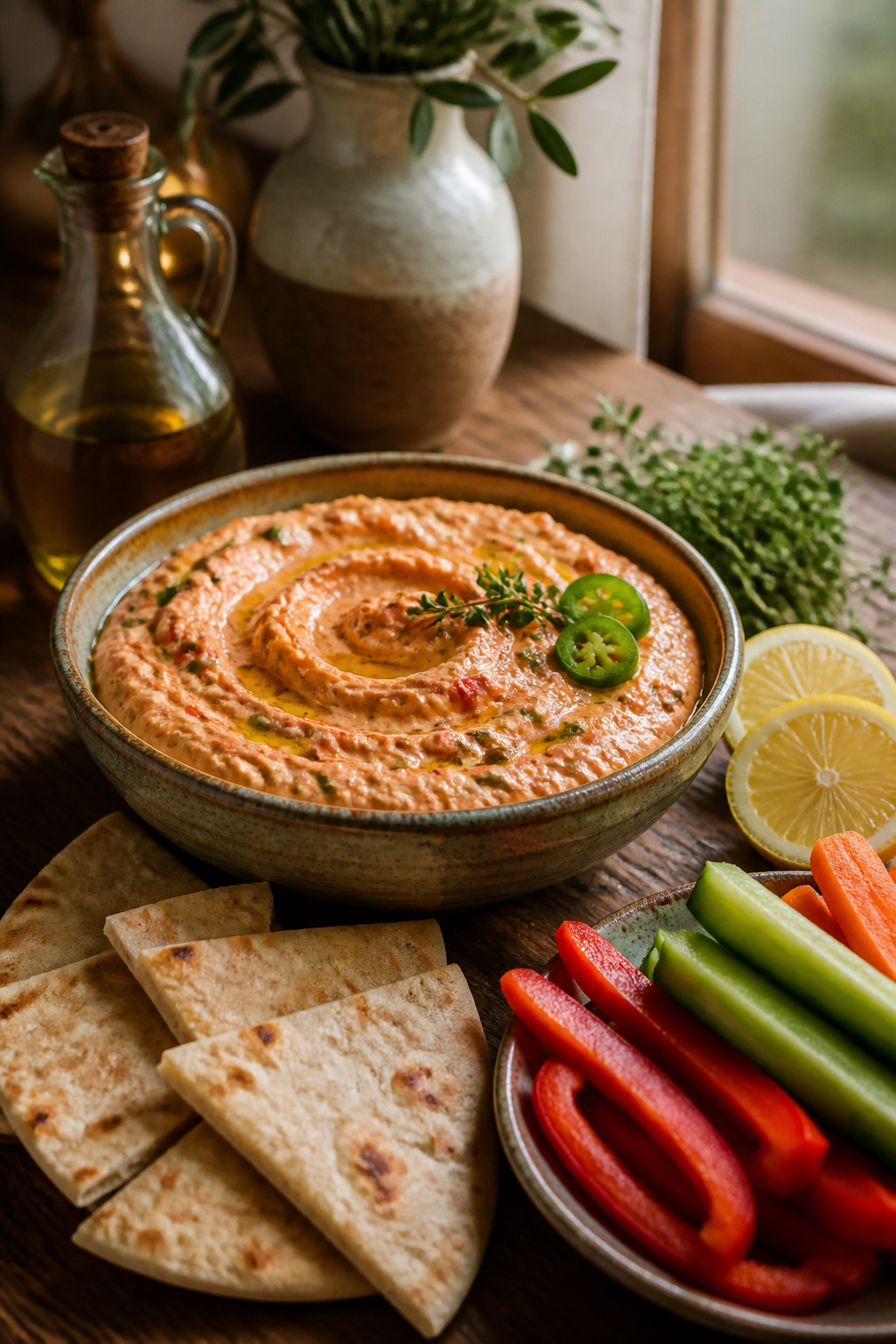
Tyrokafteri is a spicy Greek feta dip built from feta cheese, roasted red peppers, and some form of chili, whether fresh hot peppers, chilis, or a pinch of chili flakes. The name itself comes from the Greek τυροκαυτερή, pronounced tee-ro-kaf-ter-EE, which translates directly to "hot cheese." Olive oil and acid, usually lemon juice or red wine vinegar, round it out into something spreadable.
In Greece, tyrokafteri shows up as part of a meze platter, the spread of small dishes that opens a meal or anchors an evening of drinking. It works alongside grilled meats, piles onto pita wedges, or sits out with vegetables and chips for grazing. The exact heat level and pepper ratio shift from one kitchen to another; some versions lean heavier on roasted red bell pepper for sweetness, others push the chili forward and let the burn dominate.
Recommended Products

Origin: Greece

Brought to you by Whole Foods Market

One 8.0 oz. tub of Athenos Traditional Feta Cheese Chunks
Ingredients
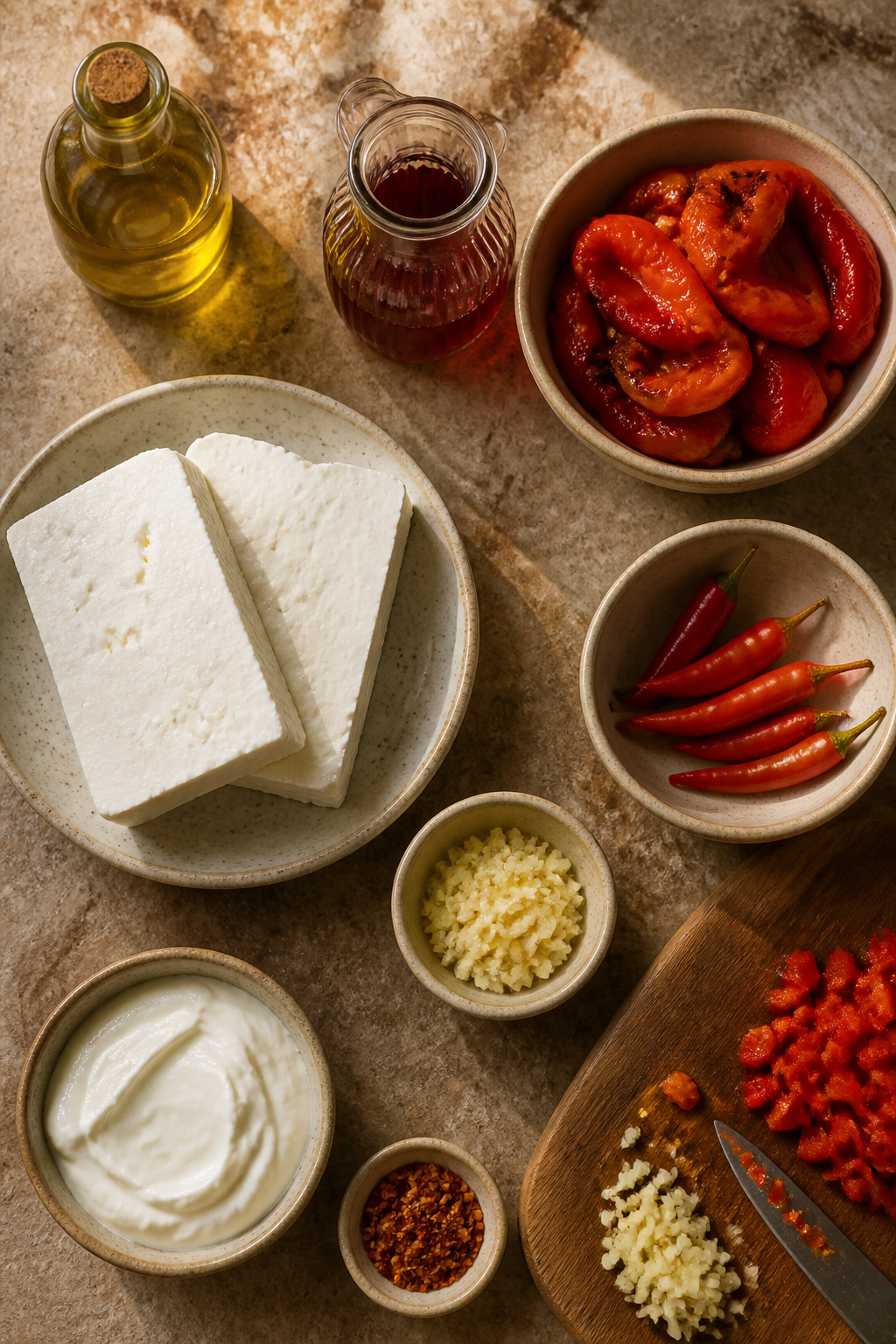
Greek feta is the non-negotiable base, and 350 grams (about 3/4 lb) is the amount that keeps the texture thick enough to hold a ridge on a pita. Blocks crumble better than pre-crumbled; the texture matters more than any brand name, since even Greek cooks disagree on which one to buy.
- Olive oil (2.5 tablespoons) plus red wine vinegar (1 teaspoon) for the sharp, loose consistency that separates tyrokafteri from plain whipped feta
- Roasted red peppers (1/4 cup, finely diced) for sweetness and color; jarred works, though some recipes swap in fresh bell or banana peppers
- Fresh chili peppers (1–2 teaspoons chopped) for the actual heat; dried flakes (1/2 to 1 teaspoon) are the backup, not the main event
The split happens on the creamy additions. One path adds Greek yogurt (1 cup) for tang and spreadability; another skips it entirely and lets the feta stand alone. Garlic lands the same way, called for in some versions, absent in others. Lemon juice (2 tablespoons) shows up mostly when yogurt is already in the mix. My take: yogurt wins if you are serving cold from the fridge, but skip it if you want the dip to set up firm at room temperature.
Recommended Products

Organic fire-roasted red peppers
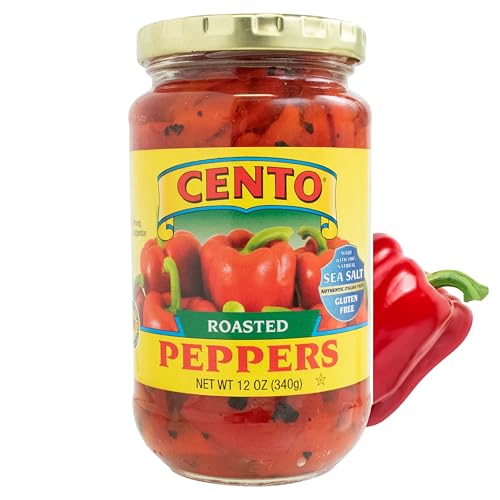
Packed with Flavor: Our Roasted Peppers start with California grown red bell peppers, fire-roasted with some char remaining, giving them a naturally flavorful taste
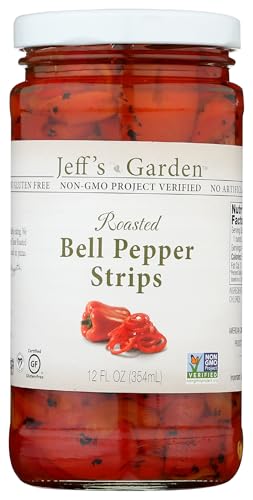
News Flash! Excellent source of Vitamin C Low in sodium High in antioxidants No sugar added Naturally low in carbs Non fat Exclusive At Jeff's Naturals
Roasting the Peppers
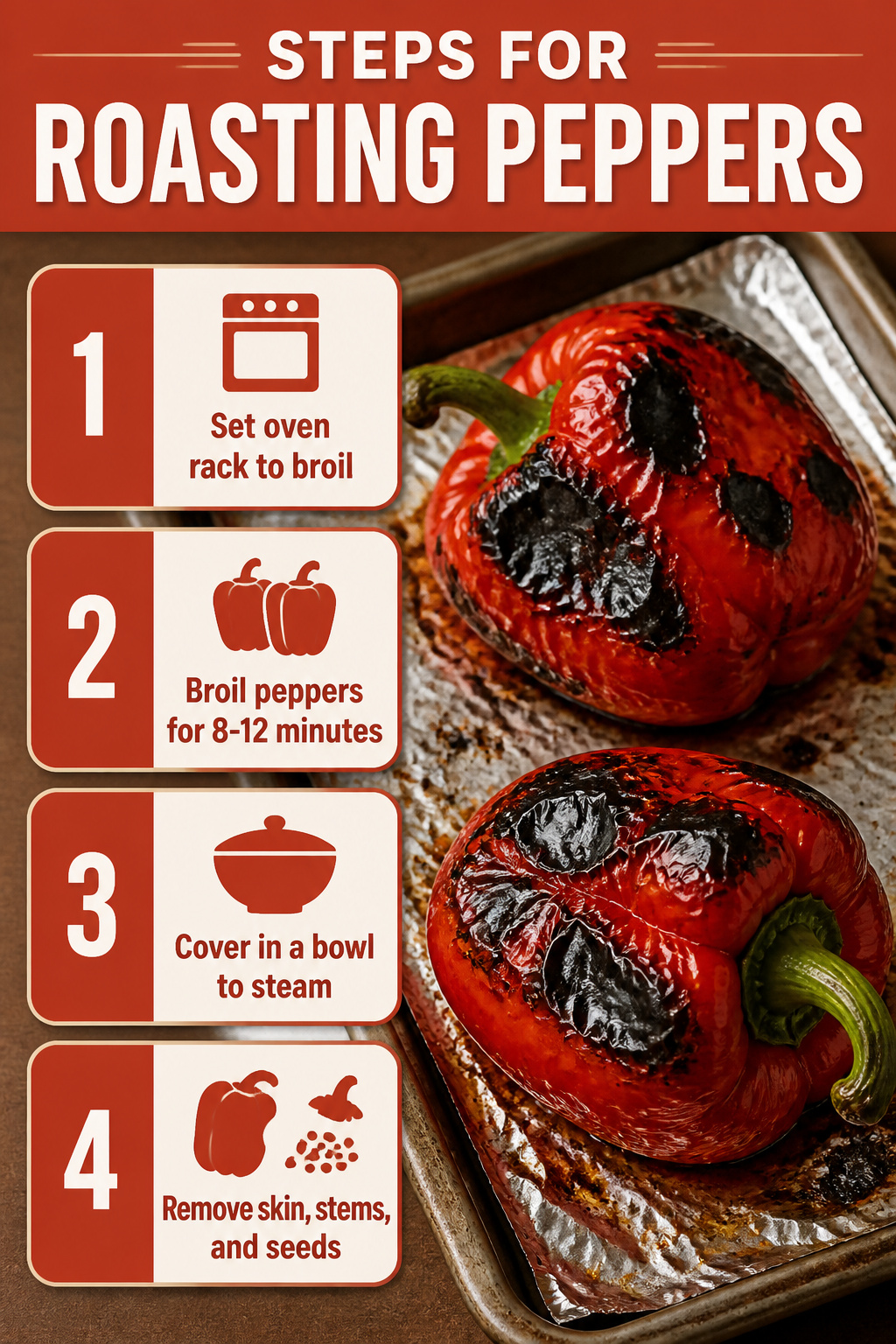
Roasting peppers yourself gives the dip a smokier depth than the jarred kind, though both work. If you are taking the shortcut, drain two jarred roasted red bell peppers well and skip straight to blending.
For fresh peppers, set your oven rack about six inches below the broiler and heat it to high. Place two red bell peppers on a foil-lined baking sheet. Broil them 8 to 12 minutes, turning with tongs every few minutes, until the skin blackens and blisters on all sides. The sources disagree on oven temperature methods: one runs the oven at 350°F until the skin blackens, another sets it to 200°C (about 400°F) for 15 to 20 minutes. The broiler is faster and more reliable.
Transfer the blistered peppers to a bowl and cover it tightly. Let them steam for 5 to 10 minutes. The trapped heat loosens the skin so it peels away in strips instead of fighting you. Once they are cool enough to handle, pull off the skin, remove the stems, and scrape out the seeds and veins. A little char left behind is fine; it adds bitterness that balances the feta’s salt.
Recommended Products
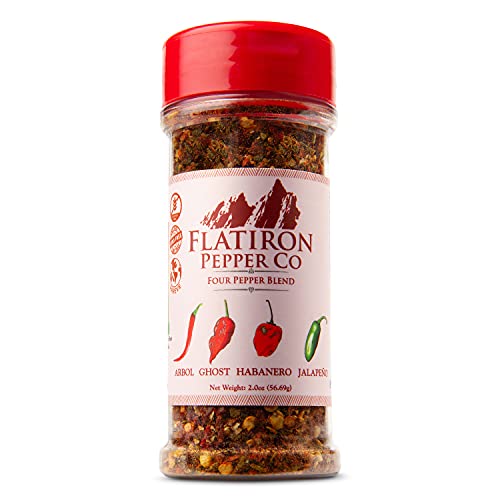
You'll never go back to generic red pepper flakes!


Blending the Dip
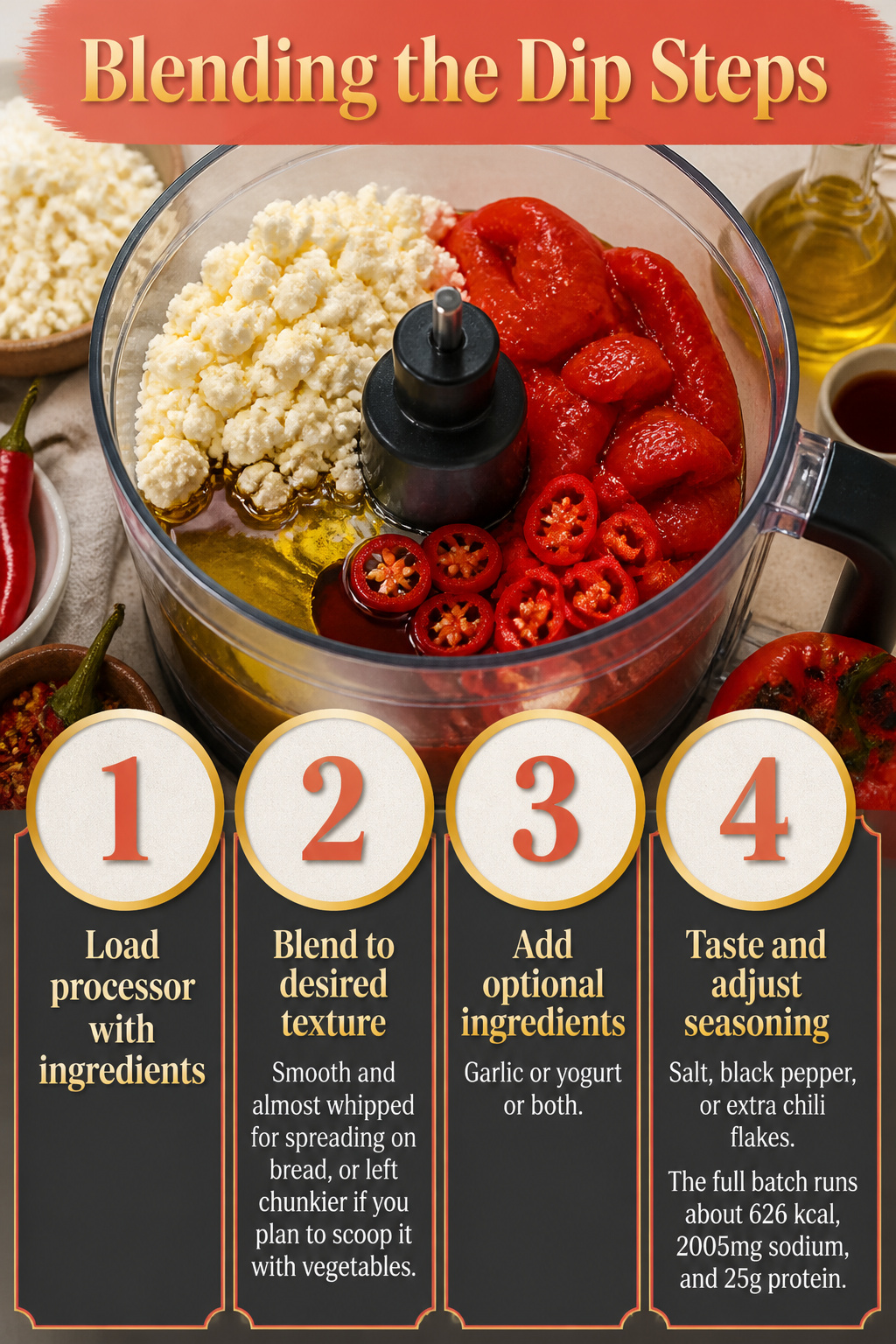
- Load the food processor with crumbled feta, roasted peppers, chili peppers, olive oil, and vinegar. Pulse or run the motor until the mixture reaches the texture you want: smooth and almost whipped for spreading on bread, or left chunkier if you plan to scoop it with vegetables.
- This is the decision that splits most tyrokafteri recipes. Some cooks blend for 30 seconds to keep a little texture; others go longer for a velvety result. One middle path is to blend most of the feta smooth, then fold in a handful of crumbled chunks at the end with a spoon.
- Add any optional ingredients now, garlic or yogurt or both, and run the machine briefly to work them in. Taste, then adjust with salt, black pepper, or extra chili flakes. The full batch runs about 626 kcal, 2005mg sodium, and 25g protein, so the salt in the feta usually does the heavy lifting.
Recommended Products

The truff in TRUFF. From our game changing hot sauces, bold pasta sauces to our flavorful mayos, we’ve never truly let the truffle shine on its own… until now. After years of exploring the unique flavor and aroma of black winter truffles, we’re finally putting them front and center in our Truffle Oil.


Try it drizzled over cold pasta salads, or enhance your homemade tomato sauce with aromatic herbal notes
Resting and Serving
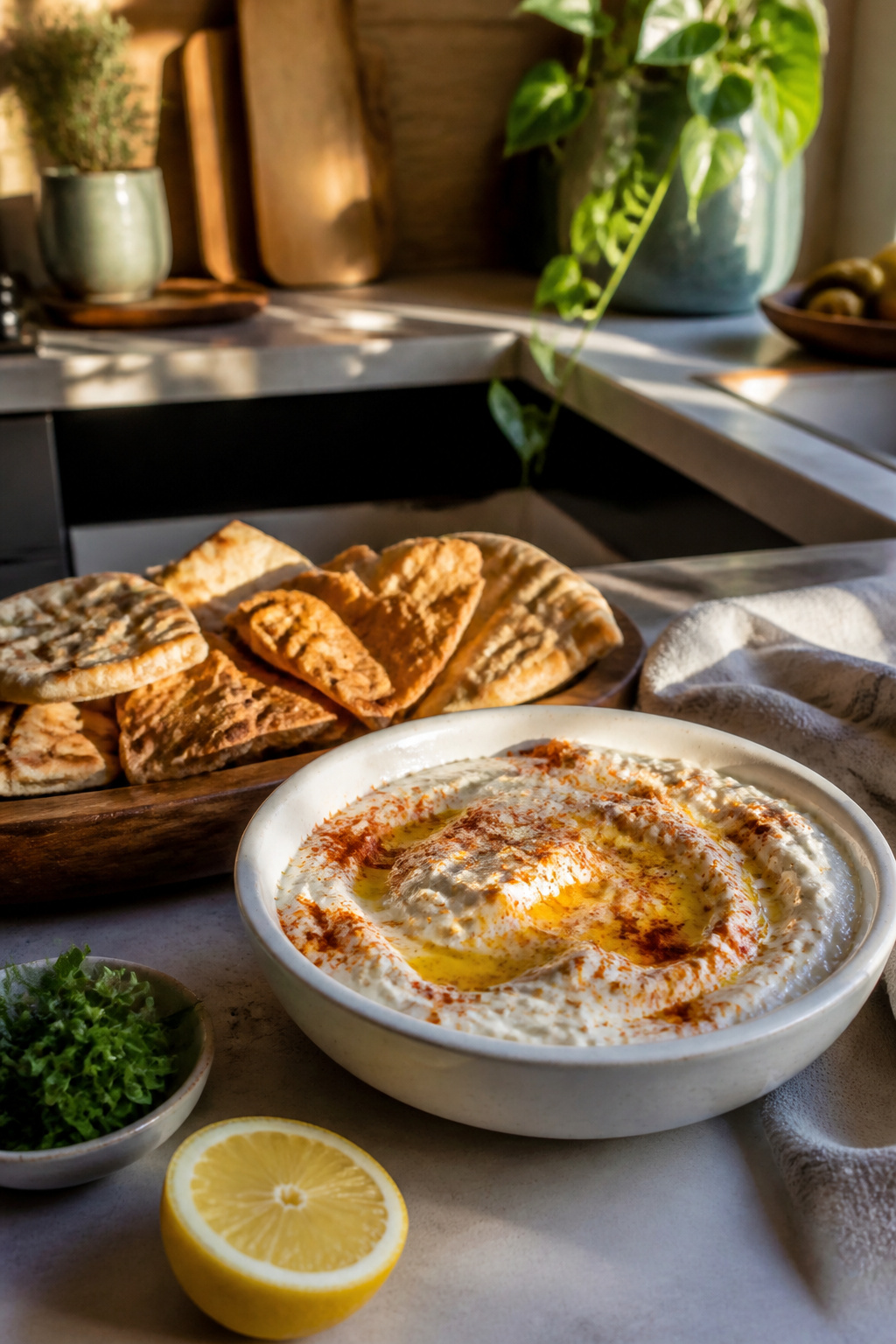
Scrape the tyrokafteri into a shallow bowl with a rubber spatula; every bit clinging to the processor blade is worth keeping. A thin stream of olive oil across the surface keeps the top from skinning over in the refrigerator, and if you want a little color, a pinch of sweet or smoked paprika or a few red pepper flakes does more than make it pretty. Refrigerate at least one hour before serving; the heat from the peppers settles down and the feta firms back up into something you can actually scoop.
Pita bread is the classic move, though sturdy chips hold up fine. The dip also works as part of a mezze spread or alongside grilled meats, and spread cold on a sandwich with roasted lamb it reads almost like a Greek aioli. From the ingredient set above, expect roughly two cups, enough for six to eight people as an appetizer or a week’s worth of lunches if you’re disciplined about it.
Recommended Products

One 32-fluid-ounce bottle of Lemon Juice

One 8 fluid ounce bottle

REAL LEMON FLAVOR - Experience the bright, crisp taste of authentic lemon juice in every single packet, perfect for elevating your beverages and meals instantly without the mess of slicing fresh lemons.
Texture and Heat Variations
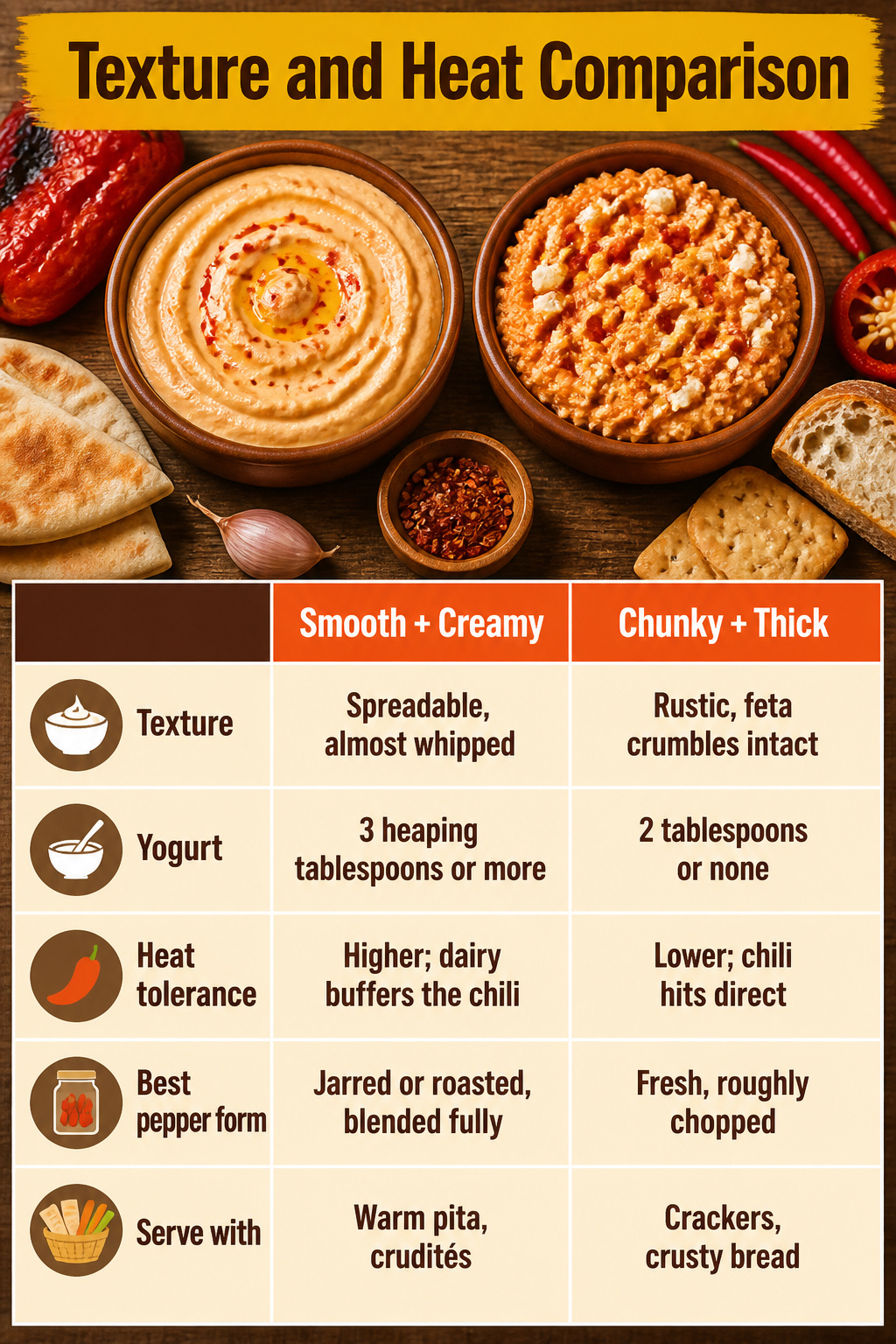
The two biggest decisions you make with tyrokafteri are texture and heat, and they pull in opposite directions more than you’d expect. A few tablespoons of Greek yogurt pushes the dip toward creamy and smooth, while skipping it leaves you with the thicker, chunkier spread some tavernas still serve. Yogurt also cools the fire; the same batch that bites without it reads as merely peppery once the dairy goes in.
For heat, you have three levers. Fresh chilis (jalapeño, serrano, habanero) give a bright, vegetal punch and the widest range. Dried red chili flakes are easier to meter out, start with half a teaspoon for medium. Jarred hot peppers or pepperoncini bring vinegar and salt along with the capsaicin, which shifts the whole flavor profile, not just the temperature. Remove seeds and membranes from fresh peppers if you want to keep your dip edible; that’s where most of the heat lives, and you can always add more later. Dairy and acid both counteract spiciness, so a yogurt-heavy batch forgives more chili than a lean one.
| Smooth + Creamy | Chunky + Thick | |
|---|---|---|
| Texture | Spreadable, almost whipped | Rustic, feta crumbles intact |
| Yogurt | 3 heaping tablespoons or more | 2 tablespoons or none |
| Heat tolerance | Higher; dairy buffers the chili | Lower; chili hits direct |
| Best pepper form | Jarred or roasted, blended fully | Fresh, roughly chopped |
| Serve with | Warm pita, crudités | Crackers, crusty bread |
Red tyrokafteri builds its color from roasted sweet peppers and chili together; white omits the sweet peppers and uses lighter chilis like banana pepper or green bell for a milder, paler dip. Both need enough heat to earn the name. If you are making this for a toddler or a chili skeptic, you are not making tyrokafteri; you are making a nice feta spread, which is a different thing entirely.
Recommended Products

Origin: United States
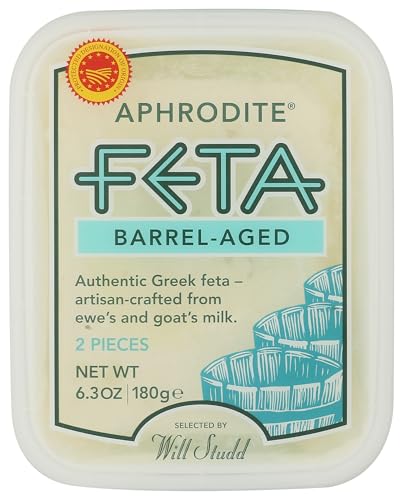
Remarkably smooth and tangy with rich, creamy mouthfeel and layered briny complexity.
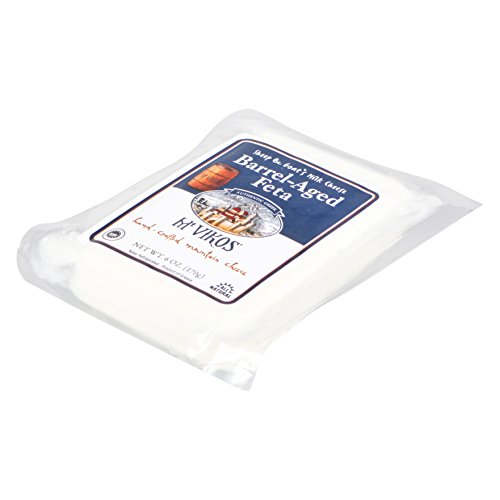
Sheep and goat's milk cheese
Storage
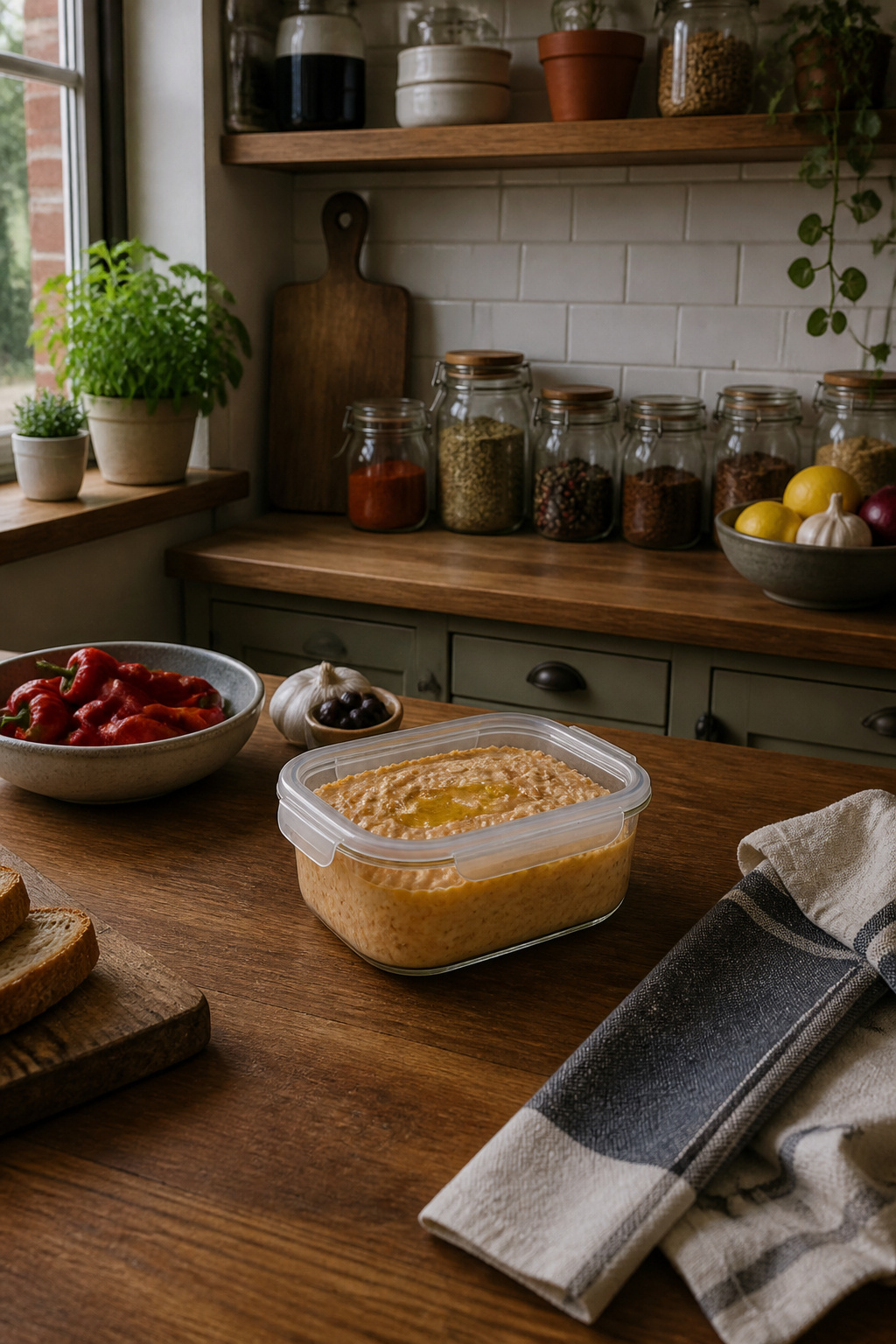
Leftover tyrokafteri keeps up to one week refrigerated, and the flavor actually improves after a day or two as the peppers, vinegar, and olive oil settle into the cheese and yogurt. The olive oil and fat will separate as it sits, so a quick stir before serving brings it back together. A thin layer of olive oil pressed across the surface helps seal out air and keeps the dip tasting fresh the full week. I would not bother freezing it. The cheese, oil, and moist peppers all change texture when thawed, turning loose and runny in a way that fresh tyrokafteri never is, and the whole thing takes barely ten minutes to make from scratch anyway.
Recommended Products

Add to soups, salads or pizza

Roasted Red Peppers have a delightful firm texture and a bright flavor tempered by a touch of smokiness.

Prized Peruvian peppers picked at the peak of flavor.
Frequently Asked Questions
Recommended Products

BURST OF FLAVOR: Created especially for chefs, Spice Classics Crushed Red Pepper is made from dried and crushed red chili peppers for consistent texture and sharp, impactful, pungent taste that will bring pleasant heat to a variety of recipes

NEXT-LEVEL FLAVOR | Momofuku Chili Crunch is a spicy-crunchy hot chili oil from David Chang. It’s loaded with three types of chili peppers, crunchy garlic, and shallots.

LONG-LASTING HEAT: A heat that lingers with fruity, earthly undertones for all your favorite meals and recipes.
What is tyrokafteri?
Tyrokafteri is a spicy Greek feta dip made from feta cheese, roasted red peppers, and chili. The name comes from Greek words that translate directly to "hot cheese." It shows up as part of meze platters in Greece and works with grilled meats, pita wedges, or vegetables.
How do you make tyrokafteri?
Load crumbled feta, roasted peppers, chopped chili, olive oil, and red wine vinegar into a food processor and blend until smooth or chunky, whichever texture you prefer. Some recipes add Greek yogurt and garlic at the end for extra tang and spreadability.
How long does tyrokafteri last in the fridge?
Leftover tyrokafteri keeps for up to one week refrigerated. The flavor actually improves after a day or two as the peppers, vinegar, and olive oil settle into the cheese. Stir before serving, since the olive oil and fat will separate as it sits.