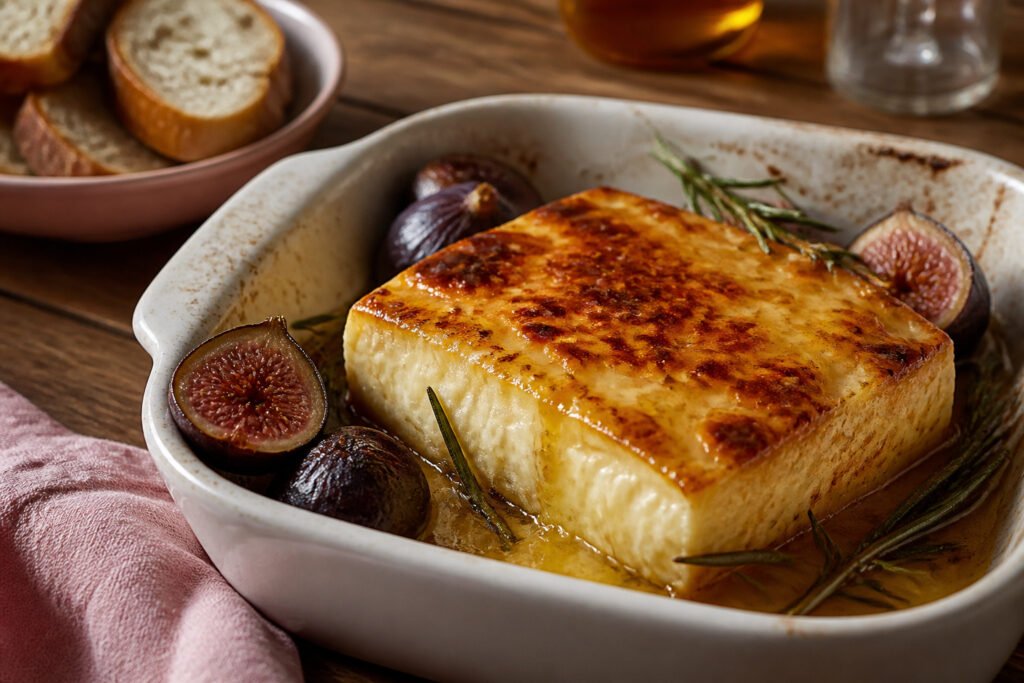
Baked feta with honey is a block of cheese softened in a 400-degree oven, painted with warmed honey, and finished under the broiler until the surface bubbles and browns. The catch is the broiler itself: honey’s sugars flame up fast, and the line between caramelized and bitter is measured in seconds, not minutes. At Opa! we learned to watch the surface for the first sign of bubbling, potholder in hand, because the residual heat keeps cooking even after you pull the dish.
1. Preheat the Oven

Set the oven to 400°F. Six of the recipes I looked at open here, and there is a reason the number stays that flat. At 400 degrees the feta warms through and turns soft and springy without collapsing; the block needs about 7 to 10 minutes depending on its exact size and how cold it was going in. The real browning happens later, under the broiler, so resist the urge to push the temperature higher for color now. A lower, gentler start keeps the cheese intact while it softens, which matters once you paint honey on top and slide it back under intense heat. If your oven runs hot or you are using a small countertop model, check at 7 minutes; the springy-to-the-touch test is more reliable than the clock.
Recommended Products

DISTINCTIVE TASTE: Wild Flore and Thyme Honey has a delightfully distinct flavor, with strong aromatic and herbal notes, pairing well with salty cheeses like feta and goats cheese


DISTINCTIVE TASTE: Wild Flore and Thyme Honey has a delightfully distinct flavor, with strong aromatic and herbal notes, pairing well with salty cheeses like feta and goats cheese
2. Prepare the Feta

An 8-ounce block of feta, not the crumbled kind, is what holds its shape through the heat. The crumbles melt into a salty puddle before anything interesting happens. A block in brine is even better if you can find one; the creamier French style some markets carry is worth the hunt, though standard Greek feta still works.
Pat the block dry with a paper towel before it goes into the dish. Skip this and the surface moisture steams instead of browning, leaving you with warmed-through cheese and none of the caramelized edges that make the dish worth eating. I wrap mine in a fresh towel while the oven preheats, which usually pulls enough moisture to matter.
A lightly oiled baking dish, just enough to prevent sticking, gives the feta room with a few inches on each side for whatever you pile on later. Score the top in a shallow crosshatch so the olive oil and honey have something to cling to instead of sliding off into the dish.
Recommended Products

Origin: United States

MADE EASY BAKE OLIVE OIL: This ultra light tasting olive oil is expertly crafted by The Olive Oil People for all your go-to baking recipes.

Authentic Mediterranean Flavor: Savor the rich taste of Greek Feta cheese paired with smoky and fruity olives, marinated to perfection for a delightful culinary experience.
3. Add Olive Oil

A dry block of feta emerging from the oven is the first sign the olive oil was treated as optional. 1 to 2 tablespoons of extra-virgin olive oil, drizzled over the top and worked down the sides, is what turns the surface glossy and keeps the interior creamy rather than chalky. The oil creates a thin barrier that slows moisture loss as the heat penetrates; without it, the exterior tightens and cracks before the center even warms through.
The amount scales with your dish. A snug ramekin needs only enough to coat, with just a thin pool beneath the block. Move to a wider gratin dish and the same feta wants more oil to cover the same surface area, and that extra oil in the corners becomes excellent for dragging bread through later. Skimp, and you are left with a warm, dense rectangle that never quite relaxes. Coat it properly, and the cheese softens into something you can swirl against the side of the dish with the back of a spoon.
Recommended Products

The ultimate cheese for salads

Try some delicious crumbled feta on anything from a salad to a burger

One 8.0 oz. tub of Athenos Traditional Feta Cheese Chunks
4. Bake the Feta

The feta goes in at 400 degrees for 8–10 minutes, the window six sources agree on. At that mark the block still holds its shape but yields like a kitchen sponge when you press the center. The surface turns matte and warm; it is not yet spreading or weeping into the dish.
Leave it to 12 and the bottom starts to slump. The cheese pools into the olive oil, and once that happens the structure is gone. You can still eat it, but it will not slice or sit on bread. It becomes a dip, and a thin one.
If you overshoot, pull the dish out and let it firm for five minutes on a trivet. The feta tightens slightly as it cools, enough to cut or spread with intention. Return it to the oven only if you need it warm again, and then just for a minute or two.
Recommended Products

Great topping for salads

Origin: Wisconsin
5. Prepare the Honey

Cold honey straight from the jar will drag across the surface of the cheese instead of coating it, so warming it until it flows like thin syrup is the move here. I set a small bowl with one tablespoon of honey over a pan of simmering water for a minute or two, though the microwave works fine if you watch it. You are not aiming for hot, just fluid enough that a pastry brush can spread it in an even layer without catching or pooling. The difference is immediate: cold honey sits on top in amber globs, while the warmed version sinks slightly into the warm feta and starts to caramelize properly under the broiler.
Recommended Products

DISTINCTIVE TASTE: Wild Flore and Thyme Honey has a delightfully distinct flavor, with strong aromatic and herbal notes, pairing well with salty cheeses like feta and goats...
6. Broil the Feta

Set the block of feta on a small ovenproof dish and drizzle the honey across the top. The cheese has already baked until it is soft and springy to the touch, so this last step is only about color and heat. Slide it under the broiler and do not walk away. The honey darkens fast, and the line between golden and burnt is measured in seconds, not minutes.
Broilers run hot and uneven. One oven takes around 5 minutes to reach that perfect caramelized top; another would incinerate the same cheese in that same time. The visual cue is the surface bubbling and just starting to brown. Pull it the moment you see that activity, because the honey will keep cooking on the hot feta even after the heat is off. Some cooks warm the honey first so it spreads thin and even; others have watched it flame under the broiler and prefer to broil the cheese bare, then drizzle the honey on after, letting the residual heat do the work. Either way, the risk is the same: a scorched top that tastes of bitterness instead of caramel. Keep your eyes on it, and keep a potholder in hand.
Recommended Products

A classic crowd-pleaser, this mix is packed with creamy Feta cubes that are marinated with Greek Kalamata and green olives. A perfect cocktail hour bite served with wine.

FETA CHEESE OLIVES – Discover a gourmet jar of hand-packed Greek olives. Bold and tangy, these olives are perfect for adding a Mediterranean vibe to any cocktail or salad.

Authentic Mediterranean Flavor: Savor the rich taste of Greek Feta cheese paired with smoky and fruity olives, marinated to perfection for a delightful culinary experience.
7. Serve

The honey you drizzled before baking loses some sweetness under the heat, so a fresh drizzle after the feta comes out of the oven brings it back. Thyme is the classic finish, though oregano works if that is what you have. Za’atar is worth keeping nearby too. The recipe yields 4 to 6 servings, which is realistic for a spreadable appetizer; people slow down once the cheese cools and firms.
At the restaurant we kept Greek pita on hand, the thicker kind that does not split when you drag it through warm cheese. Naan was the backup, and sourdough or ciabatta will do if that is what is in your kitchen. Toast whatever bread you use, cut it into wedges, and serve it immediately. The feta will firm as it sits, and while you can rewarm it, the texture is best right out of the oven.
Recommended Products

Origin: Greece

The ultimate cheese for salads

One 4-ounce container of Organic Valley Organic Feta Cheese Crumbles
8. Thyme

Fresh thyme lands on baked feta in almost every version of this dish, but timing splits the field. The New York Times and My Lilikoi Kitchen both lay whole sprigs over the cheese before it goes into the oven, letting the heat draw out the oil. Diane Kochilas and Mak and Her Cheese hold the leaves back entirely, sprinkling them on at the end as a garnish.
At Opa!, we split the difference. A few sprigs went in with the olive oil at the start, enough to perfume the block without giving the direct heat a full half-hour to attack the leaves. The rest we stripped and scattered after the broiler, when the honey was still tacky and the leaves stuck rather than slid. Oven thyme for depth, raw thyme at the finish for the snap of it: that was the balance that kept the herb from tipping bitter, which it will if it broils too long or too close. The reader who wants one less step can skip the early sprigs and still end up with a good plate, just a quieter one.
9. Sesame

Sesame seeds give baked feta a crust that shatters between your teeth before the soft cheese underneath takes over. The BBC Good Food method presses honey-brushed feta into a shallow dish of seeds so the block emerges fully coated; the oven toasts them in place while the cheese warms through. That toasting step matters more than most people bother with. Raw sesame seeds taste flat and almost dusty against the salt and honey. Ten or fifteen minutes at baking heat turns them nutty and brittle, a real textural counterweight instead of just a speckled coat. Diane Kochilas lists sesame as an optional add-on, and that feels about right: it is not essential, but it solves the one complaint baked feta sometimes earns, which is that every bite is the same soft richness. The crunch arrives early and disappears fast, so the cheese still finishes the mouthful. If you are buying seeds specifically for this, the toasted kind from the jar save a step; if you already have raw ones in the pantry, they will get there in the oven either way. Press the seeds on thick enough that no honey shows through, or they will slide off as the feta softens and you will end up fishing for them with a spoon.
10. Nuts

Almonds and walnuts both work over baked feta with honey, though they behave differently in the oven. Add them in the last five minutes of baking so they toast rather than scorch; honey’s sugars run hot, and nuts left the full bake time turn bitter and dark.
Walnuts carry a slight tannic edge that stands up to the honey’s blunt sweetness without disappearing. Almonds read milder and add a cleaner crunch, which some cooks prefer when the honey itself is the point. The sources also mention pistachios, pecans, pine nuts, and hazelnuts as options, but walnuts and almonds are the ones that come up twice, and that repetition matters for a weeknight cook who wants a reliable outcome rather than a project.
If you want the nuts truly crisp rather than just warm, you can wait and scatter them on right after the feta leaves the oven. The residual heat softens them slightly without the risk of burning, and the contrast of temperature between the hot cheese and the room-temperature nuts is worth trying at least once.
Recommended Products

Super premium green olives stuffed with salty feta cheese. The perfect marriage of Mediterranean flavors.

8.45 fluid ounces of infused extra virgin olive oil

AWARD WINNING EXTRA VIRGIN OLIVE OIL (EVOO): Multi awarded in competitions throughout the world. Awarded EVOO of the YEAR: 2020, 2021, 2022, 2023 and 2024.
11. Za’atar

Za’atar brings a woodsy, almost resinous depth that can flatten against the warm, salty feta if it stands alone. The blend of dried thyme, oregano, marjoram, sesame seeds, and sumac carries a lot of earth and only a little lift. The honey has to do the lifting, cutting through that density with a bright, round sweetness that keeps each bite from tasting like dried herbs on warm cheese.
I scatter za’atar over the feta before it goes into the oven, about a teaspoon across an eight-ounce block, then drizzle the honey after baking while the surface is still soft enough for the two to mingle. The sesame seeds in the blend toast in the heat and add a faint crunch, but the real payoff is the moment the sumac’s tart edge meets the honey’s glide. Without that sweetness, the za’atar reads as dusty; with it, the dish tastes like something intentional rather than something rescued.
12. Hot Honey

Mike’s Hot Honey has become the default answer for a reason. The chile infusion gives you heat that reads as flavor rather than punishment, and it already plays well with dairy. A standard 12-ounce squeeze bottle runs about $10 and lasts through multiple dinners, which matters when you are feeding a family on a Tuesday.
The broiler does tame the heat some. What starts sharp and vinegary on the palate softens into a low, warm buzz after two and a half minutes under the flame. That is not a loss; it is a different dish. If you want the full sting, drizzle a second thread of hot honey over the feta after it comes out of the oven, while the surface is still glossy and the bread is waiting.
A drizzle of honey and a blast of heat transform a standard block of crumbly feta into an unexpectedly luscious, creamy spread for pita and vegetables.
What this means practically: the honey does not just sweeten. It browns. It helps the top blister and caramelize in those two and a half minutes, so the same blast of heat that softens the chile also builds texture. You are getting two jobs from one ingredient, which is the kind of efficiency that keeps weeknight cooking sustainable.
Making your own is an option if the bottle is not in the pantry. Warm half a cup of honey with a tablespoon of crushed red pepper flakes and a teaspoon of apple cider vinegar, let it sit ten minutes, then strain. It will be hotter than Mike’s and less smooth, but it works in a pinch. The store version wins on consistency and shelf life.
Ingredients That Matter

Block feta, not the pre-crumbled kind, is what every recipe calls for, and the reason is structural. Crumbled feta has too much surface area and anti-caking agents that keep it from melting into the creamy center this dish is known for. A 7- to 8-ounce block, patted dry so the oil can actually adhere, gives you that intact core with a slightly yielding exterior after baking. I saw the difference at Opa! when we switched from a domestic barrel-aged feta to a Greek import packed in brine: the domestic crumbled more readily even in block form, and the Greek held its shape through a 400-degree oven while still turning soft enough to spread on pita.
Quality olive oil matters just as much. The sources range from 1 to 2 teaspoons up to 2 tablespoons, but they agree on extra-virgin and on using it to coat both the dish and the cheese. Cheap oil turns harsh under heat, and with only three or four ingredients total, there is nowhere for that bitterness to hide. At the restaurant we bought Greek extra-virgin in ten-liter tins for the kitchen; the peppery finish was noticeable even in the small amounts this recipe takes. The honey gets the attention, but the oil carries the bite.
Baking and Broiling

Most recipes for baked feta with honey call for a two-stage cook: bake at 400°F until the cheese softens, then broil with honey on top. The first stage takes about 7 to 10 minutes and leaves the feta springy but still holding its shape. Skip the foil if you plan to finish under the broiler; you need a dish that can take that direct heat.
The broiler stage is where things go wrong fast. Honey under a broiler can flame up, and the line between caramelized and burnt is roughly two to three minutes. Sources describe watching for the top to brown and just start to bubble, then pulling it immediately. One cook noted the honey flamed both times they made it, though removing it quickly saved the dish. Israeli feta browns more readily than French under the broiler, if that choice affects your timing. A countertop oven like the Breville Smart Oven ran about 2½ minutes in one test, but your broiler’s distance from the element changes that, so the visual cue matters more than the clock.
What to Serve With It

Pita, naan, and crusty bread like sourdough or ciabatta are the carriers most sources agree on, warmed or lightly toasted so they do not crack when you drag them through warm feta. Greek pita, the thicker kind, holds up better than the pocket style. At the restaurant, we saw the most plates come back clean when the feta arrived with toasted naan and roasted tomatoes on the side. The tomatoes go in about 45 to 60 minutes ahead of the cheese, and the sweet-tart juice against salty feta is what people remembered. Fresh fruit works too: watermelon, peaches, figs, or dried dates if you want the same contrast without the oven time. Heirloom tomatoes, roasted beets, nuts, or pickled vegetables round it out for a fuller spread. The cheese firms as it cools, so everything else should be ready before it leaves the oven.
Other Cheeses to Try

Haloumi comes up often as a swap for baked feta with honey, and the logic is obvious: it holds its shape in heat and carries salt well. The catch is that haloumi is firmer, so the center stays springy rather than turning soft and melty. That texture shift changes the whole experience, especially once honey pools on the plate.
Goat cheese is another route, and it will collapse and spread in the oven more readily than feta. The flavor tilts sharper and more acidic, which can fight the sweetness of the honey instead of balancing it.
I tried both during the months we were rebuilding the restaurant’s small-plate list after the 2022 kitchen flood. Goat cheese needed careful timing, pulled before it liquefied entirely. Haloumi needed a lower temperature and a shorter bake, then still felt like a different dish. Neither gave the same contrast of crusty exterior and creamy center that makes the feta version worth serving. Feta cracks slightly as it bakes, honey seeps into those fissures, and the result is why this combination became a staple at the restaurant and at my table.
Frequently Asked Questions
What can I serve with baked feta with honey?
Pita, naan, and crusty breads like sourdough or ciabatta are the standard carriers, warmed or lightly toasted so they do not crack when dragged through the warm cheese. Greek pita, the thicker kind, holds up better than pocket-style pita. Roasted tomatoes, fresh fruit such as watermelon or figs, nuts, and pickled vegetables also work well alongside the cheese.
How long do I bake feta?
Bake the feta at 400°F for 8 to 10 minutes, until it is soft and springy to the touch but still holding its shape. Check at 7 minutes if your oven runs hot or you are using a small countertop model; the springy-to-the-touch test matters more than the clock. Past 12 minutes the bottom starts to slump and the cheese becomes a thin dip instead of a sliceable block.
Can I use different types of cheese for baked feta with honey?
Haloumi and goat cheese are the most common swaps, but both change the dish significantly. Haloumi stays firmer and springier in the center rather than turning soft and melty. Goat cheese collapses and spreads more readily and its sharper acidity can fight the honey instead of balancing it. Neither gives the same contrast of crusty exterior and creamy center that makes the feta version distinctive.